Mexico
Akumal
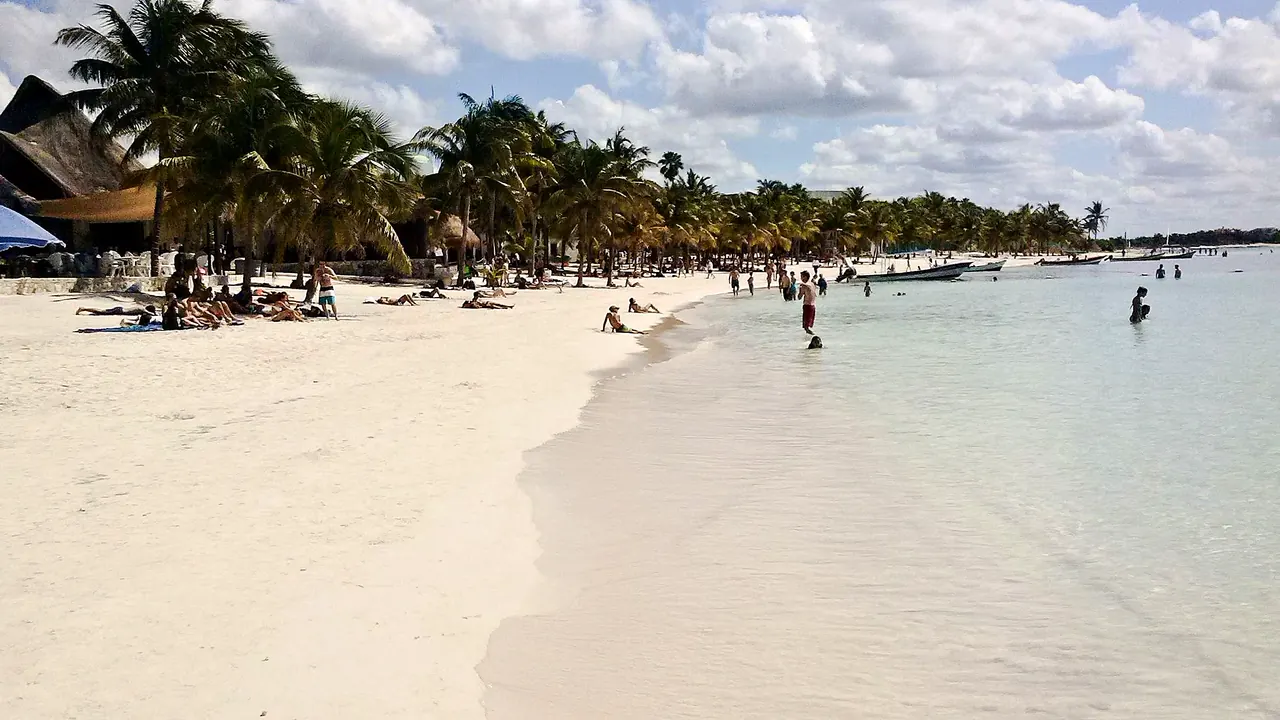
A palm-lined beach on Akumal Bay
- Beaches88
- Nature & outdoors77
- Families70
Photo: Alfonzo Buscemi, CC BY 3.0, cropped
Match
39
Every category weighted equally
- Beach & sun48
- Culture & arts27
- Food & nightlife25
- Family trip49
- Outdoors52
- Relax & unwind48
- Shopping & style28
- On a budget38
Akumal in twelve categories
Our verdict on each, scored 0 to 100 against the same fixed benchmark cities, so a score means the same thing on every page.
Beaches & swimming. Scores 88 out of 100.
Food & drink. Scores 28 out of 100.
Culture & sights. Scores 6 out of 100.
Nightlife. Scores 7 out of 100.
Nature & outdoors. Scores 77 out of 100.
Day trips. Scores 68 out of 100.
Good for families. Scores 70 out of 100.
Getting around. Scores 18 out of 100.
Shopping & style. Scores 7 out of 100.
Affordability. Scores 36 out of 100.
Live music & performing arts. Scores 4 out of 100.
Wellness & relaxation. Scores 55 out of 100.
Akumal category by category
Beaches & swimming
88Beach life is the reason Akumal exists. The village is strung along a run of sheltered bays on the Caribbean, and the water is warm all year, around 26°C in winter and 29°C in late summer, clear and calm behind the reef. Akumal Bay is the best known, a curve of soft sand where green sea turtles graze on the seagrass a few metres from shore. Half Moon Bay and Jade Bay to the north are quieter and rockier, lined with villas, and the Yal-Ku lagoon mixes fresh and salt water for easy floating and snorkelling.
These are small, gentle beaches rather than long open strands, and parts of the shore are seagrass or limestone rather than pure white sand. Xcacel, a protected turtle-nesting beach, and the long beaches around Tulum are a short drive away for more space. In some summers drifts of sargassum seaweed wash in and can spoil a day or a week, so a visitor in the warm months should keep an eye on which bays are clear.
Food & drink
28Eating in Akumal is simple and limited. Along the bays there are a handful of open-air restaurants serving grilled fish, ceviche, tacos and cocktails, with a relaxed, sandy-floored mood and resort-level prices. Across the highway, the pueblo where local workers live has taco stands and small family kitchens that offer better, plainer Yucatecan cooking such as cochinita pibil and panuchos.
Many visitors stay in villas and condos and cook for themselves, stocking up at the supermarkets in Playa del Carmen or Tulum. For a serious meal or more variety, most people drive to one of those towns for the evening.
Culture & sights
6Akumal has almost nothing to see in the usual sense. It began as a coconut plantation and a base for divers, and its only real institution is a small ecological centre devoted to the reef and the turtles. The Maya sites that make this coast famous, Tulum, Coba and Muyil, all lie outside it and need a short drive.
Nightlife
7Evenings in Akumal are quiet. A few beach bars and restaurants serve drinks until late evening, and a sunset margarita by the bay is about as far as going out goes. Those wanting bars and clubs drive or take a taxi to Playa del Carmen or Tulum, and many come here precisely to avoid them.
Nature & outdoors
77The outdoors here is largely underwater. The Mesoamerican reef runs just offshore, with good snorkelling straight from the bays and dive sites a short boat ride out. Inland, the limestone is riddled with cenotes and flooded caves, part of one of the longest underground river systems known, and the cenotes along the road towards Tulum and Coba draw cave divers from around the world as well as snorkellers who float over stalactites in clear fresh water.
On land the country is flat and covered in low, dense jungle, so there is little hiking and no viewpoint to climb. Turtles nest on the protected beaches from May to October, and the Sian Ka'an biosphere reserve to the south offers lagoons, mangroves, birds and dolphins by boat. The heat and humidity make midday activity hard work for much of the year.
Day trips
68Akumal sits in the middle of the Riviera Maya, which makes it a practical base. The cliff-top ruins of Tulum are about twenty minutes south, and Coba, with its tall pyramid set deep in the forest, is under an hour inland. Playa del Carmen is about half an hour north, and from there ferries cross to Cozumel for its town and reef.
Further out, the colonial town of Valladolid and the great site of Chichen Itza are both roughly two hours away, a long but popular day that is best started early. The quieter Maya site of Muyil lies at the edge of Sian Ka'an, south of Tulum. Beyond this, most of the Yucatan's cities and lagoons need an overnight stay.
Good for families
70Akumal works well for families who want a calm, water-based vacation. The bays are shallow and sheltered, and snorkelling alongside turtles in Akumal Bay is the kind of thing children remember for years. The Yal-Ku lagoon is gentle enough for younger swimmers, and villa rentals with kitchens and pools suit families who want space.
The big eco-parks of the coast, Xel-Ha a few minutes away and Xcaret near Playa del Carmen, add zip lines, underground rivers and animal encounters. The village itself has little else for children, the heat is heavy in summer, and almost everything beyond the beach means a drive.
Getting around
18Akumal is a scatter of bays and villas off the main coastal highway, and it is not built for walking beyond the stretch you stay on. Shared colectivo vans run up and down the highway between Playa del Carmen and Tulum and will stop on request, which is fine for a single trip but awkward with gear or children. Most visitors hire a car, which also makes the cenotes and ruins far easier to reach.
Shopping & style
7There is very little to buy in Akumal beyond sunscreen, snorkel gear, groceries and a few souvenirs and beach clothes. Playa del Carmen's long pedestrian street and the craft shops in Valladolid are where visitors go when they want to shop.
Affordability
36Akumal is expensive for Mexico. Most lodging is beachfront villas, condos and a few resorts priced for foreign visitors, and there is almost no budget accommodation in the bays themselves. The bay-side restaurants charge resort rates, and car hire, entry to the eco-parks and cenotes, and guided snorkelling add up over a week.
Costs come down for those who rent a place with a kitchen and cook, eat at the taco stands and family kitchens in the pueblo across the highway, and use the colectivos rather than taxis. Much of what makes a stay here good, swimming and snorkelling in the bays, costs little once you have arrived.
Live music & performing arts
4There is essentially no performance life in Akumal: no theatre, no concert hall and at most a guitarist or small band playing in a beach restaurant. The large evening spectacle of Mexican music and dance at the Xcaret park near Playa del Carmen is the nearest thing to a show.
Wellness & relaxation
55Akumal's main wellness asset is its pace. Days run on swimming, snorkelling and hammocks, there is no traffic in the bays, and evenings end early. Yoga classes, beach massage and spa treatments at the resorts and villas are easy to arrange, and a swim in a cool, still cenote is restorative in its own way.
The one local bathing tradition is the temazcal, a Maya sweat lodge ceremony with herbs and chanting, which is offered at several places along this coast. Beyond that there are no thermal baths or bathhouse culture, and the spa offer is a handful of hotel spas rather than a reason to come.
When should you go?
Pick a month to see what it is like. The climate figures are measured averages, not a forecast.
Akumal in July
Daytime high, °C
Rainfall in the month, mm
The whole year
Shaded against this city’s own year: the deepest cell is its best month for that figure and the palest its weakest.
Where the figures come from
Akumal has no weather station within reach, so its figures come from a gridded climate model rather than a measured record, and read a broad area rather than the city itself.
Temperature and rainfall are climate normals, averaged over the years shown. Akumal: 2001-2020 normals, NASA POWER reanalysis grid, no weather station within 90 km.
Before you go
| Measure | Akumal |
|---|---|
| Official language | Spanish, Nahuatl, Yucatec Maya |
| Currency | Mexican Peso (MXN) |
| Sockets | AB127 V, 60 Hz |
| Driving side | Right |
| Time zone | UTC-5 |
| Emergency number | 911 |
| Elevation | 11 m |
| Main airport | Cancún International Airport (CUN)85 km from centre135 non-stop destinations |
| Public holidays this year | 9 days |
By the numbers
| Measure | Akumal |
|---|---|
| City population | 2,154 |
| Museums within 10 km | 0 |
| UNESCO World Heritage sites within 50 km | 0 |
| Swim season, months above 21 °C | 12 months |
Compare Akumal with
Every comparison with a written verdict behind it.