Mexico
Riviera Maya
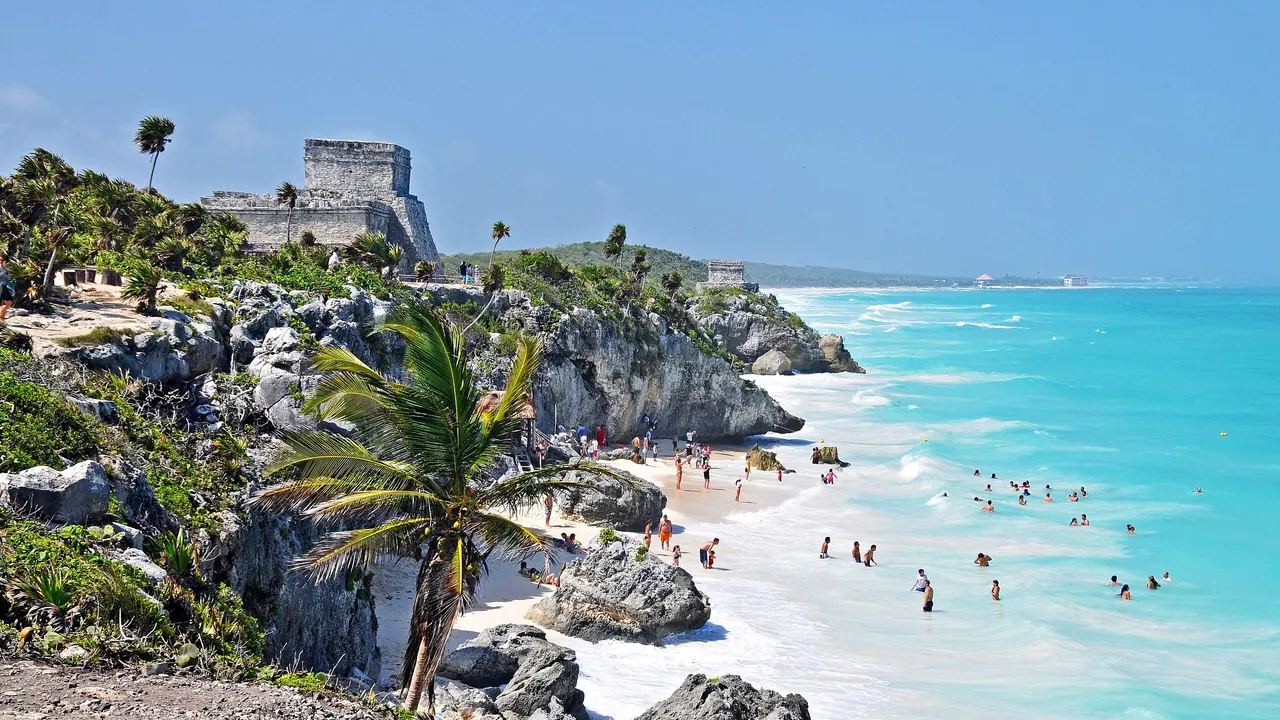
El Castillo at Tulum on the cliff above the beach
- Beaches92
- Nature & outdoors80
- Families80
Photo: Dennis G. Jarvis, CC BY-SA 2.0, cropped
Match
59
Every category weighted equally
- Beach & sun66
- Culture & arts50
- Food & nightlife53
- Family trip63
- Outdoors64
- Relax & unwind65
- Shopping & style54
- On a budget57
Riviera Maya in twelve categories
Our verdict on each, scored 0 to 100 against the same fixed benchmark cities, so a score means the same thing on every page.
Beaches & swimming. Scores 92 out of 100.
Food & drink. Scores 55 out of 100.
Culture & sights. Scores 40 out of 100.
Nightlife. Scores 68 out of 100.
Nature & outdoors. Scores 80 out of 100.
Day trips. Scores 58 out of 100.
Good for families. Scores 80 out of 100.
Getting around. Scores 50 out of 100.
Shopping & style. Scores 42 out of 100.
Affordability. Scores 42 out of 100.
Live music & performing arts. Scores 22 out of 100.
Wellness & relaxation. Scores 80 out of 100.
Riviera Maya category by category
Beaches & swimming
92This is a coast built for beach days. White sand runs for over 100km from Puerto Morelos to Tulum, the water is clear and close to 27°C to 29°C through the year, and almost every stay here is planned around the sea. Playa del Carmen has the busiest town beaches, Akumal and Xpu-Ha have calm, reef-sheltered bays where turtles graze in the shallows, and the beaches below Tulum's cliff-top ruins are the most photographed on the coast.
The variety is a real strength: lively town fronts, quiet coves, wide resort beaches and long empty stretches toward Sian Ka'an. The one recurring drawback is sargassum seaweed, which in some years piles up on the shore from roughly spring to late summer; resorts clear it, but public beaches can be smelly and murky for weeks. Winter and early spring usually give the cleanest water.
Food & drink
55The food that rewards a visitor is Yucatecan: cochinita pibil slow-cooked in achiote, sopa de lima, panuchos and salbutes, and fresh ceviche and fish tacos along the coast. The best of it is found at taquerias and family-run places a few streets back from Playa del Carmen's Quinta Avenida and in Tulum town, where locals eat. Tulum's beach road adds a tier of polished, wood-fired and design-led restaurants that draw serious cooks.
The weakness is that many visitors stay all-inclusive and eat at buffets, and the main tourist strips are full of generic, overpriced menus. A visitor who makes the effort eats well; one who stays in the resort will not learn much about the cuisine.
Culture & sights
40The region's heritage is Maya, and it lies in ruins rather than towns. Tulum's walled city on a cliff above the sea is small but its setting is unforgettable, and Coba, deeper in the jungle, is a large site with tall pyramids and long raised roads that you can walk or cycle between. Smaller sites at Muyil, on the edge of Sian Ka'an, and San Gervasio on Cozumel add to the picture.
Beyond the ruins there is little. Playa del Carmen and Tulum are young resort towns with no historic centre, and museums are few. A visitor who wants colonial churches, plazas and major Maya cities like Chichen Itza has to leave the coast for a day.
Nightlife
68Nights here split between two towns. Playa del Carmen is the late, loud one: the streets around Calle 12 and the Quinta Avenida fill with bars, rooftop terraces and clubs that run well past 3am, with a young, international and fairly unsubtle crowd. Tulum has built a reputation for electronic music, with DJ nights in jungle clearings and beach clubs drawing a fashionable crowd, peaking in winter and around the big season of parties in January.
It is a lively scene rather than a deep one, and most of it is made for visitors. Outside those two towns, resort areas such as Akumal and Puerto Morelos go quiet early.
Nature & outdoors
80The land is flat jungle on limestone, and its wonder is underneath. Thousands of cenotes, sinkholes of clear fresh water, connect to some of the longest underwater cave systems known; Dos Ojos and Gran Cenote, near Tulum, are classics for snorkelling and cave diving. Offshore, the Mesoamerican Reef runs the length of the coast, and the walls off Cozumel are among the most celebrated drift dives anywhere.
Sian Ka'an, a vast protected reserve of lagoons, mangroves and reef south of Tulum, is reached by boat for dolphins, birds and crocodiles. Turtles feed in Akumal's bay, and sea turtles nest on the beaches in summer. What is missing is height: no hills, views or mountain walking, and the jungle heat makes long hikes hard work.
Day trips
58There is one great day out, and it is a long one. Chichen Itza, the most famous Maya city on the peninsula, lies inland and is usually paired with Valladolid, a colonial town of pastel streets, a cathedral square and a cenote in the middle of town. From Tulum it is about two hours by road; from Playa del Carmen allow two and a half, so an early start matters. Ek Balam, with its finely carved stucco temple, sits near Valladolid and suits a quieter version of the same trip, and Valladolid on its own makes an easier day from Tulum, about an hour and a half away.
Beyond that the choice is short. The ferry from Playa del Carmen crosses to Cozumel's small town of San Miguel in under an hour, and from the northern end of the coast a boat from Cancun reaches Isla Mujeres, a little island town of golf carts and bright houses. Cancun itself is close for a day in the city. The lagoon town of Bacalar is too far south for comfort in a day and is better as a night or two at the end of a trip. Most visitors take one or two of these outings and spend the rest of their time on the coast.
Good for families
80This coast is one of the easiest places in the region for a family vacation. Large all-inclusive resorts with kids' clubs and shallow pools line the shore, and calm, reef-protected bays at Akumal, Xpu-Ha and Puerto Morelos let children snorkel among fish and turtles. A string of big eco-parks between Playa del Carmen and Tulum is built for families, with underground rivers to float down, zip lines, lagoons and evening shows.
Cenotes thrill older children, and the ruins at Tulum and Coba are short and manageable. The drawbacks are humid heat, mosquitoes after dusk and distances that usually mean a hire car or transfers; families who stay in a resort and take a few excursions find it effortless.
Getting around
50Everything lies along one straight coastal highway, which makes the region simple to grasp. Long-distance buses link Cancun airport, Playa del Carmen and Tulum, and shared colectivo vans run up and down the highway all day, stopping on request at beaches and cenote turnoffs. Playa del Carmen's centre is easy to walk, and Tulum's town, beach road and ruins are best linked by bicycle.
Roads are flat and good, and hiring a car is the easiest way to reach Coba, the cenote roads and the quieter beaches. The frustrations are taxis that cost far more than the distances suggest, especially in Tulum, and resort entrances set well back from the highway.
Shopping & style
42Shopping centres on Playa del Carmen's Quinta Avenida, a long pedestrian street of beachwear, silver, tequila, Talavera pottery and much repetitive souvenir stock, with a couple of open-air malls at its edges. Tulum's beach road and town have a different character: linen, boho fashion, woven baskets, hammocks and design pieces in small boutiques.
There is little luxury or depth, and prices on the main strips are aimed at visitors. The best buys are crafts: hand-embroidered huipiles, hammocks and pottery, better and cheaper inland in Valladolid if you go there.
Affordability
42This is not budget Mexico. Prices on the coast are set for international visitors, and Tulum in particular charges for its beach hotels and design restaurants as much as many European resorts. Big all-inclusives, eco-park tickets, diving and cenote fees add up quickly.
A visitor watching costs does best in Playa del Carmen or Puerto Morelos, staying a few blocks back from the sea, eating at taquerias and loncherias, and travelling by colectivo and bus, which are cheap. Winter, the main season, is when rooms cost the most.
Live music & performing arts
22Performance here is mostly made for visitors. The eco-parks stage large evening spectacles of Maya ball games, folk dance and mariachi, resorts have their own nightly shows, and bars in Playa del Carmen and Tulum put on live Latin, reggae and rock bands. There is no theatre, opera or classical concert life to speak of, so a visitor who cares about the stage will find little beyond the occasional festival.
Wellness & relaxation
80Tulum is the centre of it: yoga shalas in the jungle, retreats, breathwork and sound-healing sessions, and spas built of wood and palm thatch along the beach road. The temazcal, a Maya sweat lodge ceremony of steam, herbs and chanting, is a genuine local tradition and offered across the coast, and swimming in a cool cenote has its own restorative effect.
The large resorts between Playa del Carmen and Tulum have some of the biggest hotel spas in the country, with hydrotherapy circuits and treatments at length. The pace is slowest in Puerto Morelos, Akumal and the southern stretch of Tulum's beach; Playa del Carmen's centre is noisy and better avoided by anyone wanting rest.
Where to stay in Riviera Maya
Playa del Carmen is the most practical base on the coast. The centre is easy to walk, the ferry to Cozumel leaves from town, and buses and colectivos run in both directions along the highway. It suits nightlife and travellers watching costs, especially a few blocks back from the sea. Anyone wanting quiet evenings should look elsewhere, because the streets around Quinta Avenida stay loud until late.
Tulum suits food, wellness and cenotes. The town is where locals eat, the beach road has the yoga shalas and the polished restaurants at higher prices, and a bicycle links both with the ruins. It is also the closest base for Coba, Valladolid and Sian Ka'an. Between the two towns, Akumal and Xpu-Ha have calm, reef-sheltered bays where children can snorkel among turtles, and they go quiet early. That makes them a good fit for families and a slow stay, while the large resorts along the same stretch suit anyone who wants everything on site.
Puerto Morelos, at the northern end near the airport, is the calmest and one of the better-value choices. Everything sits on one straight highway, so a week works from a single base. A longer trip can split its time between Playa del Carmen and Tulum, perhaps adding a night or two in Bacalar at the end.
When should you go?
Pick a month to see what it is like. The climate figures are measured averages, not a forecast.
Riviera Maya in July
Daytime high, °C
Rainfall in the month, mm
The whole year
Shaded against this city’s own year: the deepest cell is its best month for that figure and the palest its weakest.
Where the figures come from
Riviera Maya has no weather station within reach, so its figures come from a gridded climate model rather than a measured record, and read a broad area rather than one spot.
Temperature and rainfall are climate normals, averaged over the years shown. Riviera Maya: 2001-2020 normals, NASA POWER reanalysis grid, no weather station within 90 km.
Before you go
| Measure | Riviera Maya |
|---|---|
| Official language | Spanish, Nahuatl, Yucatec Maya |
| Currency | Mexican Peso (MXN) |
| Sockets | AB127 V, 60 Hz |
| Driving side | Right |
| Time zone | UTC-5 |
| Emergency number | 911 |
| Main airport | Cancún International Airport (CUN)136 non-stop destinations |
| Public holidays this year | 9 days |
By the numbers
| Measure | Riviera Maya |
|---|---|
| Swim season, months above 21 °C | 12 months |
Compare Riviera Maya with
Every comparison with a written verdict behind it.