Mexico
Tulum
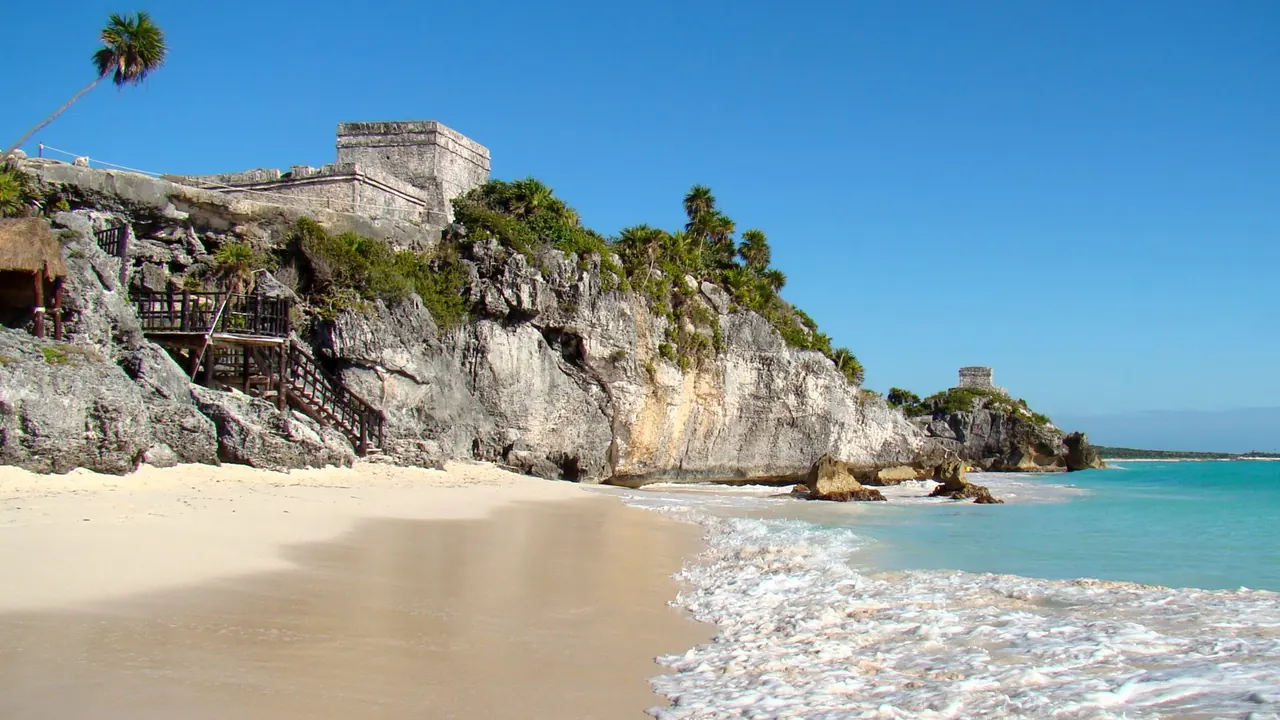
El Castillo above the beach at Tulum
- Beaches88
- Wellness & relaxation85
- Nature & outdoors76
Photo: Bjørn Christian Tørrissen, CC BY-SA 3.0, cropped
Match
52
Every category weighted equally
- Beach & sun60
- Culture & arts42
- Food & nightlife46
- Family trip54
- Outdoors59
- Relax & unwind60
- Shopping & style46
- On a budget50
Tulum in twelve categories
Our verdict on each, scored 0 to 100 against the same fixed benchmark cities, so a score means the same thing on every page.
Beaches & swimming. Scores 88 out of 100.
Food & drink. Scores 52 out of 100.
Culture & sights. Scores 30 out of 100.
Nightlife. Scores 60 out of 100.
Nature & outdoors. Scores 76 out of 100.
Day trips. Scores 68 out of 100.
Good for families. Scores 60 out of 100.
Getting around. Scores 25 out of 100.
Shopping & style. Scores 35 out of 100.
Affordability. Scores 30 out of 100.
Live music & performing arts. Scores 15 out of 100.
Wellness & relaxation. Scores 85 out of 100.
Tulum category by category
Beaches & swimming
88The coast here is the reason most people come. A long run of pale sand backed by palms and low dunes runs south from the cliff-top ruins towards the Sian Ka'an reserve, with water that sits around 27°C to 29°C for much of the year and goes from milky turquoise to deep blue within a short swim. Stretches near the archaeological zone and the public beaches by the ruins are the classic postcard; further south the shore lined with small hotels and beach clubs is quieter and wilder.
The catch is sargassum, a brown seaweed that can pile up on the sand in the warmer months, heavily in some years and barely in others, so it is worth checking before booking. Akumal, about 30 minutes north, adds a sheltered bay where turtles graze in the shallows. The town itself is a few kilometres inland, so most visitors cycle or take a taxi to the sea each day.
Food & drink
52Eating splits in two. The beach road and the jungle strip behind it are lined with candlelit restaurants cooking over open fire, built around the local Caribbean catch, Yucatecan produce and a lot of mezcal, aimed squarely at visitors and often more about the setting than the plate. In the town centre the food is plainer and more Mexican: taco stands for al pastor and cochinita pibil, juice bars, small fondas and evening street stalls along the main avenue.
There is good cooking to be found, and Yucatecan dishes such as sopa de lima, whole fish grilled with achiote and slow-cooked pork are worth seeking out. But this is a small town, the range is narrow, and many menus lean towards the same smoothie-bowl and ceviche formula.
Culture & sights
30The one sight of real weight is the walled Maya city on the cliff edge just north of the beaches, a late port and trading town whose small temple, El Castillo, stands above the sea in one of the most photographed settings in the Maya world. It is compact and seen in a couple of hours, best early before the tour coaches arrive.
Beyond that the town has little historic fabric: a low, modern grid of shops and guesthouses along the highway, a few murals and no museums of note. Visitors interested in Maya heritage use Tulum as a base and head inland for the bigger sites.
Nightlife
60Tulum is known well beyond Mexico for its electronic music nights: DJ sets in jungle clearings, beach clubs that run from late afternoon into the night, and full-moon parties, all with a dressed-up, bohemian crowd. The peak comes in winter and around New Year, when international DJs and large outdoor events fill the calendar and the town is at its busiest.
Outside those big nights it is smaller. The town centre has a strip of mezcal bars and casual places along the main avenue, and the beach road has sunset bars, but there is no dense bar district to wander. Big events are expensive, and it is sensible to go with friends and keep an eye on drinks and on how you get home.
Nature & outdoors
76The landscape is flat limestone jungle, and its great feature lies underground. The area around Tulum is riddled with cenotes, sinkholes and flooded caves of startlingly clear water, among the best places on earth for cavern snorkelling and cave diving; Gran Cenote, Dos Ojos and many smaller pools are a short ride away.
South of the town, the Sian Ka'an biosphere reserve protects lagoons, mangroves and reef, explored by boat or on a float through Maya-built channels, with dolphins, turtles and wading birds. The reef offshore and the bay at Akumal suit snorkelling, and the flat roads make cycling easy. What is missing is relief: there are no hills or hiking trails to speak of, and the heat makes midday outings hard work.
Day trips
68The Maya world is the main draw. Coba, with its tall pyramid in the forest, is under an hour inland, and the smaller site at Muyil lies just to the south. Chichen Itza, one of the great archaeological sites of the Americas, is about two hours away and pairs naturally with the colonial town of Valladolid and its pastel streets, or with Ek Balam's well-preserved acropolis.
Along the coast, Playa del Carmen is about 45 minutes north, with ferries across to Cozumel for its island town and reefs. The lagoon at Bacalar sits a little beyond the two-hour mark. Most trips need a car, a tour or the Tren Maya, since the town's station is outside the centre.
Good for families
60Children tend to love the place for its water: warm sea, shallow snorkelling at Akumal where turtles feed close to shore, and cenotes with calm, clear pools and wooden steps. The big eco-parks at Xel-Ha, about 15 minutes north, and Xcaret, under an hour away, are built for families, with lazy rivers, snorkelling lagoons and shows.
The town itself is less geared to them. Much of the beach strip caters to couples, yoga retreats and late parties, many small hotels are adults-oriented, and sights are spread out with no easy public transport. Heat, mosquitoes and a sargassum season need planning. Families do best in a resort or rental with a pool and a hire car.
Getting around
25Tulum is spread along a highway, with the town grid on one side, the beach a few kilometres east and the hotel strip running far to the south. The centre is easy enough on foot, and the flat terrain makes bicycles the most popular way to reach the ruins and the beach, though roads can be narrow and unlit at night.
Beyond that there is little public transport: shared colectivo vans along the highway to Playa del Carmen and the cenotes, taxis that are costly for the distance, and a Tren Maya station outside town. Most visitors who want to see cenotes and ruins hire a car or book tours.
Shopping & style
35Shopping here has one look: linen dresses, woven bags, macramé, palm-fibre baskets and natural-dyed homewares, sold in airy boutiques along the jungle-shaded beach road and pitched at a well-off crowd. It is pleasant to browse but small and pricey. The town's main avenue has souvenir shops, silver jewellery and Mexican crafts such as embroidered huipiles and hammocks, often at better prices. There are no department stores, luxury streets or proper markets.
Affordability
30Tulum is one of the most expensive places to stay in Mexico. Boutique hotels on the beach road and the jungle strip charge resort prices, restaurants there price their menus for foreign visitors, and taxis, beach clubs and party tickets all cost more than elsewhere in the country. Cenotes and the national park areas each charge their own entry.
The town centre softens this. Guesthouses and apartments away from the sea, taco stands, juice bars and bicycle hire keep a budget trip possible, as long as you accept riding to the beach rather than waking up on it.
Live music & performing arts
15There is no theatre, concert hall or classical season. Live music means bands and acoustic sets in bars on the main avenue, occasional performers at beach restaurants and the sax-and-drums accompaniment to DJ nights. Ceremonial dance and music appear mostly in staged form at the large eco-parks up the coast. Visitors who want a real performance programme will find little here.
Wellness & relaxation
85Wellness is a large part of what Tulum is about. The beach road and the jungle behind it are full of yoga shalas, retreat hotels, open-air spas and treatment rooms, with sound baths, breathwork and massage on offer daily. The local bathing tradition is the temazcal, a Maya sweat lodge of domed stone or mud used for cleansing ceremonies, and many places run sessions.
The pace on the southern beach strip is slow, with barefoot days and sea-view hammocks. The tone can tip into the commercial and the town is not always quiet: party nights and highway traffic intrude, so a calmer stay means picking a spot well away from the clubs.
When should you go?
Pick a month to see what it is like. The climate figures are measured averages, not a forecast.
Tulum in July
Daytime high, °C
Rainfall in the month, mm
The whole year
Shaded against this city’s own year: the deepest cell is its best month for that figure and the palest its weakest.
Where the figures come from
Tulum has no weather station within reach, so its figures come from a gridded climate model rather than a measured record, and read a broad area rather than the city itself.
Temperature and rainfall are climate normals, averaged over the years shown. Tulum: 2001-2020 normals, NASA POWER reanalysis grid, no weather station within 90 km.
Before you go
| Measure | Tulum |
|---|---|
| Official language | Spanish, Nahuatl, Yucatec Maya |
| Currency | Mexican Peso (MXN) |
| Sockets | AB127 V, 60 Hz |
| Driving side | Right |
| Time zone | UTC-5 |
| Emergency number | 911 |
| Elevation | 5 m |
| Main airport | Felipe Carrillo Puerto International Airport Tulum (TQO)21 km from centre11 non-stop destinations |
| Public holidays this year | 9 days |
By the numbers
| Measure | Tulum |
|---|---|
| City population | 33,374 |
| Museums within 10 km | 0 |
| UNESCO World Heritage sites within 50 km | 0 |
| Swim season, months above 21 °C | 12 months |
Compare Tulum with
Every comparison with a written verdict behind it.