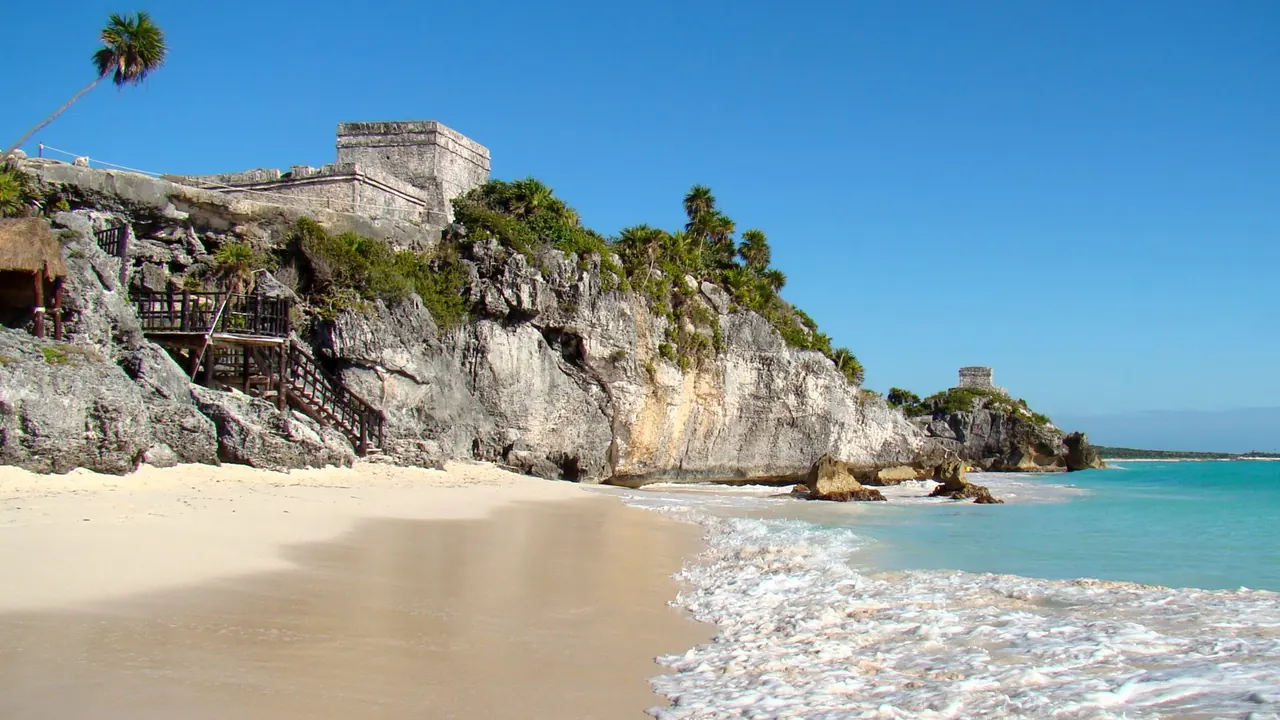
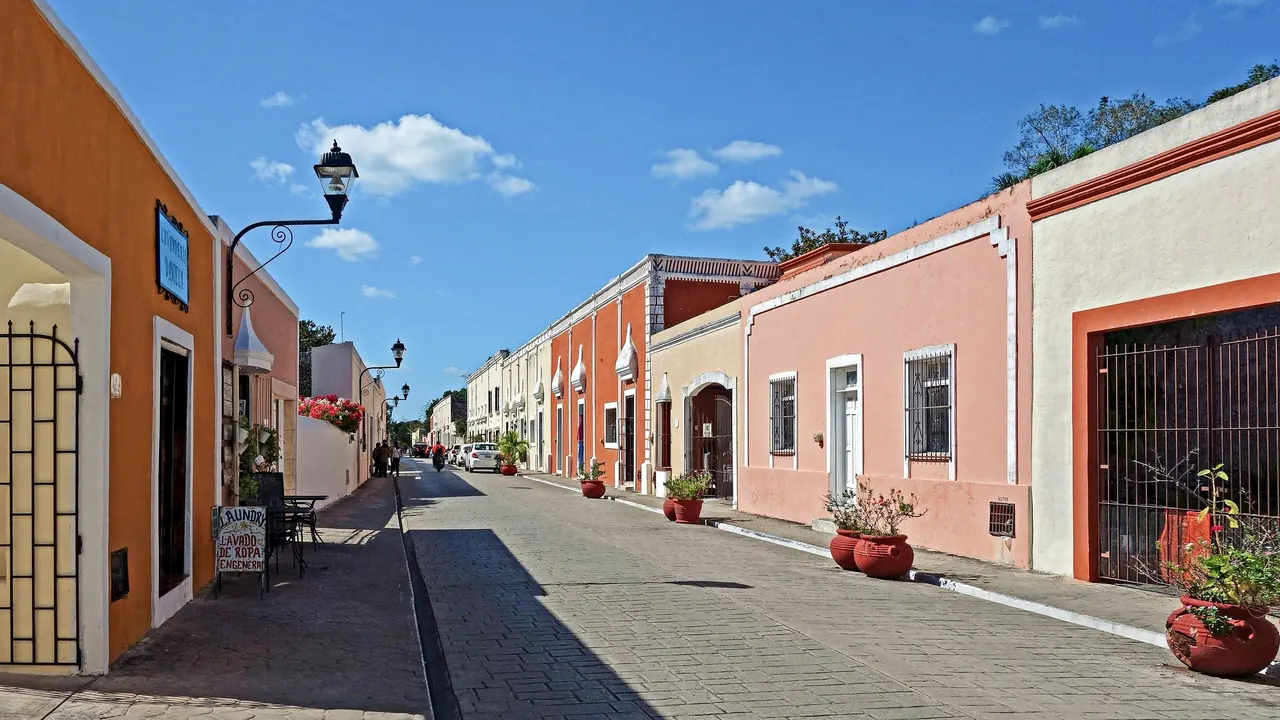
Photos: Tulum by Bjørn Christian Tørrissen, CC BY-SA 3.0, cropped; Valladolid, Mexico by Haakon S. Krohn, CC BY 4.0, cropped.
Tulum or Valladolid, Mexico?
Our verdict in twelve categories, each scored against the same fixed benchmark cities, and the climate month by month, so you can choose for your trip.
Choose Tulum for
- beaches
- nightlife
- wellness
Tulum is the pick for a trip built around the sea and slowing down. It has warm turquoise water on long pale sand, cenotes and the Sian Ka'an reserve for snorkelling, yoga shalas and temazcal sessions, and electronic music nights in jungle clearings. It suits couples and groups of friends with a good budget who are happy to cycle or drive between the beach, the town and the sights.
Choose Valladolid, Mexico for
- prices
- getting around
- culture and sights
Travellers who came to the Yucatán for the Maya sites and colonial streets will get more from Valladolid. From here you can reach Chichén Itzá at opening time, and Ek Balam and Cobá are close too. The town's own centre of painted houses and the San Bernardino convent is easy to walk, and rooms and meals cost far less. The trade-off is quiet evenings and a long drive to the nearest sea beach.
Scoreboard
Twelve categories on one fixed scale from 0 to 100. The shaded stretch is the gap between the two.
Your match
Pick a travel style or drag the sliders, and both match scores follow your weighting.
Wins on beaches and nightlife with your weighting.
Wins on prices and getting around with your weighting.
What matters to you?
Category by category
What the scores mean for a trip.
Beaches & swimming
Tulum's coast is the main event. A long strand of pale sand under palms runs from the ruins south towards Sian Ka'an, and the warm water turns from turquoise to deep blue a few strokes out. Akumal's sheltered bay adds turtles, though in some years sargassum fouls the sand in the warmer months.
Valladolid has no sea within easy reach, since El Cuyo on the Gulf and the Caribbean shore are both about two hours away. You swim in cenotes instead: Zací right in town, and X'keken or Suytun just outside. They are cool, clear and striking under their cave roofs, but they make a dip between sights, not a beach day.
Food & drink
Tulum has the wider choice. There are fire-cooked dinners on the beach road built around Caribbean fish and mezcal, and taco stands serving al pastor in the town centre. The tourist strip does lean on its setting, though, and on the same ceviche and smoothie-bowl formula.
Valladolid's range is narrower but more its own. It has its own longaniza and lomitos, morning tacos at the municipal market, and marquesitas made in front of the cathedral at night. The regional cooking in its colonial courtyards is good, and there is very little beyond it.
Culture & sights
Tulum has one great sight: the walled Maya port on the cliff, with El Castillo standing above the sea. You can see it in a couple of hours. Around it is a modern highway town with no museums of note.
Valladolid has more to see in its own streets. The painted colonial houses around the square, the church of San Servacio, the Calzada de los Frailes leading to the San Bernardino convent and the folk art of the Casa de los Venados fill a couple of unhurried days.
Nightlife
Tulum has a real night scene. It is known for DJ sets in jungle clearings, beach clubs that run from late afternoon, and full-moon parties, all at their peak in winter and around New Year. Between the big events, the mezcal bars on the main avenue and the sunset spots on the beach road keep things going on a smaller scale.
In Valladolid an evening means a stroll on the lit-up main square past the marquesita carts, and perhaps a drink in a courtyard bar or a craft-beer place on the Calzada. The town is mostly asleep by late evening, and there are no clubs.
Nature & outdoors
Both towns sit on the same flat limestone forest with cenotes beneath it, but Tulum has more close at hand. Gran Cenote and Dos Ojos are among the world's great places for cavern snorkelling and cave diving. The Sian Ka'an reserve adds lagoons, mangroves, reef and dolphins.
Valladolid's cenotes are an easy early-morning bike ride away. Ría Lagartos, about an hour and a quarter north, has mangrove channels and flamingos on its pink salt flats. Neither place has hills or real hiking.
Day trips
From Tulum, Cobá and Muyil are close, but Chichén Itzá is a two-hour trip, often combined with a stop in Valladolid itself. What Tulum adds is the coast: Playa del Carmen, the ferry to Cozumel and, a little farther, the lagoon at Bacalar.
Valladolid is the better base for the Maya sites. Chichén Itzá is near enough to reach at opening, Ek Balam is half an hour away and Cobá about an hour. The yellow town of Izamal and the flamingo village of Río Lagartos add two more good outings.
Good for families
Tulum gives children more to do. There is warm sea, turtles in the shallows at Akumal, calm cenotes with wooden steps, and the eco-parks at Xel-Ha and Xcaret with their lazy rivers and snorkelling lagoons. Because many hotels are adults-oriented and the party nights run late, families do best in a resort or rental with a pool.
Valladolid is calm and welcoming, with a small centre and a square where children can run about in the evening. Older children enjoy the cenote rope swings and climbing the ruins. Nothing is built for children, though, and the inland heat is harder on little ones.
Getting around
Tulum is spread thin: the town is on the highway, the beach a few kilometres away and the hotel strip stretches far to the south. Bicycles work well by day on the flat ground, but the roads are narrow and unlit after dark. Taxis are dear and colectivos only run along the highway, so most visitors end up hiring a car.
Valladolid's historic centre is small and flat. The square, the Calzada and the convent are all a short walk apart, and a cycle path runs out to the nearer cenotes. Buses reach Chichén Itzá, but the outlying sites mostly need a car or a driver.
Shopping & style
Neither town is a shopping destination, and they differ mainly in style. Tulum's beach road sells one airy look of linen, macramé and woven bags at high prices, while the town's main avenue has cheaper silver, huipiles and hammocks. Valladolid keeps to Yucatecan crafts: embroidered blouses, sandals made in town, local honey and Xtabentún liqueur by the Zací cenote, plus a working municipal market for spices.
Affordability
In Tulum the high prices sit where most visitors want to be. The boutique hotels on the beach road and in the jungle strip charge resort rates, and the restaurants beside them price their menus for foreign visitors. Even the landscape costs extra, because the cenotes and the national park areas each charge their own entry, so a few days of cenote hopping soon adds up.
Valladolid's splurge is a boutique hotel in a restored colonial house, and even those cost far less than comparable rooms on the Caribbean coast two hours away. Here your sightseeing, more than your room, decides the budget. Chichén Itzá has the highest entry fee of the Maya sites nearby, and the cenotes outside town each charge separately.
Live music & performing arts
Neither town has a theatre or concert hall. Tulum's live music means bar bands, acoustic sets and saxophone and drums over the DJ nights. Valladolid's evenings are more traditional: jarana dancers perform the vaquería on the main square, light shows are projected onto the San Bernardino convent, and trova singers play in restaurants.
Wellness & relaxation
Tulum is built for this. Yoga shalas, retreat hotels, open-air spas, sound baths and Maya temazcal sweat lodges line the beach road and the jungle behind it. For a slow, barefoot pace, stay on the quieter southern strip, well away from the clubs.
Valladolid relaxes you through its pace instead. Afternoons are shuttered and slow, courtyard hotels have hammocks and small pools, and a massage or temazcal can be arranged nearby. It makes a calm base, but you would not plan a wellness stay around it.
When should you go?
Pick your month. The climate figures are measured averages, not a forecast.
Tulum in July
Valladolid, Mexico in July
Daytime high, °C
Rainfall in the month, mm
Where the figures come from
Tulum has no weather station within reach, so its figures come from a gridded climate model rather than a measured record, and read a broad area rather than the city itself.
Temperature and rainfall are climate normals, averaged over the years shown. Tulum: 2001-2020 normals, NASA POWER reanalysis grid, no weather station within 90 km. Valladolid, Mexico: 1991-2020 normals, Valladolid, Yuc. (2 km from centre).
Tulum is good for the beach all year. Daytime highs barely move, from 27°C in winter to 31°C in May, and the sea is warm enough for long swims in every month. December to April is the driest stretch. Rain builds from May and is heaviest in September and October, with around 208mm in October.
Valladolid is inland and several degrees hotter through the year. From March to September highs sit in the mid-thirties and reach 37°C in May, which makes the ruins and the streets hard going at midday, even though spring is its sunniest season. December and January, dry and around 30°C, are the best months for exploring on foot and by bike. The rains follow the same pattern as on the coast, heaviest from June to October.
Which traveller are you?
On a beach and sun trip, Tulum is the obvious choice. Pale sand runs south from the cliff-top ruins, the sea is warm all year, and the turtles at Akumal are close by. Valladolid offers only cenote dips, and the nearest sea beach is about two hours away.
For a culture and arts trip, Valladolid is the better base. Its colonial streets and Franciscan convent fill two days on their own. Chichén Itzá, Ek Balam and Cobá are all within about an hour, so you can reach them before the coaches from the coast arrive.
On a trip on a tight budget, your money goes much further in Valladolid. Courtyard guesthouses, market breakfasts, colectivos and bike hire all cost little. Tulum's beach hotels, taxis and club nights are among the dearest in Mexico, and only its inland centre keeps costs down.
Before you go
| Measure | Tulum | Valladolid, Mexico |
|---|---|---|
| Official language | Spanish, Nahuatl, Yucatec Maya | Spanish, Nahuatl, Yucatec Maya |
| Currency | Mexican Peso (MXN) | Mexican Peso (MXN) |
| Sockets | AB127 V, 60 Hz | AB127 V, 60 Hz |
| Driving side | Right | Right |
| Time zone | UTC-5 | UTC-6 |
| Emergency number | 911 | 911 |
| Elevation | 5 m | 23 m |
| Main airport | Felipe Carrillo Puerto International Airport Tulum (TQO)21 km from centre9 non-stop destinations | Cancún International Airport (CUN)143 km from centre135 non-stop destinations |
| Public holidays this year | 9 days | 9 days |
By the numbers
| Measure | Tulum | Valladolid, Mexico |
|---|---|---|
| City population | 33,374 | 56,494 |
| Museums within 10 km | 0 | 0 |
| UNESCO World Heritage sites within 50 km | 0 | 1 |
| Swim season, months above 21 °C | 12 months | - |
Where else could you go?
Every comparison below shares a destination with this one, so you can follow Tulum or Valladolid, Mexico somewhere new.
- Akumalvs Tulum
- Playa del Carmenvs Tulum
- Akumalvs Valladolid, Mexico
- Playa del Carmenvs Valladolid, Mexico
- Cancunvs Tulum
- Meridavs Valladolid, Mexico