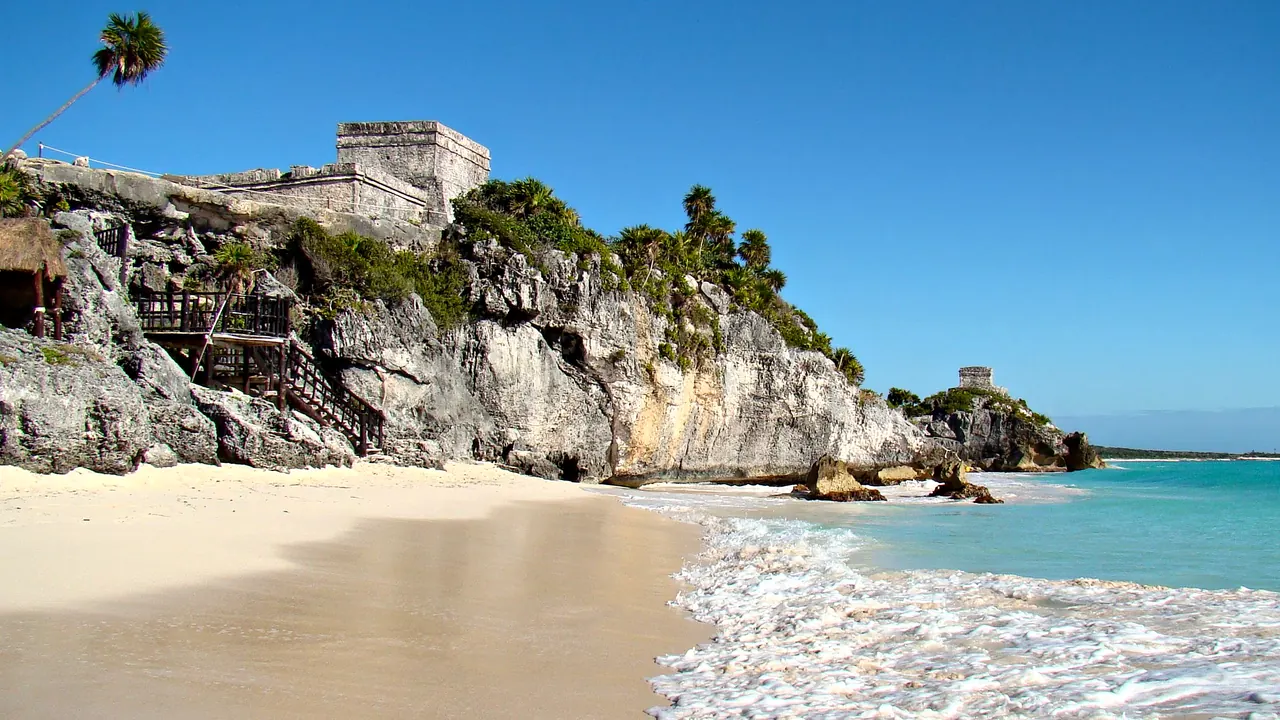
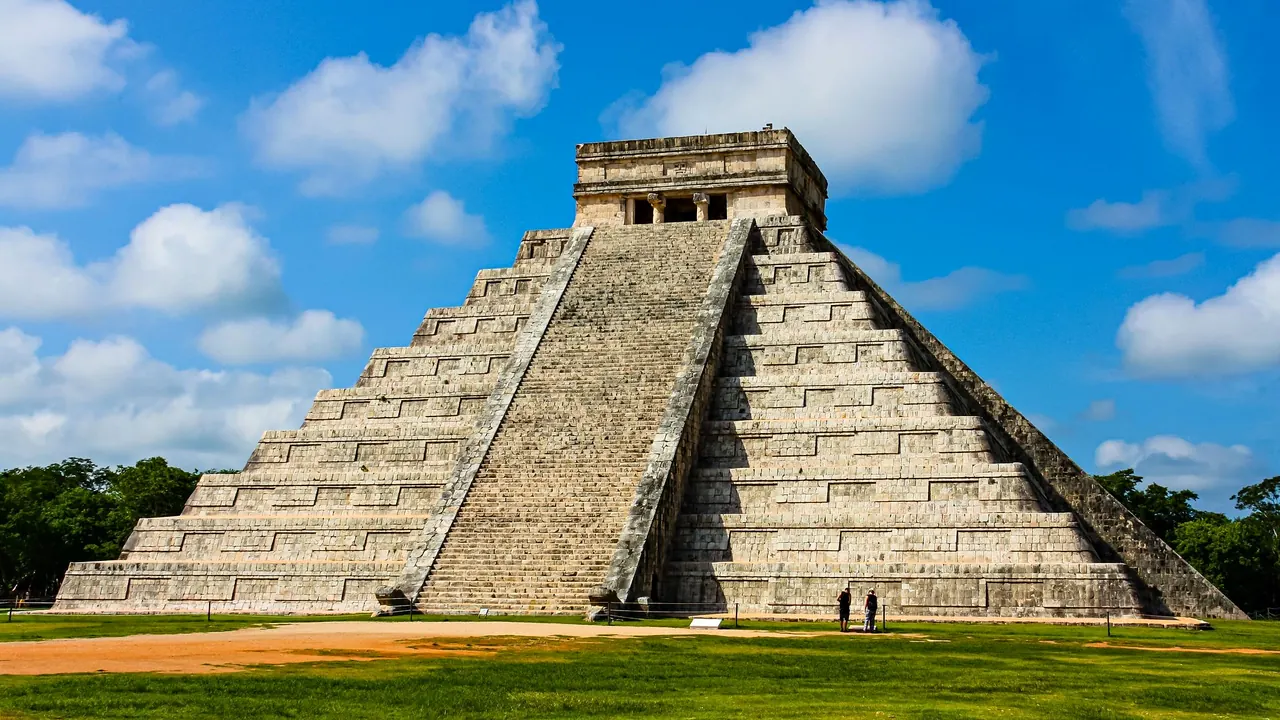
Photos: Tulum by Bjørn Christian Tørrissen, CC BY-SA 3.0, cropped; Yucatan by Maciej Cisowski, Pexels License.
Tulum or Yucatan?
Our verdict in twelve categories, each scored against the same fixed benchmark cities, and the climate month by month, so you can choose for your trip.
Choose Tulum for
- wellness
- beaches
- nightlife
Tulum is the pick for a trip built around the sea. You get the pale Caribbean sand running south from the cliff-top ruins, cenotes and reef for snorkelling, yoga shalas and spas behind the dunes, and DJ nights in jungle clearings. It suits couples and groups of friends who want to stay by the water and slow down, and who don't mind paying resort prices and hiring a car or booking tours to get anywhere.
Choose Yucatan for
- culture and sights
- prices
- live music and the arts
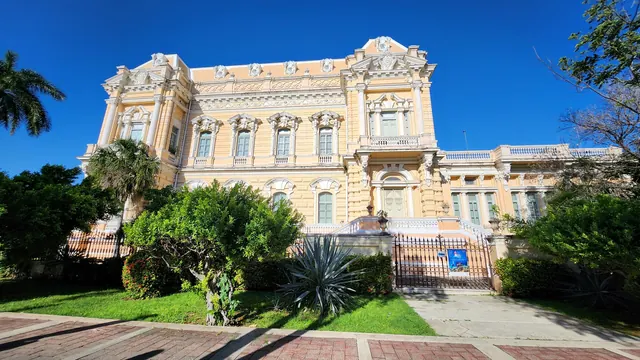
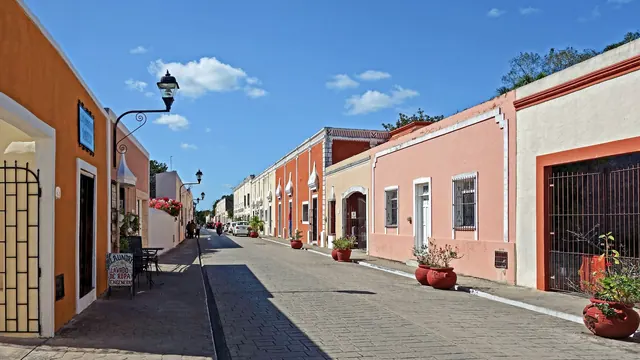
Travellers who come for the Maya world and the cooking will get more from Yucatan. Chichen Itza, Uxmal and the Puuc sites sit alongside colonial Mérida, yellow Izamal and Valladolid, so a week fills easily. Yucatecan food is at its best in Mérida's markets, buses link the towns, and money goes much further. The trade-offs are a greenish Gulf coast that plays only a small part, hotter days and a calmer evening scene.
Scoreboard
Twelve categories on one fixed scale from 0 to 100. The shaded stretch is the gap between the two.
Your match
Pick a travel style or drag the sliders, and both match scores follow your weighting.
Wins on wellness and beaches with your weighting.
Wins on culture and sights and prices with your weighting.
What matters to you?
Category by category
What the scores mean for a trip.
Beaches & swimming
The sea is Tulum's whole reason for being, and here it is far ahead. Pale sand and dunes run south from the Maya ruins towards Sian Ka'an, and the water turns from milky turquoise to deep blue. The quieter southern strip and the sheltered bay at Akumal add variety. Sargassum is the one real risk.
Yucatan's coast faces the Gulf. Progreso, Sisal, Celestún and El Cuyo have long, shallow, calm water, but it is often greenish and the winter north winds can spoil days. The best swimming there is in the freshwater cenotes around Homún and Cuzamá. For a vacation centred on the sea, they are no substitute for Tulum.
Food & drink
Yucatan eats much better. Mérida is where its own cuisine is cooked best. You get cochinita tacos for breakfast, lunch counters in the Lucas de Gálvez and Santiago markets, dishes such as relleno negro and papadzules, and the Lebanese-Yucatecan kibis you won't find on the coast.
In Tulum, food on the beach road is mostly about candlelit, fire-cooked settings for visitors, and many menus repeat the same ceviche and smoothie bowls. The cheaper and more Mexican eating is at the taco stands and fondas in town, but the range stays narrow.
Culture & sights
This is where the two differ most. Tulum's one major sight is the walled Maya port above the sea, a superb setting that you can see in a couple of hours. Apart from that, the town is a modern grid with no museums worth the name.
Yucatan is the heartland Tulum's visitors make trips into. It has Chichen Itza, the stone mosaics of Uxmal and the quiet Puuc sites of Kabah, Sayil and Labná. On top of the ruins there is a full colonial layer: Mérida's cathedral built from temple stone, the mansions on Paseo de Montejo, Izamal's great convent and the old henequen haciendas.
Nightlife
Tulum has the bigger night out, and it has a particular style: electronic music in jungle clearings, beach clubs that run from late afternoon into the night, and full-moon parties. It is busiest in winter and at New Year. Away from those events there are just a few mezcal bars on the main avenue.
Yucatan's evenings centre on Mérida and are social rather than wild. People sit out in the plazas after the heat breaks, and the cantinas around Calle 60 bring botanas with each round. The colonial towns and coast villages are quiet by late evening.
Nature & outdoors
Both sit on the same flat limestone with no hills to climb, and both are riddled with cenotes, but Tulum gets more out of it. Gran Cenote, Dos Ojos and the flooded caves around them are among the world's great places for cavern snorkelling and cave diving, all a short ride from town. To the south, Sian Ka'an adds lagoons, mangroves and Maya-built channels to float down, and the reef lies just off the beach, close enough to snorkel without a long boat trip.
Yucatan's reef, Alacranes, lies far out in the Gulf beyond Progreso, so reaching it is a serious expedition rather than a morning's swim. The region's outdoor strength is on the coast instead. The mangrove reserves at Celestún and Ría Lagartos, with flamingo flocks, crocodiles and pink salt flats, make it the better choice for birders, and kayaking in the estuaries and cycling between cenote villages fill other days. In both places the heat cuts long outings short for much of the year.
Day trips
Yucatan is the better base for exploring, because it has two hubs. From Mérida you can do the Puuc route, Izamal, the ports of Celestún and Sisal, and Campeche for a long day. From Valladolid, Ek Balam and Río Lagartos are close, and Cobá and the Caribbean are within reach.
Tulum's outings are good but more spread out. Cobá and Muyil are near, Akumal and Playa del Carmen are up the coast, and there are ferries to Cozumel. Many of its best trips, such as Chichen Itza and Valladolid, mean two hours each way into Yucatan itself.
Good for families
Children do well in both, in different ways. Tulum gives them warm sea, turtles in the shallows at Akumal and the eco-parks at Xel-Ha and Xcaret, with lazy rivers and shows. However, much of the beach strip is aimed at couples and late parties.
Yucatan is for families who like adventure: flamingo boat trips, iguanas sunning on the ruins, very shallow Gulf water for small swimmers, and Mérida's plazas full of local families on weekend evenings. It has fewer attractions built for children and longer, hotter car days to the sites.
Getting around
Yucatan is noticeably easier. Mérida's flat historic centre is walkable early and late in the day, comfortable buses link Mérida, Valladolid, Izamal and the main ruins, and the roads are straight and well kept for anyone who drives.
Tulum is strung along a highway, with the beach several kilometres from town and the hotel strip trailing south. Bicycles, colectivo vans and expensive taxis are the options, the train station is outside town, and most visitors end up hiring a car or booking tours.
Shopping & style
Neither has fashion streets, but Yucatan offers more to buy. Mérida's Lucas de Gálvez market is crowded and good for browsing, with hammocks, guayabera shirts, huipiles and jipi palm hats. The galleries near Paseo de Montejo and the workshops in Izamal and Valladolid add more.
Tulum sells mainly one look: linen, macramé and woven baskets in pricey boutiques along the beach road. Its main avenue has the better-priced silver and Mexican crafts.
Affordability
The gap is wide. Tulum is one of the costliest places to stay in Mexico. Beach-road hotels, restaurants, taxis, beach clubs and separate entry fees for each cenote all add up. A budget stay means a guesthouse in town and cycling to the sea.
Yucatan costs far less for a comfortable trip. It has cheap market meals and buses, and good-value rooms in Mérida's and Valladolid's colonial houses. Only the restored haciendas, the boutique mansion hotels and the combined fees at the big ruins push the bill up.
Live music & performing arts
Yucatan has a real performance life, and Tulum barely has one. Most nights, Mérida's plazas put on free trova serenades, jarana dancers balancing trays on their heads, and the fire-lit Maya ballgame in front of the cathedral. The Teatro José Peón Contreras and a symphony orchestra cover the formal side.
In Tulum, live music means bar bands on the main avenue and musicians playing over DJ sets. Traditional dance appears mostly as staged shows at the eco-parks.
Wellness & relaxation
Tulum is built around wellness. Yoga shalas, retreat hotels, open-air spas, sound baths and temazcal ceremonies fill the beach road and the jungle behind it. To keep it peaceful, choose somewhere well away from the party venues.
Yucatan offers a quieter kind of rest. Old henequen haciendas have spas in their former machine rooms and pools among ruined walls, and they also run temazcal sessions. Days in Izamal and Valladolid follow a slow pattern of early walks, long lunches and a siesta.
When should you go?
Pick your month. The climate figures are measured averages, not a forecast.
Tulum in July
Yucatan in July
Daytime high, °C
Rainfall in the month, mm
Where the figures come from
Tulum has no weather station within reach, so its figures come from a gridded climate model rather than a measured record, and read a broad area rather than one spot.
Yucatan's temperatures are measured 65 km from the centre, at Merida / lic Manuel Crecencio.
Yucatan has no rain gauge within 25 km of the centre, so its rainfall comes from a gridded climate dataset read at the destination rather than from a gauge further away.
Temperature and rainfall are climate normals, averaged over the years shown. Tulum: 2001-2020 normals, NASA POWER reanalysis grid, no weather station within 90 km. Yucatan: 1991-2020 normals, Merida / lic Manuel Crecencio (65.4 km from centre).
Tulum is warm and fit for the beach all year, and the sea is warm enough for a long swim in every month. The best stretch is December to April, when it is dry, the heat is easy and walking and cycling are pleasant. Rain builds from May, and the wettest months are September and October, which reaches about 208mm. That means heavy downpours rather than lost days, but it is the humid low point of the year.
Yucatan's figures are measured around Mérida, where most visitors stay, and it runs much hotter. In April and May the afternoons reach about 37°C, which makes open ruins and street walking hard work after mid-morning, even though May has the most sunshine. December to February is the time to come, with highs near 30°C, little rain and long sunny days. The rains fall from June to October, much as on the Caribbean side. The Gulf is cooler than Tulum's sea, about 24°C in winter and warmest in September and October at around 28°C, so the beach suits late summer better than the cultural high season.
Which traveller are you?
On a beach and sun trip, Tulum is the clear choice. Its clear turquoise Caribbean, long palm-backed sand and turtles at Akumal are far better than Yucatan's shallow, greenish Gulf shore. Just check the sargassum before booking in the warmer months.
For a culture and arts trip, choose Yucatan. Chichen Itza, Uxmal and the quiet Puuc ruins sit alongside Mérida's cathedral, mansions and free evening performances in its plazas. Tulum has a single cliff-top site that you can see in a morning.
On a trip on a tight budget, Yucatan makes life easier. Market lunches, cheap intercity buses and guesthouses in old colonial houses keep costs low. Tulum is among Mexico's priciest places to stay, and you would need to stay inland and cycle to the sea.
Before you go
| Measure | Tulum | Yucatan |
|---|---|---|
| Official language | Spanish, Nahuatl, Yucatec Maya | Spanish, Nahuatl, Yucatec Maya |
| Currency | Mexican Peso (MXN) | Mexican Peso (MXN) |
| Sockets | AB127 V, 60 Hz | AB127 V, 60 Hz |
| Driving side | Right | Right |
| Time zone | UTC-5 | UTC-6 |
| Emergency number | 911 | 911 |
| Elevation | 5 m | - |
| Main airport | Felipe Carrillo Puerto International Airport Tulum (TQO)21 km from centre9 non-stop destinations | Manuel Crescencio Rejón International Airport (MID)22 non-stop destinations |
| Public holidays this year | 9 days | 9 days |
By the numbers
| Measure | Tulum | Yucatan |
|---|---|---|
| Population | 33,374 | 2,320,898 |
| Museums within 10 km | 0 | - |
| UNESCO World Heritage sites within 50 km | 0 | - |
| Swim season, months above 21 °C | 12 months | 12 months |
Where else could you go?
Every comparison below shares a destination with this one, so you can follow Tulum or Yucatan somewhere new.
- Akumalvs Tulum
- Playa del Carmenvs Tulum
- Cozumelvs Tulum
- Valladolid, Mexicovs Tulum
- Cancunvs Tulum
- Isla Mujeresvs Tulum