Mexico
Merida
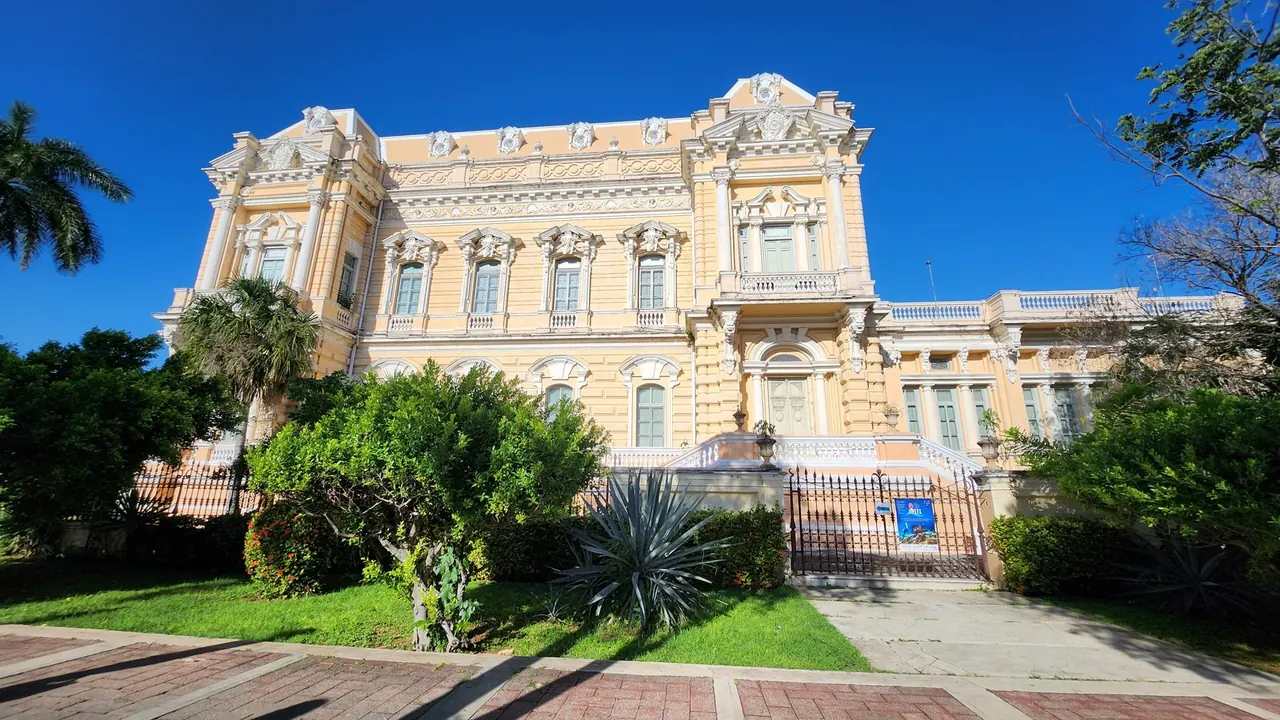
The yellow Palacio Canton on Paseo de Montejo
- Day trips80
- Affordable cities75
- Food & drink72
Photo: Mariposa2723, CC BY 4.0, cropped
Match
56
Every category weighted equally
- Beach & sun55
- Culture & arts58
- Food & nightlife56
- Family trip57
- Outdoors59
- Relax & unwind55
- Shopping & style55
- On a budget58
Merida in twelve categories
Our verdict on each, scored 0 to 100 against the same fixed benchmark cities, so a score means the same thing on every page.
Beaches & swimming. Scores 50 out of 100.
Food & drink. Scores 72 out of 100.
Culture & sights. Scores 64 out of 100.
Nightlife. Scores 42 out of 100.
Nature & outdoors. Scores 48 out of 100.
Day trips. Scores 80 out of 100.
Good for families. Scores 50 out of 100.
Getting around. Scores 45 out of 100.
Shopping & style. Scores 50 out of 100.
Affordability. Scores 75 out of 100.
Live music & performing arts. Scores 52 out of 100.
Wellness & relaxation. Scores 40 out of 100.
Merida category by category
Beaches & swimming
50Merida sits inland, and its beach is Progreso, the port town about 40 minutes north on the Gulf of Mexico. The sand is wide and the water warm, often near 28°C in summer, but the sea is shallow, calm and more green than turquoise, and the shore is flat and plain. Many local families drive up at weekends and through the summer school break. Further along the coast, Chelem and Telchac are quieter.
The swimming most visitors remember is in the cenotes, the freshwater sinkholes scattered across the countryside, where clear, cool water fills limestone caverns and open pools. For a stay built around white sand and Caribbean colour, the Riviera Maya coast is a separate trip several hours east.
Food & drink
72Yucatecan cooking is its own cuisine, shaped by Maya technique, achiote, sour orange and habanero, and Merida is where to eat it. Cochinita pibil, pork slow-cooked in banana leaves, is a breakfast dish here, eaten in tortas and tacos from market stalls. Panuchos and salbutes, sopa de lima, relleno negro, papadzules and queso relleno fill out the menus of family loncherias and grand old dining rooms in restored townhouses.
The Lucas de Galvez and Santiago markets are the places for cheap local breakfasts and lunches, and in the evening marquesita carts sell crisp rolled crepes filled with cheese around the main squares. The range of international cooking and high-end dining is modest, and the heat pushes eating towards early mornings and late evenings.
Culture & sights
64Merida's centre is a large grid of colonial streets painted in ochre, pink and blue, laid over the Maya city of T'ho in the 16th century. The Plaza Grande holds the cathedral of San Ildefonso, built from the stones of Maya temples and one of the oldest on the American mainland, the Casa de Montejo with its carved conquest facade, and the Palacio de Gobierno, whose stairwell murals tell the story of the Yucatan.
North of the centre, Paseo de Montejo is lined with French-style mansions built on the wealth of the henequen boom, one of them the Palacio Canton museum. The Gran Museo del Mundo Maya is the best place to understand the region before visiting the ruins. The great archaeological sites themselves lie outside the city.
Nightlife
42Evenings in Merida are lived outdoors once the heat breaks, and the centre fills with people after dark. Going out mostly means mezcal bars and cocktail terraces along Calle 60 and around Santa Lucia, rooftop bars over the old town, and traditional cantinas where drinks come with a run of free botanas, small plates of local snacks. A handful of clubs and late bars keep things going past midnight, especially at weekends, and there is a student crowd. It is a sociable, relaxed scene rather than a big one, and few visitors come for it.
Nature & outdoors
48The land around Merida is a flat limestone plain covered in low dry forest, with no hills or rivers above ground. Its signature landscape is underground: thousands of cenotes and caverns, many reached on a bicycle or by horse-drawn rail cart along old hacienda tracks around Cuzama and Homun. The Celestun biosphere reserve, about an hour and a half west, takes visitors by boat through mangroves to see large flocks of pink flamingos, and the Gulf coast has lagoons and good birdwatching. There is little hiking worth the name, and from April to September the heat limits activity to early mornings.
Day trips
80Merida is the classic base for the Maya world. Uxmal, about an hour south, is one of the most elegant Maya cities, and the Ruta Puuc links it to the smaller sites of Kabah, Sayil and Labna. Chichen Itza, with its great pyramid, is about two hours east and pairs with the colonial town of Valladolid. Dzibilchaltun, with its temple and cenote, is barely half an hour away, and Mayapan is an easy morning.
Izamal, about an hour east, is a small town painted entirely in yellow around a vast Franciscan convent built on a Maya platform. Restored henequen haciendas dot the countryside in every direction. A car or a tour makes most of these far easier than the long-distance buses.
Good for families
50Merida is calm and easy-going, and Mexican culture welcomes children everywhere. The Parque del Centenario has a free zoo and playground, the Animaya park on the edge of town is a larger zoo, and the evening squares, with balloon sellers and street snacks, are good for families. Cenotes and the calm, shallow sea at Progreso suit children well. Against that, the heat is fierce for much of the year, pavements are narrow and uneven, and the big attractions are ruins in open sun. There are no theme parks or major attractions built for children.
Getting around
45The historic centre is a numbered grid, even streets running north to south and odd ones east to west, which makes it hard to get lost. Most sights are within walking distance of the Plaza Grande, though narrow pavements, high kerbs and the midday heat make walking hard work. City buses are cheap but the routes are confusing for visitors, so most people use taxis or ride-hailing for anything beyond the centre. Long-distance buses run to Chichen Itza, Valladolid and Progreso, but the Puuc sites, cenotes and haciendas are much easier with a hire car, and driving on the flat Yucatan roads is straightforward.
Shopping & style
50Merida is the place to buy Yucatecan crafts. Hammocks, woven in cotton or nylon in every size, are the local speciality, along with guayabera shirts, fine palm-fibre Panama hats from the nearby town of Becal, and huipiles embroidered with flowers. The Lucas de Galvez market and the surrounding streets are crowded and chaotic, with crafts mixed in among household goods, while galleries and design shops in the restored houses of the centre sell finer work. For brands and department stores, locals head to the large malls in the north of the city.
Affordability
75Merida is an inexpensive city to stay in. Market meals and street food are very cheap, cantina snacks come free with drinks, taxis and buses cost little, and most museums and the many free cultural evenings ask little or nothing. Accommodation ranges from simple guesthouses to boutique hotels in restored colonial houses around a courtyard pool, which cost much more but are still reasonable for the quality. The larger costs are hiring a car and the entrance fees at the major archaeological sites.
Live music & performing arts
52Merida's city council puts on free open-air performances in the squares through the week, and they are the heart of the scene. Jarana dancers in white embroidered dress perform the Yucatecan vaqueria, trova trios sing romantic ballads at the long-running serenade in the Parque Santa Lucia, and the Mayan ballgame is re-enacted in front of the cathedral. The Teatro Jose Peon Contreras, a grand turn-of-the-century theatre, hosts the Yucatan Symphony Orchestra, ballet and touring productions. Beyond that, live music means small venues and bars, and there is little opera or major theatre.
Wellness & relaxation
40Merida has no bathing culture of its own, and wellness here means hotel spas, especially in the restored haciendas outside town, some of which offer treatments drawing on Maya traditions. What the city offers instead is a slow pace: shuttered afternoons through the worst heat, evenings in the squares, and courtyard hotels with small plunge pools and hammocks strung between the columns. The centre itself can be loud with traffic, and from April to June the heat is exhausting rather than restful.
When should you go?
Pick a month to see what it is like. The climate figures are measured averages, not a forecast.
Merida in July
Daytime high, °C
Rainfall in the month, mm
The whole year
Shaded against this city’s own year: the deepest cell is its best month for that figure and the palest its weakest.
Temperature and rainfall are climate normals, averaged over the years shown. Merida: 1991-2020 normals, Merida / lic Manuel Crecencio (5.1 km from centre).
Before you go
| Measure | Merida |
|---|---|
| Official language | Spanish, Nahuatl, Yucatec Maya |
| Currency | Mexican Peso (MXN) |
| Sockets | AB127 V, 60 Hz |
| Driving side | Right |
| Time zone | UTC-6 |
| Emergency number | 911 |
| Elevation | 12 m |
| Main airport | Manuel Crescencio Rejón International Airport (MID)5 km from centre22 non-stop destinations |
| Public holidays this year | 9 days |
By the numbers
| Measure | Merida |
|---|---|
| City population | 892,363 |
| People per km² | 1,010 |
| Museums within 10 km | 5 |
| UNESCO World Heritage sites within 50 km | 0 |
| Swim season, months above 21 °C | 12 months |
Compare Merida with
Every comparison with a written verdict behind it.