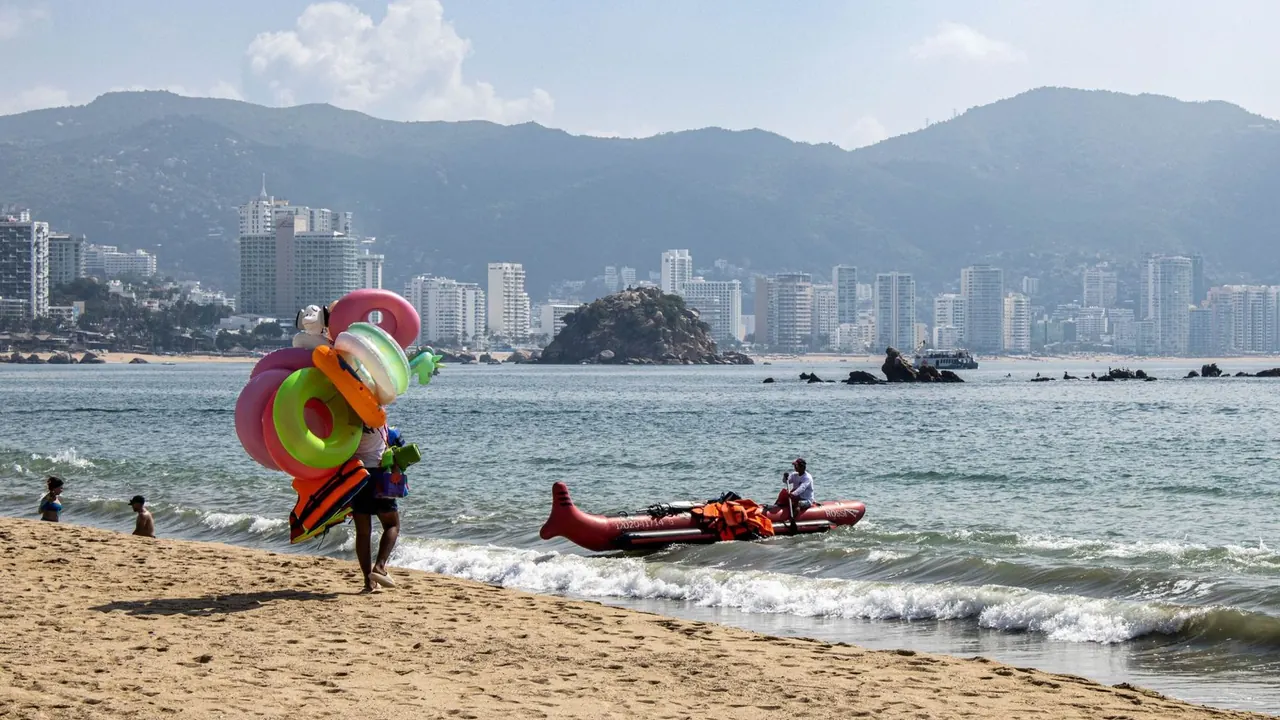
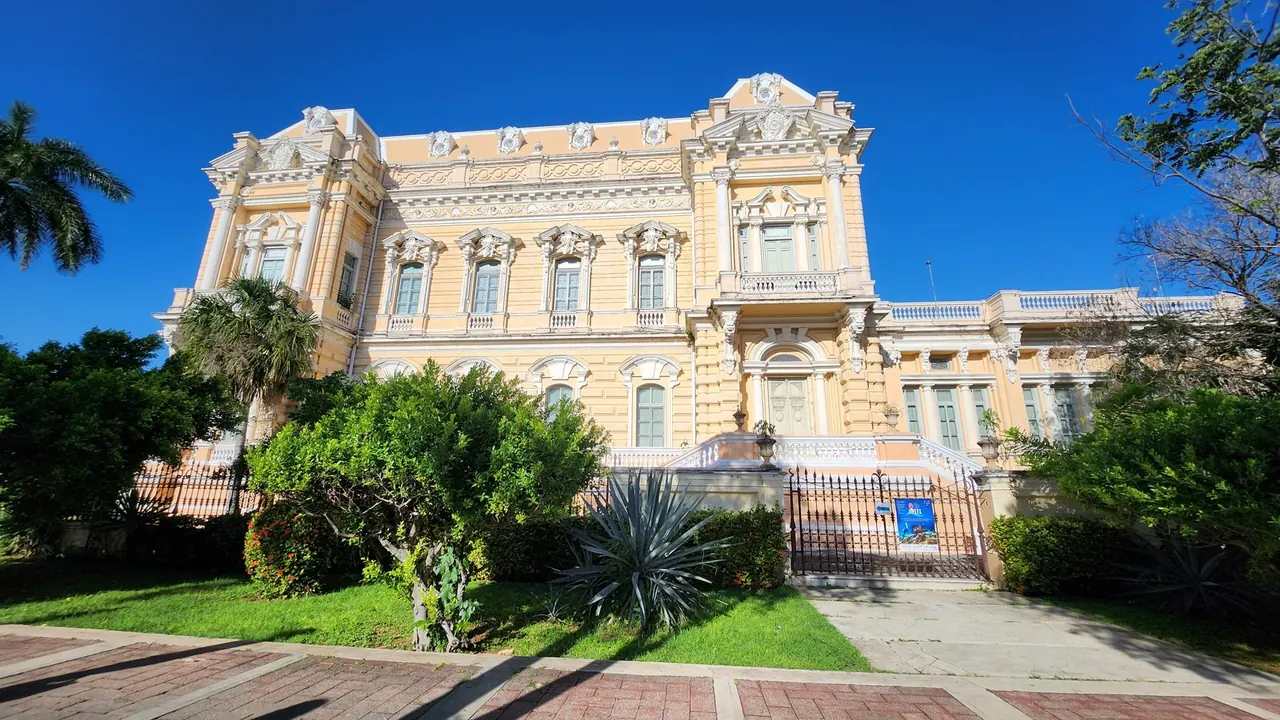
Photos: Acapulco by Felicia Navarrete, Pexels License; Merida by Mariposa2723, CC BY 4.0, cropped.
Acapulco or Merida?
Our verdict in twelve categories, each scored against the same fixed benchmark cities, and the climate month by month, so you can choose for your trip.
Choose Acapulco for
- beaches
- nightlife
- nature and the outdoors
Acapulco suits a trip where the sea comes first. The bay's sandy beaches, the sheltered coves at Caleta and Puerto Marqués and warm water in every month make it easy to swim, eat grilled fish and go out late along the Costera. Its resorts also make it a simple choice if you want to stay in one place. It is a poor base for sightseeing, so go for the water rather than for history.
Choose Merida for
- day trips
- culture and sights
- live music and the arts
Travellers who want to explore and learn will get more from Merida. It has a colonial centre, its own regional cooking and free evening performances in the squares, and Uxmal and Chichen Itza are close by, so a week there has plenty of variety. Cenotes take the place of a beach. Expect fierce heat and a plain, shallow sea at Progreso, and evenings that are sociable rather than wild.
Scoreboard
Twelve categories on one fixed scale from 0 to 100. The shaded stretch is the gap between the two.
Your match
Pick a travel style or drag the sliders, and both match scores follow your weighting.
Wins on beaches and nightlife with your weighting.
Wins on day trips and culture and sights with your weighting.
What matters to you?
Category by category
What the scores mean for a trip.
Beaches & swimming
Acapulco has a real city beach and Merida does not. Sand runs right around Acapulco's bay, from Condesa and Icacos on the hotel strip to the calm coves of Caleta and Caletilla, with Puerto Marqués and Roqueta Island for clearer water. Only the open-ocean stretches at Revolcadero and Pie de la Cuesta are too rough for swimming.
From Merida, reaching the sea means a drive of about 40 minutes to Progreso, where the Gulf is warm, shallow and calm but plain to look at. What Merida has instead are the cenotes, cool freshwater pools in limestone caverns. They make a memorable swim, but not a beach day.
Food & drink
Acapulco's best cooking is coastal Guerrero food and worth seeking out: pescado a la talla grilled over wood at Barra Vieja, ceviche in a tomato sauce, and pozole verde on Thursdays. Away from those dishes, the Costera is mostly chains and tourist seafood places.
Merida is the better place to eat. Yucatecan food is a distinct regional cuisine and this is its home city. You can have cochinita pibil for breakfast in the Lucas de Galvez and Santiago markets, sopa de lima and relleno negro in the dining rooms of old townhouses, and marquesitas from carts in the squares at night.
Culture & sights
Acapulco's sights fit into a single day. The main ones are the Fuerte de San Diego and its history of the Manila galleons, the divers at La Quebrada and Diego Rivera's mosaics on the Casa de los Vientos. Much of its heritage is its mid-century glamour as a resort, which you see in the hillside villas and old hotels rather than in museums.
Merida offers far more. Its colonial grid, laid over the Maya city of T'ho, holds one of the oldest cathedrals on the American mainland, the carved Casa de Montejo, the murals on the stairwell of the Palacio de Gobierno and the mansions of Paseo de Montejo. The Gran Museo del Mundo Maya explains the region before you visit the ruins.
Nightlife
Acapulco is the place to stay out late. Beach bars, terraces and big hillside clubs along the Costera Miguel Alemán stay open until dawn, and on long weekends and in Easter and Christmas weeks the whole strip becomes one party. The music is mainstream, and midweek in quiet seasons it can feel empty.
Evenings in Merida are smaller and gentler. They mean mezcal bars along Calle 60, rooftop terraces over the old town and cantinas that serve free botanas with each round. The scene suits talking over drinks more than dancing.
Nature & outdoors
Both have plenty to see outdoors, though of very different kinds, and neither is hiking country. Acapulco's nature is the sea and its edges: the horseshoe bay seen from the Scenic Highway, snorkelling and diving off Roqueta Island, fishing for sailfish and marlin, and the mangroves of Coyuca Lagoon.
Merida's is mostly underground. Its flat limestone plain hides thousands of cenotes, which you reach by bicycle or by old rail cart around Cuzama and Homun. The Celestun reserve has boat trips through the mangroves to see flocks of pink flamingos.
Day trips
Acapulco works poorly as a base for day trips. Its outings are half days on the edges of the city, such as the lagoon at Pie de la Cuesta and the grilled fish at Barra Vieja. Taxco, the obvious cultural trip, is around three hours away and better done with an overnight stay.
Merida is the opposite, a classic base for exploring the Maya world. Uxmal and the smaller Puuc sites lie about an hour south, the same distance as the yellow convent town of Izamal to the east, and Chichen Itza with Valladolid is about two hours away. Dzibilchaltun, with its temple and cenote, is barely half an hour out, and restored henequen haciendas lie in every direction.
Good for families
Neither is an especially easy place to take children, and the difference is in the kind of stay. Acapulco suits a resort stay, with pools and kids' clubs, the CICI water park and the calm coves of Caleta and Caletilla. The open-ocean surf is dangerous, though, and most families end up staying inside the hotel.
Merida has no water park or theme park. Instead, children get the free zoo in the Parque del Centenario, Animaya, the evening squares with balloon sellers, the cenotes and the gentle sea at Progreso. Ruins in open sun and narrow pavements are harder going for small children.
Getting around
Acapulco is a long city stretched along the Costera Miguel Alemán. Buses and taxis run its whole length, but the old town, the hotel strip and Diamante are too far apart to walk between, so most visitors rely on taxis, especially after dark.
Merida is easier. Its numbered street grid makes finding your way simple, and most sights are a walk from the Plaza Grande, even if the heat and high kerbs slow you down. For the ruins and cenotes, a hire car on the flat, easy roads works best.
Shopping & style
Both cities sell crafts, but Merida does it better. Acapulco's artisan market gathers Taxco silver, Olinalá lacquerware and Guerrero embroidery of mixed quality. Beyond that, there are beachwear stalls on the Costera and chain stores in the malls of Diamante.
Merida sells what its own region makes: hammocks in every size, guayabera shirts, palm-fibre Panama hats from Becal and embroidered huipiles. You can buy them in the chaotic Lucas de Galvez market or, for finer work, in galleries in the restored houses of the centre.
Affordability
Both are inexpensive by international standards, and the difference is in where the costs fall rather than how high they are. In Acapulco, a beach-view room in an older Costera hotel and seafood lunches cost little. Prices climb in Diamante and Las Brisas and over Easter, Christmas and long weekends.
In Merida, market meals, free cantina snacks and free cultural evenings keep daily spending low, and the courtyard hotels in colonial houses are fair value for their quality. The bigger costs are a hire car and the entry fees at the major ruins.
Live music & performing arts
Live performance in Acapulco is informal. It means mariachi bands and guitar trios in the seafood restaurants, folk shows in the hotels and touring pop stars in Diamante, with only occasional concerts by the Acapulco Philharmonic.
Merida has a proper programme, and much of it is free. Through the week the city puts on jarana dancing, trova serenades in the Parque Santa Lucia and a re-enactment of the Mayan ballgame in front of the cathedral. The Teatro Jose Peon Contreras hosts the Yucatan Symphony Orchestra and ballet.
Wellness & relaxation
Neither city has a bathing tradition, so rest depends on where you stay. In Acapulco that means resort spas in Diamante and Las Brisas, clifftop hotels with pools above the bay, and massages on the beach. The Costera is noisy, though, and long weekends crowd the sand.
Merida is the more relaxing of the two. It has shuttered afternoons, courtyard hotels with plunge pools and hammocks, and hacienda spas outside town with treatments drawing on Maya traditions. Avoid April to June, when the heat is draining.
When should you go?
Pick your month. The climate figures are measured averages, not a forecast.
Acapulco in July
Merida in July
Daytime high, °C
Rainfall in the month, mm
Temperature and rainfall are climate normals, averaged over the years shown. Acapulco: 1991-2020 normals, Acapulco, Gro. (5.9 km from centre). Merida: 1991-2020 normals, Merida / lic Manuel Crecencio (5.1 km from centre).
Acapulco is hot all year, with daytime highs that barely move from about 33°C, so the main thing to plan around is rain. From November to May the air is dry, the sun is at its strongest and the sea stays near 30°C, so almost any week suits a beach trip. From June to October the rainy season brings heavy downpours, peaking in September at close to 290mm. The sea stays warm through it, but the water in the bay can turn murky.
Merida's weather changes more through the year. December to February are the most comfortable months for walking the streets and the ruins, with highs around 30°C and little rain. The heat then builds to 37°C in April and May, which is too hot for midday sightseeing. Rain arrives in June and lasts into October, a little less heavy than on the Pacific coast. The Gulf at Progreso is warmest from August to October and noticeably cooler in winter.
Which traveller are you?
On a beach and sun trip, Acapulco is the clear choice. Its bay has a string of sandy beaches and warm sea all year, sheltered swimming at Caleta, Caletilla and Puerto Marqués, and boats to Roqueta Island. Merida offers only the flat, greenish shallows of Progreso.
For a culture and arts trip, Merida wins easily. The cathedral and Casa de Montejo on the Plaza Grande, the Gran Museo del Mundo Maya, nightly folk dance and trova in the squares, and Uxmal within reach outweigh Acapulco's fortress and cliff divers.
For a short city break, Merida is easier to enjoy in a few days. The centre is a compact numbered grid with most sights a walk from the Plaza Grande. Acapulco is a long strip along the Costera, and you need taxis to get between its neighbourhoods.
Before you go
| Measure | Acapulco | Merida |
|---|---|---|
| Official language | Spanish, Nahuatl, Yucatec Maya | Spanish, Nahuatl, Yucatec Maya |
| Currency | Mexican Peso (MXN) | Mexican Peso (MXN) |
| Sockets | AB127 V, 60 Hz | AB127 V, 60 Hz |
| Driving side | Right | Right |
| Time zone | UTC-6 | UTC-6 |
| Emergency number | 911 | 911 |
| Elevation | 18 m | 12 m |
| Main airport | General Juan N. Álvarez International Airport (ACA)18 km from centre10 non-stop destinations | Manuel Crescencio Rejón International Airport (MID)5 km from centre22 non-stop destinations |
| Public holidays this year | 9 days | 9 days |
By the numbers
| Measure | Acapulco | Merida |
|---|---|---|
| City population | 658,609 | 892,363 |
| People per km² | 350 | 1,010 |
| Museums within 10 km | 3 | 5 |
| UNESCO World Heritage sites within 50 km | 0 | 0 |
| Swim season, months above 21 °C | 12 months | 12 months |
Where else could you go?
Every comparison below shares a destination with this one, so you can follow Acapulco or Merida somewhere new.