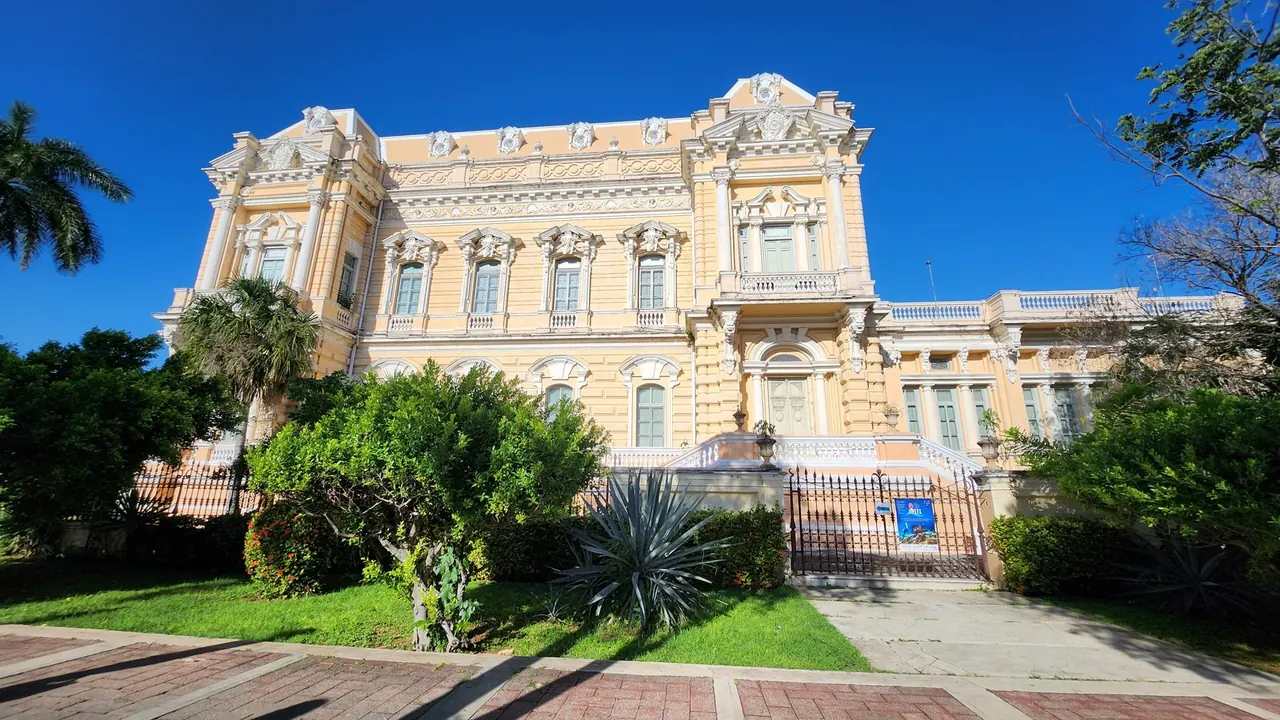
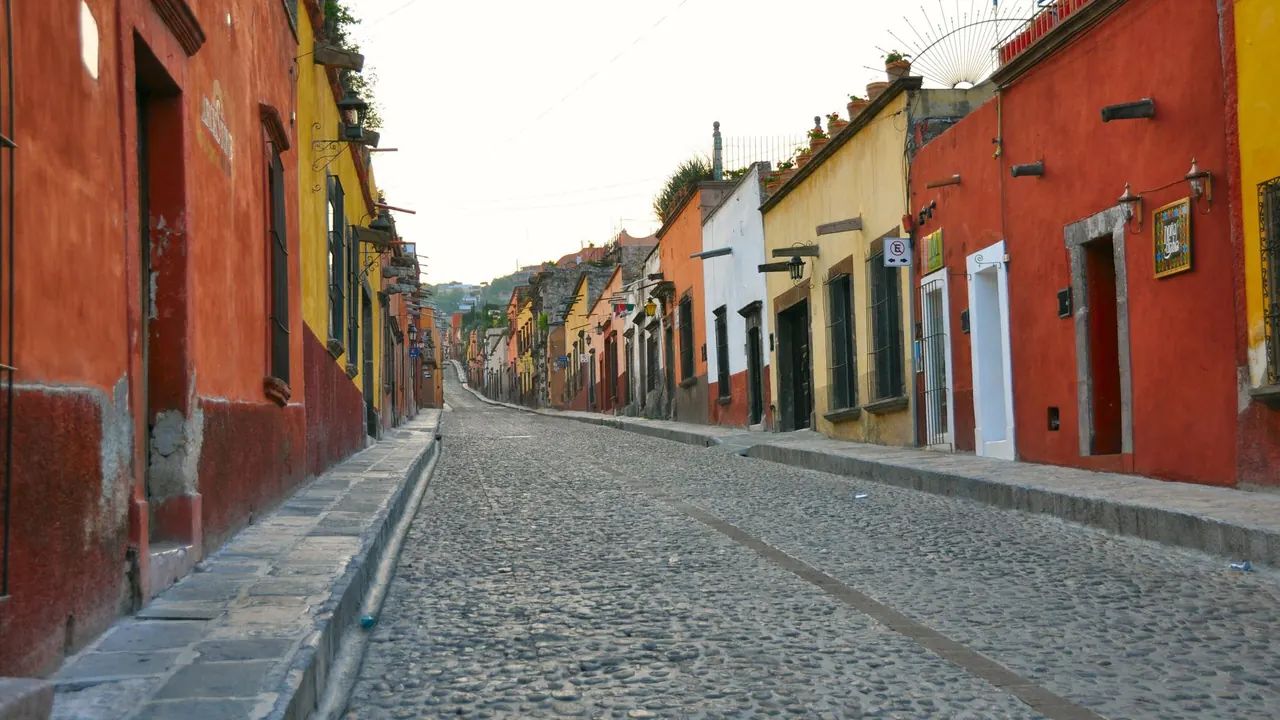
Photos: Merida by Mariposa2723, CC BY 4.0, cropped; San Miguel de Allende by Russ Bowling, CC BY 2.0, cropped.
Merida or San Miguel de Allende?
Our verdict in twelve categories, each scored against the same fixed benchmark cities, and the climate month by month, so you can choose for your trip.
Choose Merida for
- beaches
- prices
- families
Merida suits a traveller who wants the Maya world as much as a colonial town: the ruins at Uxmal and Chichen Itza, cenotes to swim in, a regional cuisine of its own and free music and dance in the squares most evenings. Money goes further here, children are better catered for, and there is a coast within reach. The heat is relentless, though, so plan on early starts and slow afternoons.
Choose San Miguel de Allende for
- wellness
- shopping
- getting around
For a slower, more adult stay, San Miguel de Allende is the better pick. It is a small hillside town of cobbled lanes, galleries and rooftop terraces, with hot springs in the valley and a mild, dry highland climate for much of the year. Expect to pay more and to walk uphill, and save the beach and children's activities for another trip.
Scoreboard
Twelve categories on one fixed scale from 0 to 100. The shaded stretch is the gap between the two.
Your match
Pick a travel style or drag the sliders, and both match scores follow your weighting.
Wins on beaches and prices with your weighting.
Wins on wellness and shopping with your weighting.
What matters to you?
Category by category
What the scores mean for a trip.
Beaches & swimming
Merida at least has a coast. Progreso is about 40 minutes north, with wide sand and warm, shallow Gulf water, and Chelem and Telchac are quieter. It is a plain shore rather than a postcard one, and the swims people remember are in the cenotes.
San Miguel has nothing comparable. It sits on the high plateau far from either sea, so swimming means a hotel pool or a soak in the valley's spring-fed pools. If you want sand, you will need a separate leg of the trip.
Food & drink
Merida has the stronger kitchen because it has a cuisine of its own, built on achiote, sour orange and habanero. You eat cochinita pibil for breakfast at the Lucas de Galvez and Santiago markets, and papadzules or relleno negro in old townhouse dining rooms. The weak spot is range beyond Yucatecan food.
San Miguel eats well for a small town. There are rooftop terraces over the Parroquia, chefs working with Bajío nopal and mesquite, and Guanajuato wines on the lists. Much of it is aimed at foreign residents, though, and the menus start to repeat sooner than Merida's.
Culture & sights
The two are evenly matched, and both are colourful colonial grids, but they offer different things. Merida has more history behind it: a cathedral built from Maya temple stones, the carved conquest façade of the Casa de Montejo, the henequen mansions of Paseo de Montejo, and the Gran Museo del Mundo Maya to prepare you for the ruins.
San Miguel works more as a single whole. It is a UNESCO-listed hillside town of carved doorways and churches, from the pink spires of the Parroquia to San Felipe Neri, with art schools and the unfinished Siqueiros mural at Bellas Artes. It has no major museums, and two unhurried days cover the main sights.
Nightlife
Neither city has a real club scene, and evenings in both revolve around mezcal bars, cantinas and rooftop drinks. Merida's centre fills once the heat breaks, with terraces on Calle 60 and around Santa Lucia, cantinas that serve free botanas, and a student crowd that keeps a few late bars going. San Miguel is quiet on weeknights but busy on Friday and Saturday, when visitors from Mexico City and Querétaro arrive and a few dance bars stay open into the early hours.
Nature & outdoors
Merida's outdoors are unusual rather than scenic. The flat plain hides thousands of cenotes, reached by bicycle or horse-drawn rail cart around Cuzama and Homun, and the mangroves of Celestun, about an hour and a half west, fill with pink flamingos. Neither city offers serious hiking.
San Miguel has the semi-arid Bajío on its doorstep. You can walk the canyon trails of El Charco del Ingenio, ride horses, mountain bike or take a dawn balloon flight. These make a pleasant morning out, but nothing here matches swimming underground or watching the flamingos.
Day trips
Both are excellent bases, and the difference lies in what you go out to see. From Merida it is the Maya world: Uxmal and the Ruta Puuc, Chichen Itza paired with Valladolid, Dzibilchaltun close by and the yellow town of Izamal.
From San Miguel it is colonial Mexico: Guanajuato in its ravine, Querétaro's aqueduct, the murals of Atotonilco, Dolores Hidalgo, Bernal and the high-desert vineyards. In both, a car or a driver opens up far more than the buses do.
Good for families
Merida gives children more to do. There is a free zoo in the Parque del Centenario, the larger Animaya park, cenotes and a shallow sea at Progreso. The heat and the shadeless ruins still tire young ones quickly.
San Miguel is an adult town with almost nothing aimed at children, and its steep cobbles make pushchairs hard work. Older children may enjoy a horse ride, the spring pools or the fireworks at a fiesta.
Getting around
You can walk both centres, but each makes it hard work in its own way. Merida's numbered grid is flat and easy to find your way around, but narrow pavements, high kerbs and the midday heat wear you down. The countryside is best seen with a hire car, and the flat roads are easy to drive.
San Miguel's centre is smaller, but its uneven stone streets climb steeply at about 1,900m, so sturdy shoes matter. The town has no airport, so you arrive by shuttle from Querétaro or León, while Merida has its own international airport.
Shopping & style
Both are craft towns rather than fashion destinations, but they sell different things. Merida is the place for hammocks, guayaberas, Becal palm hats and embroidered huipiles, much of it in the crowded streets around the Lucas de Galvez market, with malls in the north for brands.
San Miguel leans towards art and things for the home. Its stepped Mercado de Artesanías sells tin lanterns, blown glass and silver, design shops offer furniture and talavera, and a former textile mill is full of studios and antique dealers.
Affordability
Merida is clearly the cheaper stay. Market meals cost very little, cantina snacks come free and the evening shows in the squares are free too. Even the courtyard boutique hotels are reasonable for what they offer, and the main expenses are a hire car and entry to the big archaeological sites.
San Miguel is one of Mexico's dearer destinations. Hotels and restaurants around the Jardín are priced for foreign residents and weekenders, and rooms cost most at weekends and during festivals. Street stalls, market lunches and the free pleasure of its churches and streets bring the cost down.
Live music & performing arts
Merida's free performances in the squares give it the richer programme. You can see jarana dancers, hear the trova serenade in the Parque Santa Lucia and watch the Maya ballgame re-enacted before the cathedral, and the Yucatan Symphony Orchestra plays at the Teatro Jose Peon Contreras.
San Miguel has a lot of music for its size, with mariachis on the Jardín every evening, live guitar in many bars and chamber music and jazz festivals in season. Outside those festivals and the big fiestas, though, the formal programme at the Teatro Ángela Peralta is thin.
Wellness & relaxation
San Miguel is made for slowing down. The hot mineral pools and domed grottoes towards Atotonilco are about fifteen minutes away, and the town has temazcal sweat lodges, yoga and day spas, all in dry, mild air.
Merida has no bathing culture, so relaxing there means a hacienda spa or a hammock beside a courtyard plunge pool. Its spring heat and traffic noise make it the less restful of the two.
When should you go?
Pick your month. The climate figures are measured averages, not a forecast.
Merida in July
San Miguel de Allende in July
Daytime high, °C
Rainfall in the month, mm
Where the figures come from
San Miguel de Allende's temperatures are measured 54 km from the centre, at Guanajuato, Gto..
San Miguel de Allende has no rain gauge within 25 km of the centre, so its rainfall comes from a gridded climate dataset read at the city rather than from a gauge further away.
Temperature and rainfall are climate normals, averaged over the years shown. Merida: 1991-2020 normals, Merida / lic Manuel Crecencio (5.1 km from centre). San Miguel de Allende: 1991-2020 normals, Guanajuato, Gto. (53.7 km from centre).
Merida is hot in every month. The most comfortable stretch is December to February, when afternoons are warm rather than fierce and rain is rare. The heat builds through March to a punishing 37°C in April and May, too hot for walking the streets after mid-morning. The rains arrive in June, the wettest month at around 206mm, and heavy showers continue into October. The Gulf at Progreso is warm enough to swim all year and reaches 28°C from August to October, just when the rain is heaviest.
San Miguel's altitude keeps it much milder. Winter days reach about 23°C under dry, sunny skies, ideal for climbing the cobbled streets, and the dry season runs from November to April. April and May are its warmest months but stay well below Merida's heat. The summer rains from June to September are moderate and turn the hills green. In winter both cities work well, but from April to June San Miguel is by far the easier place to be outdoors.
Which traveller are you?
On a family trip with children, Merida is the easier choice. Zoos, evening squares, cenotes and the calm, shallow sea at Progreso give children plenty to do. San Miguel is built around galleries and restaurants, and its steep cobbles are hard going with a pushchair.
For a relaxing and wellness trip, San Miguel wins. Hot spring pools and grottoes towards Atotonilco, temazcal sweat lodges, yoga and day spas, all in a dry, mild climate, make idle days easy. In Merida, wellness mostly means hacienda spas, and the spring heat is draining.
On a tight budget, Merida stretches your money further. Market breakfasts of cochinita pibil, cantina snacks that come free with drinks, cheap taxis and free shows in the squares keep daily costs low. San Miguel's centre is priced for foreign residents and weekend visitors.
Before you go
| Measure | Merida | San Miguel de Allende |
|---|---|---|
| Official language | Spanish, Nahuatl, Yucatec Maya | Spanish, Nahuatl, Yucatec Maya |
| Currency | Mexican Peso (MXN) | Mexican Peso (MXN) |
| Sockets | AB127 V, 60 Hz | AB127 V, 60 Hz |
| Driving side | Right | Right |
| Time zone | UTC-6 | UTC-6 |
| Emergency number | 911 | 911 |
| Elevation | 12 m | 1,900 m |
| Main airport | Manuel Crescencio Rejón International Airport (MID)5 km from centre22 non-stop destinations | Guanajuato International Airport (BJX)77 km from centre22 non-stop destinations |
| Public holidays this year | 9 days | 9 days |
By the numbers
| Measure | Merida | San Miguel de Allende |
|---|---|---|
| City population | 892,363 | 69,811 |
| People per km² | 1,010 | - |
| Museums within 10 km | 5 | 2 |
| UNESCO World Heritage sites within 50 km | 0 | 2 |
| Swim season, months above 21 °C | 12 months | - |
Where else could you go?
Every comparison below shares a destination with this one, so you can follow Merida or San Miguel de Allende somewhere new.