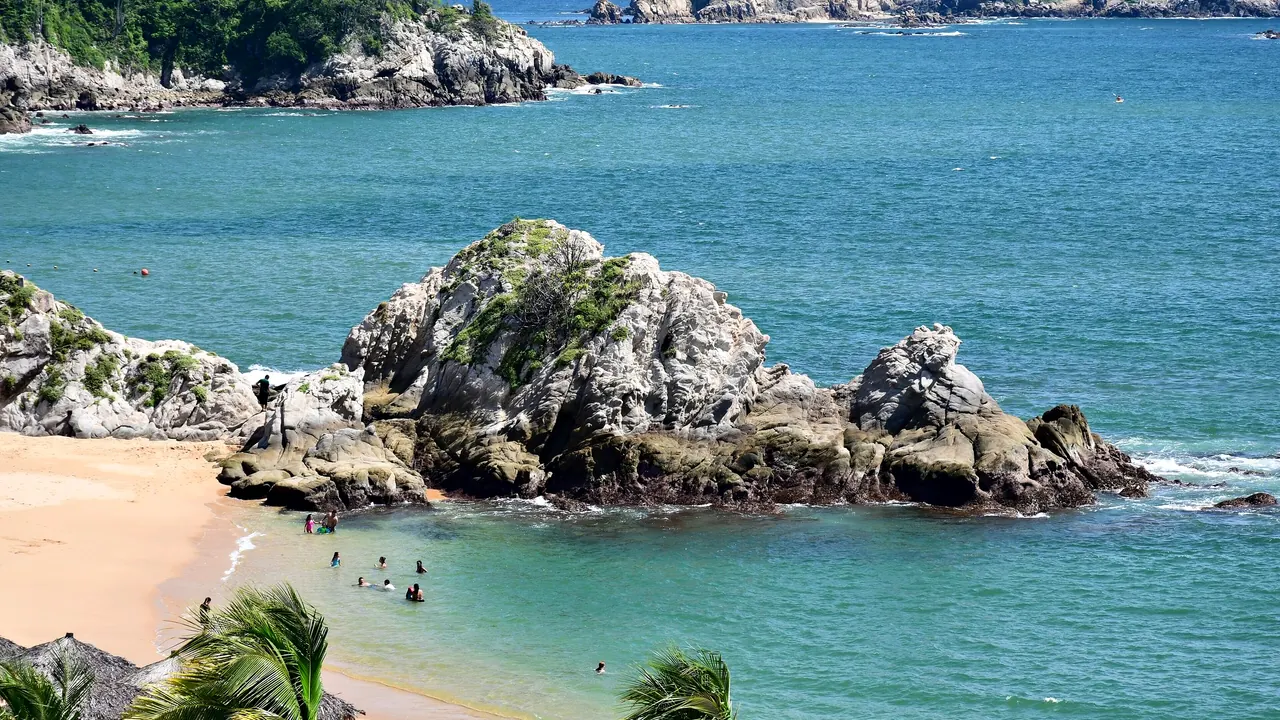
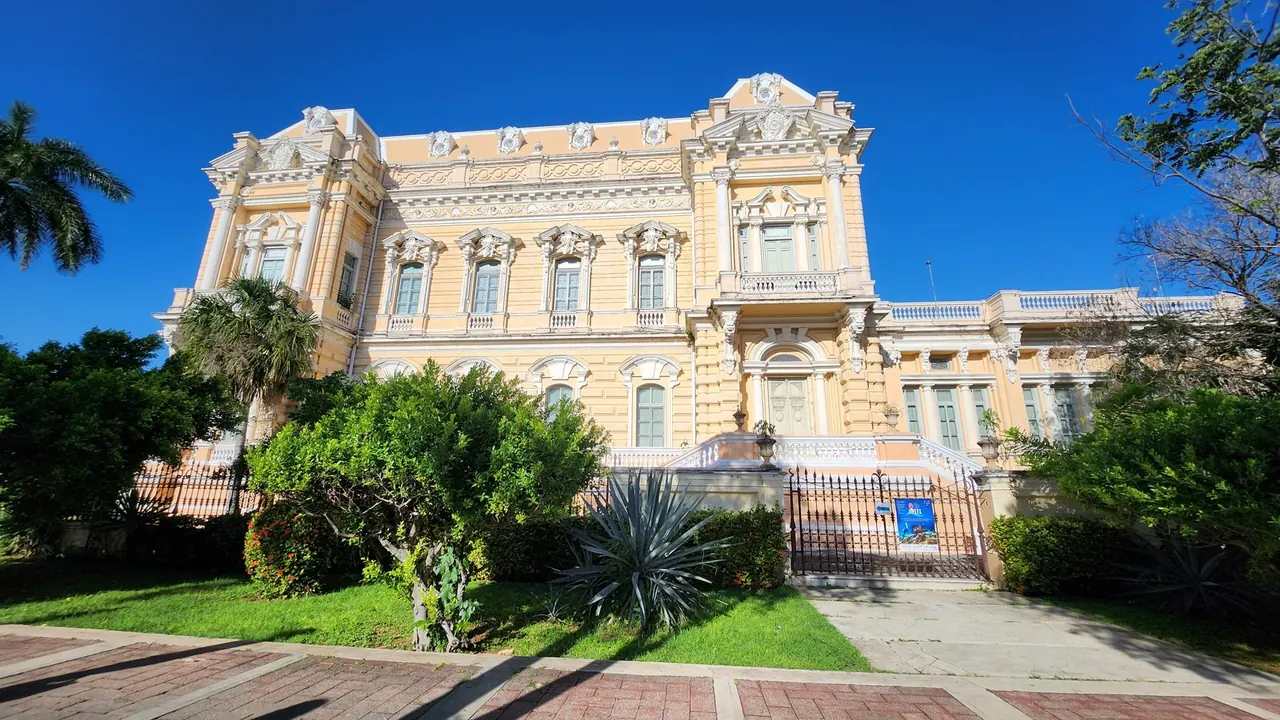
Photos: Huatulco by Gzzz, CC BY-SA 4.0, cropped; Merida by Mariposa2723, CC BY 4.0, cropped.
Huatulco or Merida?
Our verdict in twelve categories, each scored against the same fixed benchmark cities, and the climate month by month, so you can choose for your trip.
Choose Huatulco for
- beaches
- nature and the outdoors
- wellness
Choose Huatulco if the sea is the point of the trip. Its sheltered bays of golden sand, snorkelling over coral at La Entrega and boat trips to coves inside the national park make for an easy, unhurried beach stay. The quiet evenings and temazcal steam baths suit travellers who want to switch off. Little else competes for your time, because sights, shows and shopping are thin.
Choose Merida for
- culture and sights
- live music and the arts
- day trips
Merida rewards the curious traveller who wants a city with a past and the Maya world on the doorstep. The colonial grid around the Plaza Grande, free music and dance in the squares and Yucatecan cooking fill the days in town. Uxmal, Chichen Itza and Izamal make it the better base for a touring trip. The sea is an afterthought here, and a swim in a cenote is the better choice.
Scoreboard
Twelve categories on one fixed scale from 0 to 100. The shaded stretch is the gap between the two.
Your match
Pick a travel style or drag the sliders, and both match scores follow your weighting.
Wins on beaches and nature and the outdoors with your weighting.
Wins on culture and sights and live music and the arts with your weighting.
What matters to you?
Category by category
What the scores mean for a trip.
Beaches & swimming
Huatulco is a beach destination in its own right. It has nine bays of golden sand along the Pacific, and most are calm coves where you can swim and snorkel straight from the shore. Boat trips reach beaches that no road touches, such as Cacaluta and El Órgano.
Merida has to travel for its sea. Progreso, about 40 minutes north, has wide sand and warm, shallow Gulf water, but the shore is flat and the sea is green rather than clear. The swims people remember are in the freshwater cenotes inland, which Huatulco has nothing to match.
Food & drink
Merida is the place to eat well. Yucatecan cooking is a distinct regional cuisine, and here you eat cochinita pibil for breakfast at the Lucas de Galvez and Santiago markets, sopa de lima and relleno negro in the dining rooms of old townhouses, and marquesitas from carts in the squares at night.
Huatulco serves good Oaxacan staples, such as mole, tlayudas and whole fish grilled on the beach, and they are best at La Crucecita's market and fondas. The choice runs out quickly, though, and resort buffets dominate Tangolunda. Neither city is strong on fine dining.
Culture & sights
The gap here is wide. Merida's colonial centre is a sight in itself. It has the cathedral of San Ildefonso, built from the stone of Maya temples, the murals of the Palacio de Gobierno, the mansions of Paseo de Montejo and the Gran Museo del Mundo Maya, which together fill several days.
Huatulco is a planned resort, and you can see its sights in a morning. They are the painted dome of La Crucecita's church, the small ceremonial site and clifftop lookout in the Copalita park, and a quiet colonial church in the inland village of Santa María Huatulco.
Nightlife
Neither city is a party destination, but Merida has more going on after dark. Once the heat breaks the centre fills with people. You can move between mezcal bars on Calle 60, rooftop terraces, cantinas that serve free botanas with drinks and a few late clubs with a student crowd.
In Huatulco an evening means dinner and a drink around La Crucecita's plaza or at the beach bars in Santa Cruz, and most nights are quiet by midnight. Anyone after a real party goes up the coast to Zipolite.
Nature & outdoors
Huatulco has the richer outdoors. Its national park runs from dry forest down to cliffs and coral, so snorkelling, diving, whale watching from December to March and rafting on the Copalita River are all close by. Waterfalls and coffee farms lie in the Sierra Sur foothills.
Merida sits on a flat limestone plain, and its natural wonders are underground, in the cenotes around Cuzama and Homun. A boat trip to see the flamingos in the mangroves at Celestun is well worth it, but there is little real hiking, and for half the year the heat limits activity to early mornings.
Day trips
Merida is one of the great bases in Mexico for day trips. Uxmal and the Ruta Puuc, Chichen Itza paired with Valladolid, the yellow town of Izamal and Dzibilchaltun with its cenote are all within about two hours, with old henequen haciendas in between.
From Huatulco the choice is narrower. The coast villages of Mazunte, Puerto Ángel and Zipolite are about an hour west, the surf town of Puerto Escondido is about two hours away, and there are the coffee hills inland. Oaxaca city needs an overnight stay.
Good for families
Children are welcome in both of these relaxed places, but Huatulco has a slight edge for a family stay centred on the beach. In calm coves like La Entrega, children can snorkel among fish close to the shore, and the resorts in Tangolunda add pools and kids' clubs.
Merida offers more to do away from the water, with the zoo in the Parque del Centenario, Animaya and the cenotes. With young children, though, the fierce heat, uneven pavements and ruins in open sun make it harder work. Neither city has a theme park.
Getting around
Merida is the easier to navigate. The numbered street grid makes it hard to get lost in the centre, and most sights are within walking distance of the Plaza Grande, though the heat and narrow pavements slow you down. Taxis and ride-hailing cover the rest of the city, and buses run to Chichen Itza and Progreso.
Huatulco is spread over several bays. Beyond La Crucecita and Santa Cruz, which you can walk between, you rely on taxis or colectivos, and the remoter coves need a boat or a car. In both places a hire car makes trips out much easier.
Shopping & style
Neither town is for fashion, and both sell regional crafts, but they come from different traditions and Merida offers far more choice. Huatulco's stalls around La Crucecita's plaza and in Santa Cruz carry Oaxacan work, such as embroidered blouses, black pottery and painted alebrijes, along with mezcal and coffee from the hills. The selection is small and mixed in with beach souvenirs, and serious buyers keep their money for Oaxaca city.
Merida's crafts are Yucatecan. Hammocks are sold in both places, but here they are the local speciality, woven in every size, alongside guayabera shirts, fine palm-fibre hats from Becal and huipiles embroidered with flowers. Away from the crowded market streets, galleries in the restored houses of the centre sell better pieces, and the malls in the north have the brands and department stores that Huatulco lacks entirely.
Affordability
Both are good value, but your money goes further in Merida. Market meals, free cantina snacks, cheap taxis and free cultural evenings keep daily costs very low, and even the boutique hotels around courtyard pools are fair for the quality. The bigger costs are car hire and entrance fees at the ruins.
Huatulco can be cheap if you stay in La Crucecita and eat at fondas. All-inclusive resorts, boat tours and the winter high season all push the cost up.
Live music & performing arts
Merida has a real performing arts scene, and Huatulco has almost none. The city council puts on free shows in the squares, including jarana dancing, trova serenades in the Parque Santa Lucia and the Mayan ballgame in front of the cathedral. The Teatro José Peón Contreras hosts the Yucatan Symphony Orchestra and ballet.
In Huatulco, entertainment means a folk dance show at a resort or music on the plaza during festivals.
Wellness & relaxation
Huatulco is the more restful of the two. Its low-rise, uncrowded bays slow you down without any effort, and the resort spas in Tangolunda and Conejos are well equipped. The temazcal, a herbal steam bath taken in a small dome, is the local ritual to try.
In Merida you relax in courtyard hotels with plunge pools and hammocks, or at hacienda spas outside town. Traffic noise in the centre and the exhausting heat from April to June both work against a restful stay.
When should you go?
Pick your month. The climate figures are measured averages, not a forecast.
Huatulco in July
Merida in July
Daytime high, °C
Rainfall in the month, mm
Where the figures come from
Huatulco's temperatures are measured 42 km from the centre, at Puerto Angel, Oax..
Huatulco's station stands 177 m below the city centre, so the centre is likely a little cooler than the figures say.
Huatulco has no rain gauge within 25 km of the centre, so its rainfall comes from a gridded climate dataset read at the city rather than from a gauge further away.
Temperature and rainfall are climate normals, averaged over the years shown. Huatulco: 1991-2020 normals, Puerto Angel, Oax. (42.2 km from centre). Merida: 1991-2020 normals, Merida / lic Manuel Crecencio (5.1 km from centre).
Huatulco is hot every month, with highs close to 33°C, so rain decides when to go. From November to April it is almost dry, with long sunny days and the calmest, clearest water, and the sea stays warm enough for swimming all year at 27°C or more. The rains arrive in May and are heaviest from June to September. June alone brings around 270mm, there is less sunshine and the humid heat makes walking hard work.
Merida is at its best from November to March, when highs sit near 30°C and the streets are comfortable to walk in the morning and evening. April and May are the hottest months at around 37°C, which is too hot for sightseeing at midday. The rainy season runs from June to October, much as on the Pacific. In winter the Gulf at Progreso is cooler than Huatulco's sea, and it is warmest in late summer.
Which traveller are you?
For a beach and sun trip, Huatulco is the clear winner. Its sheltered Pacific coves have warm, clear water for swimming and snorkelling all year. Merida's nearest beach, Progreso, is flat and shallow, and its best swims are in cenotes rather than the sea.
On a culture and arts trip, Merida is the obvious choice. It has a colonial centre built over a Maya city, the Gran Museo del Mundo Maya and free music and dance in the squares, with Uxmal and Chichen Itza within reach. Huatulco cannot match any of this.
For an outdoors trip, Huatulco offers more variety: snorkelling and diving over coral in the national park, whales offshore in winter and rafting on the Copalita River. Merida's flat plain has cenotes and the flamingos of Celestun, but little hiking and punishing heat.
Before you go
| Measure | Huatulco | Merida |
|---|---|---|
| Official language | Spanish, Nahuatl, Yucatec Maya | Spanish, Nahuatl, Yucatec Maya |
| Currency | Mexican Peso (MXN) | Mexican Peso (MXN) |
| Sockets | AB127 V, 60 Hz | AB127 V, 60 Hz |
| Driving side | Right | Right |
| Time zone | UTC-6 | UTC-6 |
| Emergency number | 911 | 911 |
| Elevation | 220 m | 12 m |
| Main airport | Bahías de Huatulco International Airport (HUX)15 km from centre13 non-stop destinations | Manuel Crescencio Rejón International Airport (MID)5 km from centre22 non-stop destinations |
| Public holidays this year | 9 days | 9 days |
By the numbers
| Measure | Huatulco | Merida |
|---|---|---|
| City population | 7,409 | 892,363 |
| People per km² | - | 1,010 |
| Museums within 10 km | 0 | 5 |
| UNESCO World Heritage sites within 50 km | 0 | 0 |
| Swim season, months above 21 °C | 12 months | 12 months |
Where else could you go?
Every comparison below shares a destination with this one, so you can follow Huatulco or Merida somewhere new.