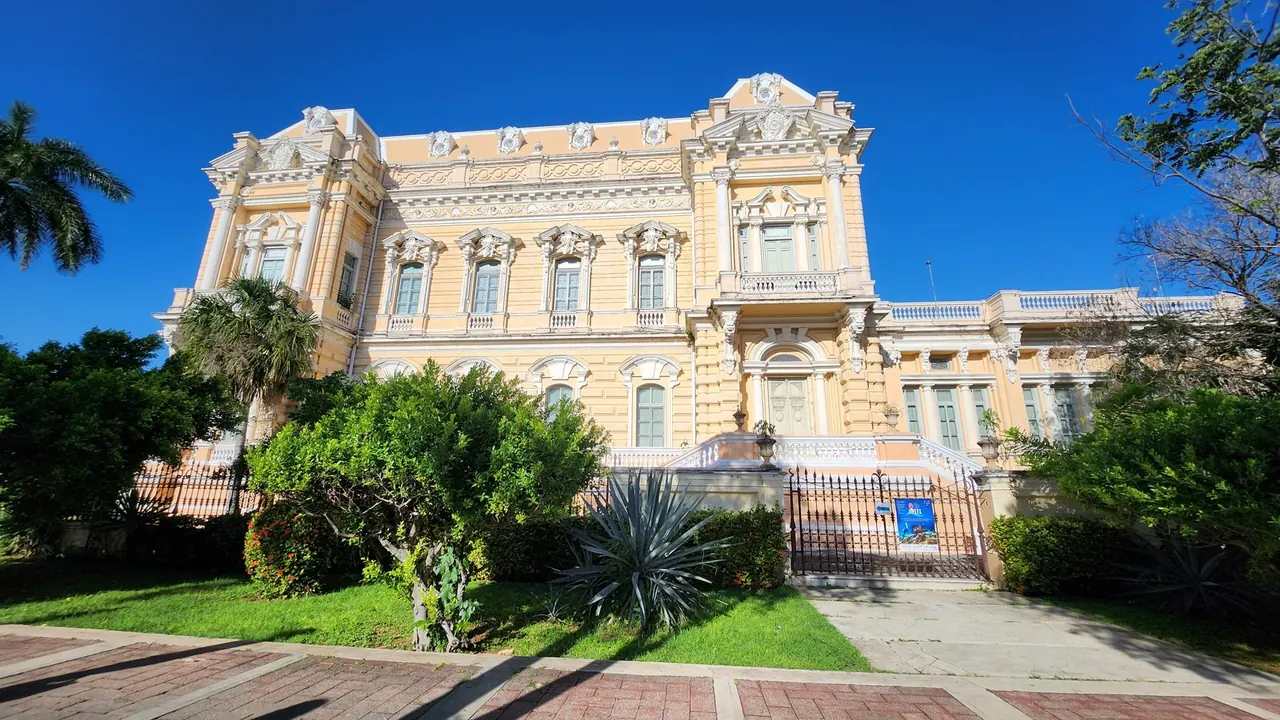
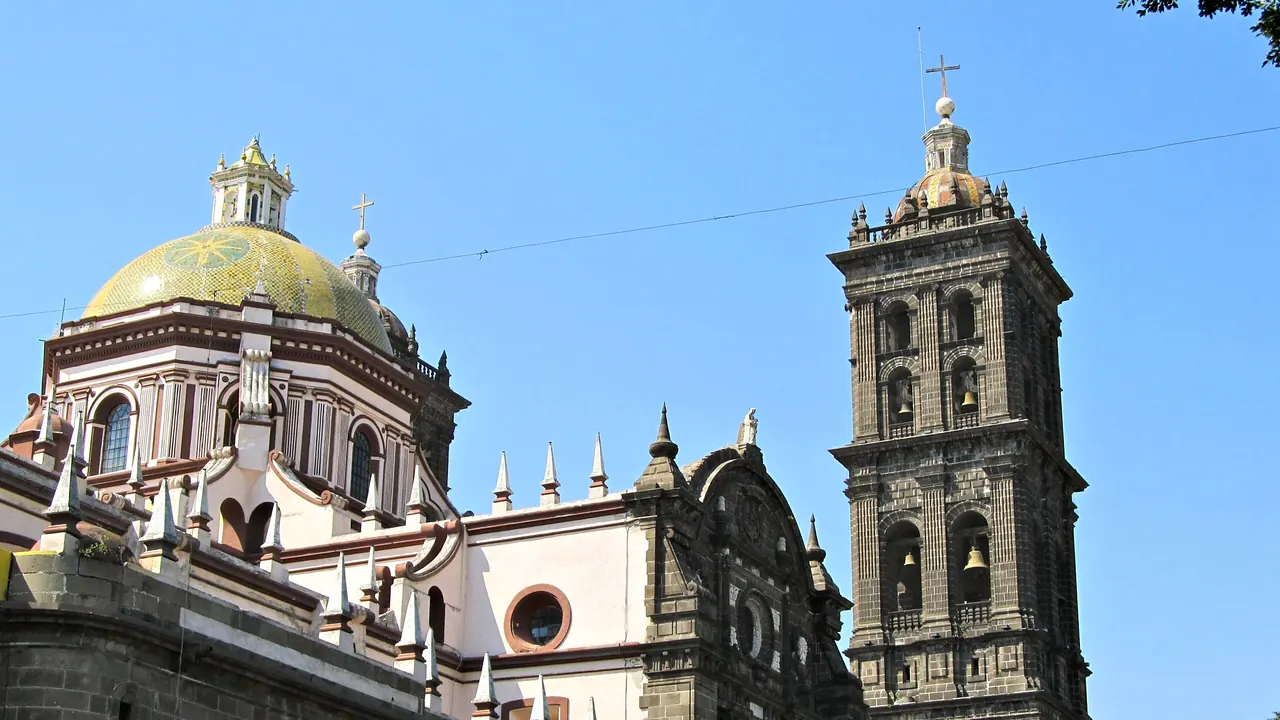
Photos: Merida by Mariposa2723, CC BY 4.0, cropped; Puebla by Octavio Alonso Maya …, CC BY-SA 3.0, cropped.
Merida or Puebla?
Our verdict in twelve categories, each scored against the same fixed benchmark cities, and the climate month by month, so you can choose for your trip.
Choose Merida for
- beaches
- live music and the arts
- wellness
Merida suits travellers drawn to the Maya world. Uxmal, Chichen Itza and the Puuc sites are within a day's drive, cenotes give you cool freshwater swimming in limestone caverns, and the Gulf coast is close enough for a day at the sea. Evenings are spent outdoors, with free dance and music in the squares most nights of the week. It is a good choice for a warm winter escape, as long as you can take steady heat.
Choose Puebla for
- nature and the outdoors
- culture and sights
- food and drink
Puebla is better if you travel to eat and look at buildings. Mole poblano and chiles en nogada come from here, and the centre is full of tiled facades, gilded Baroque chapels and some of Mexico's finest colonial interiors. It is also cheaper. At high altitude the air stays mild, and the snow-capped volcanoes on the skyline give walkers real mountains to climb.
Scoreboard
Twelve categories on one fixed scale from 0 to 100. The shaded stretch is the gap between the two.
Your match
Pick a travel style or drag the sliders, and both match scores follow your weighting.
Wins on beaches and live music and the arts with your weighting.
Wins on nature and the outdoors and culture and sights with your weighting.
What matters to you?
Category by category
What the scores mean for a trip.
Beaches & swimming
Merida has a coast within reach, and Puebla does not. Progreso is about 40 minutes north, with wide sand and warm, shallow, greenish water. Chelem and Telchac are quieter alternatives further along. The cenotes are the more memorable swim, with clear, cool water in caverns and open pools.
Puebla sits more than 2,000m up, and the Gulf around Veracruz is several hours away. Swimming there means a hotel pool or a spring-fed balneario at the edge of the city.
Food & drink
Both cities are serious places to eat, but Puebla has the edge. It is where mole poblano and chiles en nogada come from, two dishes known across all of Mexico. Everyday eating is just as distinctive, from cemitas stacked with papalo to tacos árabes, with convent sweets along the Calle de los Dulces.
Merida's Yucatecan cooking is more of a world of its own. It is built on achiote, sour orange and habanero, and cochinita pibil is eaten for breakfast at the Lucas de Galvez and Santiago market stalls. In both cities, international and fine dining are thin.
Culture & sights
Puebla's centre is the richer one to explore on foot. It is a UNESCO-listed grid of brick and Talavera tile with dozens of churches. The Capilla del Rosario is a high point of Mexican Baroque, and the Biblioteca Palafoxiana and the Museo Amparo are worth an unhurried visit.
Merida's colonial grid is grand as well, especially around the Plaza Grande, whose cathedral was built from Maya temple stones. Paseo de Montejo adds French-style mansions from the henequen boom. Its strongest draw, the great Maya sites, lies outside the city, and the Gran Museo del Mundo Maya prepares you for them.
Nightlife
Both cities have a relaxed, sociable night scene of a similar size, but it sits in different places. In Merida everyone heads outdoors once the heat breaks, to mezcal bars on Calle 60, rooftops over the old town and cantinas that serve free botanas with each drink. In Puebla the centre has cantinas and terraces looking at the cathedral, but the students take the late nights to the bar strip in Cholula, and the clubs are in Angelópolis.
Nature & outdoors
Puebla's surroundings are mountains. Popocatépetl and Iztaccíhuatl rise on the western horizon, La Malinche is a proper high-altitude climb, and the Izta-Popo national park has trails on the volcano slopes. Almost every outing needs transport.
Around Merida the land is flat dry forest, and the interest lies underground. You can cycle or ride a horse-drawn rail cart to the cenotes of Cuzama and Homun, or take a boat through the Celestun mangroves to see flamingos. The heat limits activity for half the year.
Day trips
Both cities are excellent bases, but for different trips. From Merida the excursions are ancient Maya cities: Uxmal and the Ruta Puuc to the south, Chichen Itza with Valladolid to the east, and yellow Izamal and old haciendas along the way.
Puebla's day trips are mostly colonial and pre-Hispanic. They include the vast pyramid at Cholula, the folk-Baroque churches of Tonantzintla and Acatepec, the Huejotzingo convent, and the murals at Cacaxtla near Tlaxcala. Mexico City is also within a long day's reach.
Good for families
Neither city is built around children, and they come out about even. Merida's highlights for families are water: calm, shallow sea at Progreso, cenotes, a free zoo in the Parque del Centenario and lively evening squares. Against that, the heat is hard on small children at the ruins.
Puebla's big outing is Africam Safari, where animals walk around the car. The observation wheel and Cholula's pyramid tunnels add to it, but altitude and traffic can tire young legs.
Getting around
Both cities are equally easy, and in a similar way. Each has a regular grid centre you can walk, ride-hailing for longer hops, and city buses that visitors struggle to use. In Merida the problem is heat, high kerbs and narrow pavements, and a hire car on flat, quiet roads makes the Puuc sites and cenotes much easier. Puebla's centre is more comfortable on foot in its mild air. Rapid bus lines cover a few routes, and Cholula is a short taxi ride.
Shopping & style
Both cities shop best for their own crafts, and the crafts are very different. In Merida you buy hammocks, guayaberas, Panama hats from nearby Becal and embroidered huipiles, either in the crowded market streets or in galleries in restored houses.
Puebla's speciality is Talavera pottery, bought straight from workshops where you can watch the painting. The city also has onyx at El Parián and antiques on the Callejón de los Sapos at weekends. Both send brand shoppers out to malls.
Affordability
Both cities are inexpensive, but Puebla goes further. Its taxis, market lunches and comfortable colonial hotels near the zócalo cost very little even by Mexican standards.
Merida's street food and free cantina snacks are just as cheap. A Merida trip tends to add the costs of a hire car, entry to the major archaeological sites and the courtyard boutique hotels many visitors choose.
Live music & performing arts
Merida gives casual visitors much more live performance. On most evenings the city puts on free shows in its squares: jarana dancers performing the vaqueria, trova serenades in Parque Santa Lucia and the Maya ballgame in front of the cathedral. The Teatro Jose Peon Contreras is home to the Yucatan Symphony Orchestra.
Puebla has the historic Teatro Principal and a university arts complex. Its street celebrations gather around the 5 de Mayo anniversary, and on other nights the music is mostly mariachis and trios in restaurants.
Wellness & relaxation
Merida is the slightly better place to slow down. Restored haciendas run spas with treatments drawn from Maya tradition, and courtyard hotels with hammocks and plunge pools fit the shuttered afternoons, though April to June is exhausting.
Puebla's options are more for trying once: a temazcal sweat lodge around Cholula or a sulphur-spring balneario. Outside the quiet morning plazas, traffic disturbs the calm.
When should you go?
Pick your month. The climate figures are measured averages, not a forecast.
Merida in July
Puebla in July
Daytime high, °C
Rainfall in the month, mm
Temperature and rainfall are climate normals, averaged over the years shown. Merida: 1991-2020 normals, Merida / lic Manuel Crecencio (5.1 km from centre). Puebla: 1991-2020 normals, Puebla, Pue. (5.4 km from centre).
Merida is hot all year. December and January are the most comfortable months for walking the streets and climbing ruins, with days around 30°C and little rain, and the dry spell lasts from November into April. From April to June the heat peaks near 37°C, and sightseeing shrinks to early mornings and evenings. Heavy rain arrives in June and lasts into October, mostly as afternoon downpours with plenty of sunshine around them. The Gulf is warm enough to swim in every month, and warmest, around 28°C, from August to October.
Puebla is a mild highland city. Midwinter days are around 23°C and it warms a little towards April, so it never gets too hot for walking. November to April is almost completely dry, with long sunny days and the clearest views of the volcanoes. From June to September afternoon storms bring up to 190mm a month. If you want to visit both on one trip, November to March suits them both: skies are dry in each, and Merida's heat is at its mildest.
Which traveller are you?
On a beach and sun trip, Merida is the only real option. Progreso's wide sand and warm, calm Gulf water are about 40 minutes away, and the cenotes add swimming you won't find elsewhere. Puebla sits high on a plateau, hours from any coast.
For an outdoors trip, Puebla has the landscape. La Malinche is a full-day climb through pine forest to a summit above 4,400m, and Izta-Popo has high trails. Merida's flat plain offers cenotes and flamingos at Celestun, but hardly any hiking.
On a relaxing and wellness trip, Merida's slow, shuttered afternoons work better. You get courtyard hotels with plunge pools and hammocks, and spas in restored haciendas outside town. Puebla has a temazcal or a spring-fed pool to try, but city traffic disturbs the calm more often.
Before you go
| Measure | Merida | Puebla |
|---|---|---|
| Official language | Spanish, Nahuatl, Yucatec Maya | Spanish, Nahuatl, Yucatec Maya |
| Currency | Mexican Peso (MXN) | Mexican Peso (MXN) |
| Sockets | AB127 V, 60 Hz | AB127 V, 60 Hz |
| Driving side | Right | Right |
| Time zone | UTC-6 | UTC-6 |
| Emergency number | 911 | 911 |
| Elevation | 12 m | 2,153 m |
| Main airport | Manuel Crescencio Rejón International Airport (MID)5 km from centre22 non-stop destinations | Hermanos Serdán International Airport (PBC)20 km from centre14 non-stop destinations |
| Public holidays this year | 9 days | 9 days |
By the numbers
| Measure | Merida | Puebla |
|---|---|---|
| City population | 892,363 | 1,542,232 |
| People per km² | 1,010 | 2,825 |
| Museums within 10 km | 5 | 17 |
| UNESCO World Heritage sites within 50 km | 0 | 2 |
| Swim season, months above 21 °C | 12 months | - |
Where else could you go?
Every comparison below shares a destination with this one, so you can follow Merida or Puebla somewhere new.
- Mexico Cityvs Puebla
- Valladolid, Mexicovs Merida
- Tulumvs Merida
- Akumalvs Merida
- Playa del Carmenvs Merida
- Oaxacavs Puebla