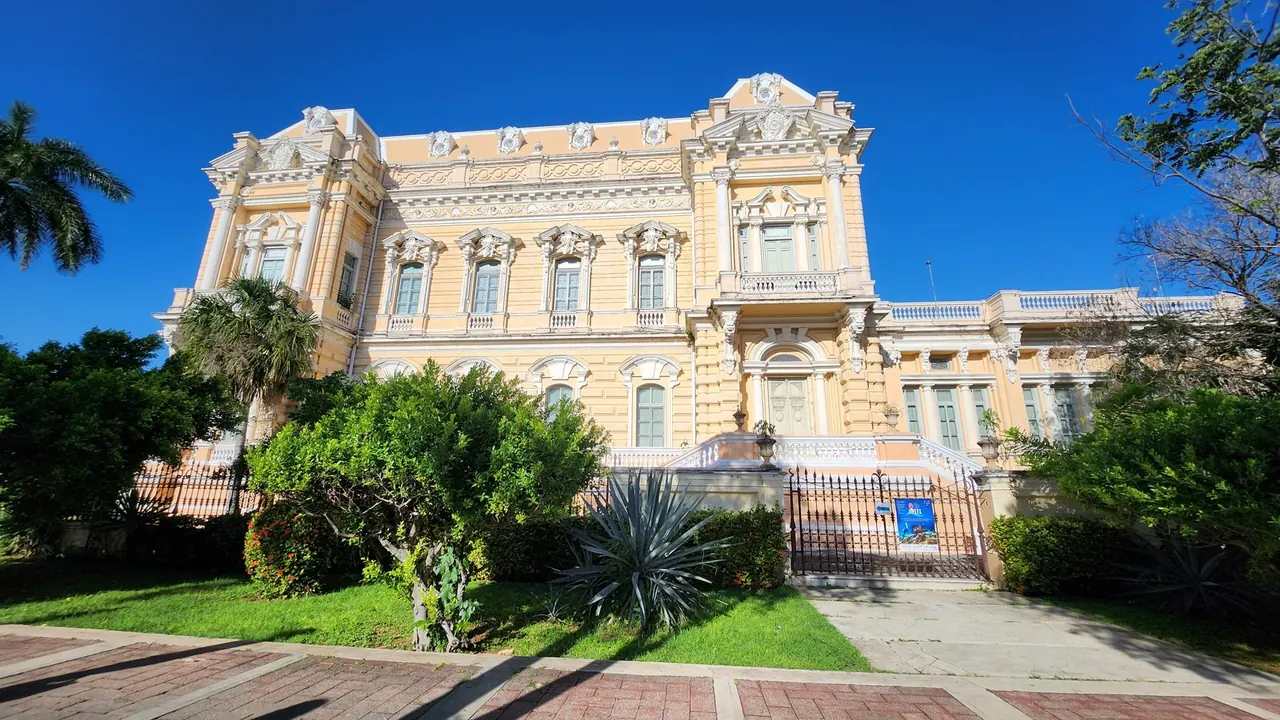
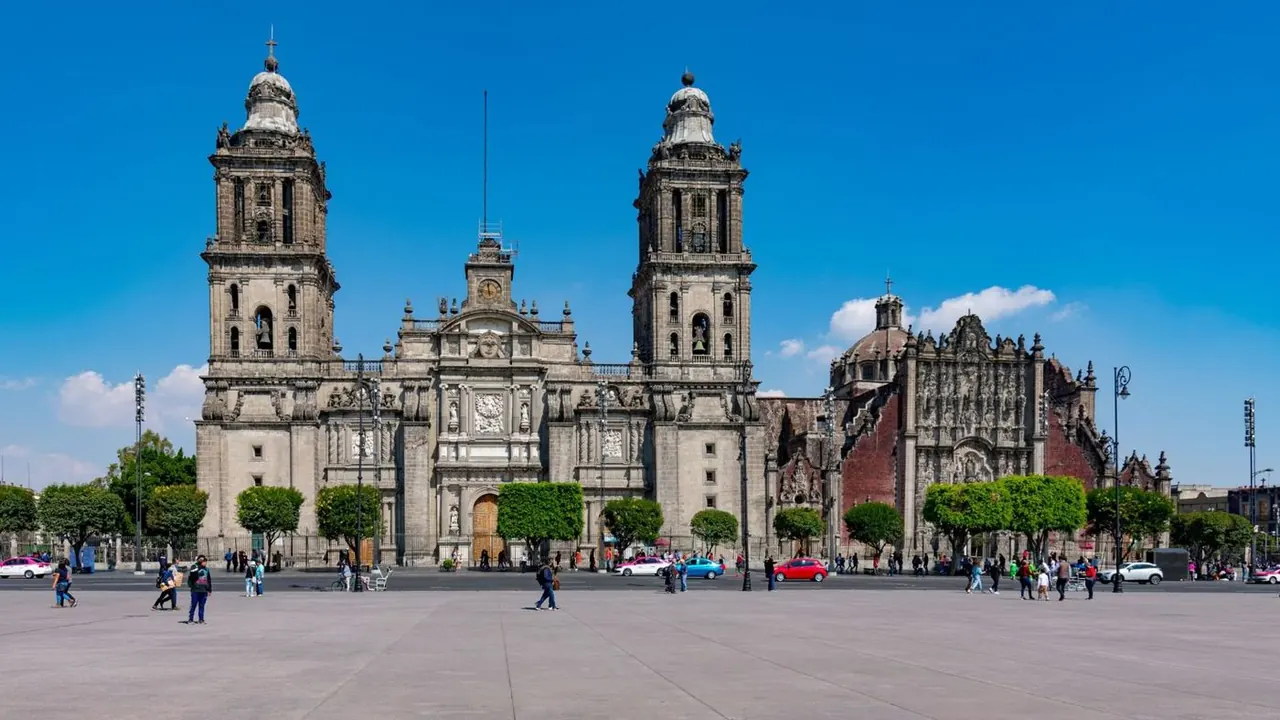
Photos: Merida by Mariposa2723, CC BY 4.0, cropped; Mexico City by Oscar Dominguez, Pexels License.
Merida or Mexico City?
Our verdict in twelve categories, each scored against the same fixed benchmark cities, and the climate month by month, so you can choose for your trip.
Choose Merida for
- beaches
- day trips
Merida suits a slower trip built around the Yucatan: Maya ruins at Uxmal and Chichen Itza, swims in cenotes, a day on the Gulf at Progreso and evenings in colonial squares with free music and dancing. It is the better pick if you want a compact, easy-going base, are happy to hire a car, and care more about the region around you than about the city itself.
Choose Mexico City for
- nightlife
- shopping
- culture and sights
If the city is the point, go to Mexico City. Its museums, street food, restaurants, nightlife and stages are on another scale, and a week only scratches the surface. You give up the sea and the calm, and you get a capital with Teotihuacan on its doorstep, deep neighbourhoods like Roma and Coyoacán, and far more to fill each day and night.
Scoreboard
Twelve categories on one fixed scale from 0 to 100. The shaded stretch is the gap between the two.
Your match
Pick a travel style or drag the sliders, and both match scores follow your weighting.
Wins on beaches and day trips with your weighting.
Wins on nightlife and shopping with your weighting.
What matters to you?
Category by category
What the scores mean for a trip.
Beaches & swimming
Merida has a beach within reach and Mexico City does not. Progreso is about 40 minutes north, with wide sand and warm, shallow, calm water that suits a relaxed swim, though the shore is plain and the sea is greenish rather than Caribbean blue. The swims people remember most are in the cenotes, clear pools in limestone caverns out in the countryside.
Mexico City sits on a plateau at 2,240m, and Acapulco is a separate trip of several hours. Swimming there means a hotel pool, so beach time has to be planned as extra days on the coast.
Food & drink
Merida is the place to eat one regional cuisine in depth. Yucatecan cooking uses achiote, sour orange and habanero, and you can have cochinita pibil for breakfast at the Lucas de Galvez market and marquesitas in the squares at night. Beyond that local cooking, there is not much range.
Mexico City offers far more. Its street food covers al pastor, tamales and blue corn quesadillas, and the Medellín, San Juan and La Merced markets show the whole country's chiles and moles. Roma, Condesa and Polanco add pulquerías, seafood counters, serious coffee and tasting menus, so you can eat well for every meal of a long stay.
Culture & sights
The two centres have some striking similarities. Each has a cathedral built over a pre-Hispanic city and a government palace with a mural history in its stairwell. Merida's colourful grid, the Casa de Montejo and the henequen mansions of Paseo de Montejo are absorbing, and the Gran Museo del Mundo Maya is a good introduction before visiting the ruins.
Mexico City has much more of everything. The excavated Templo Mayor stands next to the Zócalo, and the National Museum of Anthropology alone deserves the best part of a day. Add Bellas Artes, Chapultepec Castle, the Kahlo and Rivera houses in Coyoacán and San Ángel, and the canals of Xochimilco, and a week of sightseeing is easy to fill.
Nightlife
Merida's evenings are friendly and easy to enjoy: mezcal bars on Calle 60, rooftop terraces over the old town and cantinas that bring free botanas with each round. Very few people travel there for a night out, though.
Mexico City's nights start late and run until morning. You can walk between cocktail bars and small dance floors in Roma and Condesa, go dancing in salsa and cumbia halls or electronic clubs, find dressier lounges in Polanco and a large LGBTQ scene in the Zona Rosa. If going out matters to your trip, the capital is the easy choice.
Nature & outdoors
The nature around these two cities is very different. Merida's countryside is flat dry forest with its interest underground: cenotes around Cuzama and Homun reached by bicycle or horse-drawn rail cart, plus flamingos in the mangroves at Celestun. There is almost no hiking, and from spring through summer the heat limits outings to early mornings.
Mexico City has mountain landscapes. You can hike through the pine forests of Desierto de los Leones and on Ajusco, and the volcano pass of Paso de Cortés and the crater lakes of Nevado de Toluca are a couple of hours away. The cost is the traffic getting out of the city and poor air in the dry season.
Day trips
Both cities make excellent bases, and they lead to different places. Merida is surrounded by the Maya world: Uxmal and the Ruta Puuc sites, Chichen Itza with Valladolid, Dzibilchaltun close by, the yellow town of Izamal and old haciendas everywhere. Most are much easier with a hire car.
From Mexico City you get Teotihuacan, which is just as impressive, but most other outings are to colonial towns: tiled Puebla and the great pyramid at Cholula, Taxco for silver, and Tepoztlán and Cuernavaca for warmer air. Tours and buses work well, as long as you leave early to beat the traffic.
Good for families
Mexico City gives children more to do. Chapultepec has the zoo, boating lakes and the hands-on Papalote museum, and there is also the Polanco aquarium, a theme park with roller coasters, trajinera boats at Xochimilco and lucha libre. The downside is the long rides in traffic and the altitude for the first couple of days.
Merida is smaller and calmer, with a free zoo in the Parque del Centenario, evening squares full of balloon sellers, and gentle water at Progreso and in the cenotes. It has nothing built specially for children, though, and the heat and open-sun ruins wear out young legs quickly.
Getting around
Merida's centre is a compact numbered grid, with even streets running north to south and odd ones east to west, so you can find your way without a map and reach most sights on foot from the Plaza Grande. The hard part is the walking itself, because of narrow pavements, high kerbs and the midday heat. Taxis and ride-hailing cover the rest of the city. For the Puuc sites and cenotes, a hire car on the flat, quiet Yucatan roads is the easiest option.
Mexico City sprawls too far for any single centre. Here you explore it as a set of walkable districts, such as the Centro, Roma, Condesa and Coyoacán, and travel between them by metro, Metrobús or ride-hailing. Trains are packed at rush hour and pickpockets work them, and traffic is heavy for much of the day, so a car is more trouble than it is worth.
Shopping & style
Merida is good for a few Yucatecan specialities: hammocks, guayabera shirts, embroidered huipiles and fine Panama hats from Becal. The best pieces are in galleries in the restored houses of the centre rather than in the crowded market.
Mexico City brings in crafts from all over the country. La Ciudadela sells Oaxacan pottery, alebrijes and silver, and you can browse San Ángel's Saturday bazaar and the Sunday flea market at La Lagunilla. Luxury houses line Masaryk in Polanco, and Roma and Condesa add Mexican designers and bookshops, so there is plenty here for a shopping trip.
Affordability
In Merida, costs stay low almost wherever you go. Market breakfasts, cantina snacks that come free with a drink, cheap taxis and free evening shows in the squares all cost little. Even a boutique hotel in a restored colonial house with a courtyard pool is reasonable for what you get. The larger costs are a hire car and the entry fees at the big ruins.
In Mexico City, what you pay depends on the neighbourhood. Street tacos, market lunches and the metro are just as cheap, but hotels, well-reviewed restaurants and cocktail bars in Roma, Condesa and Polanco charge close to European-capital levels. If you stay in the Centro and eat where locals do, the capital is as easy on the budget as Merida.
Live music & performing arts
Merida's performances are mostly informal and free. Most nights the squares have jarana dancing, trova at the Santa Lucia serenade or the Maya ballgame re-enacted in front of the cathedral. The Teatro Jose Peon Contreras adds the symphony and ballet.
Mexico City has much more on stage. Bellas Artes has national opera and symphony seasons and the Ballet Folklórico, which needs no Spanish. There is also Sala Nezahualcóyotl, the Auditorio Nacional for big concerts, mariachis in Plaza Garibaldi, jazz and son clubs, and the loud spectacle of lucha libre at Arena México.
Wellness & relaxation
Neither city is a place to unwind. Merida's version of rest is slow: hammocks and plunge pools in courtyard hotels, quiet afternoons through the heat, and spas in the old haciendas with Maya-inspired treatments. From April to June, though, the heat is draining.
Mexico City's relaxation is more urban, with temazcal steam baths, day spas in Polanco and Condesa, and shady benches in Coyoacán. For a real retreat, most people leave for Tepoztlán or Cuernavaca.
When should you go?
Pick your month. The climate figures are measured averages, not a forecast.
Merida in July
Mexico City in July
Daytime high, °C
Rainfall in the month, mm
Temperature and rainfall are climate normals, averaged over the years shown. Merida: 1991-2020 normals, Merida / lic Manuel Crecencio (5.1 km from centre). Mexico City: 1991-2020 normals, Mexico Central, D. F. (7.9 km from centre).
Merida is hot all year, and the dry months from November to February are the most comfortable, with highs of about 30-32°C, little rain and plenty of sun. By April and May the heat reaches 37°C, which makes walking around the centre or the ruins hard going after mid-morning. The rains come in June and last into October, with heavy afternoon downpours that peak at around 206mm in June. The Gulf stays warm enough to swim in all year and is warmest from August to October.
Mexico City's altitude keeps it mild, with highs between 22°C and 28°C in every month, so walking is pleasant at any time of year. The dry season runs from November to April, with clear, sunny days and almost no rain. From June to September the rains arrive, mostly as afternoon storms, at up to about 186mm a month. For one trip that takes in both cities, November to March gives dry weather in each, with Merida warm and Mexico City cool.
Which traveller are you?
For a beach and sun trip, Merida is the only real option of the two. Progreso's warm, calm Gulf water is under an hour away and cenotes give clear freshwater swimming. Mexico City sits high inland, and its nearest beach is several hours' drive away.
On a culture and arts trip, Mexico City wins clearly: the Templo Mayor, the National Museum of Anthropology, Rivera's murals, the Frida Kahlo house and opera and ballet at Bellas Artes. Merida's colonial centre is lovely, but you will see it in a few days.
For a food and nightlife trip, choose Mexico City. You can eat from late-night al pastor stands up to some of the most respected tasting menus in the Americas, then move on to mezcalerías, salsa halls and clubs open until morning. Merida's Yucatecan cooking is excellent, but its evenings are quieter.
Before you go
| Measure | Merida | Mexico City |
|---|---|---|
| Official language | Spanish, Nahuatl, Yucatec Maya | Spanish, Nahuatl, Yucatec Maya |
| Currency | Mexican Peso (MXN) | Mexican Peso (MXN) |
| Sockets | AB127 V, 60 Hz | AB127 V, 60 Hz |
| Driving side | Right | Right |
| Time zone | UTC-6 | UTC-6 |
| Emergency number | 911 | 911 |
| Elevation | 12 m | 2,240 m |
| Main airport | Manuel Crescencio Rejón International Airport (MID)5 km from centre22 non-stop destinations | Mexico City Benito Juárez International Airport (MEX)7 km from centre109 non-stop destinations |
| Public holidays this year | 9 days | 9 days |
By the numbers
| Measure | Merida | Mexico City |
|---|---|---|
| City population | 892,363 | 9,209,944 |
| People per km² | 1,010 | 6,202 |
| Museums within 10 km | 5 | 108 |
| UNESCO World Heritage sites within 50 km | 0 | 6 |
| Swim season, months above 21 °C | 12 months | - |
Where else could you go?
Every comparison below shares a destination with this one, so you can follow Merida or Mexico City somewhere new.