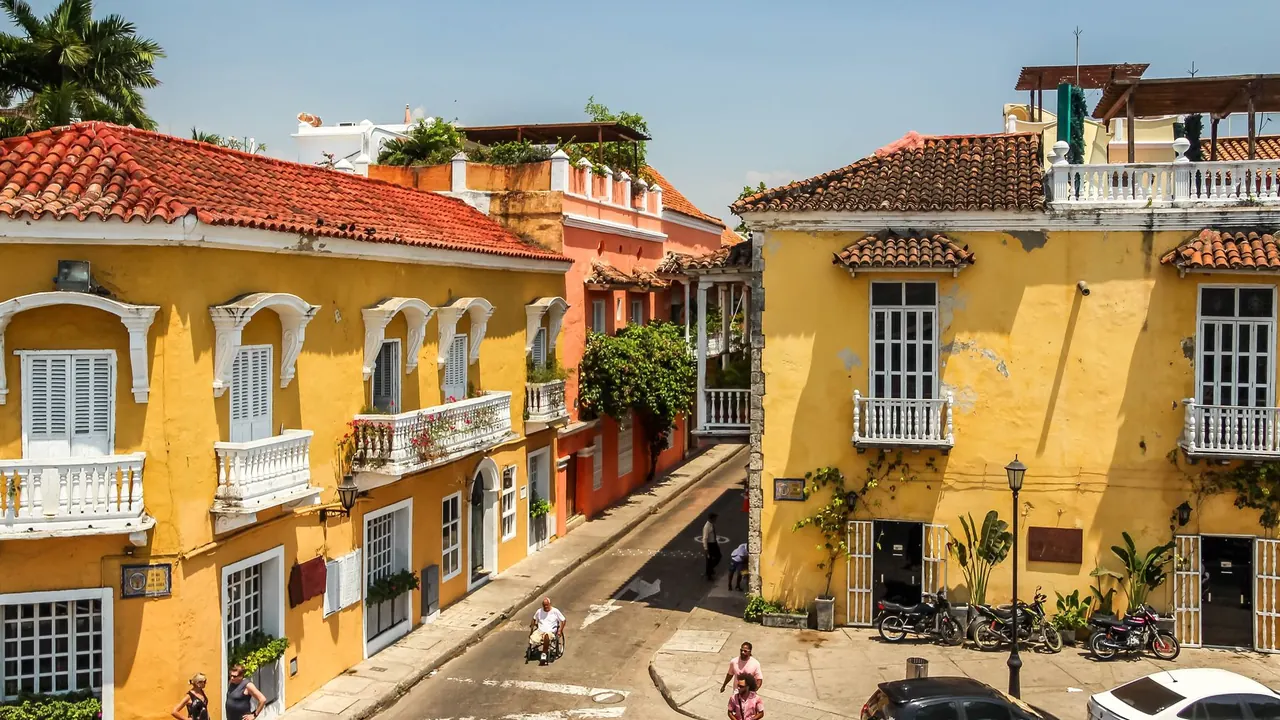
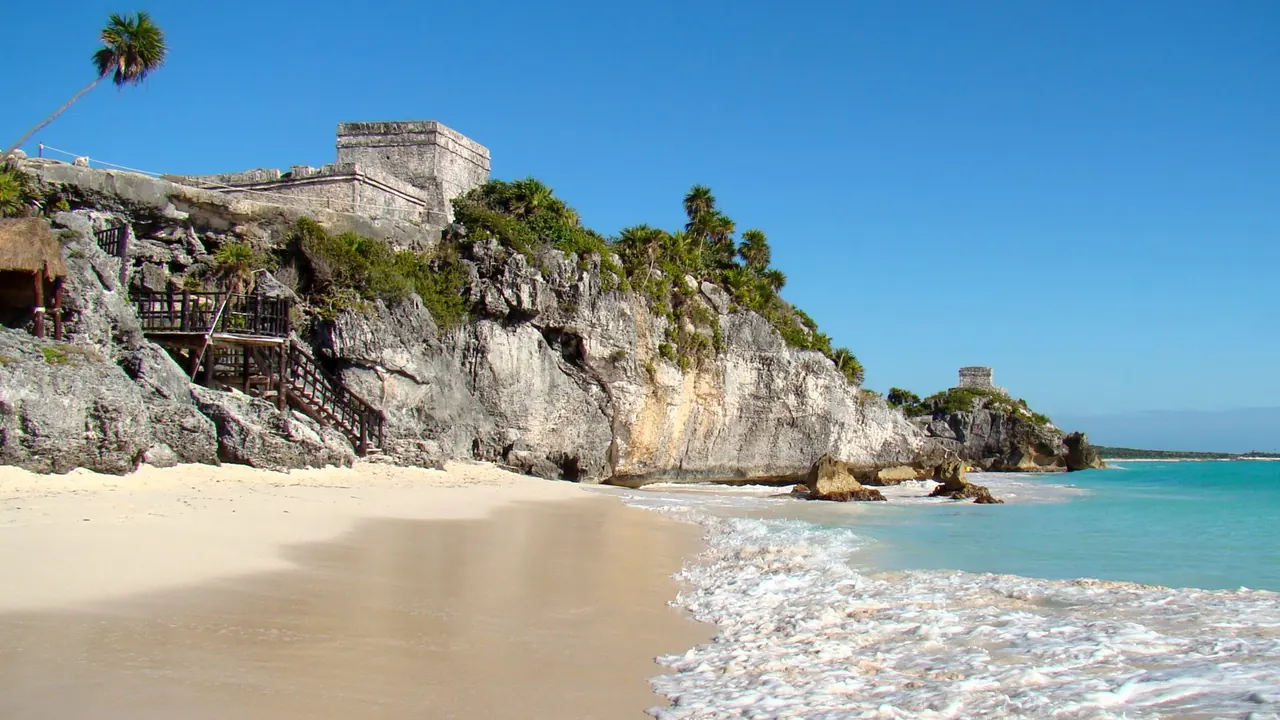
Photos: Cartagena by Dr. Thomas Liptak, CC BY-SA 4.0, cropped; Tulum by Bjørn Christian Tørrissen, CC BY-SA 3.0, cropped.
Cartagena or Tulum?
Our verdict in twelve categories, each scored against the same fixed benchmark cities, and the climate month by month, so you can choose for your trip.
Choose Cartagena for
- culture and sights
- prices
- getting around
Cartagena is the pick for travellers who want a city to walk in. Its walled colonial old town, the ramparts, the great fortress on the hill, the salsa bars of Getsemaní and the drummers in the plazas all sit within a few minutes of each other on foot. Once you step outside the boutique hotels it also stretches a budget further. The trade-off is that the good beaches are a boat ride away, not on the doorstep.
Choose Tulum for
- wellness
- day trips
- nature and the outdoors
Tulum suits a slower vacation spent outdoors around the sea and the jungle. It has pale beaches a short ride from town, cenotes for swimming and diving, the lagoons of Sian Ka'an and the big Maya sites inland. Yoga, retreats and temazcal sessions are part of daily life, and children have more to do in the water. Expect to pay more, and expect to need a car or tours, because little beyond the town grid is walkable.
Scoreboard
Twelve categories on one fixed scale from 0 to 100. The shaded stretch is the gap between the two.
Your match
Pick a travel style or drag the sliders, and both match scores follow your weighting.
Too close to call, 1 point apart
Wins on culture and sights and prices with your weighting.
Wins on wellness and day trips with your weighting.
What matters to you?
Category by category
What the scores mean for a trip.
Beaches & swimming
Cartagena's own beaches at Bocagrande and Castillogrande have darkish sand, water clouded by river sediment and plenty of vendors. The clear turquoise Caribbean is offshore, in the Rosario Islands and at Playa Blanca on Baru, so a good beach day here means a boat trip.
Tulum is clearly stronger for beaches. A long run of pale sand starts a few kilometres from town, from the beaches below the cliff-top ruins down to the quieter shore towards Sian Ka'an, and Akumal's turtle bay is half an hour north. The one thing to check before you book is sargassum seaweed, which can pile up in the warmer months.
Food & drink
Cartagena has more to eat, and more of it belongs to the place. There is fried fish with coconut rice, arepas de huevo on street corners, ceviche from carts, Palenquera women selling fruit and the sweet stalls of the Portal de los Dulces. The walled city adds a polished tier of modern Colombian cooking in colonial houses, and Getsemaní has cheaper places to eat.
Tulum's food is narrower. The firelit restaurants on the beach road often sell the setting more than the plate, so the dishes worth looking for are Yucatecan, such as sopa de lima, or cochinita pibil from the taco stands in town. Both places have plenty of menus aimed at tourists.
Culture & sights
About 11km of stone ramparts enclose Cartagena's old town, and walking them at sunset is the best introduction to one of the most complete colonial townscapes in the Americas. Below them are balconied houses in ochre, blue and pink, the cathedral, San Pedro Claver and the Palace of the Inquisition, and the Castillo San Felipe rises on its hill just outside. San Diego and Getsemaní carry the old streets on in plainer form. The collections are modest, a small Gold Museum among them, and two or three days covers the main sights.
Tulum's one important sight is smaller in every way. It is the walled Maya port on the cliff, where El Castillo stands above the sea. You go for the setting rather than the size: a couple of hours among low temples with turquoise water below, best early before the tour coaches arrive. Around it is a modern town grid with no museums of note, so the ruins make one morning's visit rather than several days of sightseeing.
Nightlife
Cartagena's nights are busier and more varied. There are drummers and street food on the Plaza de la Trinidad, salsa bars in Getsemaní, rooftop bars inside the walls, champeta at local parties and chiva buses with a band on board, all within walking distance. Touts come with it.
Tulum is known for big electronic nights instead: DJ sets in jungle clearings, beach clubs and full-moon parties, at their peak in winter. Between those events there is only a short strip of mezcal bars in town.
Nature & outdoors
Cartagena's best outdoors is the reef at Corales del Rosario, which shows wear from boat traffic. Closer in there is canoeing through the mangroves at La Boquilla, kitesurfing in the windy dry months and a wallow in the Totumo mud volcano. Inland the land is flat farmland.
Tulum has far more. There are cenotes of very clear water for snorkelling and cave diving, the lagoons and mangroves of Sian Ka'an with dolphins and turtles, reef snorkelling at Akumal and flat roads for cycling. Neither place has hills or hiking trails.
Day trips
Cartagena has few easy outings. San Basilio de Palenque, with its own language and music, makes a thoughtful half day, and the island trips are more about the water than the villages. Mompox and Santa Marta both need an overnight stay.
Tulum is within reach of the Maya world. Coba is under an hour inland, and Chichen Itza is about two hours away, paired with Valladolid or Ek Balam. Playa del Carmen and the ferry to Cozumel are also close. For most of these you need a car, a tour or the train.
Good for families
Cartagena is good for a few hours with children: carriage rides, shaded plazas and the ramparts, then calm water at the island beaches and the National Aviary on Baru. Beyond that little is made for children, and the heat and long boat rides tire small ones.
Tulum gives children more in the water. There are turtles in the shallows at Akumal, cenotes with steps down into calm pools, and the eco-parks at Xel-Ha and Xcaret. Many beach hotels lean towards adults and sights are spread out, so families do best with a pool and a hire car.
Getting around
Cartagena is much easier to get around. The walled city, San Diego and Getsemaní are minutes apart on foot, the fortress is a walk away, and plentiful cheap taxis cover the rest. Midday heat and narrow, uneven pavements are the main drawbacks.
Tulum is strung out along a highway, with the town, the beach and the hotel strip kilometres apart. Bicycles work on the flat roads, but public transport is thin and taxis are expensive, so most visitors hire a car or book tours.
Shopping & style
Cartagena has more to buy, though still not a great deal. It has Wayuu bags, sombreros vueltiaos and hammocks in the vaulted rooms of Las Bóvedas, emerald jewellers near the Plaza de Bolívar, boutiques of Colombian designers' resortwear and malls in Bocagrande.
Tulum's shopping has one look: linen, macramé and woven baskets in expensive boutiques on the beach road. Embroidered huipiles and silver jewellery sell for better prices on the town avenue.
Affordability
Both places have an expensive top tier, but Cartagena is far kinder to a budget once you leave the boutique hotels inside the walls. Guesthouses in Getsemaní, street food, set lunches, cheap taxis and reasonably priced island trips keep costs down, except over Christmas, New Year and Easter.
Tulum costs more almost everywhere, from beach-road hotels to taxis, beach clubs and the separate entry fees at cenotes. The way to keep it manageable is to stay in town and cycle to the sea.
Live music & performing arts
Neither is a place for a full season of performances, but Cartagena at least has a stage. There is the ornate Teatro Adolfo Mejía, a classical festival every January in churches and courtyards, and cumbia dancers and drummers in the plazas each evening.
Tulum has no theatre or concert hall at all, only bar bands on the main avenue and staged ceremonial dance at the eco-parks.
Wellness & relaxation
In Cartagena, rest comes from a hotel courtyard and plunge pool, a cheap massage or a few nights on the islands. The old town is hot and noisy, and the Totumo mud bath is more of a lark than a cure.
Tulum is built around wellness, with yoga shalas, retreat hotels, open-air spas, sound baths and Maya temazcal sweat lodges, and slow, barefoot days on the southern beach strip. For real quiet, choose somewhere well away from the party venues.
When should you go?
Pick your month. The climate figures are measured averages, not a forecast.
Cartagena in July
Tulum in July
Daytime high, °C
Rainfall in the month, mm
Where the figures come from
Tulum has no weather station within reach, so its figures come from a gridded climate model rather than a measured record, and read a broad area rather than the city itself.
Temperature and rainfall are climate normals, averaged over the years shown. Cartagena: 1991-2020 normals, Cartagena / Rafael Nunez (3.1 km from centre). Tulum: 2001-2020 normals, NASA POWER reanalysis grid, no weather station within 90 km.
Cartagena is hot every month, with daytime highs of around 31°C, so the year divides by rain, not by temperature. December to April is the dry season, with almost no rain from January to March and the most sunshine. That is the best time for island trips and evenings on the ramparts. The rains start in May and build to a peak in October of about 240mm, and the sea stays warm enough to swim all year.
Tulum is slightly milder in winter, with highs nearer 27°C from November to January, which makes those months the most comfortable for ruins and cycling. Its winter and spring are fairly dry but not rainless. The wet months run from June to October, wettest in October at about 210mm. The sea stays warm all year here too, so both coasts are good for swimming in any month, and the first months of the year are the most settled in both.
Which traveller are you?
On a culture and arts trip, Cartagena is the clear choice. Its history is the fabric of the place you sleep in, not a site you drive out to, so every walk counts as sightseeing. In Tulum, culture mostly means a long trip inland.
For a relaxing and wellness trip, Tulum suits better, because rest is the point of the place rather than something you hunt for. It also has a Maya bathing ritual of its own, which Cartagena lacks, and Cartagena's old town is too hot and loud to unwind in.
On a trip on a tight budget, Cartagena goes further. Living cheaply is ordinary there once you leave the walls, and the sights sit so close together that reaching them costs little. In Tulum nearly every outing, to the sea, a cenote or a party, has its own price.
Before you go
| Measure | Cartagena | Tulum |
|---|---|---|
| Official language | Spanish | Spanish, Nahuatl, Yucatec Maya |
| Currency | Colombian Peso (COP) | Mexican Peso (MXN) |
| Sockets | AB110 V, 60 Hz | AB127 V, 60 Hz |
| Driving side | Right | Right |
| Time zone | UTC-5 | UTC-5 |
| Emergency number | 123 | 911 |
| Elevation | 2 m | 5 m |
| Main airport | Rafael Nuñez International Airport (CTG)2 km from centre26 non-stop destinations | Felipe Carrillo Puerto International Airport Tulum (TQO)21 km from centre11 non-stop destinations |
| Public holidays this year | 19 days | 9 days |
By the numbers
| Measure | Cartagena | Tulum |
|---|---|---|
| City population | 914,552 | 33,374 |
| People per km² | 1,599 | - |
| Museums within 10 km | 2 | 0 |
| UNESCO World Heritage sites within 50 km | 1 | 0 |
| Swim season, months above 21 °C | 12 months | 12 months |
Where else could you go?
Every comparison below shares a destination with this one, so you can follow Cartagena or Tulum somewhere new.