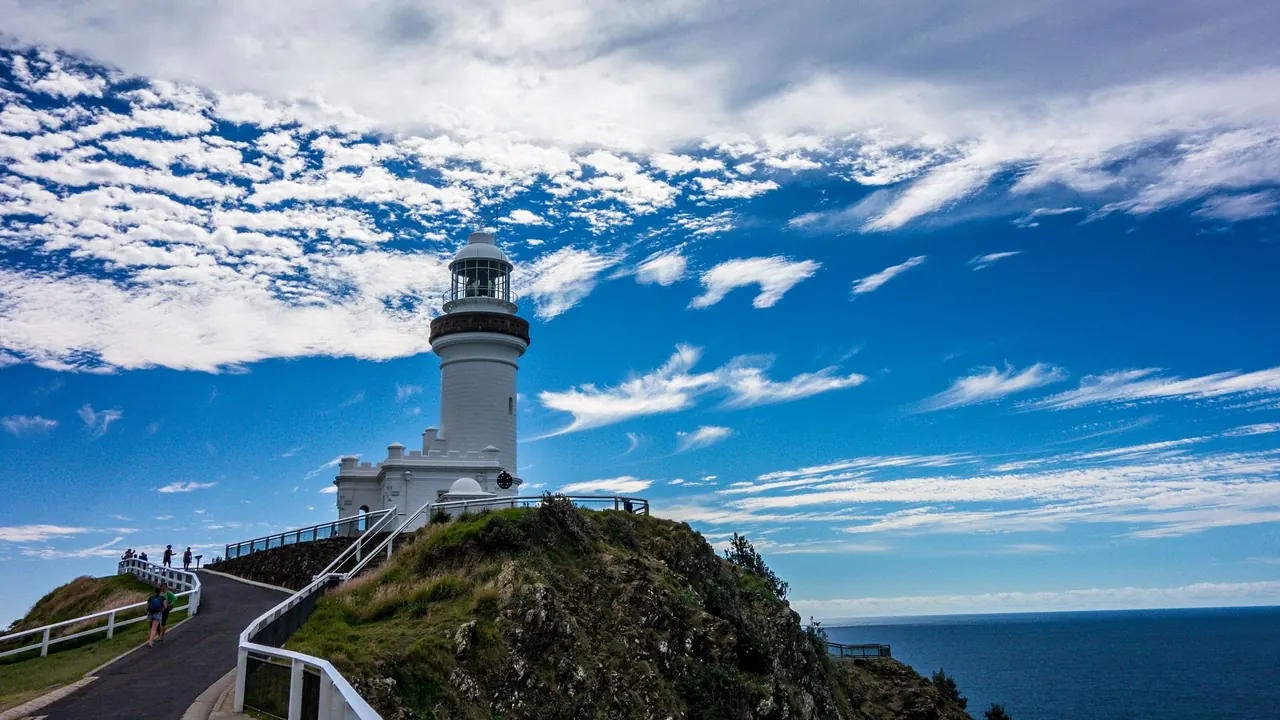
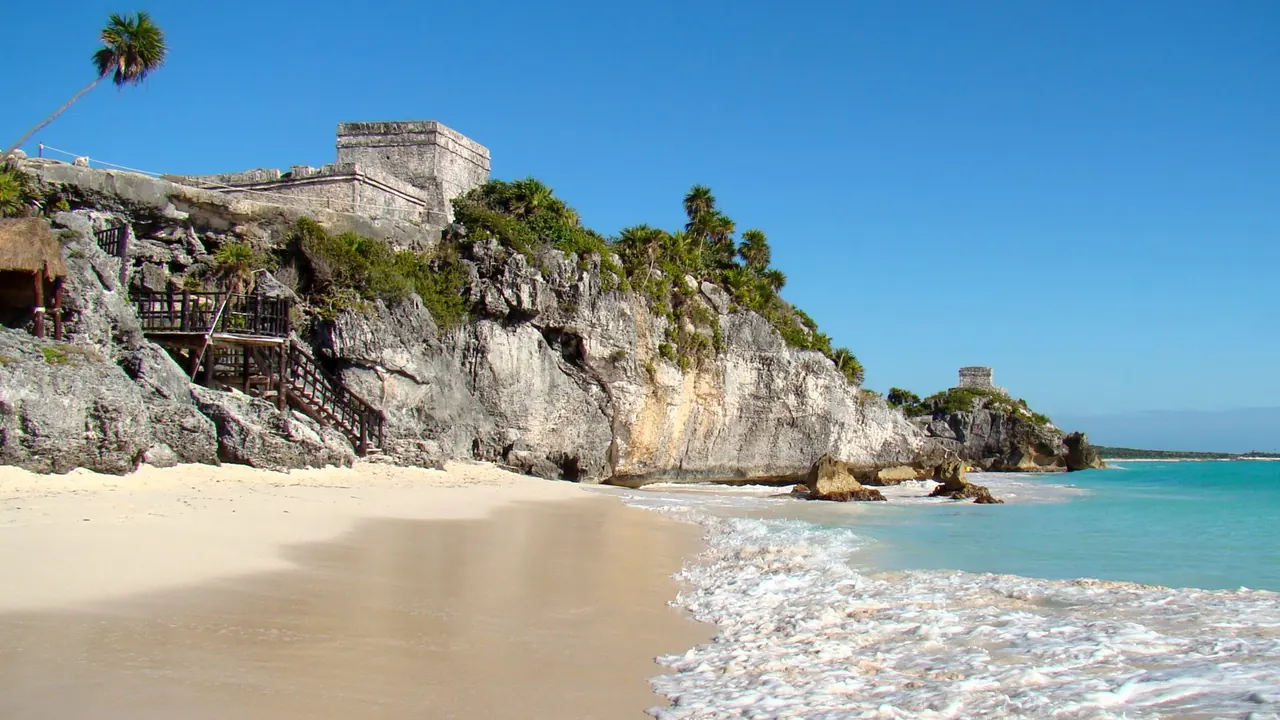
Photos: Byron Bay by Visions of Domino, CC BY 2.0, cropped; Tulum by Bjørn Christian Tørrissen, CC BY-SA 3.0, cropped.
Byron Bay or Tulum?
Our verdict in twelve categories, each scored against the same fixed benchmark cities, and the climate month by month, so you can choose for your trip.
Choose Byron Bay for
- getting around
- live music and the arts
- shopping
Byron Bay suits travellers who want an easy beach town where the sand starts at the end of the street. The centre is compact enough to walk, the coast is made for surfing and morning swims, and behind it lie green volcanic hills with rainforest trails and waterfalls. Choose it for a slow, outdoorsy stay built around the tide, a bit of yoga and a pub band in the evening, and accept that you will pay well for it.
Choose Tulum for
- nightlife
- day trips
- culture and sights
If you want more than the beach, Tulum is the better pick. A Maya city stands on the cliff above the sea, Coba and Chichen Itza are within reach, and the cenotes nearby are among the finest places anywhere for snorkelling through clear caverns or diving flooded caves. The nights are bigger too, with DJ sets in the jungle and beach clubs that run late. It is a little easier on a budget, but the town is spread out, so plan on a bicycle, taxis or a hire car.
Scoreboard
Twelve categories on one fixed scale from 0 to 100. The shaded stretch is the gap between the two.
Your match
Pick a travel style or drag the sliders, and both match scores follow your weighting.
Wins on getting around and live music and the arts with your weighting.
Wins on nightlife and day trips with your weighting.
What matters to you?
Category by category
What the scores mean for a trip.
Beaches & swimming
Both coasts are worth the journey on their own, and they differ in character rather than quality. Byron gives you variety within walking distance: patrolled surf beaches by the centre, the point break at The Pass, little Wategos and long empty arcs like Tallow. The water is cooler and the rips are serious.
Tulum offers warm, calm Caribbean water over pale sand, turquoise close to shore, with the ruins standing above it. The trade-offs are the sargassum that piles up in some warm seasons and the few kilometres between town and sea, so most days begin with a bike ride.
Food & drink
Byron eats from its farms, Tulum from a regional kitchen. In Byron the day revolves around coffee, long brunches and hinterland produce such as macadamias, avocados and grass-fed beef, and a few ambitious farm restaurants lie out towards Bangalow. After dark there is little street food and not much late dining.
Tulum has Yucatecan dishes to seek out. Cochinita pibil, sopa de lima and achiote-grilled fish turn up at the taco stands and fondas in town, while the beach road serves fire-cooked dinners where the candlelit setting often matters more than the plate. In both towns the range is narrow and many menus look alike.
Culture & sights
Tulum has the stronger draw for anyone interested in the past. Its walled Maya port, with El Castillo on the clifftop above the sea, is a site of real importance that you can see in an easy morning, and the town makes a natural base for the larger Maya cities inland.
In Byron the sights stop at the Cape Byron lighthouse, on the easternmost point of mainland Australia. The Arakwal Bumberlin heritage of the cape runs deep, but you meet it on a guided walk rather than at any monument.
Nightlife
Tulum goes out harder. It has an international name for electronic music, with DJ sets in jungle clearings, beach clubs that keep going after sunset and full-moon parties, especially through winter. The big nights are costly, and you need to keep your wits about you getting home.
Byron's evenings are smaller and more casual: sunset drinks, big beer gardens near Main Beach and a few late venues full of backpackers, mostly winding down soon after midnight.
Nature & outdoors
These two are about even outdoors, but the landscapes could hardly be more different. Byron has height and forest. The cape track climbs over the clifftops, whales pass from June to November, Julian Rocks is just offshore for diving, and the old volcanic caldera inland holds waterfalls and rainforest in Nightcap National Park and the Border Ranges.
Tulum is flat, and its wonders lie underwater. Cenotes such as Gran Cenote and Dos Ojos offer world-class cavern snorkelling and cave diving, and the Sian Ka'an lagoons and mangroves are explored by boat. For hiking, though, there is next to nothing.
Day trips
From Tulum the excursions really are worth taking. Coba's forest pyramid is under an hour away, and a longer day pairs Chichen Itza with Valladolid or Ek Balam. Cozumel is a ferry ride from Playa del Carmen, and Bacalar's lagoon is within reach.
Byron's outings are gentler: hinterland towns such as Bangalow, Mullumbimby and Nimbin, the art gallery at Murwillumbah, or the Gold Coast's theme parks. They make a nice change of pace, but few would plan a trip around them.
Good for families
Both work for families, as long as the plan is centred on water. Byron is the simpler base: a small, safe town with patrolled beaches, rock pools, calmer water at The Pass and Wategos, and vacation houses that fit a family. For theme parks, though, you drive about an hour to the Gold Coast, and the surf needs watching.
Tulum offers more ready-made excitement for children, with turtles at Akumal, clear cenote pools and the eco-parks at Xel-Ha and Xcaret close by. The flip side is a beach strip aimed at couples and partygoers, plus heat and mosquitoes, so a rental with a pool and a car helps.
Getting around
Byron Bay is easier on foot. The centre is small and flat, with Main Beach, Clarkes and Belongil a short walk away and bike paths along the coast, although the hinterland still means hiring a car.
Tulum is spread along a highway, with the town, the sea and the hotel strip kilometres apart. Bicycles cover the short hops, but the roads are dark at night, the taxis are pricey and colectivos only run along the highway. Most visitors end up hiring a car or booking tours.
Shopping & style
Both towns sell a similar relaxed linen look, but Byron gives you a little more to do. Local labels, surfwear and swimwear line its central blocks, and makers' studios in the Arts and Industry Estate and the artisan markets add handmade pieces.
Tulum's boutiques on the beach road are lovely to browse but small and expensive. The better buys are on the main avenue in town, where you'll find embroidered huipiles, hammocks and silver.
Affordability
Tulum leaves more room for a budget. Stay in the town centre, eat at the taco stands and rent a bicycle, and a trip stays affordable, although the separate entry fees for cenotes and parks add up. The beach road and the jungle strip are a different matter, with resort prices throughout.
Byron is harder on the wallet. Accommodation is expensive and rises again in summer and on festival weekends, and only hostels and campsites really save money. On the plus side, its beaches, the cape walk and the waterfalls are free.
Live music & performing arts
Byron's pub stages give it the edge. Original songwriters and roots and surf-rock acts play the beer gardens near the beach, the community centre's small theatre hosts touring comedy and music, and the long-running writers' festival brings readings to town each year. For opera, ballet or an orchestra you still have to go to Brisbane or the Gold Coast.
In Tulum, live music mostly means acoustic sets in bars on the main avenue or musicians playing alongside the DJs. Traditional dance turns up mainly as a staged show at the eco-parks.
Wellness & relaxation
Wellness runs through both towns, and the real difference is in what you do there. Byron offers yoga classes throughout the day, breathwork and sound healing, with residential retreats in the green hills. It has no bathing tradition, and its winter is the calmest time.
Tulum adds the temazcal, the Maya sweat lodge, to its shalas and open-air spas, and the southern beach strip moves at a hammock-swinging pace. Party nights and highway noise can break the calm, so choose where you stay carefully.
When should you go?
Pick your month. The climate figures are measured averages, not a forecast.
Byron Bay in July
Tulum in July
Daytime high, °C
Rainfall in the month, mm
Where the figures come from
Tulum has no weather station within reach, so its figures come from a gridded climate model rather than a measured record, and read a broad area rather than the city itself.
Temperature and rainfall are climate normals, averaged over the years shown. Byron Bay: 1991-2020 normals, Cape Byron (5.6 km from centre). Tulum: 2001-2020 normals, NASA POWER reanalysis grid, no weather station within 90 km.
Byron Bay has real seasons. December to March is warm beach weather in the high twenties, but it is also the wet, humid part of the year, and February can bring 234mm of rain. Winter, from June to August, is mild at around 19°C by day. The sea stays swimmable, though cooler. September and October are the sweet spot: dry, sunny and comfortable for walking the cape and the hinterland, with the water warming again.
Tulum stays hot all year, and the sea holds at about 27°C or warmer in every month, so the beach never closes. The difference lies in the rain and the heat. December to April is the dry season and the easiest time for ruins and cycling. From May the days reach 31°C, and the rains build through summer to a peak of 208mm in October, which makes midday sightseeing hard work. Their best seasons hardly overlap, so Byron suits a southern spring trip and Tulum a northern winter escape.
Which traveller are you?
For a culture and arts trip, Tulum is the clear choice. The cliff-top Maya city is on its doorstep, and Coba, Chichen Itza, Ek Balam and colonial Valladolid are all within day-trip range. Byron's heritage, by contrast, comes down to a lighthouse.
For a food and nightlife trip, go to Tulum. Both towns eat about as well as each other, but Tulum adds taco stands and mezcal bars to its dining, and its jungle DJ nights and beach clubs go on well past the hour when Byron's pubs empty.
On an outdoors trip built around walking, Byron Bay suits better. The cape track, rainforest waterfalls and old-growth forest in the hinterland offer real trails and views, and whales pass close by in winter. Flat, jungle-covered Tulum has no hills, and the heat makes it hard going on foot.
Before you go
| Measure | Byron Bay | Tulum |
|---|---|---|
| Official language | English | Spanish, Nahuatl, Yucatec Maya |
| Currency | Australian Dollar (AUD) | Mexican Peso (MXN) |
| Sockets | I230 V, 50 Hz | AB127 V, 60 Hz |
| Driving side | Left | Right |
| Time zone | UTC+10, UTC+11 in summer | UTC-5 |
| Emergency number | 000 | 911 |
| Elevation | 5 m | 5 m |
| Main airport | Ballina Byron Gateway Airport (BNK)21 km from centre2 non-stop destinations | Felipe Carrillo Puerto International Airport Tulum (TQO)21 km from centre9 non-stop destinations |
| Public holidays this year | 11 days | 9 days |
By the numbers
| Measure | Byron Bay | Tulum |
|---|---|---|
| City population | - | 33,374 |
| Museums within 10 km | 1 | 0 |
| UNESCO World Heritage sites within 50 km | 1 | 0 |
| Swim season, months above 21 °C | 11 months | 12 months |
Where else could you go?
Every comparison below shares a destination with this one, so you can follow Byron Bay or Tulum somewhere new.
- Akumalvs Tulum
- Playa del Carmenvs Tulum
- Gold Coastvs Byron Bay
- Valladolid, Mexicovs Tulum
- Cancunvs Tulum
- Brisbanevs Byron Bay