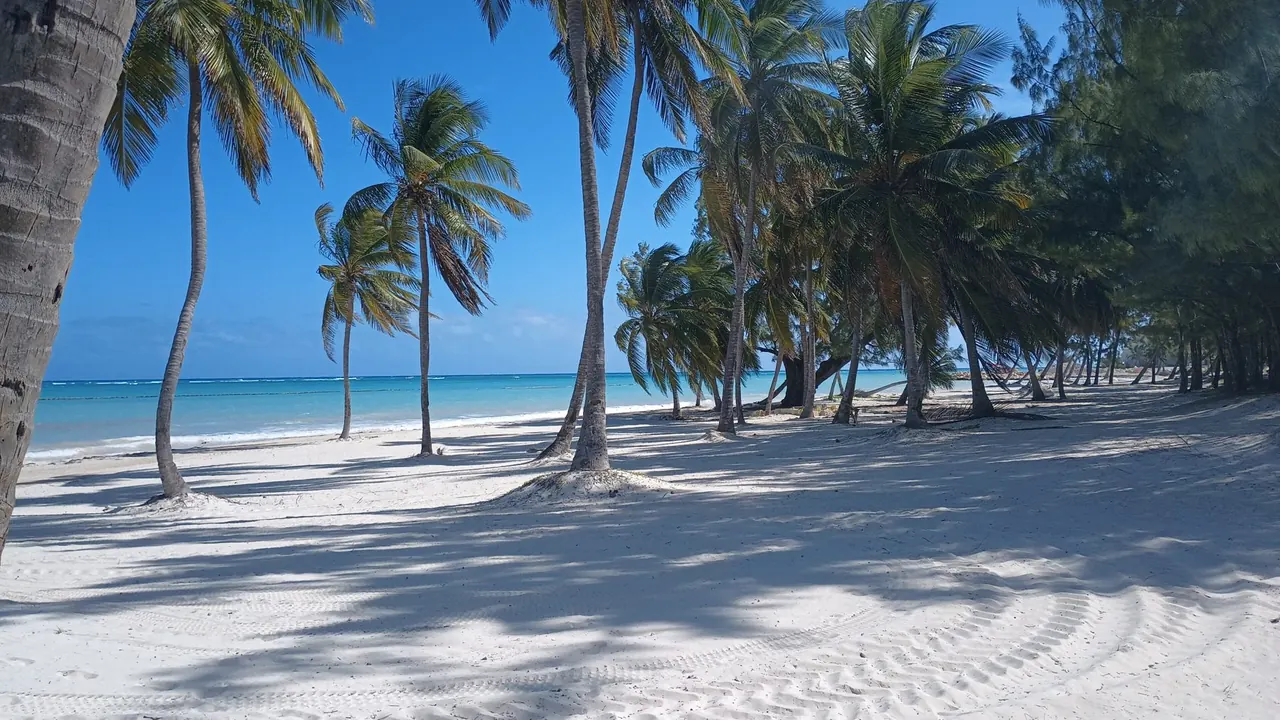
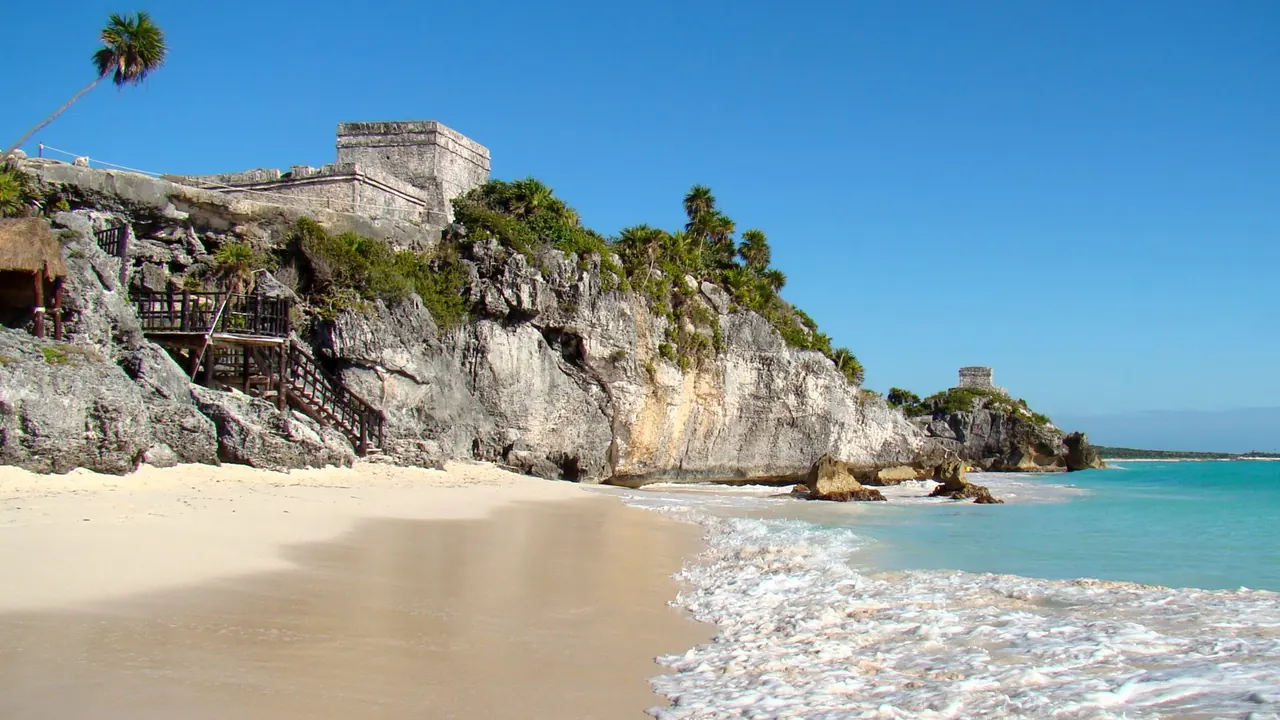
Photos: Punta Cana by Mary Mark Ockerbloom, CC0; Tulum by Bjørn Christian Tørrissen, CC BY-SA 3.0, cropped.
Punta Cana or Tulum?
Our verdict in twelve categories, each scored against the same fixed benchmark cities, and the climate month by month, so you can choose for your trip.
Choose Punta Cana for
- prices
- families
- beaches
Punta Cana is the better pick if you want a week planned around a sunbed. The sand runs for miles, reefs keep the water calm, and the all-inclusive resorts handle meals, children and evening shows without you needing to leave. Families get the most from it, and so does anyone who wants a sealed-off, easy beach stay where the package price covers most of the bill.
Choose Tulum for
- day trips
- wellness
- nature and the outdoors
Tulum suits travellers who want more than a beach and are willing to pay for it. The cliff-top Maya ruins, the cenotes and the Sian Ka'an reserve are close by, and Coba and Chichen Itza are within reach for a day. Add the yoga shalas, temazcal ceremonies and jungle DJ nights, and it makes sense for couples and friends who will hire a car or bicycles to put together a more varied trip.
Scoreboard
Twelve categories on one fixed scale from 0 to 100. The shaded stretch is the gap between the two.
Your match
Pick a travel style or drag the sliders, and both match scores follow your weighting.
Wins on prices and families with your weighting.
Wins on day trips and wellness with your weighting.
What matters to you?
Category by category
What the scores mean for a trip.
Beaches & swimming
Both are true beach destinations, but Punta Cana has the edge in sheer scale and ease. Around 50km of reef-sheltered sand runs from Juanillo to Uvero Alto, and most hotels open straight onto it, so you can walk for miles from one stretch to the next. You can choose the sociable resort sand of Bávaro or the wilder, surf-washed shore at Macao.
Tulum's coast is more scenic in places, with the ruins standing above turquoise water and a quieter southern strip heading towards Sian Ka'an. The town is inland, though, so most days start with a bicycle or taxi ride. Sargassum can affect both coasts in summer.
Food & drink
Tulum gives you more reasons to eat out. In town there are taco stands for cochinita pibil and al pastor, small fondas and evening street stalls, and Yucatecan dishes such as sopa de lima are worth seeking out. Out on the beach road, restaurants cook over open fire, although there the setting often outshines the food.
In Punta Cana most meals are resort buffets and themed dining rooms. To eat Dominican food you have to seek out the workers' comedores for la bandera, sancocho and mangú.
Culture & sights
Neither is a culture destination, but Tulum has one sight that justifies a morning: the walled Maya port on the cliff, with El Castillo above the sea, best seen early. It also works as a base for the larger inland sites. Punta Cana is a resort coast built from the 1970s onwards, with no old town or museums, so anyone curious about the island's past has to leave the coast.
Nightlife
Tulum has the bigger name after dark, and its music is electronic. Expect DJ sets in jungle clearings, beach clubs that run from late afternoon into the night, and full-moon parties for a dressed-up crowd, with mezcal bars on the main avenue for quieter evenings.
Punta Cana's evenings mostly happen inside the resorts. In Bávaro, though, you can find glossy party-show clubs, a club inside a limestone cave and colmados playing bachata until late. Both scenes are spread out, so you will need taxis in either place.
Nature & outdoors
Tulum is far richer for the outdoors because of what lies underground. Its cenotes, such as Gran Cenote and Dos Ojos, offer some of the clearest cavern snorkelling and cave diving anywhere. The Sian Ka'an reserve adds mangroves, lagoons and floats along Maya-built channels.
Punta Cana's outdoors is mostly at sea: reef snorkelling, kitesurfing at Cabeza de Toro, deep-sea fishing and boats to Saona's starfish pool, with Hoyo Azul and the Indigenous Eyes lagoons on land. Neither place has hills to hike.
Day trips
Tulum is much better placed for days out. Coba's forest pyramid is under an hour away, Chichen Itza with Valladolid makes a full day, and Playa del Carmen and the ferry to Cozumel are close up the coast.
From Punta Cana the nearer options are modest: the basilica town of Higüey, the stone village of Altos de Chavón and Bayahibe for Saona boats. Santo Domingo's Zona Colonial is the outing that really rewards the effort, but it means a long day with several hours on the road each way.
Good for families
Punta Cana makes a family week simpler. Many resorts are designed around children, with kids' clubs, waterslides and family suites, and the calm water at Bávaro and Juanillo is easy for small swimmers.
Tulum has the more memorable outings for children, including turtles in the shallows at Akumal, clear cenote pools and the eco-parks at Xel-Ha and Xcaret. The town itself leans towards couples, retreats and parties, though, so families usually need a pool and a hire car.
Getting around
Neither is easy without wheels, but Tulum is a little more manageable. Its town centre can be walked, and the flat roads make cycling to the ruins and the beach the normal way to get about. Colectivo vans also run along the highway to the cenotes.
Punta Cana has no centre at all. Gated resorts are strung along the coast and the roads have few pavements, so outside the beach itself you depend on hotel taxis, transfers or guaguas.
Shopping & style
Both offer small-scale shopping, though of different kinds. Punta Cana is the place for island specialities, such as larimar, amber, hand-rolled cigars and rum, bought by haggling at beach stalls, with a couple of open-air malls for resort wear. Tulum's style is boho linen, woven bags and macramé in airy beach-road boutiques, while embroidered huipiles and hammocks in town cost less.
Affordability
Punta Cana is the easier place to keep costs down. Its all-inclusive packages, especially when booked with flights, cover most of a week, and the extras that add up are taxis, boat trips and beachfront meals.
Tulum is expensive from the moment you arrive. Beach-road hotels, beach clubs, party tickets and separate cenote entry fees all add up. Staying in town, eating at taco stands and cycling to the sea is the way to save.
Live music & performing arts
Neither has a theatre, concert hall or classical season, so the difference is in the music you will hear. In Punta Cana that means live merengue and bachata bands at beach bars, which are genuinely Dominican, alongside resort shows. In Tulum it means acoustic sets on the main avenue and saxophone and drums over DJ sets, with staged Maya dance found mainly at the eco-parks up the coast.
Wellness & relaxation
Wellness is part of the reason people go to Tulum. Yoga shalas, retreat hotels and open-air spas line the beach road and jungle, with sound baths, breathwork and the Maya temazcal sweat lodge. Party nights can break the calm, though, so it pays to stay away from the clubs.
Punta Cana offers wellness as a hotel extra. Polished resort spas use cacao and coconut, and the main appeal is simply having nothing to do. An adults-only resort is the way to get real quiet there.
When should you go?
Pick your month. The climate figures are measured averages, not a forecast.
Punta Cana in July
Tulum in July
Daytime high, °C
Rainfall in the month, mm
Where the figures come from
Punta Cana has no rain gauge within 25 km of the centre, so its rainfall comes from a gridded climate dataset read at the city rather than from a gauge further away.
Tulum has no weather station within reach, so its figures come from a gridded climate model rather than a measured record, and read a broad area rather than the city itself.
Temperature and rainfall are climate normals, averaged over the years shown. Punta Cana: 1993-2020 (rainfall 1991-2020) normals, Punta Cana (0.9 km from centre). Tulum: 2001-2020 normals, NASA POWER reanalysis grid, no weather station within 90 km.
Both coasts are warm enough for the beach every month, and the sea stays between about 26°C and 29°C. Punta Cana's rain is spread through the year. February is the driest month, and the wetter stretch runs from May to December. It peaks at 136mm in October, and November is almost as wet. Highs reach 32°C from June to October, so summer afternoons are better spent in the water than walking about. February and March are the pleasantest months, warm and fairly dry.
Tulum has sharper seasons. February to April are very dry, but from June to October the rain is heavy and, in most of those months, much heavier than in Punta Cana. By November the two are roughly level, with Punta Cana slightly the wetter. Tulum is also a little milder in winter, around 27°C from November to January. That makes December to April the most comfortable time for cycling to the beach and walking around ruins.
Which traveller are you?
On a family trip with young children, Punta Cana asks less of parents. You can land, take one transfer and spend the week between pool, meals and shallow sea, with no car seats or timetables. In Tulum, the best days for children are outings that involve driving, heat and planning.
For a relaxing and wellness trip, Tulum gives each day a shape: a morning class, an evening ceremony and a slow afternoon in a hammock on the southern strip. In Punta Cana, rest means a lounger and the occasional massage. It is pleasant, but it could be anywhere.
On a culture and arts trip, Tulum is the only real option of the two, and even there the interest is Maya archaeology rather than galleries or theatre. Plan for early starts and a car or tour to reach the sites inland. From Punta Cana, history means one long road trip to the capital.
Before you go
| Measure | Punta Cana | Tulum |
|---|---|---|
| Official language | Spanish | Spanish, Nahuatl, Yucatec Maya |
| Currency | Dominican Peso (DOP) | Mexican Peso (MXN) |
| Sockets | AB110 V, 60 Hz | AB127 V, 60 Hz |
| Driving side | Right | Right |
| Time zone | UTC-4 | UTC-5 |
| Emergency number | 911 | 911 |
| Elevation | 28 m | 5 m |
| Main airport | Punta Cana International Airport (PUJ)1 km from centre93 non-stop destinations | Felipe Carrillo Puerto International Airport Tulum (TQO)21 km from centre11 non-stop destinations |
| Public holidays this year | 13 days | 9 days |
By the numbers
| Measure | Punta Cana | Tulum |
|---|---|---|
| City population | 138,919 | 33,374 |
| People per km² | 292 | - |
| Museums within 10 km | 0 | 0 |
| UNESCO World Heritage sites within 50 km | 0 | 0 |
| Swim season, months above 21 °C | 12 months | 12 months |
Where else could you go?
Every comparison below shares a destination with this one, so you can follow Punta Cana or Tulum somewhere new.