Mexico
Isla Mujeres
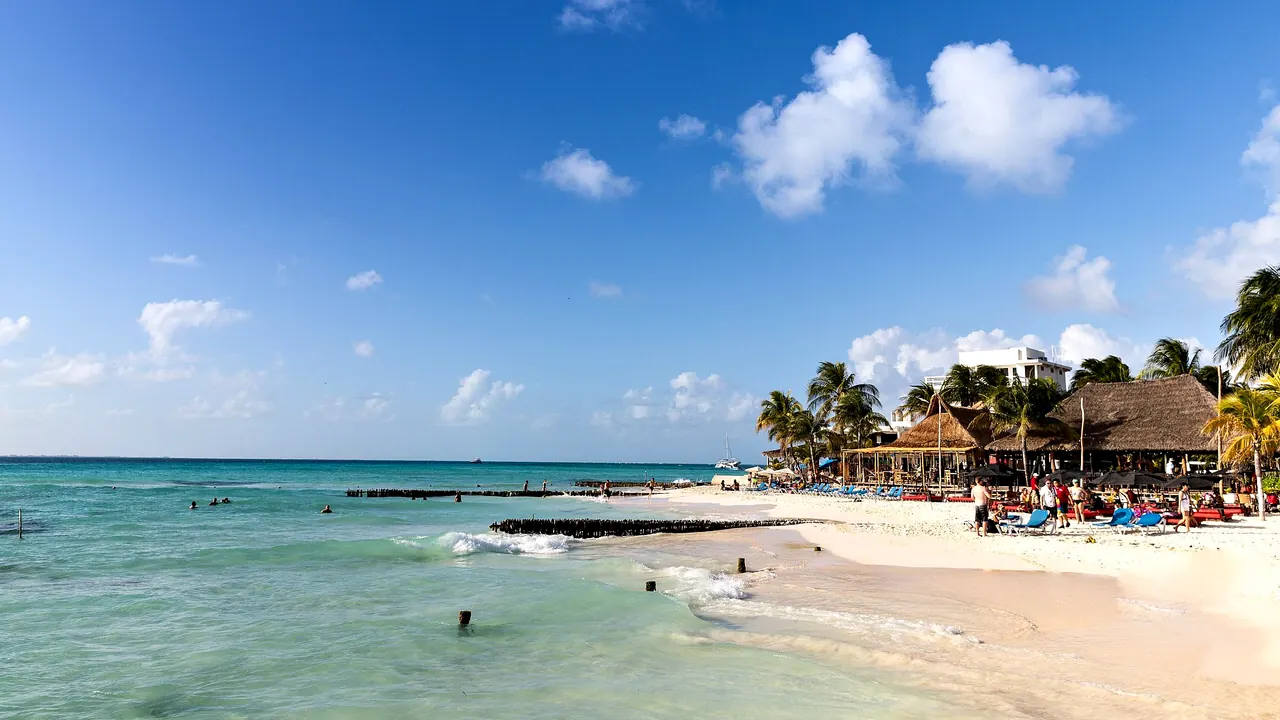
A beach with palms and thatched shade on Isla Mujeres
- Beaches90
- Getting around68
- Families62
Match
44
Every category weighted equally
- Beach & sun52
- Culture & arts36
- Food & nightlife39
- Family trip52
- Outdoors49
- Relax & unwind50
- Shopping & style39
- On a budget45
Isla Mujeres in twelve categories
Our verdict on each, scored 0 to 100 against the same fixed benchmark cities, so a score means the same thing on every page.
Beaches & swimming. Scores 90 out of 100.
Food & drink. Scores 40 out of 100.
Culture & sights. Scores 15 out of 100.
Nightlife. Scores 30 out of 100.
Nature & outdoors. Scores 58 out of 100.
Day trips. Scores 34 out of 100.
Good for families. Scores 62 out of 100.
Getting around. Scores 68 out of 100.
Shopping & style. Scores 25 out of 100.
Affordability. Scores 48 out of 100.
Live music & performing arts. Scores 8 out of 100.
Wellness & relaxation. Scores 52 out of 100.
Isla Mujeres category by category
Beaches & swimming
90Beach life here centres on Playa Norte, at the island's northern tip: soft white sand and turquoise water so shallow and sheltered that you can wade out a long way with the sea barely at your waist. The water is warm all year, around 27°C to 29°C, and the sun sets over the bay, which is rare on this coast. The calmer western side has smaller spots such as Playa Lancheros and the swimming platforms around Sac Bajo.
The eastern shore faces the open Caribbean and is rocky and wave-beaten, more for looking at than swimming, and in some summers sargassum seaweed washes up there. For long white beaches beyond Playa Norte, the Cancun Hotel Zone is a short ferry away.
Food & drink
40Eating on the island is about fresh fish and Yucatecan cooking in a small-town setting. Tikin xic, fish marinated in achiote and sour orange and grilled whole, is the local speciality, along with ceviche, lobster in season and fish tacos. The best value is in the family-run loncherías and taco stands of the town centre and around the municipal market, while the pedestrian streets near the ferry and Playa Norte fill with tourist restaurants and beach grills. It is pleasant and fresh rather than deep, and anyone after fine dining or variety will find more across the water in Cancun.
Culture & sights
15Sightseeing is light. At Punta Sur, the island's rocky southern tip, the remains of a small Maya shrine to the goddess Ixchel stand above the sea next to a sculpture garden, and the overgrown ruins of the Hacienda Mundaca recall a nineteenth century slave trader turned planter. The town itself is a grid of colourful low houses with a small church. The underwater sculpture museum off the coast is seen by snorkel or dive. Visitors who want Maya cities of real stature have to travel to the mainland and well beyond.
Nightlife
30Evenings start with sunset drinks on the sand at Playa Norte, then move to the pedestrian streets of the town centre, where open-fronted bars, rooftop terraces and a few places with dancing stay busy until late, especially at weekends and in the winter high season. The mood is barefoot and easygoing rather than wild. Serious clubbing is across the bay in the Cancun Hotel Zone, but getting back means planning around the last ferries or a late water taxi, so most visitors keep their nights on the island.
Nature & outdoors
58The outdoors here is underwater and offshore. From roughly June to September boats leave the island to swim alongside whale sharks feeding in the open sea, the island's great natural draw. Isla Contoy, a protected bird sanctuary of frigatebirds, pelicans and cormorants, is a boat trip to the north, and reefs such as Manchones and the underwater sculptures offer good snorkelling and diving in clear water. Sport fishing, kayaking and paddleboarding on the calm western side fill out the rest.
On land the island is flat, narrow and about 7km long, and the main walk is along the cliffs of Punta Sur and the wild eastern shore. There are no hills, forests or trails of note.
Day trips
34The ferry to Cancun is short, and from the mainland a day out is possible but takes effort. Cancun itself, with its Maya museum and the small ruins of El Rey, is the easiest, and the fishing village of Puerto Morelos and the beach town of Playa del Carmen are about an hour or so further down the coast. The big names of the Yucatán, Chichén Itzá, Tulum and colonial Valladolid, lie two and a half hours or more away once the crossing is counted, which makes for long organised days. Most visitors stay on the island and treat the mainland as an occasional outing.
Good for families
62For families with young children the island's strength is the sea at Playa Norte: shallow, waveless and warm, it works almost like a giant paddling pool. The turtle sanctuary on the lagoon side, where hatchlings are raised and released, is a favourite with children, and the snorkelling park near Punta Sur suits older ones with zip lines and calm reef water. Driving a golf cart around the island is an outing in itself.
The town is small, relaxed and easy to manage, though midday heat and the lack of shade on the beach need planning. There is little else made for children, and the large eco-parks of the Riviera Maya are a long trip away.
Getting around
68The island is small enough that getting around is simple. The town centre, the ferry dock and Playa Norte are all within a short walk of one another, and the rest of the island, down to Punta Sur, is a short ride by taxi, rented golf cart, moped or bicycle along a single coastal road. Frequent passenger ferries cross to Cancun in about 20 minutes. Beyond the island it gets harder: reaching anything on the mainland means the ferry and then a taxi, bus or tour.
Shopping & style
25Shopping means strolling the pedestrian streets of the town centre, lined with stalls and small shops selling silver jewellery, embroidered dresses, hammocks, Huichol beadwork, painted ceramics and beachwear. Bargaining is expected in the souvenir stalls. There is little beyond that, and anyone wanting brands or malls goes to Cancun.
Affordability
48Prices follow the Caribbean resort pattern rather than ordinary Mexican levels. Rooms on or near Playa Norte and boutique hotels on the island's quieter shores are expensive in the winter high season, as are beach bars, tours such as whale shark trips, and golf-cart hire. Simpler guesthouses in the town centre, the market loncherías and taco stands, and the cheap ferry keep a careful budget workable, but this is not a bargain destination.
Live music & performing arts
8There is essentially no performing arts scene. Live music means a guitarist or a band in a bar or restaurant in the evening, and folk dancing turns up at local festivals. Theatre or concerts need a trip to the mainland, and even there the offer is thin.
Wellness & relaxation
52The island's restorative quality comes from its pace. Days here move slowly, from a morning swim to a hammock to sunset on the bay, and the quieter southern and eastern shores, away from the town, are where people go to switch off. Massage on the beach and in small spas is easy to find, yoga classes are common, and some places offer a temazcal, the traditional Maya sweat lodge. There is no bathing tradition or thermal culture beyond that, and the town streets near the ferry can be noisy in the high season.
Where to stay in Isla Mujeres
Most visitors stay at the northern tip, in the town centre or close to Playa Norte. This is the easiest base for a first visit and for families with young children. The ferry dock, the shallow beach, the market loncherías and the evening bars are all a short walk apart, so you won't need to hire anything. The downside is noise, because the pedestrian streets near the ferry stay busy late in the high season. The simpler guesthouses that keep a careful budget workable are mostly in the grid of streets a little back from the sand.
Along the calm western side, around Sac Bajo and the lagoon, the pace slows. The swimming platforms and the still water for kayaking and paddleboarding suit couples and families who want quieter evenings, and town is a short ride away by golf cart or taxi.
The southern and eastern shores towards Punta Sur are for a quiet stay. This is a rocky, wave-beaten coast for sea views and sunrises rather than swimming, and it is where people come to switch off, usually in pricier boutique hotels. You will need a cart or taxi to reach the beach and dinner. The island is only about 7km long, so one base covers it all, and the mainland works best as an occasional day out rather than a second stop.
When should you go?
Pick a month to see what it is like. The climate figures are measured averages, not a forecast.
Isla Mujeres in July
Daytime high, °C
Rainfall in the month, mm
The whole year
Shaded against this city’s own year: the deepest cell is its best month for that figure and the palest its weakest.
Where the figures come from
Isla Mujeres has no weather station within reach, so its figures come from a gridded climate model rather than a measured record, and read a broad area rather than one spot.
Temperature and rainfall are climate normals, averaged over the years shown. Isla Mujeres: 2001-2020 normals, NASA POWER reanalysis grid, no weather station within 90 km.
Before you go
| Measure | Isla Mujeres |
|---|---|
| Official language | Spanish, Nahuatl, Yucatec Maya |
| Currency | Mexican Peso (MXN) |
| Sockets | AB127 V, 60 Hz |
| Driving side | Right |
| Time zone | UTC-5 |
| Emergency number | 911 |
| Main airport | Cancún International Airport (CUN)136 non-stop destinations |
| Public holidays this year | 9 days |
By the numbers
| Measure | Isla Mujeres |
|---|---|
| Population | 13,174 |
| People per km² | 3,137 |
| Swim season, months above 21 °C | 12 months |
Compare Isla Mujeres with
Every comparison with a written verdict behind it.