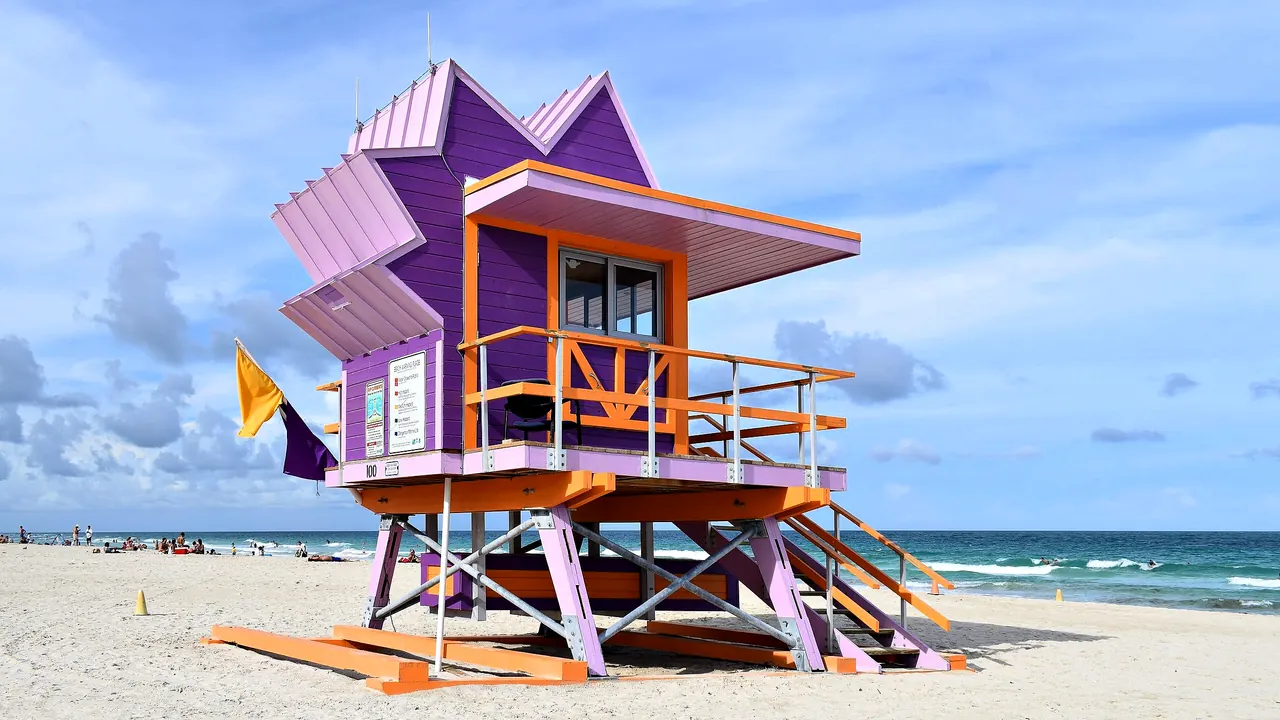
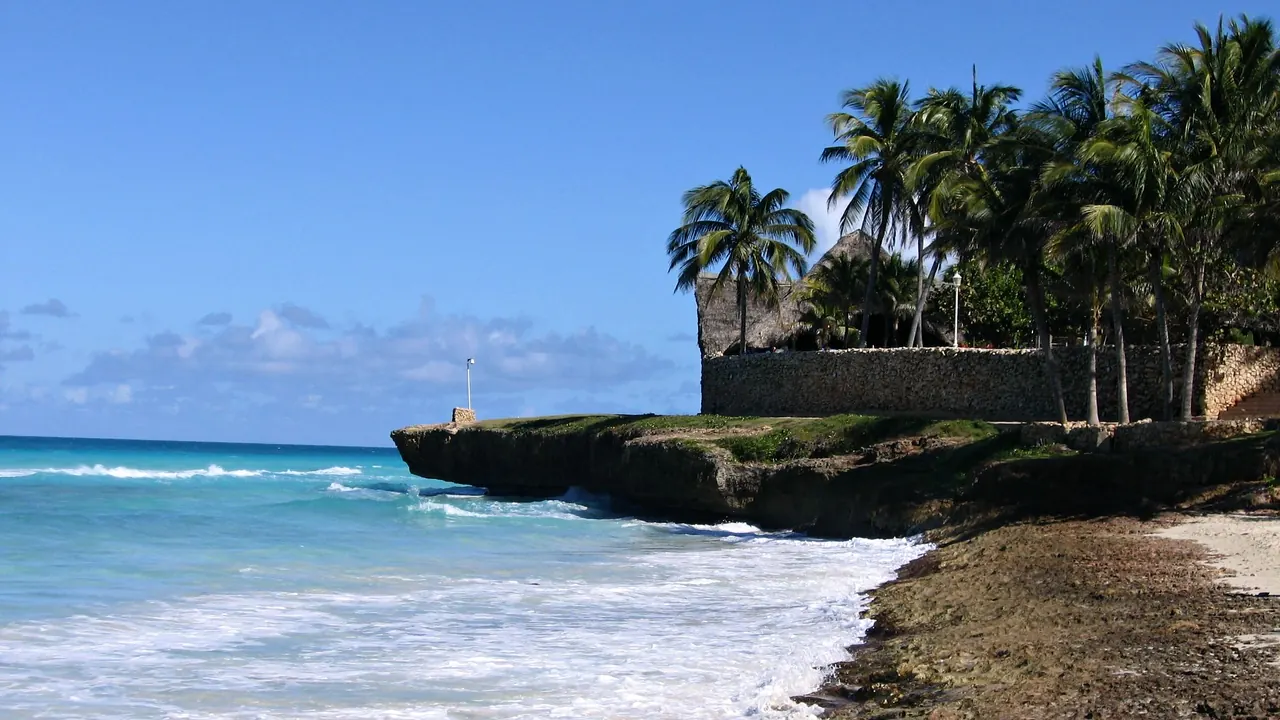
Photos: Miami Beach by Radomianin, CC BY-SA 4.0, cropped; Varadero by Dordelune, Public domain.
Miami Beach or Varadero?
Our verdict in twelve categories, each scored against the same fixed benchmark cities, and the climate month by month, so you can choose for your trip.
Choose Miami Beach for
- nightlife
- food and drink
- shopping
Miami Beach suits travellers who want the beach as one part of a fuller trip. It has Art Deco streets to walk, Latin-tinged food, clubs that run until dawn and a symphony hall a few blocks from the sand. Mainland Miami's neighbourhoods and museums are just across the bay. The price is a much higher bill for almost everything.
Choose Varadero for
- prices
- beaches
Choose Varadero when the beach itself is the plan. The sand runs further, the water is clearer and more turquoise, and an all-inclusive package costs far less than a resort week in Florida. In return the food is plain, the sights are few and evenings mean salsa and rum rather than clubbing. For history, Havana is a day out away.
Scoreboard
Twelve categories on one fixed scale from 0 to 100. The shaded stretch is the gap between the two.
Your match
Pick a travel style or drag the sliders, and both match scores follow your weighting.
Wins on nightlife and food and drink with your weighting.
Wins on prices and beaches with your weighting.
What matters to you?
Category by category
What the scores mean for a trip.
Beaches & swimming
Both are first-class beach destinations, and the difference is in character rather than quality. Miami Beach's 11km of sand is a city shore. South Beach has the crowds, music and pastel lifeguard huts, Mid-Beach and North Beach are calmer, and a beachwalk runs behind the dunes. The water is green-blue rather than clear.
Varadero's strip is nearly twice as long, and its water is the clear, shallow turquoise that Miami lacks, sheltered close to shore. Beyond the town end the sand fronts the resorts and finishes in empty coves near the tip, so it feels more spacious. Winter fronts can still bring red-flag days.
Food & drink
Food is one of the widest gaps between the two. Miami Beach has upscale hotel dining and seafood with a strong Latin American accent, Cuban sandwiches and cafecito from takeaway windows, and stone crabs in winter. Little Havana is just across the causeway. Only the tourist menus of Ocean Drive let it down.
In Varadero most meals come from the resort, and the few private restaurants in town serve a narrow range of Cuban staples, depending on which ingredients can be found. A good daiquiri, fresh fruit and strong coffee are the highlights, so anyone who travels to eat will be happier in Florida.
Culture & sights
Miami Beach has much more to see. The Art Deco Historic District and the Miami Modern hotels further north form a whole townscape of interwar resort buildings that you can explore on foot. The Wolfsonian, the Bass and the Holocaust Memorial add to it, and the larger museums are a short trip across the bay.
Varadero's sights fit into an afternoon: the Du Pont family's Xanadu Mansion on its headland, a small museum in an old wooden summer house, and pre-Columbian drawings in the Cueva de Ambrosio. For Cuba's real history and architecture you have to leave the peninsula.
Nightlife
South Beach is one of the best-known places in the world for going out. It has DJ clubs open until dawn, afternoon pool parties and lobby bars made for being seen along Collins and Washington Avenues, with dress codes, door policies and big bills to match. Sunset Harbour and Mid-Beach have quieter cocktail bars.
In Varadero, most evenings are spent inside the resorts, with animation shows and drinks by the pool. The town has a small, friendly scene of open-air bars, salsa clubs where locals dance with real skill and a disco inside a limestone cave, but it is over well before dawn.
Nature & outdoors
Neither place has hills or real hiking, and in both the outdoor life happens mostly on the water: diving on reefs and wrecks, fishing trips and calm water for paddling. Miami Beach has the edge because of what is within reach. The Everglades are about an hour away, Biscayne National Park protects a bay of reefs and keys, and Oleta River has mangrove trails close by.
Varadero has catamaran trips to the offshore cays, kitesurfing when the winter winds blow, the cactus trails and caves of the Varahicacos reserve and the Cueva de Saturno cenote. The Zapata wetlands take a long day rather than an easy morning.
Day trips
The two offer a similar range of outings, but of very different kinds. From Miami Beach the trips are American: Little Havana, Wynwood and Vizcaya on the mainland, then Fort Lauderdale, Palm Beach and Key Largo further out, most of them needing a car or a tour.
Varadero's day trips are where its history lies. Havana, about two hours away, fills a long and memorable day. Matanzas has its nineteenth-century theatre and old French pharmacy, Cárdenas has its horse carts, and the Bay of Pigs makes a longer outing.
Good for families
For families the two are much alike: the beach does most of the work, and little beyond it is built for children. Miami Beach has lifeguards along the whole shore and calmer bases in Mid-Beach and towards Surfside. The zoo and science museum are on the mainland, though, and South Beach is loud.
In Varadero, the shallow water and the all-inclusive resorts with kids' clubs make days easy, and Cubans are warm with children. Parents should bring medicines, nappies and sun cream from home, because supplies are hard to find and medical care is basic.
Getting around
Miami Beach is the easier place to get around. South Beach is flat and compact enough to walk, free trolleys and buses run up Collins Avenue, and bike share and the beachwalk make cycling easy. Leaving the island is the slow part, with no rail link and heavy traffic on the causeways.
Varadero stretches its resorts along a single road about 20km long. Beyond the walkable grid at the town end you depend on the tourist bus, taxis, coco-taxis or horse carriages. Any trip off the peninsula needs a transfer, a tour, a coach or a car with a driver.
Shopping & style
Miami Beach is far ahead here, though it is no shopping capital. Lincoln Road's palm-shaded pedestrian mall is mostly international chains, while Bal Harbour, at the northern end of the island, brings together the big European fashion and jewellery houses.
Varadero has what a beach visitor needs and some souvenirs: craft markets along the main avenue, resort shops and a small mall. The things worth buying are rum and cigars from the official shops.
Affordability
Varadero is clearly the cheaper of the two. Its all-inclusive packages undercut many Caribbean rivals, and guests who stay at the resort spend little. Taxis, excursions and private restaurants are priced for foreigners, though.
Miami Beach is expensive. Oceanfront hotels cost a great deal in winter, with resort fees, parking and tipping added on top, and South Beach cocktails and club entry are dear even by big-city standards. North Beach hotels, lower summer rates and the free trolleys help, but it is still the costlier choice.
Live music & performing arts
For a resort, Miami Beach has a real arts calendar. The New World Symphony plays in its Frank Gehry hall and projects some concerts for audiences on the lawn outside. Miami City Ballet is based here, and the Jackie Gleason and Colony theatres stage touring and smaller shows, mostly from autumn to spring.
Varadero has no theatre or concert hall, but live music is everywhere in a casual way: son trios in hotel lobbies, strong bands in the dance clubs and cabaret shows in the resorts. For Cuban ballet or serious music, you need to go to Havana.
Wellness & relaxation
Both offer resort spas rather than any bathing tradition, and Miami Beach's are larger and better equipped, with hydrotherapy circuits, saunas, plunge pools and sunrise yoga on the sand. For a restful stay, choose Mid-Beach or the stretch towards Surfside rather than South Beach.
Varadero's spas are simpler, with massages in open-air cabins by the sea, and standards vary. Its strength is the slow pace of the quieter resorts at the eastern end, where there is nothing to organise.
When should you go?
Pick your month. The climate figures are measured averages, not a forecast.
Miami Beach in July
Varadero in July
Daytime high, °C
Rainfall in the month, mm
Where the figures come from
Varadero has no rain gauge within 25 km of the centre, so its rainfall comes from a gridded climate dataset read at the city rather than from a gauge further away.
Temperature and rainfall are climate normals, averaged over the years shown. Miami Beach: 1991-2020 (sunshine 1981-2010) normals, Miami International Airport (18.8 km from centre). Varadero: 2007-2020 (rainfall 1991-2020) normals, Varadero, Matanzas (0.7 km from centre).
Both are warm enough for swimming all year, with the sea never far below 25°C, and both follow the same pattern: a dry season from about November to April and a hot, wet season from May to October. Winter, with highs in the mid-20s, is the most comfortable time to walk Miami Beach's Art Deco streets. From June to September highs reach 33°C, afternoon storms are frequent and June alone brings around 267mm of rain. Miami Beach is sunniest in spring, from March to May.
Varadero's dry season is drier still, especially in December and February, though winter cold fronts can bring wind and red-flag days on the beach. Its wet months are steadily rainy rather than peaking as sharply as Miami's, and late summer into autumn is hurricane season. For both, late November to April is the safest choice. Late summer has the warmest sea, around 29°C, but also the most heat and storms.
Which traveller are you?
For a food and nightlife trip, Miami Beach is the clear pick. Cuban takeaway windows, winter stone crabs and chef-driven seafood lead into late dinners and South Beach clubs that keep going until dawn. Varadero offers resort buffets and salsa bars that close long before that.
On a trip on a tight budget, Varadero goes much further. An all-inclusive package covers the room, meals and drinks on a beach every bit as good as Florida's. In Miami Beach, resort fees, parking and costly cocktails add to every bill.
For a culture and arts trip, Miami Beach has far more close at hand: the Art Deco district, the Wolfsonian and the Bass, the New World Symphony and Miami City Ballet. Varadero's sights take a few hours, and for real culture you need a long day in Havana.
Before you go
| Measure | Miami Beach | Varadero |
|---|---|---|
| Official language | - | Spanish |
| Currency | US Dollar (USD) | Cuban Peso (CUP) |
| Sockets | AB120 V, 60 Hz | AB110 V, 60 Hz |
| Driving side | Right | Right |
| Time zone | UTC-5, UTC-4 in summer | UTC-5, UTC-4 in summer |
| Emergency number | 911 | Police 106, ambulance 104, fire 105 |
| Elevation | 1 m | 4 m |
| Main airport | Miami International Airport (MIA)16 km from centre198 non-stop destinations | Juan Gualberto Gomez International Airport (VRA)19 km from centre1 non-stop destination |
| Public holidays this year | 11 days | 9 days |
By the numbers
| Measure | Miami Beach | Varadero |
|---|---|---|
| City population | 82,890 | 21,170 |
| People per km² | 2,109 | 662 |
| Museums within 10 km | 14 | 0 |
| UNESCO World Heritage sites within 50 km | 0 | 0 |
| Swim season, months above 21 °C | 12 months | 12 months |
Where else could you go?
Every comparison below shares a destination with this one, so you can follow Miami Beach or Varadero somewhere new.
- Miamivs Miami Beach
- Fort Lauderdalevs Miami Beach
- Boca Ratonvs Miami Beach
- Palm Beachvs Miami Beach
- West Palm Beachvs Miami Beach
- Havanavs Varadero