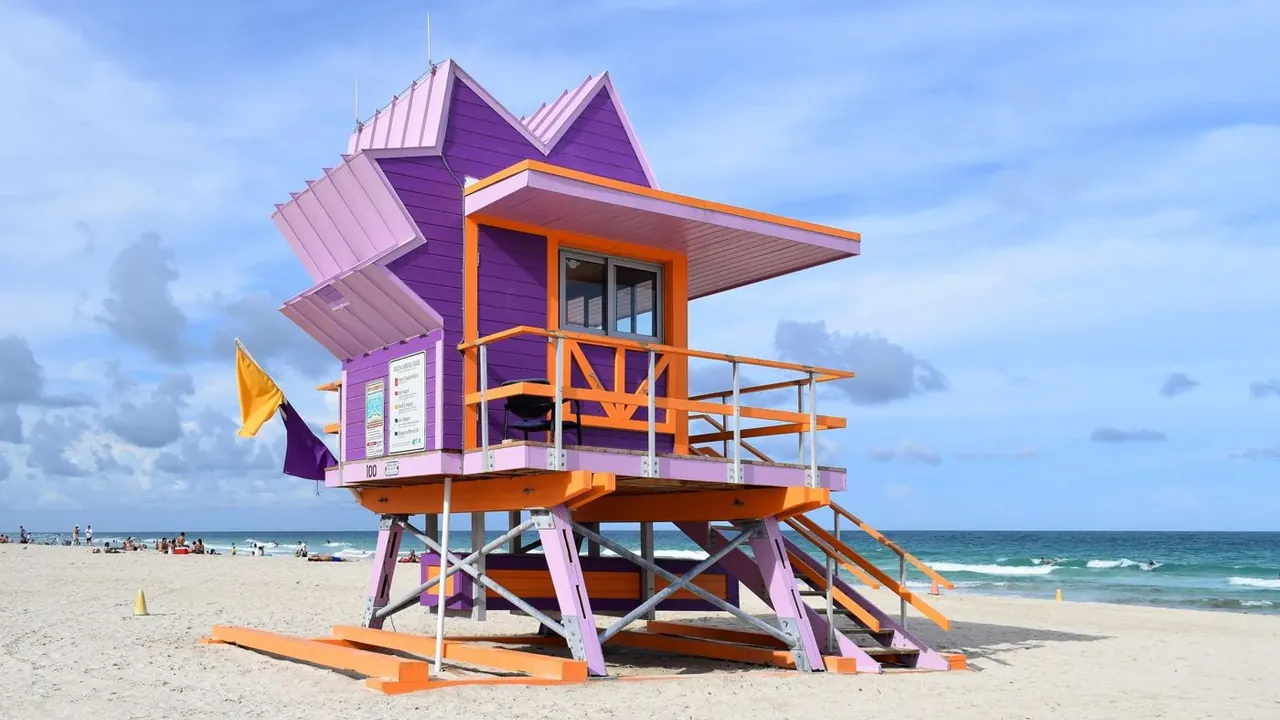
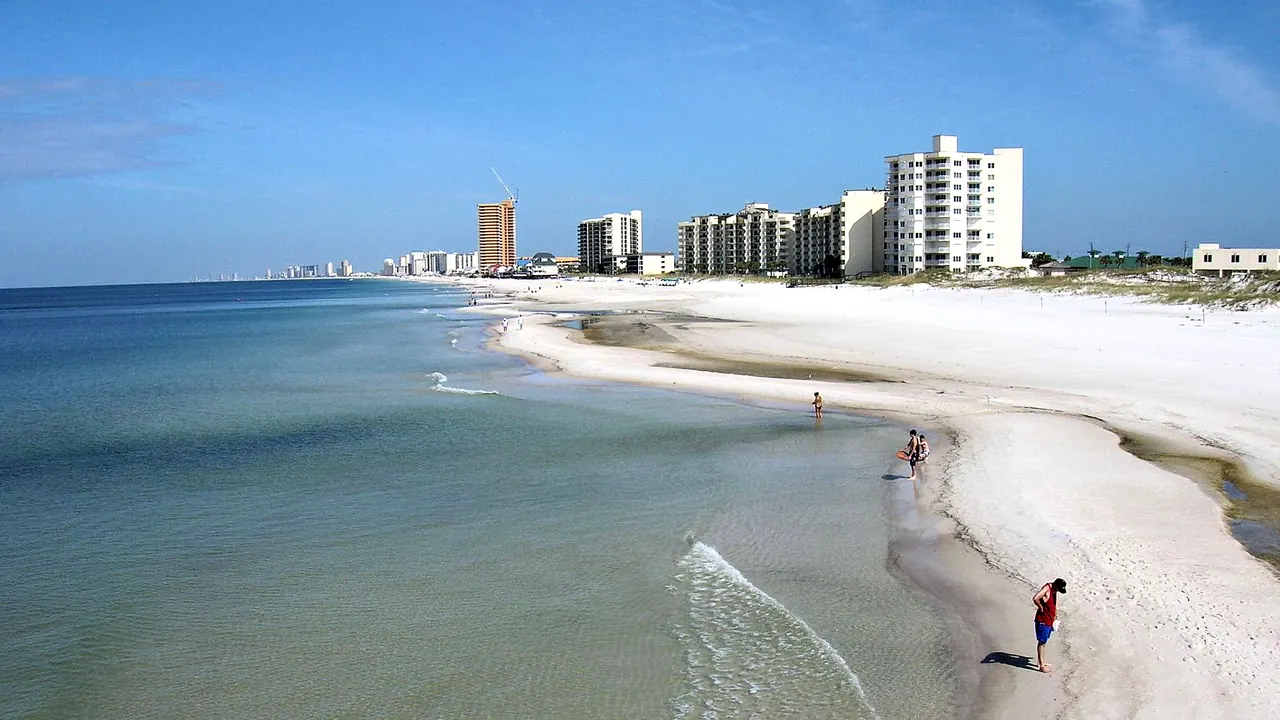
Photos: Miami by Radomianin, CC BY-SA 4.0, cropped; Panama City Beach by j.s. clark/ "Image by jsclark.net.", CC BY-SA 2.0, cropped.
Miami or Panama City Beach?
Our verdict in twelve categories, each scored against the same fixed benchmark cities, and the climate month by month, so you can choose for your trip.
Choose Miami for
- nightlife
- culture and sights
- shopping
Miami suits travellers who want the beach as one part of a fuller city trip. There are Cuban lunch counters and late dinners, Art Deco streets and Vizcaya, clubs that run until dawn and the Everglades on the western edge. Because the Atlantic stays warm through the winter, it is also the place for winter sun, as long as the budget can stretch to an expensive city.
Choose Panama City Beach for
- prices
- families
For a summer family vacation built around sand and water, Panama City Beach is the simpler and cheaper choice. Families can stay in a condo with a kitchen and a pool, swim in shallow green Gulf water, and spend days at water parks and mini-golf along the strip or in the sheltered lagoon at St. Andrews. There is little in the way of museums, dining or nightlife beyond beach bars, so it suits people happy to spend nearly every day on the shore.
Scoreboard
Twelve categories on one fixed scale from 0 to 100. The shaded stretch is the gap between the two.
Your match
Pick a travel style or drag the sliders, and both match scores follow your weighting.
Wins on nightlife and culture and sights with your weighting.
Wins on prices and families with your weighting.
What matters to you?
Category by category
What the scores mean for a trip.
Beaches & swimming
Both are first-rate beach destinations, but they feel different. Miami Beach is one long, built-up strip of pale sand on the Atlantic, from the Art Deco hotels of South Beach to the quieter family stretch at Surfside. Key Biscayne has calmer, shallower water, and the sea is warm enough to swim in every month.
Panama City Beach has finer, whiter quartz sand and clear green Gulf water. The most natural stretches are in St. Andrews State Park and on Shell Island, which has no buildings and is reached by boat. Its swimming season is shorter, though: in winter the water is too cold for most people. Rip currents are a real risk here, so check the beach flags.
Food & drink
Miami eats like a Latin American capital. Cuban cafecito, pastelitos and lechon in Little Havana are the base, with Haitian, Venezuelan, Peruvian and Nicaraguan cooking around the city and a serious chef-led tier in Brickell and the Design District.
Panama City Beach has one strength: Gulf seafood eaten casually, such as blackened grouper, shrimp baskets and local oysters on dockside decks. Beyond that, the choice is mostly chains and big themed restaurants along Front Beach Road. Both places serve grouper sandwiches, but only Miami gives you reasons to plan every meal.
Culture & sights
Miami has real sights for a few days. Walk the pastel 1930s hotels of the Art Deco district along Ocean Drive, tour the Italianate villa and gardens of Vizcaya on the bay, and add the Perez Art Museum, the Wolfsonian and the Wynwood murals.
Panama City Beach has almost none of this. The strip is condo towers and modern attractions. The small Man in the Sea Museum, about diving history, and the older streets of the St. Andrews district across the bay are about all there is unless you drive further.
Nightlife
In Miami, going out is a main reason to visit. South Beach and downtown clubs with international DJs run until dawn, Wynwood has warehouse bars and breweries, and Little Havana has salsa nights. Money and stamina get you the most out of it.
In Panama City Beach, an evening means a frozen drink at a tiki hut at sunset or a cover band on a deck over the sand, and most places are quiet by mid-evening. Both towns change in March, for different reasons: Miami fills with dance-music crowds, while Panama City Beach turns over to rowdy spring-break students.
Nature & outdoors
Both are flat, but Miami has the bigger landscapes nearby. The Everglades start at the city's edge, with airboats, alligators along the Anhinga Trail and cycling at Shark Valley. Biscayne National Park and the coral reefs of Key Largo are good for snorkelling and kayaking among mangroves.
Panama City Beach is on a smaller scale. It has tall white dunes and pine flatwoods in St. Andrews State Park, a rare coastal dune lake at Camp Helen, dolphin-watching trips on the bay and dives on wrecks offshore. Summer heat and humidity limit outdoor time in both places.
Day trips
Both have a modest choice of day trips, and you need a car for either. From Miami, you can see the Gilded Age mansions and the Flagler Museum in Palm Beach, or the seafood shacks of Islamorada in the Upper Keys. Key West is too far for a comfortable day.
Panama City Beach has more varied small towns. The pastel planned towns of Seaside and Rosemary Beach on 30A are under an hour away, Apalachicola is an old oyster port with brick warehouses, and Pensacola's historic district is near the two-hour limit.
Good for families
Panama City Beach is built for families. Most visitors come with children, condos with pools and kitchens are the normal place to stay, and the water park, marine park, go-karts and mini-golf are all on one road. The St. Andrews lagoon is a safe place for small children to snorkel. Avoid March, when spring break takes over the strip.
Miami has more to see, including Zoo Miami, the planetarium and aquarium at the Frost Science Museum and the Venetian Pool in Coral Gables. But each outing usually means a car journey, and the party side of South Beach is not what most parents want.
Getting around
Neither is easy without a car, but Miami is less dependent on one. South Beach is flat and easy to walk or cycle, the free Metromover links downtown with Brickell, and ride-hailing covers Wynwood or Little Havana.
Panama City Beach stretches about 43km along one main road. The trolley buses are slow and infrequent, pavements come and go, and almost every outing beyond your stretch of sand needs a car.
Shopping & style
Miami is a serious luxury shopping city. Fashion houses have flagship stores in the Design District, Bal Harbour has an exclusive open-air mall, and there are large outlet malls inland and mainstream brands along Lincoln Road. Little Havana has guayabera makers and cigar shops.
Panama City Beach offers a big open-air centre of American chain stores by the city pier and huge souvenir warehouses with shark-mouth entrances. For anything more individual, go to the boutiques in the 30A towns.
Affordability
Panama City Beach is easier on the wallet. Renting a condo lets you cook instead of eating out, and outside summer and spring break the rates drop sharply. Meals, attractions and car hire still cost what they do at any American resort.
Miami is expensive throughout. Beachfront hotels add resort fees and parking, bar bills climb quickly, and South Beach club drinks are among the costliest anywhere. Free beaches, cheap Cuban lunch counters and staying on the mainland soften the bill.
Live music & performing arts
Miami has a real arts calendar, mostly in winter. The Adrienne Arsht Center hosts opera and touring Broadway shows, Miami City Ballet is a company of standing, and the New World Symphony plays in its Frank Gehry building with screenings on the lawn. The music most rooted in the city is salsa and Afro-Cuban bands around Little Havana.
Panama City Beach has acoustic sets and cover bands at the beach bars. Across the bay, a restored historic theatre puts on a modest season of shows.
Wellness & relaxation
Miami has more to offer here, though neither is a wellness destination. The big hotels on Miami Beach and Key Biscayne have full spa floors, there is yoga on the sand at sunrise, and a long-established Russian and Turkish bath house offers steam rooms and cold plunges. The city is loud, though, so look for calm on Key Biscayne or around Surfside.
In Panama City Beach, relaxing comes from the setting more than from facilities. It has a few day spas, and from autumn to spring the empty beach is good for long sunset walks.
When should you go?
Pick your month. The climate figures are measured averages, not a forecast.
Miami in July
Panama City Beach in July
Daytime high, °C
Rainfall in the month, mm
Where the figures come from
Panama City Beach has no rain gauge within 25 km of the centre, so its rainfall comes from a gridded climate dataset read at the city rather than from a gauge further away.
Temperature and rainfall are climate normals, averaged over the years shown. Miami: 1991-2020 (sunshine 1981-2010) normals, Miami International Airport (10 km from centre). Panama City Beach: 1971-2000 (rainfall 1991-2020) normals, Tyndall Air Force Base (24.6 km from centre).
Miami is warm all year, and its best months for the beach and the streets run from December to April. Days are dry and sunny, and the sea rarely drops below 25°C. From May the heat builds and the rain arrives. June brings around 267mm, and the wet, sticky weather lasts into October, with short heavy storms most afternoons. The beach still works then, but walking around the city in the middle of the day is hard going.
Panama City Beach follows the seasons much more closely. In January the daytime high is about 16°C and the Gulf falls to around 17°C, so winter is for walks on the sand, not swimming. May and October are the most comfortable beach months. From June to September the sea sits near 29°C, but the days are hot and the wettest months of its year fall in that stretch. In winter, Miami is the only one of the two where you can swim.
Which traveller are you?
For a food and nightlife trip, Miami is far ahead. You can have Cuban coffee at a ventanita, ceviche or stone crab for dinner, and then rooftop bars in Brickell, salsa on Calle Ocho or a club that stays open until dawn. Panama City Beach offers seafood shacks and tiki bars.
On a family trip with children, Panama City Beach is the easier choice. The water is shallow, condos with pools are the normal place to stay, the lagoon is sheltered and the attractions are all along one road. In Miami, outings mean long drives, and South Beach's party side gets in the way.
On a tight budget, Panama City Beach goes further. Cooking in a rented condo saves on restaurants, and winter stays are especially cheap. Miami adds resort fees, parking and costly drinks, although its Cuban lunch counters and free Metromover help a little.
Before you go
| Measure | Miami | Panama City Beach |
|---|---|---|
| Currency | US Dollar (USD) | US Dollar (USD) |
| Sockets | AB120 V, 60 Hz | AB120 V, 60 Hz |
| Driving side | Right | Right |
| Time zone | UTC-5, UTC-4 in summer | UTC-6, UTC-5 in summer |
| Emergency number | 911 | 911 |
| Elevation | 2 m | 3 m |
| Main airport | Miami International Airport (MIA)7 km from centre198 non-stop destinations | Northwest Florida Beaches International Airport (ECP)20 km from centre19 non-stop destinations |
| Public holidays this year | 11 days | 11 days |
By the numbers
| Measure | Miami | Panama City Beach |
|---|---|---|
| City population | 442,241 | 18,094 |
| People per km² | 3,046 | 375 |
| Museums within 10 km | 17 | 0 |
| UNESCO World Heritage sites within 50 km | 0 | 0 |
| Swim season, months above 21 °C | 12 months | 7 months |
Where else could you go?
Every comparison below shares a destination with this one, so you can follow Miami or Panama City Beach somewhere new.
- Miami Beachvs Miami
- Fort Lauderdalevs Miami
- Boca Ratonvs Miami
- Destinvs Panama City Beach
- Palm Beachvs Miami
- West Palm Beachvs Miami