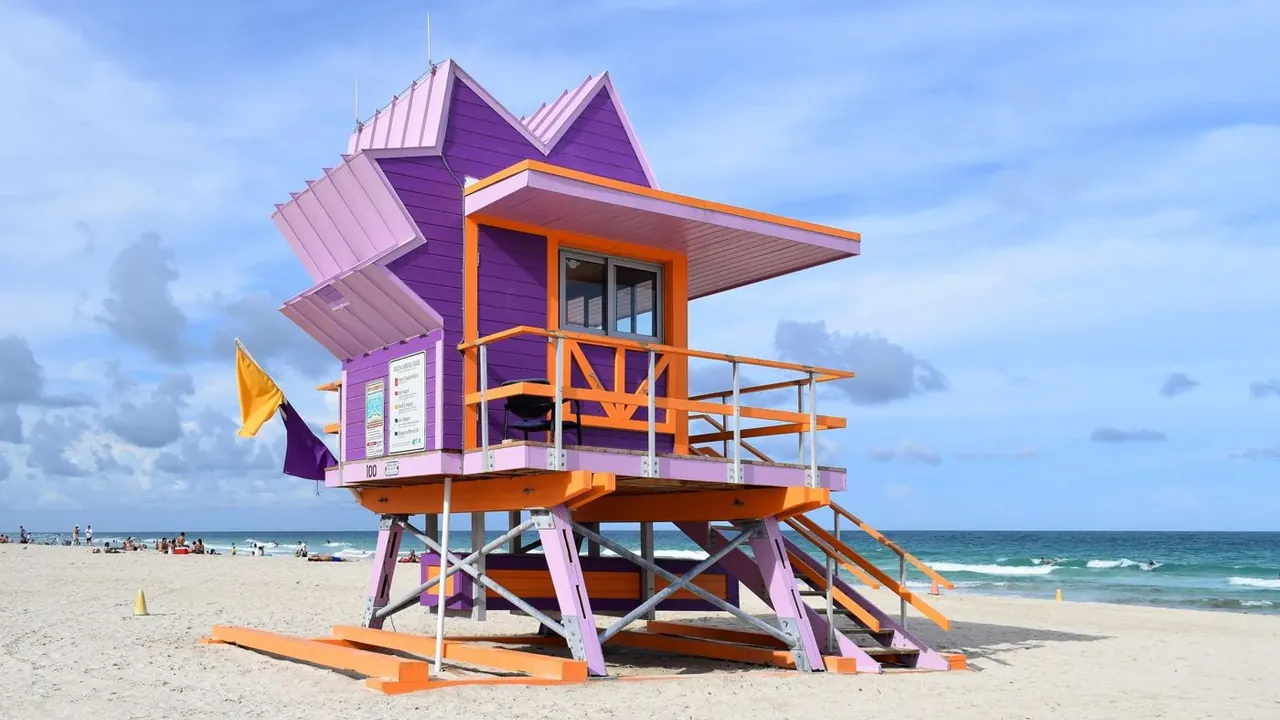
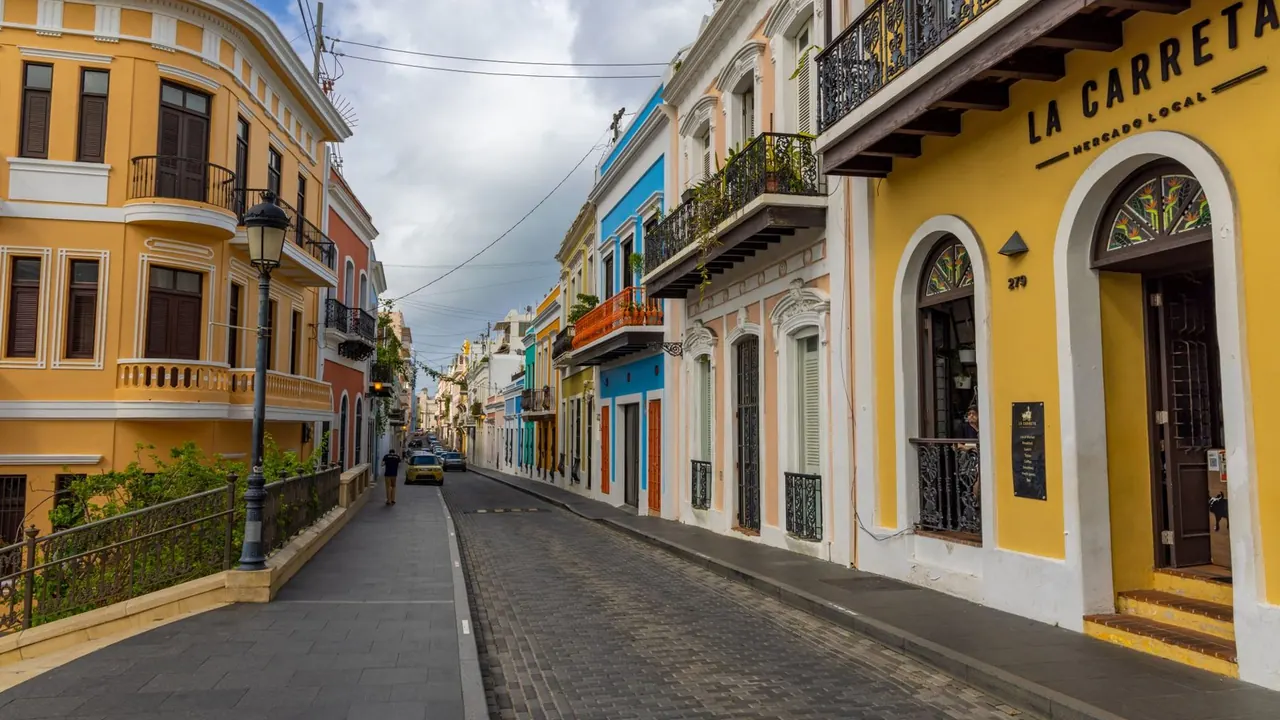
Photos: Miami by Radomianin, CC BY-SA 4.0, cropped; San Juan by Mohan Nannapaneni, Pexels License.
Miami or San Juan?
Our verdict in twelve categories, each scored against the same fixed benchmark cities, and the climate month by month, so you can choose for your trip.
Choose Miami for
- shopping
- nightlife
- beaches
Miami suits travellers who put the beach and the night first. Its barrier island gives one long, unbroken run of sand from South Beach to Surfside, the clubs run until dawn, and the Design District and Bal Harbour make it a genuine luxury shopping trip. Add Cuban lunch counters, a wider spread of Latin American cooking and the most child-oriented attractions of the two, and it rewards a bigger budget and a winter escape.
Choose San Juan for
- prices
- nature and the outdoors
- day trips
San Juan is the better pick for anyone who wants history and landscape alongside the sea. The walled old town with El Morro and San Cristóbal is centuries older than anything in Miami, El Yunque's rainforest and the glowing lagoon near Fajardo sit within an easy drive, and Ponce and Loíza make more rewarding outings than South Florida's towns. It also costs somewhat less, and its nights feel looser and more street-based.
Scoreboard
Twelve categories on one fixed scale from 0 to 100. The shaded stretch is the gap between the two.
Your match
Pick a travel style or drag the sliders, and both match scores follow your weighting.
Too close to call, 2 points apart
Wins on shopping and nightlife with your weighting.
Wins on prices and nature and the outdoors with your weighting.
What matters to you?
Category by category
What the scores mean for a trip.
Beaches & swimming
Miami has the edge, mostly because its beach is one continuous, easily swum strip of pale sand along the whole barrier island, with Key Biscayne's Crandon Park and Bill Baggs for shallower, calmer water. The setting is flat and lined with buildings, and summer can bring sargassum.
San Juan's beaches are good but patchier. Isla Verde's reef-sheltered sand and the calm bay at Escambrón are excellent, yet parts of Condado and the coast towards Piñones have strong currents, so lifeguarded balnearios matter here. The palm-backed crescent at Luquillo is prettier than anything near Miami, and the winter sea runs a little warmer.
Food & drink
Miami offers more to eat. Cuban cooking leads, from cafecito at ventanita windows to lechon on Calle Ocho, but Venezuelan, Colombian, Peruvian, Haitian and Nicaraguan food broaden it, and stone crab and grouper sandwiches add a seafood strand. There is also a serious upscale tier in Brickell and the Design District.
San Juan focuses on a single island cuisine and does it well: mofongo, arroz con gandules, alcapurrias from seaside kiosks and the pork-roasting stalls of Guavate up in the hills. Rum, the piña colada and mountain-grown coffee give it a drinking culture that Miami's lunch counters lack.
Culture & sights
San Juan has the deeper history. Its walled old town of blue cobbles and colonial houses, the forts of El Morro and San Cristóbal and the cathedral with Ponce de León's tomb date back nearly five centuries and form a UNESCO site walkable in a day.
Miami's heritage is barely a century old but distinctive in its own way: the pastel 1930s Art Deco blocks of South Beach and the Italianate villa and gardens of Vizcaya. Its museums and Wynwood murals give more contemporary art than San Juan, though neither city needs more than a few days.
Nightlife
Miami is the bigger night out. South Beach and the downtown clubs run on international DJs, dress codes and bottle tables until dawn, and Wynwood's warehouse bars, Brickell's rooftops and salsa on Calle Ocho add range. It rewards a large budget and stamina.
San Juan's nights are rougher round the edges and more spontaneous. Crowds drink in the street at La Placita in Santurce, and Calle San Sebastián mixes dive bars with salsa and reggaeton dance floors. Condado and Isla Verde add casinos and hotel lounges, but the energy is concentrated from Thursday to Saturday.
Nature & outdoors
San Juan has the more varied outdoors. El Yunque brings tropical rainforest, waterfalls and hill views under an hour away, Laguna Grande glows with bioluminescent plankton on night paddles, and the north coast has proper winter surf.
Miami's great asset is the Everglades: airboats, alligators on the Anhinga Trail and cycling at Shark Valley, with Biscayne's mangroves and reefs close by. The land is entirely flat, though, and from June to September heat and mosquitoes make it hard going.
Day trips
San Juan has more worth leaving town for. Ponce, over the mountains, has its colonial plaza, red-and-black firehouse and a fine art museum, the ferry to Cataño reaches the rum distillery, and Loíza is the heart of Afro-Puerto Rican bomba. Culebra and Vieques reward an overnight stay.
Miami's options are pleasant but thinner: Fort Lauderdale's canals, Palm Beach's Gilded Age mansions and the seafood shacks of Key Largo and Islamorada. Key West is too far for a comfortable day trip.
Good for families
Miami has more built for children. Zoo Miami, the Frost Science Museum's planetarium and aquarium, Jungle Island and the Venetian Pool fill the days that the calm beaches of Key Biscayne and North Beach do not, though nearly every outing needs a car.
San Juan's highlights are simpler: El Morro's tunnels and cannons, kite flying on the lawn outside, sheltered water at Escambrón and short paved trails in El Yunque. There is no zoo or aquarium, but English, US standards and resort pools make it easy to manage.
Getting around
Neither is easy without wheels, and both rely on ride-hailing. Miami's walkable pockets are flat, South Beach is good by bike and the free Metromover links downtown and Brickell, yet nothing on rails reaches the beach.
San Juan's old town is compact but hilly and cobbled, and the Tren Urbano misses both it and the beach districts. In both cities the best outings, whether the Everglades and the Keys or El Yunque and Ponce, mean hiring a car or booking a tour.
Shopping & style
Miami is in another league for buying. The Design District's flagships among architect-designed buildings, Bal Harbour, the vast Aventura Mall and the western outlets serve luxury and bargain hunters alike, with Lincoln Road for mainstream brands.
San Juan has Plaza Las Américas and a short run of boutiques on Ashford Avenue, but its strength is souvenirs with roots: carved santos, vejigante masks, guayaberas, cigars, coffee and rum from Old San Juan. That is local character Miami largely lacks.
Affordability
San Juan is the less expensive of the two, though it still costs about what a US mainland city does. Miami's beachfront hotels add resort fees and parking on top of high winter rates, and South Beach club drinks are notoriously costly.
Both cities soften the bill the same way: Cuban counters and bakeries in Miami, kiosks and roadside stalls in San Juan, and cheaper rooms in summer and autumn at the cost of hurricane risk. In San Juan the main extra is a hire car to see the island.
Live music & performing arts
The two are evenly matched but lean in different directions. Miami is stronger on formal stages: Florida Grand Opera and Broadway tours at the Arsht Center, the well-regarded Miami City Ballet and the New World Symphony in its Gehry building, with screenings on the lawn.
San Juan's music lives more in the streets and dance halls. Salsa bands fill Old San Juan and Santurce, and open bomba sessions let visitors join the drumming and dancing, while the Casals Festival and the Centro de Bellas Artes carry the classical side.
Wellness & relaxation
Rest means resort spas in both, and neither city is quiet. Miami has a little more: sunrise yoga on the sand and a long-established Russian and Turkish bath house with banya and cold plunges, plus calm stretches on Key Biscayne and around Surfside.
San Juan has no bathing tradition, so calm comes from a hotel pool in Condado or Isla Verde, or from leaving the city for countryside retreats and the small offshore islands.
When should you go?
Pick your month. The climate figures are measured averages, not a forecast.
Miami in July
San Juan in July
Daytime high, °C
Rainfall in the month, mm
Temperature and rainfall are climate normals, averaged over the years shown. Miami: 1991-2020 normals, Miami International Airport (10 km from centre). San Juan: 1991-2020 normals, San Juan / Int., Puerto Rico (12.8 km from centre).
Miami has a real winter and a real wet season. From December to April days are pleasantly warm, around 25°C in January, rain is light and the streets are comfortable to walk. The sea is at its coolest then but still fine for swimming. From May the heat and humidity build and afternoon storms arrive, and June can bring 267mm of rain. Through the summer, walking at midday is hard work and the outdoors is best left to early mornings, even though the sea is at its warmest.
San Juan changes far less through the year. Highs stay around 29°C even in midwinter, so the beach is always an option and the old town can be walked in any month. February and March are the driest months, with March down to 53mm, and March is also the sunniest, with April and July close behind. The rest of the year brings more rain, which peaks late with 178mm in November. For a winter beach trip San Juan is the warmer of the two. For walking the streets in spring, Miami is cooler and almost as dry.
Which traveller are you?
For a shopping trip, Miami is the clear choice. The Design District's fashion-house flagships, Bal Harbour's exclusive open-air mall, Aventura's sheer size and the outlet malls to the west add up to far more than San Juan's one big mall and short boutique strip.
On an outdoors trip, San Juan wins on variety. El Yunque offers rainforest trails, waterfalls and lookout towers, Laguna Grande glows on night kayak trips and the offshore cays are good for snorkelling, whereas Miami's flat Everglades and bay are best only in winter.
On a trip with a tight budget, San Juan is the gentler of two costly cities. Kiosks in Piñones and roadside stalls keep meals cheap, and the forts charge little, while Miami adds resort fees, parking and some of the steepest bar bills anywhere.
Before you go
| Measure | Miami | San Juan |
|---|---|---|
| Official language | - | Spanish, English |
| Currency | US Dollar (USD) | US Dollar (USD) |
| Sockets | AB120 V, 60 Hz | AB120 V, 60 Hz |
| Driving side | Right | Right |
| Time zone | UTC-5, UTC-4 in summer | UTC-4 |
| Emergency number | 911 | 911 |
| Elevation | 2 m | 3 m |
| Main airport | Miami International Airport (MIA)7 km from centre198 non-stop destinations | Luis Munoz Marin International Airport (SJU)12 km from centre59 non-stop destinations |
| Public holidays this year | 11 days | 21 days |
By the numbers
| Measure | Miami | San Juan |
|---|---|---|
| City population | 442,241 | 342,259 |
| People per km² | 3,046 | 2,847 |
| Museums within 10 km | 17 | 18 |
| UNESCO World Heritage sites within 50 km | 0 | 1 |
| Swim season, months above 21 °C | 12 months | 12 months |
Where else could you go?
Every comparison below shares a destination with this one, so you can follow Miami or San Juan somewhere new.