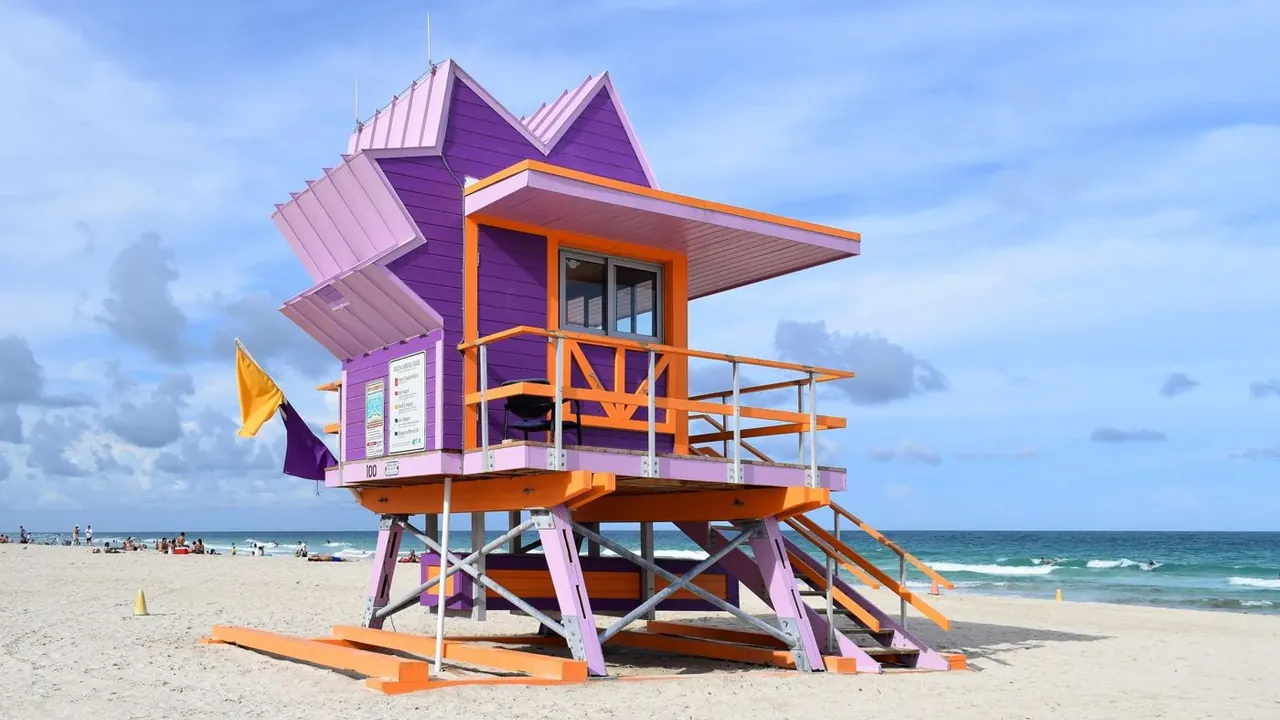
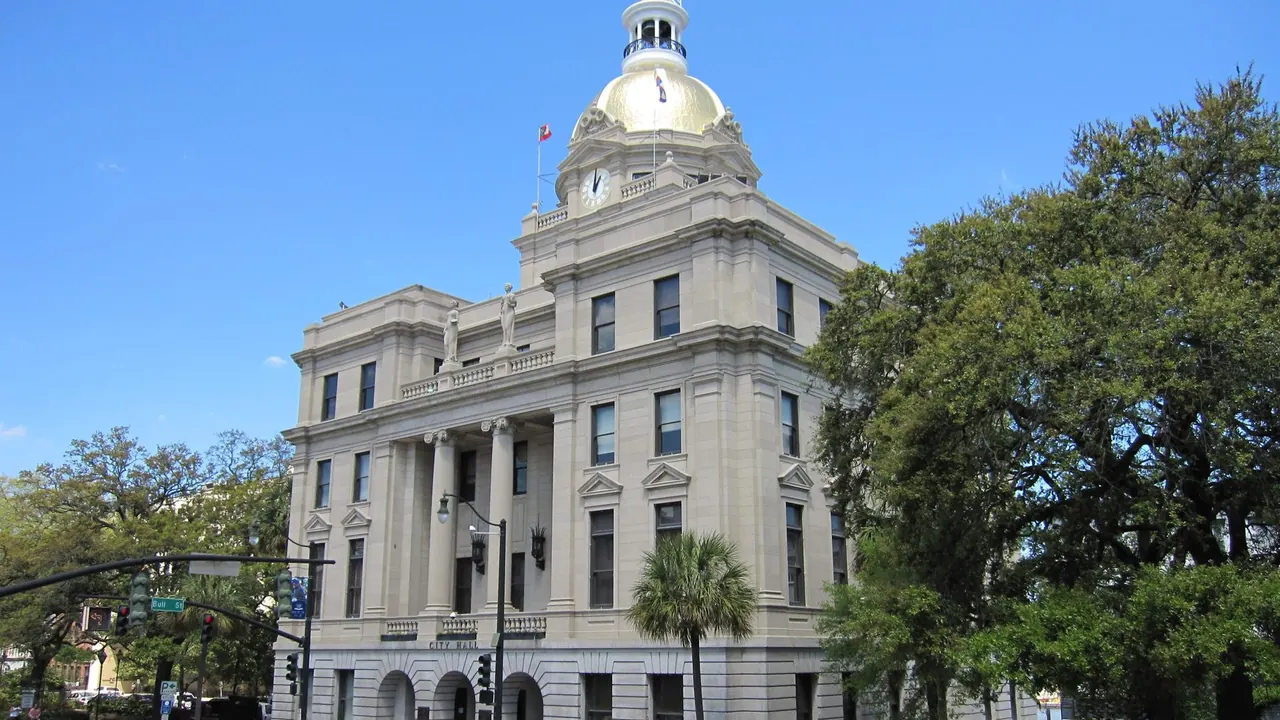
Photos: Miami by Radomianin, CC BY-SA 4.0, cropped; Savannah by Chris M Morris, CC BY 2.0, cropped.
Miami or Savannah?
Our verdict in twelve categories, each scored against the same fixed benchmark cities, and the climate month by month, so you can choose for your trip.
Choose Miami for
- beaches
- nightlife
- shopping
Miami is the place for a sun-and-sea vacation with late nights attached. You get a long strip of pale sand with warm water in every month, Cuban and Latin American cooking on almost every corner, clubs that keep going until dawn, and the Design District and Bal Harbour for serious shopping. It suits travellers who don't mind paying for all that and who will happily rely on ride-hailing or a hire car to get between neighbourhoods.
Choose Savannah for
- getting around
- day trips
- culture and sights
If you would rather walk than drive and want the town itself to be the attraction, Savannah is the better fit. Its oak-shaded squares, old townhouses and riverfront cotton warehouses make a slow, atmospheric long weekend. Charleston, Beaufort and the Georgia islands are good drives for spare days, and the beach at Tybee is a pleasant outing rather than the point of the trip. It costs a little less than Miami, though neither city is cheap.
Scoreboard
Twelve categories on one fixed scale from 0 to 100. The shaded stretch is the gap between the two.
Your match
Pick a travel style or drag the sliders, and both match scores follow your weighting.
Wins on beaches and nightlife with your weighting.
Wins on getting around and day trips with your weighting.
What matters to you?
Category by category
What the scores mean for a trip.
Beaches & swimming
This is Miami's home ground. You can step straight onto a continuous run of pale sand from South Beach up to Surfside, with calmer, shallower water at Crandon Park on Key Biscayne for days you don't want waves. The sea is warm enough to swim in all year, though the backdrop is hotel towers rather than scenery.
Savannah has no beach of its own. Tybee Island, half an hour away, offers wide, flat sand and a relaxed small-town feel, but the water is tinted by the marshes and is too cold for most people through the winter. You'll probably give it a day out rather than build the trip around it.
Food & drink
Miami has the wider and livelier table. Cuban cooking is everywhere, from cortaditos and croquetas at Calle Ocho's walk-up windows to slow-roasted lechon. It sits alongside Venezuelan, Peruvian, Haitian and Nicaraguan food, winter stone crab and a strong upscale tier in Brickell and the Design District.
Savannah cooks in one tradition and does it well: shrimp and grits, she-crab soup, Lowcountry boil and oyster roasts in the cooler months, often served family-style at long tables. A handful of chef-led rooms in restored townhouses raise the standard, but after a few days you will have covered most of its range.
Culture & sights
Savannah is the more rewarding place to explore. Its 1733 street plan of garden squares under live oaks survives almost whole, lined with Federal, Greek Revival and Victorian houses. The Telfair Museums and the Owens-Thomas House, with its account of the enslaved people who worked there, add depth to a town that is itself the main sight.
Miami's history is mostly from the 20th century. Its highlights are the pastel Art Deco blocks of Ocean Drive and Collins Avenue and the Italianate villa and gardens of Vizcaya, with good contemporary art at the Pérez museum and in Wynwood's murals. Those are well worth a day or two, but they don't add up to a historic townscape like Savannah's.
Nightlife
Miami is in another league after dark. South Beach and the downtown clubs host international DJs and run until dawn. Wynwood has warehouse bars and late parties, Brickell has rooftop cocktails, and Little Havana has salsa nights. Expect dress codes and big bills.
Savannah's evenings are more like a stroll. You can carry a to-go cup between River Street's bars, the taverns around City Market and quiet cocktail rooms in old townhouses, and art students keep a few dive bars going. Apart from the huge St Patrick's Day party, most of the town is quiet well before Miami's clubs even fill up.
Nature & outdoors
Both are flat, low-lying coastal country, but Miami has the bigger wild places on its doorstep. Within an hour you can see alligators from the Anhinga Trail boardwalks in the Everglades, paddle the mangroves of Biscayne National Park or snorkel the reefs off Key Largo.
Savannah's Lowcountry is gentler. Its best experiences are on the water: kayaking tidal creeks through the salt marsh, dolphin-spotting trips and birding for wood storks. On land, the oak avenue at Wormsloe and the trails on Skidaway Island are the easy outings. In both places summer heat and insects push the best outdoor days into the cooler months.
Day trips
Savannah has much better destinations within a day's drive. Charleston, about two hours north, is a worthwhile second historic city. Antebellum Beaufort, the Civil War fort at Pulaski and the old resort district on Jekyll Island all make easy days out by car.
From Miami, the nearer options are pleasant but limited: Fort Lauderdale's canals, the mansions and Flagler Museum in Palm Beach, or seafood stops in Key Largo and Islamorada. Key West is the famous one, but the drive is long enough that it works better as an overnight trip.
Good for families
Miami gives children more to do. There are warm, calm beaches at North Beach and Key Biscayne, the large open-air Zoo Miami, the aquarium and planetarium at the Frost Science Museum, and airboat rides in the Everglades. The catch is that most outings need a car, and South Beach's party side is best avoided with children.
Savannah manages well on a smaller scale, with shady squares to run around in, trolley tours, the free river ferry and ghost walks for older children. It has no zoo, aquarium or theme park, so you will run out of family days sooner.
Getting around
Savannah is far easier on foot. The historic district is a compact grid where most hotels, restaurants and sights are a short shaded walk apart, and a free shuttle and the river ferry cover the rest. You only need a car or a tour for Bonaventure, Wormsloe and Tybee.
Miami spreads out across the bay and the barrier island. South Beach is walkable and the Metromover links downtown with Brickell, but the Metrorail never reaches the beach. Most visitors end up using ride-hailing for Wynwood or Little Havana and hiring a car for anything further afield.
Shopping & style
Miami is a proper shopping destination. The Design District is full of flagship stores from the big fashion houses, Bal Harbour has one of the country's most exclusive open-air malls, and the giant Aventura Mall and the outlets on the western edge cover the bargain end.
Savannah is more for browsing. You'll find boutiques and home-goods shops along Broughton Street, work by art-school students and graduates, and antique dealers and bookshops around the southern squares. Beyond pralines and hot sauce on River Street, there is little to buy that you couldn't find elsewhere.
Affordability
Neither is a bargain, but Savannah is the gentler on the wallet. Much of the pleasure there costs nothing: walking the squares, Forsyth Park and Bonaventure. Highway motels and summer midweek stays bring room costs down.
In Miami, beachfront resort fees, parking charges and South Beach drink prices add up fast. You can save money with Cuban lunch counters, the free Metromover and a mainland base, but the bills still run higher than in Savannah.
Live music & performing arts
Miami has more to see through the season. The Adrienne Arsht Center stages opera, touring Broadway shows and visiting orchestras, Miami City Ballet is a respected company, and the New World Symphony plays in its Gehry building on Miami Beach. Salsa and Afro-Cuban bands in Little Havana add a distinctly local sound.
Savannah's offer is concentrated in a few festivals. The spring Savannah Music Festival fills historic theatres and churches with chamber music, jazz and blues, and an autumn jazz festival takes over Forsyth Park. Come at other times and you may only find a bar band or a busker in the squares.
Wellness & relaxation
Neither city is built around wellness, but they offer different ways to unwind. Miami has full resort spa floors in the Miami Beach and Key Biscayne hotels, sunrise yoga on the sand and an old Russian and Turkish bath house with steam rooms and cold plunges. To get away from the noise, head to Surfside or Key Biscayne.
Savannah has fewer treatments but a slower pace. Its version of rest is a bench under the oaks or a garden courtyard at a quiet inn on a southern square, best in spring or autumn when the humidity eases and River Street is quiet midweek.
When should you go?
Pick your month. The climate figures are measured averages, not a forecast.
Miami in July
Savannah in July
Daytime high, °C
Rainfall in the month, mm
Temperature and rainfall are climate normals, averaged over the years shown. Miami: 1991-2020 normals, Miami International Airport (10 km from centre). Savannah: 1991-2020 normals, Savannah Airport (9.9 km from centre).
Miami is warm all year, with highs around 25°C even in January and a sea that stays warm enough to swim in every month. That makes November to April the best stretch: dry, sunny-feeling days that are comfortable for walking South Beach. From May the rain builds into the wet season, which peaks at about 267mm in June. Midsummer is hot and sticky, with frequent afternoon storms.
Savannah has proper seasons. Winter highs of about 16°C are pleasant for walking the squares, but the sea is far too cold for swimming then, around 15°C. Spring (March to May) and October are the best months for both the streets and the marshes. June to September brings heat of up to 34°C, the heaviest rain and the only reliably warm sea at Tybee. So Miami is at its best in the months when Savannah is cool, while Savannah's ideal shoulder seasons fall when Miami is starting to get hot and wet.
Which traveller are you?
On a beach and sun trip, choose Miami. The sand starts at the end of the hotel street, the Atlantic is warm in every month, and you can move from South Beach to the calmer water of Key Biscayne. In Savannah, the beach means a drive out to Tybee.
For a food and nightlife trip, Miami gives you much more. You can start with cafecito at a Little Havana window, eat ceviche or stone crab for dinner, then choose between salsa on Calle Ocho, Wynwood warehouse bars or South Beach clubs that close at dawn.
For a short city break, Savannah is the easier choice. The historic district is compact and flat, so you can walk from square to square, the museums and the river without needing a car, which suits two or three unhurried days far better than Miami's spread-out neighbourhoods.
Before you go
| Measure | Miami | Savannah |
|---|---|---|
| Currency | US Dollar (USD) | US Dollar (USD) |
| Sockets | AB120 V, 60 Hz | AB120 V, 60 Hz |
| Driving side | Right | Right |
| Time zone | UTC-5, UTC-4 in summer | UTC-5, UTC-4 in summer |
| Emergency number | 911 | 911 |
| Elevation | 2 m | 15 m |
| Main airport | Miami International Airport (MIA)7 km from centre198 non-stop destinations | Savannah Hilton Head International Airport (SAV)12 km from centre39 non-stop destinations |
| Public holidays this year | 11 days | 12 days |
By the numbers
| Measure | Miami | Savannah |
|---|---|---|
| City population | 442,241 | 147,780 |
| People per km² | 3,046 | 524 |
| Museums within 10 km | 17 | 19 |
| UNESCO World Heritage sites within 50 km | 0 | 0 |
| Swim season, months above 21 °C | 12 months | 6 months |
Where else could you go?
Every comparison below shares a destination with this one, so you can follow Miami or Savannah somewhere new.