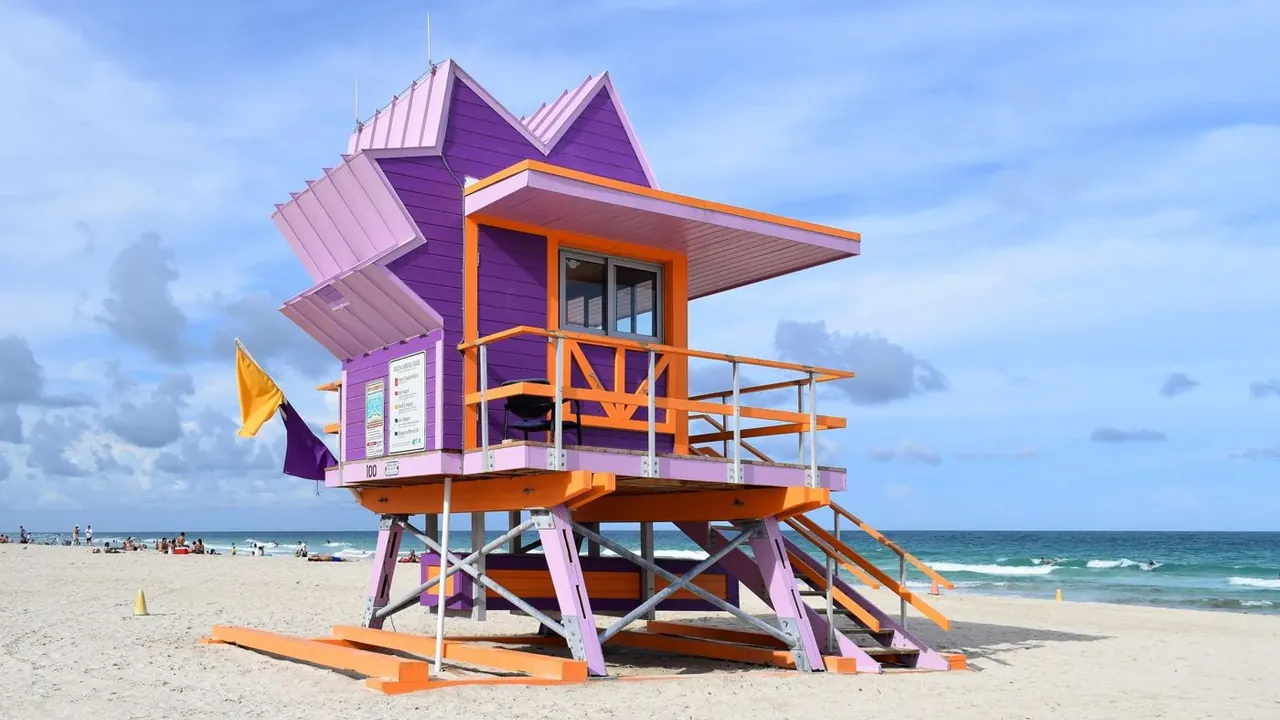
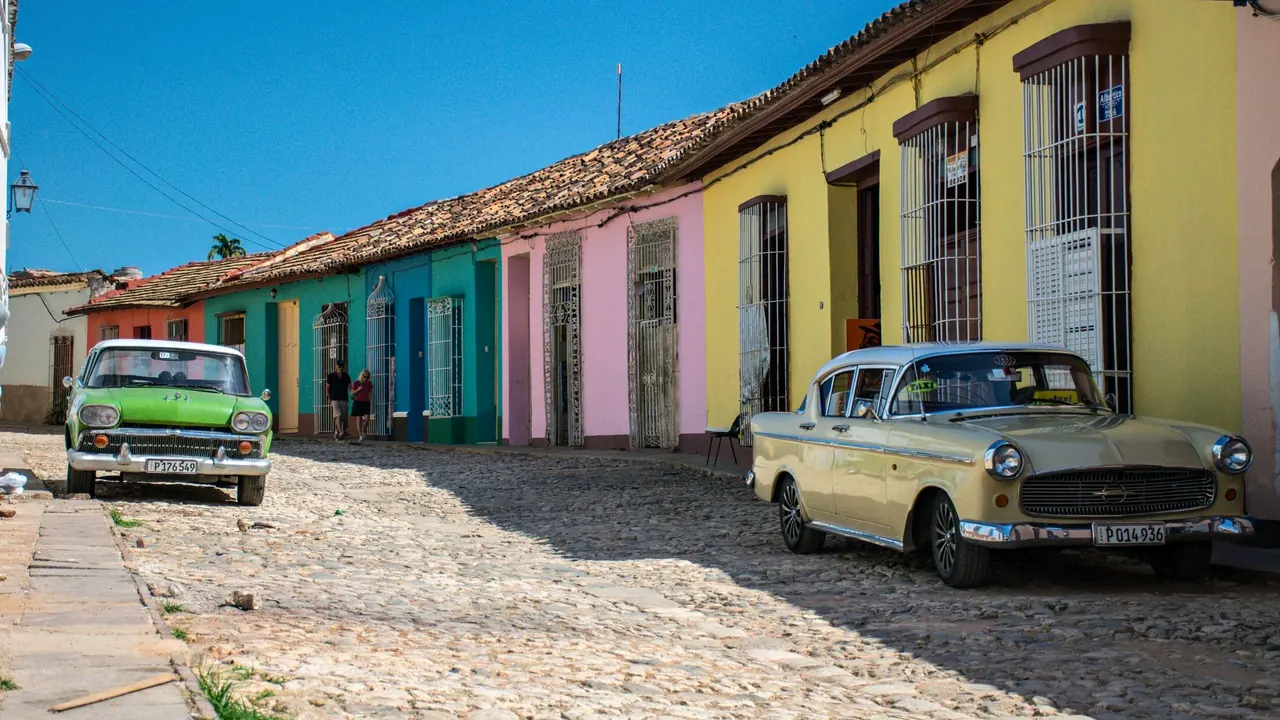
Photos: Miami by Radomianin, CC BY-SA 4.0, cropped; Trinidad, Cuba by Ákos Helgert, Pexels License.
Miami or Trinidad, Cuba?
Our verdict in twelve categories, each scored against the same fixed benchmark cities, and the climate month by month, so you can choose for your trip.
Choose Miami for
- shopping
- food and drink
- nightlife
Miami suits a trip built around the beach and the evenings. The long sand of Miami Beach, Cuban and Latin American cooking across the city, late clubs and rooftop bars, and luxury shopping in the Design District make it the stronger choice for travellers who want plenty to do. They should also be ready to pay for it and to rely on a car or ride-hailing once they leave South Beach.
Choose Trinidad, Cuba for
- prices
- day trips
- culture and sights
For a slower, cheaper trip into the past, Trinidad is the better pick. Its UNESCO-listed colonial streets, nightly son and salsa by the Plaza Mayor, the sugar valley and the Escambray waterfalls reward travellers who are happy with a room in a family home and simple food. They will need to accept power cuts, a narrow menu and few comforts for children.
Scoreboard
Twelve categories on one fixed scale from 0 to 100. The shaded stretch is the gap between the two.
Your match
Pick a travel style or drag the sliders, and both match scores follow your weighting.
Wins on shopping and food and drink with your weighting.
Wins on prices and day trips with your weighting.
What matters to you?
Category by category
What the scores mean for a trip.
Beaches & swimming
Miami's beach is the main event. One continuous strip of pale sand runs along Miami Beach, from the Art Deco stretch of South Beach to quieter North Beach and Surfside, and Key Biscayne has calmer, shallower water. You can stay a few steps from the sea and swim straight from your hotel.
Trinidad has a fine beach but only one real choice: Playa Ancon, a taxi or bike ride from town, plus the small local shore at La Boca. The Caribbean there is clear and has reef snorkelling, but the beach is a day out from the old town rather than the place where the trip happens.
Food & drink
Miami offers far more to eat, and more variety. You can have cafecito and croquetas from the ventanitas of Little Havana, Haitian griot, Venezuelan arepas and stone crab in winter, and Brickell and the Design District have a chef-led upscale tier. You can eat somewhere different every day, as long as you avoid the tourist tables on South Beach's main strips.
In Trinidad the best meals are often at your own casa particular: roast pork, black beans and lobster, with a canchanchara in a clay cup. The paladares in colonial houses are pleasant, but supplies are unpredictable and the same menu turns up everywhere.
Culture & sights
The two are broadly level, but their culture is of different kinds. Miami's heritage belongs to the twentieth century: the pastel Art Deco hotels of Ocean Drive and Collins Avenue, Vizcaya on the bay, solid museums from the Perez to the Wolfsonian, and the murals of Wynwood.
Trinidad is the older and more complete place, a sugar-era colonial town listed by UNESCO, where the cobbled streets and the Plaza Mayor are themselves the sight. Its museums, such as the Museo Romantico, are small. The pleasure lies in wandering and in climbing the Palacio Cantero tower for the view over the rooftops.
Nightlife
Miami has the far bigger night out. South Beach clubs bring in international DJs and the downtown venues run until dawn, while Wynwood has breweries, Brickell has rooftop bars and Calle Ocho has salsa. It takes money and stamina, but you can go somewhere different every night.
Trinidad's evenings are warmer and simpler: rum cocktails and dancing on the steps beside the Plaza Mayor, a few courtyard bars and a club inside a cave above town. It is sociable and easy to join, but after a few nights it repeats itself.
Nature & outdoors
Miami's outdoors is flat wetland and open water, while Trinidad's is mountain forest and waterfalls. From Miami you can take an airboat or walk the Anhinga Trail in the Everglades, kayak through the mangroves of Biscayne National Park, or go paddleboarding and kitesurfing on the bay. All of it is best in winter.
Trinidad has the hills Miami lacks entirely. The Escambray mountains rise behind the town, with forest trails at Topes de Collantes leading to the pool at Salto del Caburni, and horse rides cross the Valle de los Ingenios. The trails are steep and humid, and most comfortable from December to April.
Day trips
Trinidad is the better base for excursions. The Valle de los Ingenios, with its ruined sugar mills and the Manaca Iznaga tower, starts at the edge of town. The neoclassical port of Cienfuegos, old Sancti Spiritus and Santa Clara's Che Guevara memorial are all within about two hours, though each needs a taxi, a hire car or a tour.
From Miami the choices are milder: the canals of Fort Lauderdale, the mansions and Flagler Museum of Palm Beach, or seafood shacks in Key Largo and Islamorada. Key West is the memorable one, but it is three to four hours away and works better as an overnight.
Good for families
Miami has much more for children: warm, calm water at Key Biscayne and North Beach, Zoo Miami, the planetarium and aquarium at the Frost Science Museum, the Venetian Pool and Everglades airboat rides. The drawbacks are the long drives between them and the summer heat.
Trinidad welcomes children warmly and has a shallow beach at Ancon, and older children enjoy the horse rides and waterfall pools. But nothing is aimed at young visitors, the cobbles defeat a pushchair, and power cuts switch off the fans, so it is a hard trip with small children.
Getting around
Neither is easy to get around beyond its centre, but the problems are different. Miami sprawls. South Beach is flat and good for walking or cycling, and the free Metromover links downtown and Brickell. But the Metrorail does not reach Miami Beach, and most outings mean ride-hailing or a hire car in heavy traffic.
Trinidad is the opposite: a compact old town with few cars, where everything is a short walk over rough, sloping cobbles. Leaving it is the hard part. You need taxis, bicycle taxis or tours to reach the beach and the hills, and the coaches to other cities are slow and infrequent.
Shopping & style
For shopping, Miami is far ahead. It has the fashion flagships of the Design District, the exclusive open-air mall at Bal Harbour, the enormous Aventura Mall and outlet malls on the western edge. Local craft is limited to cigars and guayaberas in Little Havana.
Trinidad has what Miami lacks and little else: hand embroidery and crochet along the craft market lanes, pottery from family workshops and paintings in small galleries. Stalls sell much the same things, and rum and cigars are better bought at state shops.
Affordability
Trinidad is much the cheaper of the two. A room in a casa particular with breakfast, dinner at the family's table and free music in the squares keep daily costs low. Taxis, tours and paladar meals priced for visitors still add up, and you need cash.
Miami is expensive at nearly every step: high winter hotel rates with resort fees and parking, tax and tips on every bill, and some of the costliest club drinks anywhere. Free beaches, Cuban lunch counters and staying on the mainland only partly soften it.
Live music & performing arts
Miami's performing arts happen on formal stages, while Trinidad's are one live tradition played every night. In Miami that means the Adrienne Arsht Center, with Florida Grand Opera and touring Broadway shows, Miami City Ballet, and the New World Symphony in its Gehry building. Salsa and Afro-Cuban bands also play in Little Havana.
Trinidad has no theatre, opera or classical season, but its own music is played very well every night. There is son and bolero at the Casa de la Trova and the Casa de la Musica, and Afro-Cuban drumming and rumba at the Palenque de los Congos Reales, with locals dancing beside visitors.
Wellness & relaxation
If spas are the point, Miami is the better place to unwind. The large Miami Beach and Key Biscayne hotels have full spa floors and ocean-view pools, yoga classes meet on the sand at sunrise, and a long-established Russian and Turkish bath house offers steam rooms and cold plunges. Calm is easiest to find on Key Biscayne or around Surfside.
Trinidad has no spa culture beyond a few resort massages near Ancon. Rest there means the slow rhythm of shaded courtyards and rocking chairs, interrupted by roosters at dawn, music until late and power cuts that stop the air conditioning.
When should you go?
Pick your month. The climate figures are measured averages, not a forecast.
Miami in July
Trinidad, Cuba in July
Daytime high, °C
Rainfall in the month, mm
Where the figures come from
Trinidad, Cuba's temperatures are measured 59 km from the centre, at Cienfuegos, Las Villas.
Trinidad, Cuba has no rain gauge within 25 km of the centre, so its rainfall comes from a gridded climate dataset read at the city rather than from a gauge further away.
Temperature and rainfall are climate normals, averaged over the years shown. Miami: 1991-2020 (sunshine 1981-2010) normals, Miami International Airport (10 km from centre). Trinidad, Cuba: 2014-2025 (rainfall 1991-2020) normals, Cienfuegos, Las Villas (59.3 km from centre).
Both cities follow the same Caribbean pattern, with a dry season from November to April and a wet, stormy one from May to October. Miami is the milder of the two in winter, with highs around 25°C in January that make walking the Art Deco district comfortable, and its sea stays warm enough for swimming in every month. Its summer rain is heavy, peaking at about 267mm in June, so the long, sunny days of March and April give the best mix of warmth and dry weather.
Trinidad is hotter all year and already near 29°C in midwinter, so its cobbled streets are easiest to walk from December to March, and December is almost rainless. Through the cooler months the Caribbean off Playa Ancon is a degree or two warmer than the Atlantic at Miami. From May the wet season brings heat and frequent downpours together, which makes hiking in the hills hard going.
Which traveller are you?
On a food and nightlife trip, Miami is the clear choice. Cuban lunch counters, Peruvian ceviche and winter stone crab fill the days, and the nights move between South Beach clubs, Wynwood warehouse bars and Brickell rooftops. Trinidad's repeating menus and single square cannot match that range.
For a trip on a tight budget, Trinidad goes much further. A casa particular room with breakfast costs little, the music in the squares is free or nearly so, and the old town is all on foot. In Miami, hotels, resort fees and hire cars add up quickly.
On a family trip with children, Miami is far easier. Calm water at Key Biscayne, Zoo Miami, the Frost Science Museum and hotels built around pools fill the days. In Trinidad, rough cobbles, power cuts and scarce familiar foods and medicines make small children hard work.
Before you go
| Measure | Miami | Trinidad, Cuba |
|---|---|---|
| Official language | - | Spanish |
| Currency | US Dollar (USD) | Cuban Peso (CUP) |
| Sockets | AB120 V, 60 Hz | AB110 V, 60 Hz |
| Driving side | Right | Right |
| Time zone | UTC-5, UTC-4 in summer | UTC-5, UTC-4 in summer |
| Emergency number | 911 | Police 106, ambulance 104, fire 105 |
| Elevation | 2 m | 60 m |
| Main airport | Miami International Airport (MIA)7 km from centre198 non-stop destinations | Abel Santamaria International Airport (SNU)77 km from centre1 non-stop destination |
| Public holidays this year | 11 days | 9 days |
By the numbers
| Measure | Miami | Trinidad, Cuba |
|---|---|---|
| City population | 442,241 | 51,994 |
| People per km² | 3,046 | 45 |
| Museums within 10 km | 17 | 4 |
| UNESCO World Heritage sites within 50 km | 0 | 1 |
| Swim season, months above 21 °C | 12 months | 12 months |
Where else could you go?
Every comparison below shares a destination with this one, so you can follow Miami or Trinidad, Cuba somewhere new.
- Miami Beachvs Miami
- Fort Lauderdalevs Miami
- Boca Ratonvs Miami
- Palm Beachvs Miami
- West Palm Beachvs Miami
- Naples, Floridavs Miami