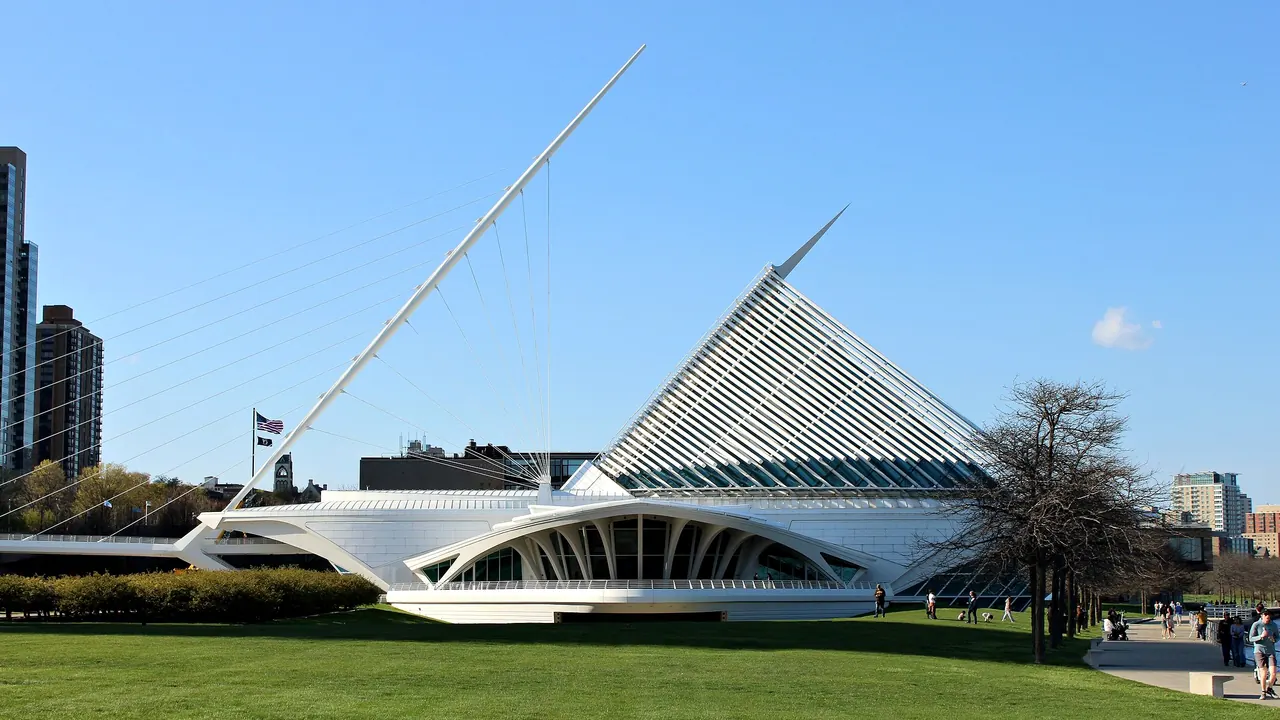
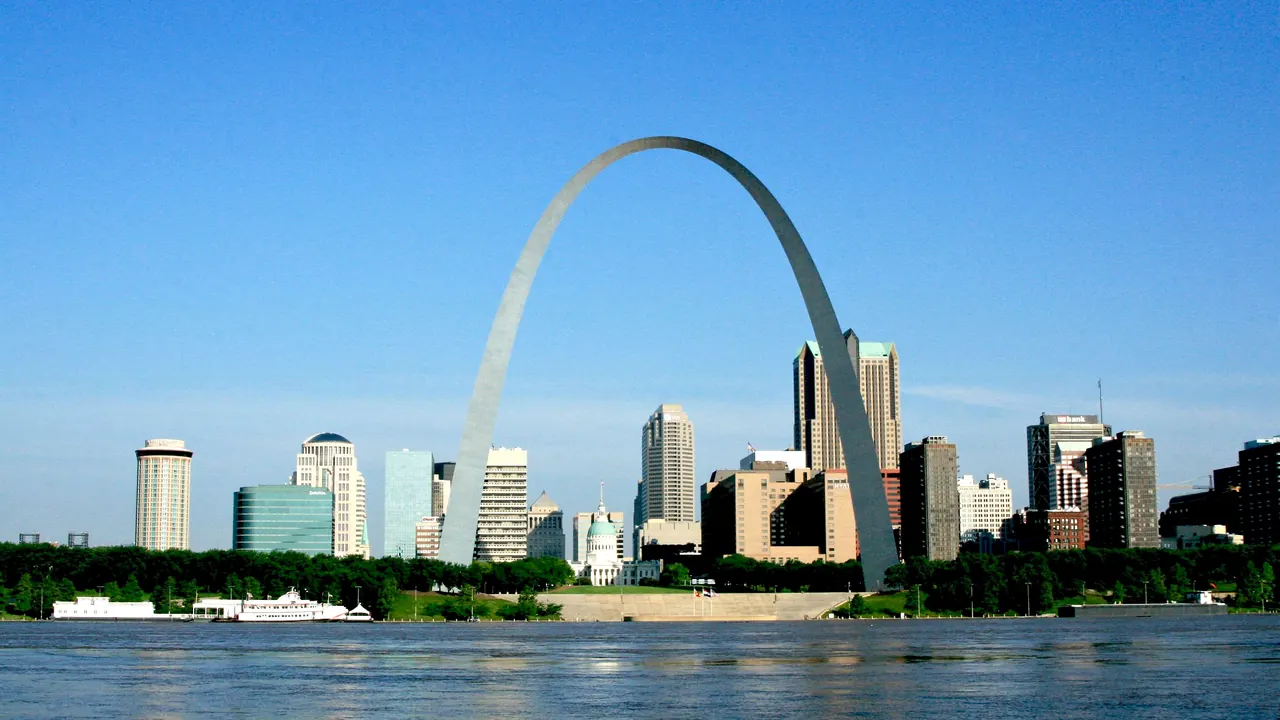
Photos: Milwaukee by Michael Barera, CC BY-SA 4.0, cropped; St. Louis by Holly Cheng, CC BY 2.0, cropped.
Milwaukee or St. Louis?
Our verdict in twelve categories, each scored against the same fixed benchmark cities, and the climate month by month, so you can choose for your trip.
Choose Milwaukee for
- beaches
- nightlife
- wellness
Milwaukee suits a summer trip built around the lakefront. You get an afternoon on the sand at Bradford Beach, an evening in a corner tavern, a Friday fish fry and, if the dates fit, the festival grounds in full swing. It is also the better base if you want Chicago as a day out without hiring a car, and the more natural choice if your idea of a night out is a long bar of regulars rather than a show.
Choose St. Louis for
- families
- culture and sights
- live music and the arts
Families and anyone who travels for museums and music will get more out of St. Louis. The City Museum and the free zoo and science centre in Forest Park make it one of the easier American cities for children. The Gateway Arch, the Saint Louis Symphony, the Muny and the city's blues heritage give a culture trip more weight than Milwaukee can. It is also better in spring and autumn, when Milwaukee is still cold or already cooling.
Scoreboard
Twelve categories on one fixed scale from 0 to 100. The shaded stretch is the gap between the two.
Your match
Pick a travel style or drag the sliders, and both match scores follow your weighting.
Too close to call, 2 points apart
Wins on beaches and nightlife with your weighting.
Wins on families and culture and sights with your weighting.
What matters to you?
Category by category
What the scores mean for a trip.
Beaches & swimming
Milwaukee at least has a real beach. Bradford Beach lies below the East Side bluffs, with volleyball courts and cabanas, and McKinley and South Shore stretch along the same lakefront. Lake Michigan is cold for most of the year, though, so plan on a summer afternoon on the sand rather than a beach trip.
St. Louis has nothing comparable. Its rivers are working waterways with strong currents, and in the humid summer the only way to cool off is a pool or a long drive to an Ozark reservoir.
Food & drink
The two eat about equally well, and both are rooted in beer, immigrant cooking and frozen custard. Milwaukee's table is German, Polish and Serbian. Its rituals are the Friday fish fry with potato pancakes and the wood-panelled supper club, with grazing at the Public Market and Mexican cooking on the South Side.
St. Louis has more dishes of its own: toasted ravioli, Provel-topped cracker-crust pizza, gooey butter cake and serious ribs. It also has more range by neighbourhood, from the trattorias of The Hill to the Bosnian grills of South Grand and the Saturday Soulard Market.
Culture & sights
St. Louis has the bigger set of sights. The Gateway Arch and its museum of westward expansion, the Old Courthouse where the Dred Scott case began and the free Saint Louis Art Museum in Forest Park would anchor a trip on their own. The Cathedral Basilica's mosaics and the Wainwright Building add depth for anyone interested in architecture.
Milwaukee's strongest card is the Calatrava pavilion of the Milwaukee Art Museum, with the Harley-Davidson Museum a real draw for motorcycle fans. Beyond those, its brewing-era mansions, the Basilica of St Josaphat and the Third Ward warehouses make pleasant wandering rather than a long list of must-sees.
Nightlife
Milwaukee is the easier and livelier place for a night out. The neighbourhood tavern, with its brewery signs and pool table, is everywhere. Brady Street, Water Street and the Walker's Point and Third Ward taprooms sit close enough to drift between, and in summer the patios and beer gardens fill up.
St. Louis spreads its evenings across Soulard, Washington Avenue, the Grove and the Delmar Loop, often a taxi ride apart, and many streets go quiet early outside baseball season. Its advantage is live blues in the Soulard bars, which Milwaukee's tavern scene does not match.
Nature & outdoors
Neither offers dramatic scenery, and the outdoors are about equal in quality but different in character. Milwaukee's centrepiece is water: the Olmsted-designed bluffs and ravines of Lake Park, a lakefront lined with parkland, flat trails for cycling and a river you can kayak through the centre, with the glacial hills of Kettle Moraine an hour away.
St. Louis looks inland, to the wooded Ozark foothills, river bluffs and caves at Castlewood and Meramec, and the Katy Trail for long rides. Its outdoor seasons differ too: Milwaukee is best from May to October, while St. Louis is at its best in spring and autumn and adds bald eagles on the river bluffs in winter.
Day trips
Milwaukee has a slight edge, largely because Chicago is about an hour and a half away by train, with no car needed at either end. Closer in, Frank Lloyd Wright's buildings in Racine, the stone mills of Cedarburg and Kohler's gardens make easy outings.
St. Louis offers more history out of town. Cahokia Mounds, a UNESCO site, is only twenty minutes away, and the French colonial houses of Ste. Genevieve, the German wine towns of Hermann and Augusta and Mark Twain's Hannibal are all within reach. Almost all of them need a car.
Good for families
St. Louis is the better city for children. The City Museum, a converted shoe warehouse full of climbing tunnels and slides, has no equal in Milwaukee. The zoo and science centre in Forest Park are free, and the Magic House and the Arch tram pods give children plenty more. Attractions are spread out, though, and summer afternoons are sticky.
Milwaukee still does well, with its large zoo, Discovery World's aquariums by the lake and the Mitchell Park Domes for a cold day. It works best in summer, when beach days, ball games and festivals fill the calendar. From November to March the cold cuts back what families will do outdoors.
Getting around
In both cities a car does most of the work, and parking is easy in either. Milwaukee's centre is more compact. Downtown, the Third Ward and the lakefront join up on foot along the Riverwalk, and The Hop streetcar covers the core.
St. Louis has the MetroLink light rail, which is handy from the airport to Forest Park, downtown and the stadium. However, Soulard, The Hill and South Grand lie well off it, and the walkable districts are far apart.
Shopping & style
Shopping is modest in both, and neither is worth planning a trip around. Milwaukee's best browsing is in the converted warehouses of the Historic Third Ward, and most visitors take home Wisconsin cheese, beer or Harley-Davidson gear. In St. Louis the most interesting street is Cherokee Street, with its antiques, vintage and Latin American shops. In both cities big-name fashion means a drive to the suburban malls.
Affordability
The two cost roughly the same, cheaper than the coastal cities but still with tax and tips on every bill. Where you save differs. In St. Louis the zoo, the art museum, the history museum and the science centre are all free. Milwaukee's savings come from cheap tavern beer, fish fries and a lakefront that costs nothing.
Watch Milwaukee's big festival and game weekends, which push hotel rates up sharply. In St. Louis, set aside money for a hire car or taxis, since the city's sights and neighbourhoods are spread so far apart.
Live music & performing arts
St. Louis has the deeper programme. Its symphony, founded in 1880, plays in the ornate Powell Hall. The Muny stages musicals outdoors in Forest Park, and the Opera Theatre runs an acclaimed early-summer season. On top of that is a real blues lineage, from Chuck Berry and W.C. Handy to the National Blues Museum and the bars that keep it alive through the week.
Milwaukee has a full set of companies for its size and the lovely 1895 Pabst Theater. Its big moment is Summerfest, weeks of bands on the lakefront stages. Outside summer the offering is more local in scale.
Wellness & relaxation
Neither city is a place to come for rest and treatments, but Milwaukee is a little better. The resort village of Kohler, about an hour north, offers a proper spa day, and the lakefront walks are calming. St. Louis offers only day and hotel spas in Clayton and the Central West End. For calm it relies on a slow morning in Forest Park or the Japanese garden at the Missouri Botanical Garden.
When should you go?
Pick your month. The climate figures are measured averages, not a forecast.
Milwaukee in July
St. Louis in July
Daytime high, °C
Rainfall in the month, mm
Temperature and rainfall are climate normals, averaged over the years shown. Milwaukee: 1991-2020 (sunshine 1981-2010) normals, Gen Mitchell International Airport (11.2 km from centre). St. Louis: 2006-2020 (sunshine 1981-2010, rainfall 1991-2020) normals, Cahokia / Maplewood Park (7.2 km from centre).
Milwaukee has a short, pleasant summer and a long, hard winter. June to August is the time to go, with daytime highs around 27°C, the most sunshine of the year and Lake Michigan warming to about 21°C in August, which is as good as swimming gets there. September is still mild. From December to February the highs hover around freezing, falling to -1°C in January, so walking the streets loses its appeal. June is the wettest month.
St. Louis runs several degrees warmer all year. That gives it a far gentler winter, but July and August are hot and humid at about 32°C, too much for long afternoons on foot. April and May are warm but the wettest months, at around 123mm. The best weeks for walking and the parks are in late September and October, when it is dry, sunny and still warm, at the same point in the year that Milwaukee is turning cold.
Which traveller are you?
On a beach and sun trip, Milwaukee is the clear choice, though it cannot carry a whole beach vacation. Expect a few summer afternoons on the sand at Bradford Beach, beside a lake too cold for much swimming. St. Louis has no beach at all.
On a family trip with children, choose St. Louis, ideally in spring or autumn. Children get more variety there: a hands-on museum in Kirkwood, a large theme park forty minutes west and an easy evening at the ballpark. Milwaukee is pleasant with children but depends more on summer.
For a culture and arts trip, St. Louis gives you more for both days and evenings. You can spend the day on landmarks and American history, then go to the orchestra, the opera or a musical under the stars, with blues as the local thread. Milwaukee offers the same mix on a smaller scale.
Before you go
| Measure | Milwaukee | St. Louis |
|---|---|---|
| Currency | US Dollar (USD) | US Dollar (USD) |
| Sockets | AB120 V, 60 Hz | AB120 V, 60 Hz |
| Driving side | Right | Right |
| Time zone | UTC-6, UTC-5 in summer | UTC-6, UTC-5 in summer |
| Emergency number | 911 | 911 |
| Elevation | 188 m | 149 m |
| Main airport | General Mitchell International Airport (MKE)12 km from centre34 non-stop destinations | St. Louis Lambert International Airport (STL)20 km from centre64 non-stop destinations |
| Public holidays this year | 12 days | 14 days |
By the numbers
| Measure | Milwaukee | St. Louis |
|---|---|---|
| City population | 577,222 | 301,578 |
| People per km² | 2,302 | 1,764 |
| Museums within 10 km | 14 | 18 |
| UNESCO World Heritage sites within 50 km | 0 | 1 |
| Swim season, months above 21 °C | 1 month | - |
Where else could you go?
Every comparison below shares a destination with this one, so you can follow Milwaukee or St. Louis somewhere new.
- Chicagovs Milwaukee
- Wisconsin Dellsvs Milwaukee
- Bransonvs St. Louis
- Kansas Cityvs St. Louis
- Memphisvs St. Louis
- Louisvillevs St. Louis