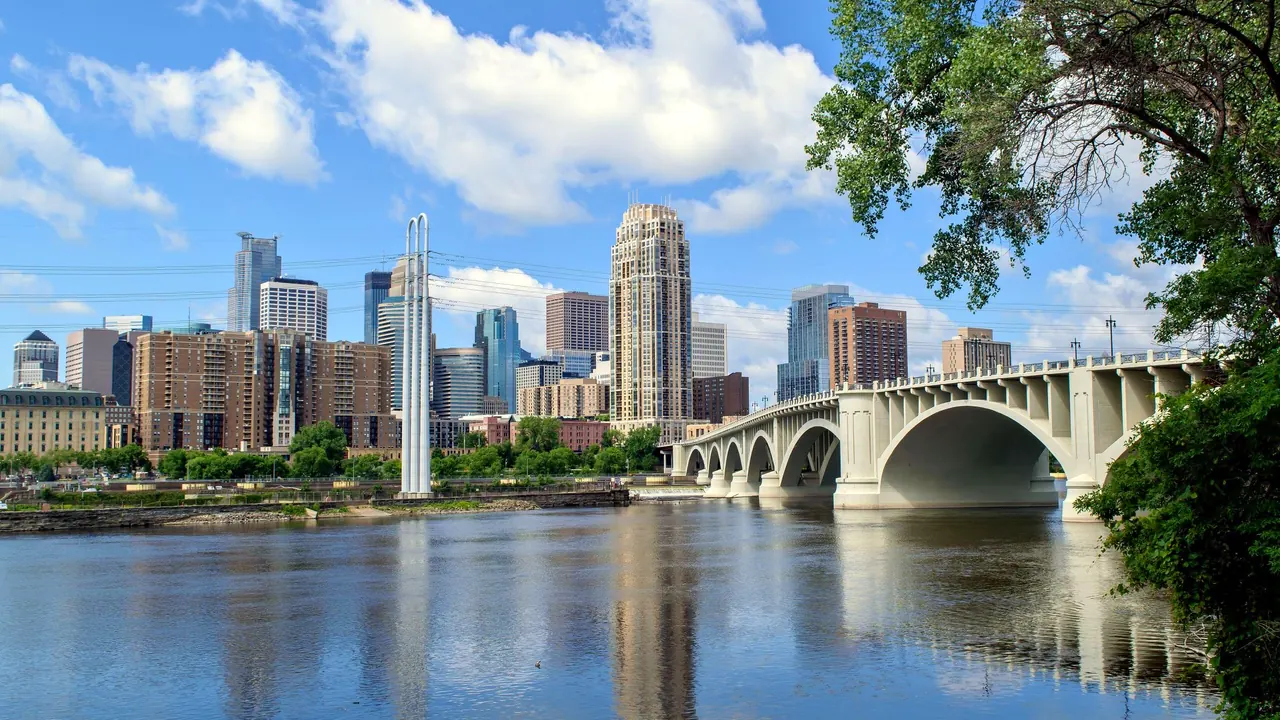
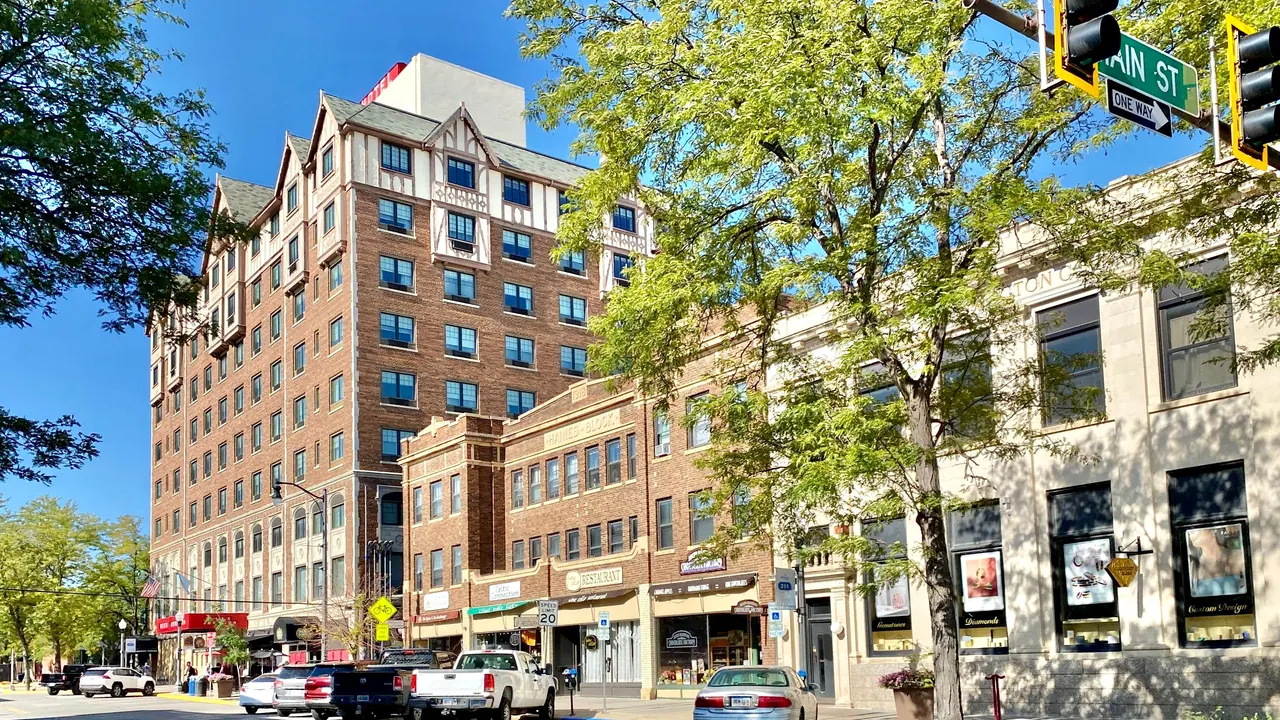
Photos: Minneapolis by Thomas Parker, Pexels License; Rapid City by w_lemay, CC BY-SA 2.0, cropped.
Minneapolis or Rapid City?
Our verdict in twelve categories, each scored against the same fixed benchmark cities, and the climate month by month, so you can choose for your trip.
Choose Minneapolis for
- live music and the arts
- getting around
- shopping
Minneapolis is the better pick for a city trip in the full sense. You get free entry to big art museums, an evening at the Guthrie or Orchestra Hall, dinner in the immigrant kitchens along Lake Street, and light rail and bike lanes to link it all. Its outdoors is urban: lakes and parkways rather than wild country. It suits travellers who want culture and good eating, with a swim or a cycle ride on the side.
Choose Rapid City for
- nature and the outdoors
- day trips
- prices
Rapid City works best as a base. People come for what lies just beyond it: the Black Hills, bison in Custer State Park, the caves, the Badlands and Mount Rushmore. They come by car. It suits road-trippers, hikers and families who want long days outside and are happy with a steak and an early night afterwards.
Scoreboard
Twelve categories on one fixed scale from 0 to 100. The shaded stretch is the gap between the two.
Your match
Pick a travel style or drag the sliders, and both match scores follow your weighting.
Wins on live music and the arts and getting around with your weighting.
Wins on nature and the outdoors and day trips with your weighting.
What matters to you?
Category by category
What the scores mean for a trip.
Beaches & swimming
Neither city is anywhere near the sea, but Minneapolis has real swimming inside the city. Bde Maka Ska, Lake Harriet and Lake Nokomis have sandy strips and lifeguards, and you can cycle to them after a day of sightseeing. The water is warm enough from late June to early September.
Rapid City's swimming is in the hills, at Sheridan Lake, Pactola Reservoir and Sylvan Lake. These are cooler lakes with small gravel or sandy shores, and you need a car to reach them. They make a good stop on a driving day, but the pine setting is the real draw.
Food & drink
If eating well is part of the plan, Minneapolis is the clear choice. Its best cooking comes from immigrant communities: Somali, Ethiopian and Vietnamese kitchens on Lake Street and Eat Street, Hmong markets, and the Midtown Global Market. Chef-led restaurants and brewery taprooms cluster in Northeast and the North Loop.
Rapid City's food is narrower but distinctly regional. Try bison burgers, chislic at the bar and Indian tacos on Lakota fry bread. Away from the brewpubs and a few more ambitious kitchens on Main Street, though, it is mostly chains and hearty tourist-town dinners.
Culture & sights
Minneapolis has much more to see within the city. The Minneapolis Institute of Art has jades and old masters with free entry, the Walker is a major modern art museum, and the riverfront pairs the Mill City Museum's ruined flour mill with the Stone Arch Bridge over St Anthony Falls.
Rapid City's in-town sights are smaller and more local. They include the bronze presidents on downtown street corners, the Journey Museum's story of the Black Hills and the Lakota, and the Badlands fossils at the School of Mines. A day covers them, and the bigger landmarks are out in the hills.
Nightlife
Minneapolis gives you a proper choice of evenings out, spread across several neighbourhoods. There are old bars and taprooms in Northeast, cocktail bars in the North Loop warehouses and weekend crowds in the Warehouse District and Uptown. Summer patios and rooftops are the highlight.
In Rapid City, going out means a few blocks around Main Street Square, with brewpubs, sports bars and country music, and most places wind down early. The exception is the Sturgis motorcycle rally in early August, when the whole region turns loud and late.
Nature & outdoors
This is where Rapid City pulls clearly ahead, because real wild country starts at the edge of town. There are granite spires along the Needles Highway, bison and pronghorn in Custer State Park, long cave tours at Wind Cave and Jewel Cave, and the eroded ridges of the Badlands an hour east. Hikers, climbers and cyclists on the Mickelson Trail all have serious ground to cover.
Minneapolis has a gentler, urban kind of green. The 80km Grand Rounds links the lakes, Minnehaha Falls and the Mississippi gorge, and you can ride it all day without a car. In winter there are ski trails and skating on the frozen lakes. The land is flat, though, and nothing in it compares with the Hills.
Day trips
Rapid City has the stronger list of outings, and some of them are famous. Mount Rushmore is half an hour away, followed by the Crazy Horse Memorial and its museum of Native American culture. You can also visit gold-rush Deadwood, the Mammoth Site at Hot Springs and the Minuteman Missile silo on the prairie. Every one of them needs a car.
From Minneapolis, the easiest outing is St Paul, a light-rail ride away, with its Capitol, cathedral and the Summit Avenue mansions. Stillwater on the St Croix and the river towns around Lake Pepin make pleasant drives. Beyond those, the countryside is mostly farmland.
Good for families
Both cities work well for children, but the days look very different. Minneapolis is strong on indoor options that keep going in any weather: the amusement park and aquarium inside the Mall of America, the Science Museum and Children's Museum in St Paul, and the free Como Zoo. In summer, add lake beaches and paddle boats.
Rapid City is the classic summer road trip. Children can see bison stopping traffic, take cave tours, pan for gold, dig at the Mammoth Site and visit Storybook Island, and there are plenty of motels with pools. Expect more hours in the car, and plan it as a warm-weather trip.
Getting around
Minneapolis can be done without a car. The Blue Line runs from the airport to downtown and the Mall of America, and the Green Line runs on to St Paul. Skyways let you cross downtown indoors in winter, and protected bike lanes and the Midtown Greenway reach the lakes.
Rapid City's downtown is walkable, but the city buses do not reach Mount Rushmore, the parks or the hill towns, so you will need a hire car. The upside is that driving is easy, with light traffic and simple parking. Roads such as the Needles Highway are a sight in their own right.
Shopping & style
Minneapolis is far better for a proper shopping day. It has the Mall of America, a light-rail ride from downtown, and there is no sales tax on clothing. The North Loop has independent boutiques and Northeast has makers' studios.
Rapid City's appeal is souvenirs you cannot find in Minneapolis. Look for Black Hills gold jewellery with its grape-leaf designs, Lakota quillwork, beadwork and star quilts in the downtown galleries, and Western boots and hats.
Affordability
The overall cost is similar, by American standards, but it adds up in different ways. In Minneapolis much of the best is free: the Institute of Art, the Sculpture Garden and the lakes. Light rail is cheap, so you can skip the car. Hotel rates rise when big conventions or sporting events are in town.
Rapid City's motels and casual meals are cheaper, but a hire car, fuel and park entry fees are unavoidable. Rooms get dearer in peak summer and very expensive during the August rally week. Late spring and early autumn are the better-value times to go.
Live music & performing arts
Minneapolis is one of the strongest American cities outside the coasts for live performance, and Rapid City has nothing like it. There is the Guthrie on the Mississippi, touring Broadway shows in the Hennepin Avenue theatres, the Minnesota Orchestra and, across the river, the St Paul Chamber Orchestra and the Minnesota Opera. First Avenue, the club tied to Prince, anchors the local rock scene.
Rapid City has a symphony orchestra, touring shows at the civic centre and summer plays in the pines in Custer State Park. The most memorable performances there are the powwows, above all the large one held each autumn.
Wellness & relaxation
Neither is a spa destination, but Minneapolis has a living bathing tradition. In winter, public saunas set up on the frozen lakes, and people alternate the heat with a cold plunge in the Nordic way. In summer, an evening walk around a lake does much the same job.
Rapid City's best option is an hour south in Hot Springs, where a spring-fed indoor pool has drawn bathers since the 1890s. Near the city itself, relaxing mostly means a quiet cabin or lodge in the hills.
When should you go?
Pick your month. The climate figures are measured averages, not a forecast.
Minneapolis in July
Rapid City in July
Daytime high, °C
Rainfall in the month, mm
Temperature and rainfall are climate normals, averaged over the years shown. Minneapolis: 1991-2020 (sunshine 1981-2010) normals, Minneapolis-St Paul International (21.5 km from centre). Rapid City: 1991-2020 (sunshine 1981-2010) normals, Rapid City Regional Airport (14.7 km from centre).
Both cities have short, warm summers and hard winters, but the winters are not equally hard. Minneapolis is the colder of the two: January highs sit around -5°C, the lakes freeze, and walking any distance outside is a chore from December to February. Its warm stretch runs from late June to early September, when the lakes are good for swimming. That is also the wettest part of the year, with June bringing about 116mm.
Rapid City has a milder winter, with January highs near 3°C, and it is much drier all year. It gets hotter in high summer, about 31°C in July against 29°C in Minneapolis, which can make long hikes hard work at midday. Its rain peaks in May. August and September are dry and sunny, which makes early autumn the most comfortable time for the hills. Both cities get long hours of sunshine from May to August.
Which traveller are you?
For an outdoors trip, Rapid City is the easy choice. The Black Hills begin at the edge of town. You can hike Black Elk Peak, cycle the Mickelson Trail, see bison in Custer State Park, go down Wind Cave and drive an hour east to the Badlands.
On a culture and arts trip, Minneapolis has far more to offer. The Minneapolis Institute of Art is free, the Walker has a strong modern collection, and the Guthrie, Orchestra Hall and First Avenue fill the evenings. Rapid City mainly offers a short downtown walk among statues of presidents.
For a food and nightlife trip, Minneapolis comes out ahead again. Lake Street's Somali, Vietnamese and Mexican kitchens, the Northeast taprooms and the North Loop cocktail bars are much more varied than Rapid City's steakhouses and a downtown that mostly goes quiet before midnight.
Before you go
| Measure | Minneapolis | Rapid City |
|---|---|---|
| Currency | US Dollar (USD) | US Dollar (USD) |
| Sockets | AB120 V, 60 Hz | AB120 V, 60 Hz |
| Driving side | Right | Right |
| Time zone | UTC-6, UTC-5 in summer | UTC-7, UTC-6 in summer |
| Emergency number | 911 | 911 |
| Elevation | 264 m | 985 m |
| Main airport | Minneapolis–Saint Paul International Airport / Wold–Chamberlain Field (MSP)12 km from centre163 non-stop destinations | Rapid City Regional Airport (RAP)14 km from centre8 non-stop destinations |
| Public holidays this year | 12 days | 12 days |
By the numbers
| Measure | Minneapolis | Rapid City |
|---|---|---|
| City population | 429,954 | 74,703 |
| People per km² | 2,889 | - |
| Museums within 10 km | 22 | 1 |
| UNESCO World Heritage sites within 50 km | 0 | 0 |
Where else could you go?
Every comparison below shares a destination with this one, so you can follow Minneapolis or Rapid City somewhere new.
- Wisconsin Dellsvs Minneapolis
- Estes Parkvs Rapid City
- Milwaukeevs Minneapolis
- Bouldervs Rapid City
- Steamboat Springsvs Rapid City
- Denvervs Rapid City