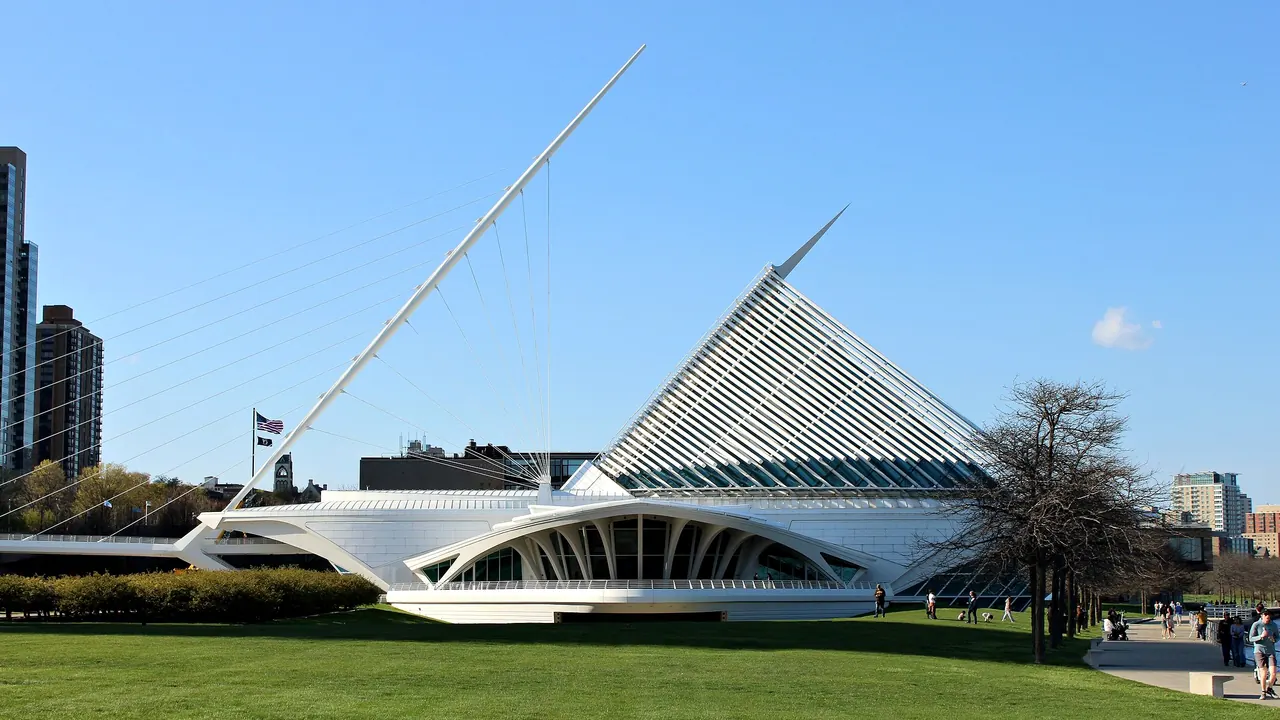
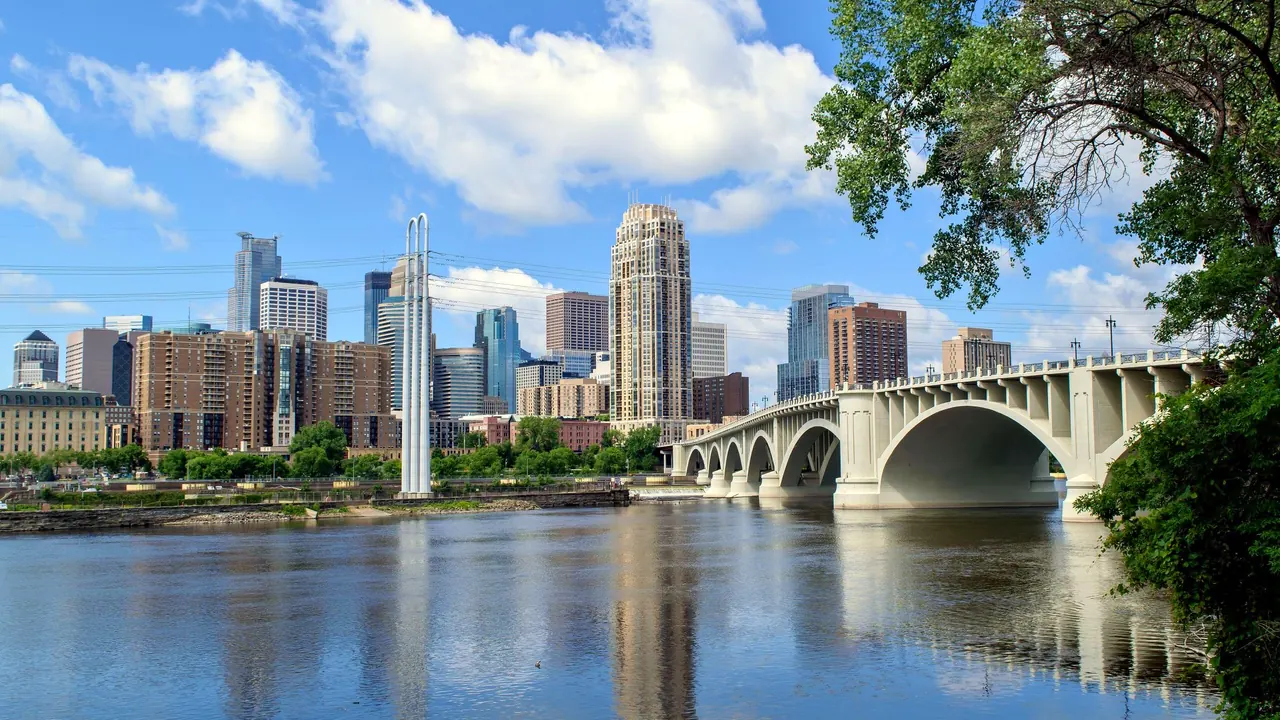
Photos: Milwaukee by Michael Barera, CC BY-SA 4.0, cropped; Minneapolis by Thomas Parker, Pexels License.
Milwaukee or Minneapolis?
Our verdict in twelve categories, each scored against the same fixed benchmark cities, and the climate month by month, so you can choose for your trip.
Choose Milwaukee for
- day trips
- nightlife
- prices
Milwaukee suits the traveller who wants a sociable, beer-soaked Midwestern city with an easy reach beyond it. Its corner taverns, Friday fish fries and summer lakefront festivals give it more character after dark, and the train to Chicago means a second great city is close enough for a day. Come in summer, hire a car for the outlying sights, and treat it as a relaxed base rather than a checklist.
Choose Minneapolis for
- shopping
- live music and the arts
- wellness
Minneapolis is the stronger pick for anyone who plans evenings around a stage or days around a park. The Guthrie, Orchestra Hall and First Avenue give it the deeper performing arts calendar, the Chain of Lakes and the Grand Rounds make the outdoors part of daily life, and light rail from the airport to downtown and the Mall of America makes it easier for families and shoppers to manage without driving.
Scoreboard
Twelve categories on one fixed scale from 0 to 100. The shaded stretch is the gap between the two.
Your match
Pick a travel style or drag the sliders, and both match scores follow your weighting.
Wins on day trips and nightlife with your weighting.
Wins on shopping and live music and the arts with your weighting.
What matters to you?
Category by category
What the scores mean for a trip.
Beaches & swimming
Neither is a beach destination, but Minneapolis edges ahead for actual swimming. Its city lakes are small next to Lake Michigan and sheltered by the neighbourhoods around them, so they warm well by late July. Lake Harriet, Bde Maka Ska, Lake Nokomis and Cedar Lake all have lifeguarded areas and are a short bike ride from most of the city, which makes an after-work swim a normal part of summer.
Milwaukee's lakefront feels grander, with Bradford Beach's volleyball courts and cabanas facing what looks like open sea. Lake Michigan stays cold, though, and an offshore wind can chill it sharply overnight, so many visitors sit on the sand and paddle rather than swim.
Food & drink
The two are broadly level, but they feed you in very different ways. Milwaukee's table is old Upper Midwest: the Friday fish fry with potato pancakes, bratwurst, cheese curds, frozen custard and the wood-panelled supper club, with beer as the city's founding trade and the Public Market for grazing.
Minneapolis is at its best in its immigrant corridors, where Lake Street and Eat Street serve Somali, Ethiopian, Vietnamese and Mexican cooking and Hmong markets offer dishes rarely found elsewhere in the country. Pick Milwaukee for regional tradition and Minneapolis for range.
Culture & sights
Each city gives you about two or three days of sights, so the difference is in kind. Minneapolis is the art-museum city, with the encyclopedic Minneapolis Institute of Art, the contemporary Walker Art Center and its Sculpture Garden, and the flour-milling story told at the Mill City Museum beside St Anthony Falls.
Milwaukee's draws are more architectural and more particular: Calatrava's winged pavilion at the Art Museum, the Harley-Davidson Museum, and the brewing-era wealth visible in the Pabst Mansion, the Basilica of St Josaphat and the cream-brick warehouses of the Third Ward.
Nightlife
Milwaukee has the livelier night out, largely because the neighbourhood tavern is woven into the city itself, with old brewery signs, pool tables and regulars on almost every block. Water Street adds a loud sports-and-student strip, and Brady Street, Walker's Point and the Third Ward cover cocktails, taprooms and the main LGBTQ bars.
Minneapolis is friendly but more spread out, with taprooms in Northeast, cocktail bars in the North Loop and weekend crowds in Uptown and the Warehouse District. Neither is a clubbing city, and in both the best nights fall in summer on patios.
Nature & outdoors
Minneapolis builds the outdoors into the city more completely. The Grand Rounds, a loop of about 80km of parkways and paths, ties together the Chain of Lakes, Minnehaha Falls and the Mississippi gorge, and winter brings groomed ski trails at Theodore Wirth Park and skating on the frozen lakes.
Milwaukee's green space runs along Lake Michigan, with Olmsted's Lake Park and its ravines and long flat rides on the Oak Leaf Trail. Its outdoor season is shorter, though, and the Kettle Moraine's glacial hills, about an hour away, are the main escape inland.
Day trips
Milwaukee has far more within easy reach, and the reason is mainly Chicago, about an hour and a half by train, with its architecture and museums close to the station. Madison, Frank Lloyd Wright's buildings in Racine, the stone mills of Cedarburg, Kohler and the mansions of Lake Geneva fill out several more days.
From Minneapolis, St Paul is the obvious outing but is effectively part of the same city. Beyond it, Stillwater on the St Croix and the river towns around Lake Pepin make a pleasant drive, and then the list runs out.
Good for families
Minneapolis is better equipped for children, especially outside summer. The Mall of America's indoor amusement park and aquarium, the Science Museum and Minnesota Children's Museum in St Paul, and two zoos mean long winters do not leave families stuck, and the summer lakes add paddle boats and small beaches.
Milwaukee is easy and friendly with children too, with a well-regarded zoo, Discovery World's freshwater aquariums and the Mitchell Park Domes. It works best in summer, when the lakefront festivals and a baseball game round out the days.
Getting around
Minneapolis is the easier city without a car. Light rail runs from the airport to downtown and the Mall of America and on to St Paul, the skyways let you cross downtown indoors in winter, and protected bike lanes and the Midtown Greenway reach the lakes.
Milwaukee's centre is compact and pleasant to walk along the Riverwalk, and The Hop streetcar links downtown with the Third Ward. Beyond that core there is no rail, so the zoo, the Harley-Davidson Museum and the day trips usually mean driving or ride-hailing, though parking is rarely a problem.
Shopping & style
Minneapolis has the much stronger shopping offer, anchored by the Mall of America, reachable by light rail, with no sales tax on clothing. The North Loop's independent boutiques and Northeast's makers' studios give it a local layer as well.
Milwaukee is small-scale by comparison. The Third Ward's galleries and design shops and Brady Street's vintage and record stores are fine for an afternoon, and the most typical souvenirs are Wisconsin cheese, local beer and Harley-Davidson gear.
Affordability
Costs are much the same in both, moderate by American standards, with tax and tip added to meals and hotel rates jumping for big events. Where the savings fall differs.
In Milwaukee they come from cheap tavern beer, inexpensive fish fries and free lakefront parks. In Minneapolis they come from free entry to the Minneapolis Institute of Art and the Sculpture Garden, good-value immigrant kitchens, and light rail that can spare you a hire car for most of the trip.
Live music & performing arts
Minneapolis has one of the deepest performing arts scenes in the American interior. The Guthrie Theater on the river, the restored Hennepin Avenue houses, the Children's Theatre Company, the Minnesota Orchestra and the Ordway's opera and chamber orchestra keep stages busy all year, and First Avenue, where Prince filmed Purple Rain, anchors its rock history.
Milwaukee has a full set of companies for its size and the ornate Pabst Theater, but its real strength is seasonal: Summerfest fills the lakefront with music for weeks. Outside summer, it offers less to plan a trip around.
Wellness & relaxation
Neither city is a spa destination, but Minneapolis has a tradition of its own in the Nordic sauna, with winter saunas set up on frozen lakes and a cold plunge or a roll in the snow between rounds. Evening walks around the lakes add to its unhurried feel.
Milwaukee offers hotel and day spas and calm walks along the lakefront and Riverwalk. For anything more serious, visitors drive about an hour north to Kohler.
When should you go?
Pick your month. The climate figures are measured averages, not a forecast.
Milwaukee in July
Minneapolis in July
Daytime high, °C
Rainfall in the month, mm
Temperature and rainfall are climate normals, averaged over the years shown. Milwaukee: 1991-2020 (sunshine 1981-2010) normals, Gen Mitchell International Airport (11.2 km from centre). Minneapolis: 1991-2020 (sunshine 1981-2010) normals, Minneapolis-St Paul International (21.5 km from centre).
Milwaukee and Minneapolis have the same shape to the year: long, freezing winters and a short, warm summer that is clearly the time to go. Milwaukee's winter is a little milder, with January highs around -1°C. Minneapolis sits nearer -5°C, and from December to February its streets are hard going on foot. From June to August both reach the high twenties, with Minneapolis slightly hotter at about 29°C in July and sunnier for most of the year. Milwaukee's rain is spread from April to August, while Minneapolis stays wet right through the summer, from May to August. June is the wettest month in both.
For swimming, the window runs from late June to early September in each. Lake Michigan off Milwaukee stays cold well into June and peaks at about 21°C in August, which makes August the best month there for a proper swim. Minneapolis's smaller city lakes warm up faster in midsummer. For walking and sightseeing without the heat, May and September are the most comfortable months in both.
Which traveller are you?
For a culture and arts trip, Minneapolis is the better choice. The Guthrie Theater, Orchestra Hall and the Ordway give it a stage worth booking most nights, and the Walker Art Center and the free Minneapolis Institute of Art add serious collections by day.
On a shopping trip, Minneapolis wins easily. The Mall of America is a light-rail ride away and clothing carries no sales tax, while the North Loop adds independent boutiques. Milwaukee's Third Ward is pleasant for browsing, but most visitors leave with cheese.
For a food and nightlife trip, Milwaukee has more local flavour. Friday fish fries, supper clubs and frozen custard pair with a tavern on nearly every corner and the busy Water Street strip, giving evenings a character that Minneapolis's quieter bar scene lacks.
Before you go
| Measure | Milwaukee | Minneapolis |
|---|---|---|
| Currency | US Dollar (USD) | US Dollar (USD) |
| Sockets | AB120 V, 60 Hz | AB120 V, 60 Hz |
| Driving side | Right | Right |
| Time zone | UTC-6, UTC-5 in summer | UTC-6, UTC-5 in summer |
| Emergency number | 911 | 911 |
| Elevation | 188 m | 264 m |
| Main airport | General Mitchell International Airport (MKE)12 km from centre34 non-stop destinations | Minneapolis–Saint Paul International Airport / Wold–Chamberlain Field (MSP)12 km from centre163 non-stop destinations |
| Public holidays this year | 12 days | 12 days |
By the numbers
| Measure | Milwaukee | Minneapolis |
|---|---|---|
| City population | 577,222 | 429,954 |
| People per km² | 2,302 | 2,889 |
| Museums within 10 km | 14 | 22 |
| UNESCO World Heritage sites within 50 km | 0 | 0 |
| Swim season, months above 21 °C | 1 month | - |
Where else could you go?
Every comparison below shares a destination with this one, so you can follow Milwaukee or Minneapolis somewhere new.
- Chicagovs Milwaukee
- Wisconsin Dellsvs Milwaukee
- Wisconsin Dellsvs Minneapolis
- Detroitvs Milwaukee
- St. Louisvs Milwaukee
- Louisvillevs Milwaukee