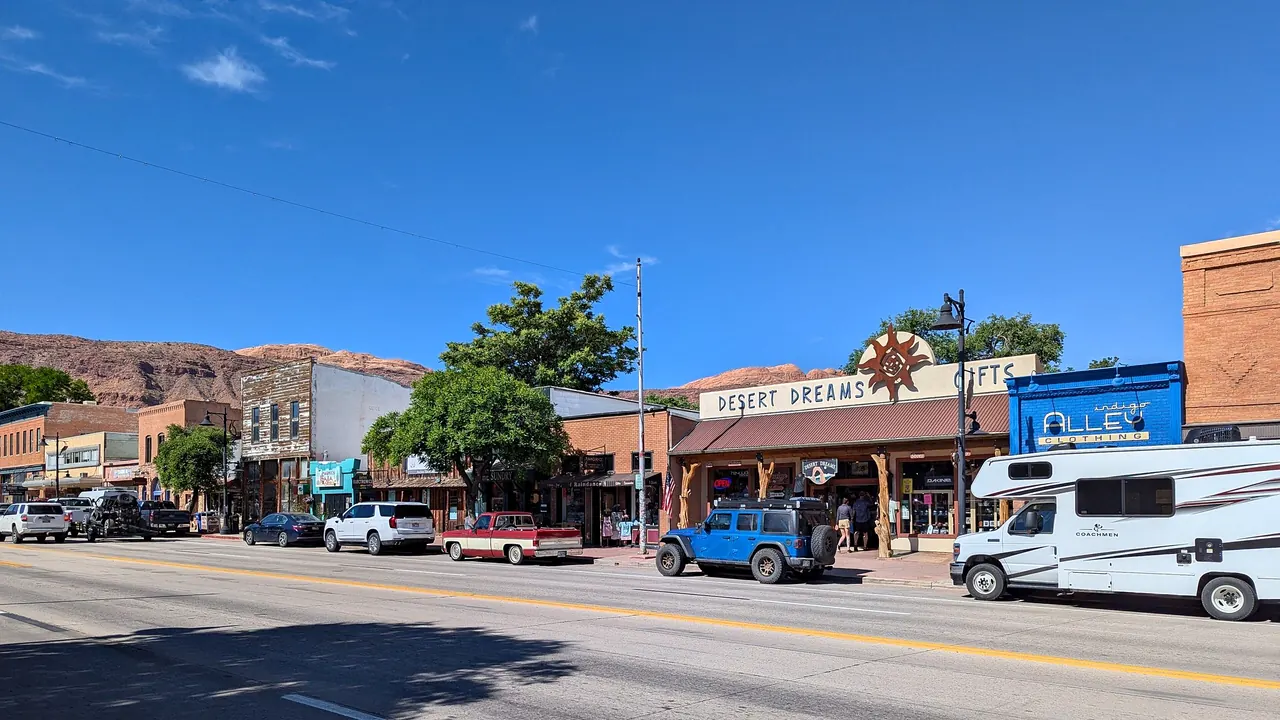
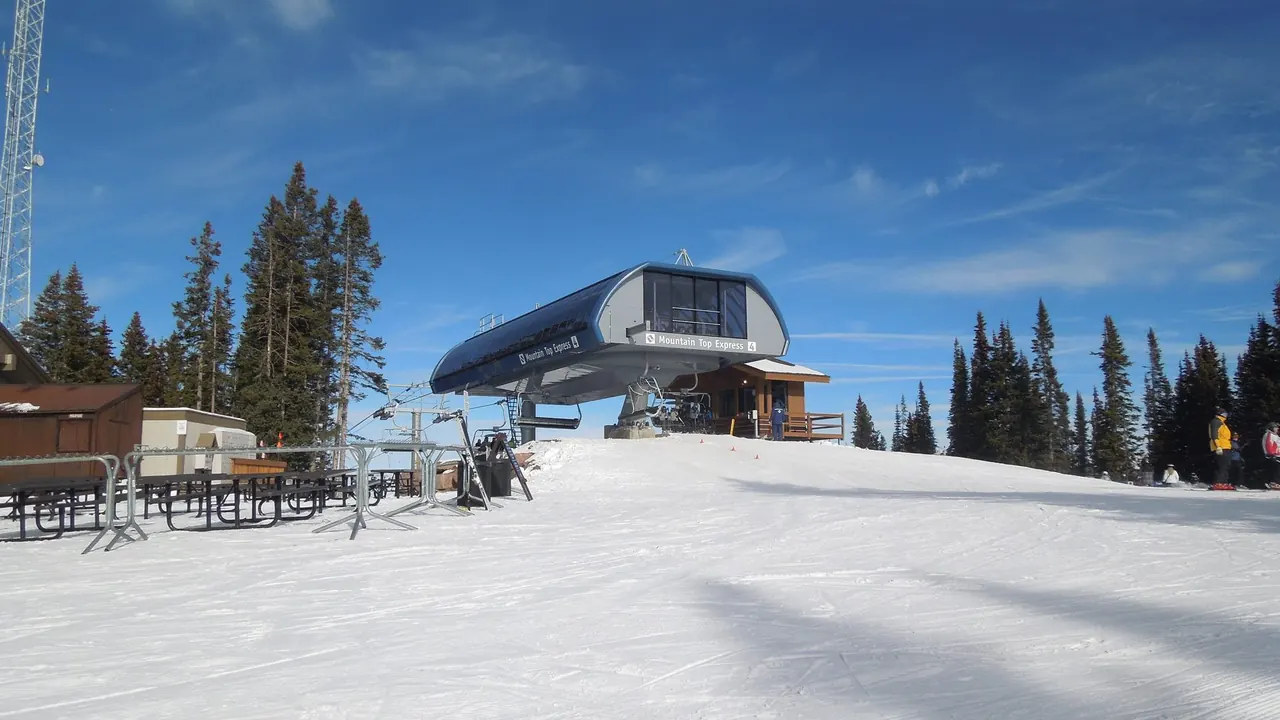
Photos: Moab by G. Edward Johnson, CC BY 4.0, cropped; Vail by DReifGalaxyM31, CC BY 3.0, cropped.
Moab or Vail?
Our verdict in twelve categories, each scored against the same fixed benchmark cities, and the climate month by month, so you can choose for your trip.
Choose Moab for
- prices
- beaches
- culture and sights
Moab is for travellers who want red-rock desert on the doorstep and don't mind a car, early starts and a quiet town at night. Arches, Canyonlands and the Slickrock Trail are all close, the camping and free hikes keep costs down, and spring or autumn here makes a hard-to-beat active trip for hikers, mountain bikers and rafters.
Choose Vail for
- getting around
- live music and the arts
- day trips
Vail suits travellers who want the mountains with comfort built in. You get world-class skiing in winter, alpine hiking and summer music festivals, plus spas, après-ski, polished restaurants and a free bus that makes a car optional in town. The price is steep, so it rewards those who can afford it and want everything close to the lifts.
Scoreboard
Twelve categories on one fixed scale from 0 to 100. The shaded stretch is the gap between the two.
Your match
Pick a travel style or drag the sliders, and both match scores follow your weighting.
Wins on prices and beaches with your weighting.
Wins on getting around and live music and the arts with your weighting.
What matters to you?
Category by category
What the scores mean for a trip.
Beaches & swimming
Neither is a place for a beach vacation, and the swimming each offers is quite different. In Moab's summer heat people cool off in the shallow pools of Mill Creek, at Ken's Lake or on Colorado River sandbars, though the river is fast and silty.
Vail's swimming means small mountain lakes and reservoirs that stay cold even in July. In both towns most visitors end up in the hotel pool.
Food & drink
Vail is the better place to eat, if you want a proper dinner out. Vail Village and Lionshead have steak and game restaurants, fondue rooms, sushi and long wine lists, and you can lunch at a mountain lodge between runs, with Colorado lamb, elk and trout on many menus.
Moab's Main Street is about refuelling: burgers, tacos, pizza, breweries and a few more ambitious Southwestern dinners, all in dusty boots. It is more casual and cheaper than Vail, but there is less choice, and both towns go quiet in their off-seasons.
Culture & sights
Neither town is worth visiting for its sights, but their history is of very different ages. Around Moab, the depth is ancient: Ancestral Puebloan and Fremont petroglyph panels along Potash Road and Kane Creek, dinosaur trackways and the small Museum of Moab.
Vail's culture dates from the 1960s, a ski resort built to look like a Tyrolean village. The Colorado Snowsports Museum, with its story of the Tenth Mountain Division, and the Betty Ford Alpine Gardens fill a few hours.
Nightlife
Vail has the livelier evenings. Après-ski fills the slopeside terraces of Vail Village and Lionshead as the lifts close, and on winter weekends a few bars and a small club stay open past midnight, though summer and the off-seasons are much calmer.
Moab offers a couple of brewpubs where bikers and rafters swap stories, and the town is mostly asleep by eleven. Its real night-time draw is the dark, star-filled desert sky.
Nature & outdoors
Both are outstanding outdoor bases, but the landscapes could hardly be more different. Moab is red-rock desert: Arches starts minutes from town, Canyonlands and Dead Horse Point overlook the canyons of the Colorado and Green rivers, and the Slickrock Trail and Whole Enchilada make it a mountain-biking capital, with rafting, canyoneering and climbing besides.
Vail is high alpine country at about 2,500m. It has a vast ski area in winter, and in summer gondolas, the Gore Range and Holy Cross wilderness, fly fishing on Gore Creek and gold aspens in autumn. Choose by season and taste: desert in spring and autumn, or mountains in winter and summer.
Day trips
Vail has more places to visit within a short drive. Beaver Creek is next door, Breckenridge's Victorian main street is under an hour away, Leadville's silver-boom streets make a half day, and Glenwood Springs is an hour down the canyon.
From Moab, nearly every day out is more landscape, and the towns within reach are small. The best cultural outing is a long drive south to Bluff, Edge of the Cedars in Blanding and the towers of Hovenweep.
Good for families
Vail is the easier choice with children. It has large ski schools and gentle learning terrain, a car-free village, and in summer ropes courses, a mountain coaster and tubing at the top of the gondola. Altitude and winter cold are hard on toddlers, though.
Moab can thrill school-age children who love scrambling on rocks, with short walks to Sand Dune Arch, dinosaur tracks, gentle river floats and Junior Ranger programmes. But summer heat, unfenced drops and long hours in the car make it a better fit for older, active families.
Getting around
Vail is much easier without a car. The village cores are pedestrian, the lifts start in town and a free bus runs the length of the valley, so many visitors manage a week on foot and by bus. Reaching other towns still calls for a car.
In Moab, a car is essential beyond Main Street and the bike path to the Arches entrance. There is no useful public transport, the parks lie along long desert roads, and a high-clearance vehicle reaches far more trailheads.
Shopping & style
Vail has more shopping, though of a narrow, upmarket kind: ski clothing, fur and leather, jewellery, Western boots and galleries along its pedestrian lanes.
Moab's shops are practical, with bike, climbing and camping stores. Its most distinctive buys are geodes and fossils from its rock shops, and Navajo jewellery and weavings.
Affordability
Moab costs much less, though it is not cheap. Motels charge resort rates in spring and autumn, and rafting or jeep tours add up. But one park pass covers a week, camping is inexpensive or free, and most hikes cost nothing, especially in the cheaper winter months.
Vail is among the most expensive vacations in North America, with slopeside lodging, lift tickets, ski school and meals all well above normal American prices. Staying further down the valley or coming outside winter softens the cost only a little.
Live music & performing arts
Vail has a serious summer of music and dance: Bravo! Vail brings orchestras to the open-air Gerald R. Ford Amphitheater, and the Vail Dance Festival and a jazz festival follow. Winter brings little beyond après-ski bands.
Moab's highlight is the Moab Music Festival at the end of summer, with chamber concerts held in canyon grottoes reached by boat. It is memorable but brief, and the rest of the year is quiet.
Wellness & relaxation
Vail is the better place to rest, with polished hotel spas, saunas and hot tubs under the peaks, an unhurried pace outside busy weekends, and the mineral pools and vapour caves of Glenwood Springs an hour away.
Moab has only a few small massage studios, and its days are early and hot. Its restful side is the quiet desert evening as the cliffs turn red.
When should you go?
Pick your month. The climate figures are measured averages, not a forecast.
Moab in July
Vail in July
Daytime high, °C
Rainfall in the month, mm
Where the figures come from
Moab's temperatures are measured 27 km from the centre, at Moab / Crescent Junction.
Moab's station stands 162 m above the city centre, so the centre is likely a little warmer than the figures say.
Moab has no rain gauge within 25 km of the centre, so its rainfall comes from a gridded climate dataset read at the city rather than from a gauge further away.
Vail's temperatures are measured 47 km from the centre, at Kremmling.
Vail's station stands 186 m below the city centre, so the centre is likely a little cooler than the figures say.
Vail has no rain gauge within 25 km of the centre, so its rainfall comes from a gridded climate dataset read at the city rather than from a gauge further away.
Temperature and rainfall are climate normals, averaged over the years shown. Moab: 2006-2020 (rainfall 1991-2020) normals, Moab / Crescent Junction (27 km from centre). Vail: 2006-2025 (rainfall 1991-2020) normals, Kremmling (46.5 km from centre).
Moab is at its best in spring and autumn. Daytime highs climb to around 20°C in April and stay mild into early May, and September and October bring the same comfortable warmth back. From June to August afternoons reach about 35°C, too hot for midday hiking, and winters are cold and quiet. It is a dry place in every month, so rain rarely spoils a day.
Vail's year is split between snow and summer. Winter days stay around freezing or below, with a highest of about -4°C in January. That cold keeps the powder good for skiing from December to March. July and August are the warm months, peaking near 29°C, which is ideal for high trails and the festivals, and September adds the gold aspens. Vail gets light rain or snow spread evenly through the year, with no real dry season, and is noticeably wetter than Moab. Put together, Moab works best in the shoulder seasons and Vail in deep winter or high summer.
Which traveller are you?
On a trip on a tight budget, Moab goes further. You can spend the days walking to Delicate Arch, cycling the paved path to Arches and watching sunset at Dead Horse Point, then cook supper at camp. In Vail, every bed and dinner carries resort prices.
For a relaxing and wellness trip, Vail suits better. Days in Moab run on dawn starts and desert heat. In Vail you can ease into the altitude with slow mornings, a stroll along Gore Creek, the Betty Ford Alpine Gardens and a massage before dinner.
For a ski trip, Vail is the only real choice of the two. Moab's winter means cold, empty trails and no lift-served slopes. Vail's ski area runs from groomed front-side runs to the Back Bowls and Blue Sky Basin, and the lifts start in town.
Before you go
| Measure | Moab | Vail |
|---|---|---|
| Currency | US Dollar (USD) | US Dollar (USD) |
| Sockets | AB120 V, 60 Hz | AB120 V, 60 Hz |
| Driving side | Right | Right |
| Time zone | UTC-7, UTC-6 in summer | UTC-7, UTC-6 in summer |
| Emergency number | 911 | 911 |
| Elevation | 1,227 m | 2,445 m |
| Main airport | Canyonlands Regional Airport (CNY)27 km from centre2 non-stop destinations | Eagle County Regional Airport (EGE)48 km from centre16 non-stop destinations |
| Public holidays this year | 12 days | 12 days |
By the numbers
| Measure | Moab | Vail |
|---|---|---|
| City population | 5,366 | 4,835 |
| People per km² | 501 | 400 |
| Museums within 10 km | 1 | 1 |
| UNESCO World Heritage sites within 50 km | 0 | 0 |
Where else could you go?
Every comparison below shares a destination with this one, so you can follow Moab or Vail somewhere new.
- Beaver Creekvs Vail
- Copper Mountainvs Vail
- Keystonevs Vail
- Breckenridgevs Vail
- Winter Park, Coloradovs Vail
- Aspenvs Vail