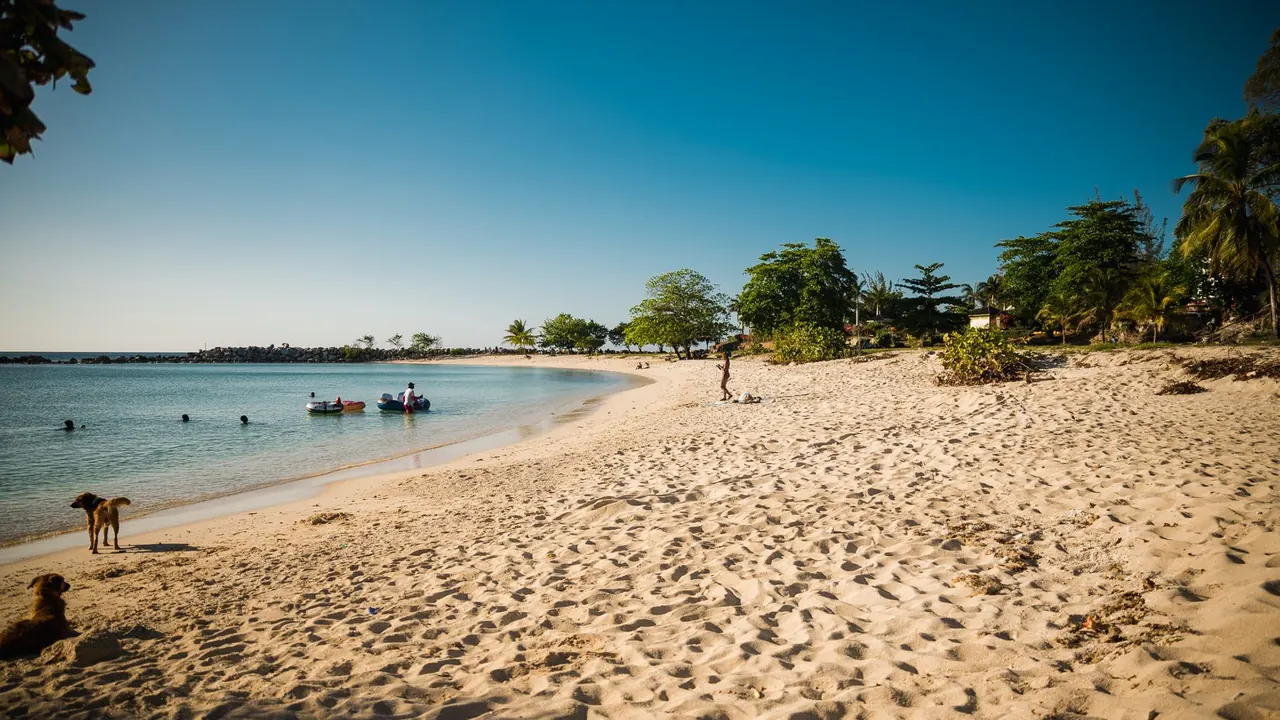
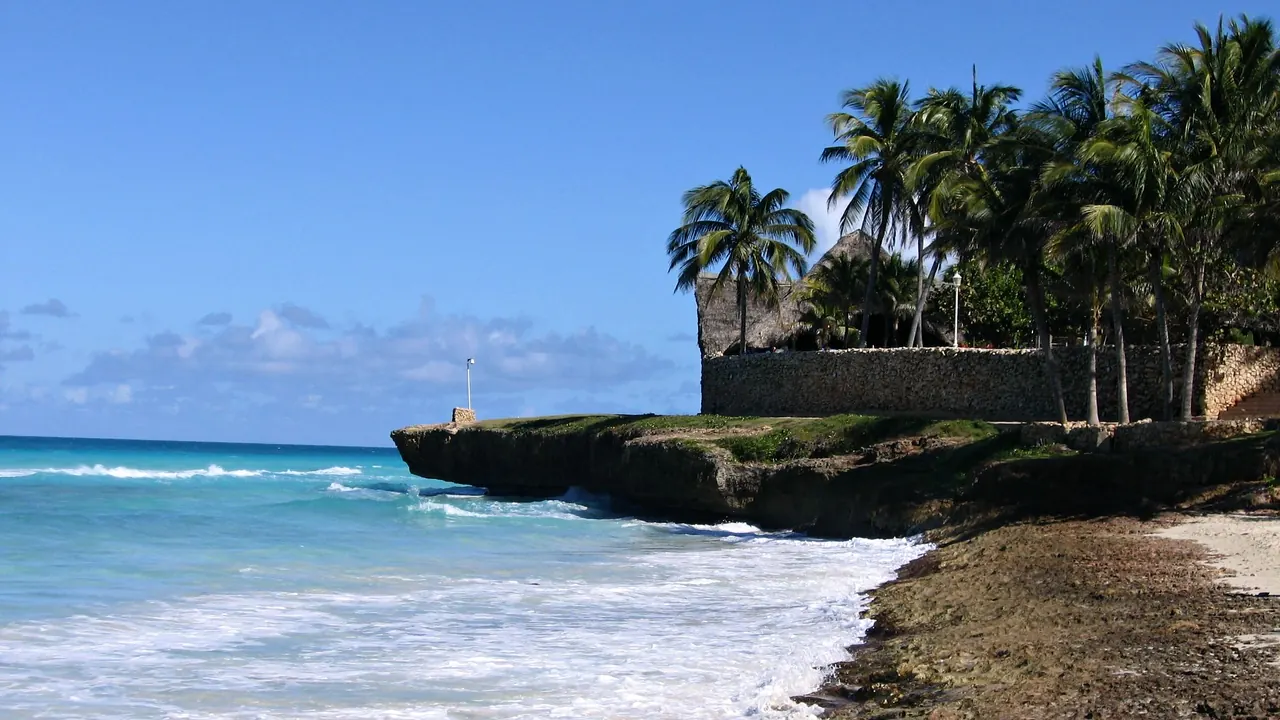
Photos: Montego Bay by Dre Dawkcide, Pexels License; Varadero by Dordelune, Public domain.
Montego Bay or Varadero?
Our verdict in twelve categories, each scored against the same fixed benchmark cities, and the climate month by month, so you can choose for your trip.
Choose Montego Bay for
- food and drink
- nature and the outdoors
- culture and sights
Montego Bay suits travellers who want the beach as a base rather than the whole trip. Jerk pits and fish shacks give the food real character. The green hills behind the coast offer rafting on the Martha Brae, zip lines and reef snorkelling in the marine park. In the evenings the Hip Strip and the weekend sound-system parties offer more than Varadero does.
Choose Varadero for
- prices
- getting around
- beaches
For a pure beach vacation, Varadero is the stronger pick. The Hicacos Peninsula's long, unbroken strip of powdery sand outclasses Montego Bay's small town beaches, its shallow water suits young children, and all-inclusive packages here tend to cost less. Food and sightseeing are thin, but Havana is close enough for a day trip, which makes up for much of that.
Scoreboard
Twelve categories on one fixed scale from 0 to 100. The shaded stretch is the gap between the two.
Your match
Pick a travel style or drag the sliders, and both match scores follow your weighting.
Wins on food and drink and nature and the outdoors with your weighting.
Wins on prices and getting around with your weighting.
What matters to you?
Category by category
What the scores mean for a trip.
Beaches & swimming
Both have calm, warm, clear water, but the shoreline is very different. Montego Bay's town beaches, led by Doctor's Cave on the Hip Strip, are short curves of sand between rocky or private stretches, and many visitors end up on their resort's own sand at Rose Hall or Ironshore.
Varadero is one long beach: about 20km of unbroken powdery sand along the peninsula's northern shore. It is busier with Cuban families at the town end and quieter towards the empty coves at the tip. To find anything like it from Montego Bay, you would have to drive an hour and a half to Negril.
Food & drink
Montego Bay eats far better. Jerk pork and chicken from roadside pits, patties, curry goat, ackee and saltfish, and fish from beach shacks give even resort guests good reasons to go out, though fine dining is scarce.
In Varadero, cooking depends on what ingredients can be found. Most meals are resort buffets, and a handful of private restaurants serve ropa vieja, roast pork and lobster. The pleasures here are in the glass, a daiquiri or mojito made with Cuban rum, more than on the plate.
Culture & sights
Neither is a culture destination, but Montego Bay has more to see. The Rose Hall and Greenwood great houses tell the plantation story, and Sam Sharpe Square remembers the 1831 rebellion, with the old Cage lock-up beside it.
Varadero's sights are the Du Pont family's Xanadu Mansion on its headland, a small museum in a wooden summer house and the pre-Columbian cave drawings in the Varahicacos reserve. A few hours cover them all.
Nightlife
Montego Bay has the livelier evenings. The Hip Strip's open-air bars stay open into the small hours, and the weekend waterfront parties and street dances with dancehall sound systems are the real local scene, best visited with someone who knows them.
Varadero is quieter and more about dancing than late drinking. There are salsa clubs where locals dance with real skill, a disco inside a limestone cave, and nights that end well before dawn. In both places, many guests never leave the resort bar.
Nature & outdoors
Montego Bay has the richer setting. Behind the reefs of the marine park, green hills offer bamboo rafting on the Martha Brae, zip lines and the hand-fed hummingbirds of Rocklands, and the karst of Cockpit Country has guided walks.
Varadero is flat, so outdoor days are spent on the water: catamarans to the offshore cays, diving on reefs and wrecks, and kitesurfing when the winter winds come. On land, the short trails of Varahicacos and the Saturno cenote are the main draws, and the Zapata wetlands make a long day out.
Day trips
Both have a handful of good outings, but of different kinds. From Montego Bay, Georgian Falmouth is forty minutes away, and Negril's cliffs, Bob Marley's birthplace at Nine Mile and the Appleton rum estate are further out along slow, winding roads.
Varadero's outings centre on one big city. Havana, two hours west, makes a long but rewarding day, and Matanzas, with its theatre and old French pharmacy, is much closer. Montego Bay's trips lean towards beaches, rum and music history, while Varadero's lean towards colonial towns and Cuba's revolutionary past at the Bay of Pigs.
Good for families
Montego Bay works for families who stay inside a good resort, with kids' clubs, splash pools and calm water within the reef, and children love the hummingbirds at Rocklands. Beyond the hotel, though, chaotic traffic, few pavements and persistent vendors keep most families close to base.
Varadero is easier with small children. The water is shallow and gentle along the whole beach, the all-inclusive format takes care of meals, and the rowing boats in Josone Park or the dolphin centre fill a day off the sand. Bring medicines, nappies and sun cream, as these are hard to find there.
Getting around
Montego Bay's airport is right beside the Hip Strip, but the ease ends there. Resorts are spread for kilometres along the coast, pavements disappear and route taxis are hard for visitors to work out, so most people use tourist taxis and agree the fare first.
Varadero is simpler to get around. The town end is a walkable grid of numbered streets, an open-top tourist bus runs the length of the peninsula, and coco-taxis, carriages and rental bikes cover the flat roads. Leaving either place still means hiring a driver or joining a tour.
Shopping & style
Shopping is a minor matter in both, but Montego Bay has a little more. You can haggle for carvings and paintings at the Harbour Street craft market, duty-free shops by the cruise port sell jewellery, watches and rum, and Blue Mountain coffee is the best thing to take home.
In Varadero, craft stalls on the main avenue and a small mall cover souvenirs and essentials, and everyday items can be scarce. The one purchase worth making is rum and cigars from the official shops.
Affordability
A resort stay generally costs less in Varadero than in Montego Bay. On the Jamaican side, most beds are in large resorts aimed at North American visitors, and tourist taxis, excursions and Hip Strip menus carry visitor prices too. The way to spend less is to eat where locals do, at roadside jerk pits, patty bakeries and beach fish shacks, or to stay in a small guesthouse away from the coast.
Varadero's all-inclusive packages are one of the cheaper ways to get a white-sand Caribbean beach, so it comes out ahead for anyone who books one and stays on the peninsula. Once you leave the package behind, though, taxis, excursions and private restaurants are all priced for foreigners. For independent travellers who move around a lot, the gap between the two gets much smaller.
Live music & performing arts
Neither has theatre or concert halls to speak of, so the difference is in the music itself. Montego Bay is reggae and dancehall country: Reggae Sumfest fills the town each summer, and cover bands play the Hip Strip the rest of the year.
Varadero's music is Cuban son and salsa, played by trios in hotel lobbies and by full bands in the dance clubs, often very well, along with feathered cabaret shows in the resorts. For ballet or more serious Cuban music, you need to go to Havana.
Wellness & relaxation
In both, relaxation comes from resort spas and slow beach days rather than any bathing tradition. Montego Bay's strength is its many adults-only resorts and massages on the sand, though the town around them is noisy.
Varadero's calm is at the quieter eastern end of the peninsula, where long days need no planning, but spa standards and supplies vary from hotel to hotel.
When should you go?
Pick your month. The climate figures are measured averages, not a forecast.
Montego Bay in July
Varadero in July
Daytime high, °C
Rainfall in the month, mm
Where the figures come from
Varadero has no rain gauge within 25 km of the centre, so its rainfall comes from a gridded climate dataset read at the city rather than from a gauge further away.
Temperature and rainfall are climate normals, averaged over the years shown. Montego Bay: 1991-2020 normals, Montego Bay / Sangster (3.7 km from centre). Varadero: 2007-2020 (rainfall 1991-2020) normals, Varadero, Matanzas (0.7 km from centre).
Montego Bay is hot all year, with highs from 30°C in winter to 34°C in July and August, so walking the streets in high summer is hard going. The driest and sunniest stretch runs from February to April. Rain picks up in May and again from September to November, peaking at around 158mm in October. The sea stays at 27°C or warmer, so swimming is warm in every month.
Varadero has a milder winter, with highs in the mid-20s from December to February, the most comfortable time for being out and about, though the sea is a little cooler then. Its wet season is longer and heavier than Montego Bay's and runs steadily from May to October, while November to April is mostly dry. March and April are dry in both, and Montego Bay's sea is a degree or two warmer then.
Which traveller are you?
For a food and nightlife trip, Montego Bay is the better choice. Jerk smoked over pimento wood, patties and fish from beach shacks give it far more to eat than Varadero's resort buffets, and the Hip Strip and weekend street dances run later than Varadero's salsa bars.
On an outdoors trip, Montego Bay wins on landscape. Its green, hilly hinterland has bamboo rafting, zip lines, horse rides and guided walks in Cockpit Country, while Varadero is a flat limestone strip where nearly all outdoor time is spent on the water.
On a trip on a tight budget, Varadero makes money go further. Its all-inclusive packages undercut many Caribbean rivals, and Montego Bay's resorts are priced for a North American market. Book a package and stay on the peninsula, because taxis and excursions add up quickly.
Before you go
| Measure | Montego Bay | Varadero |
|---|---|---|
| Official language | English, Jamaican Patois | Spanish |
| Currency | Jamaican Dollar (JMD) | Cuban Peso (CUP) |
| Sockets | AB116 V, 50 Hz | AB110 V, 60 Hz |
| Driving side | Left | Right |
| Time zone | UTC-5 | UTC-5, UTC-4 in summer |
| Emergency number | Police 110/112/119/911, ambulance 110, fire 110 | Police 106, ambulance 104, fire 105 |
| Elevation | 19 m | 4 m |
| Main airport | Sangster International Airport (MBJ)4 km from centre49 non-stop destinations | Juan Gualberto Gomez International Airport (VRA)19 km from centre1 non-stop destination |
| Public holidays this year | 10 days | 9 days |
By the numbers
| Measure | Montego Bay | Varadero |
|---|---|---|
| City population | 123,994 | 21,170 |
| People per km² | - | 662 |
| Museums within 10 km | 0 | 0 |
| UNESCO World Heritage sites within 50 km | 0 | 0 |
| Swim season, months above 21 °C | 12 months | 12 months |
Where else could you go?
Every comparison below shares a destination with this one, so you can follow Montego Bay or Varadero somewhere new.
- Negrilvs Montego Bay
- Ocho Riosvs Montego Bay
- Havanavs Varadero
- Kingstonvs Montego Bay
- Trinidad, Cubavs Varadero
- Trinidad, Cubavs Montego Bay