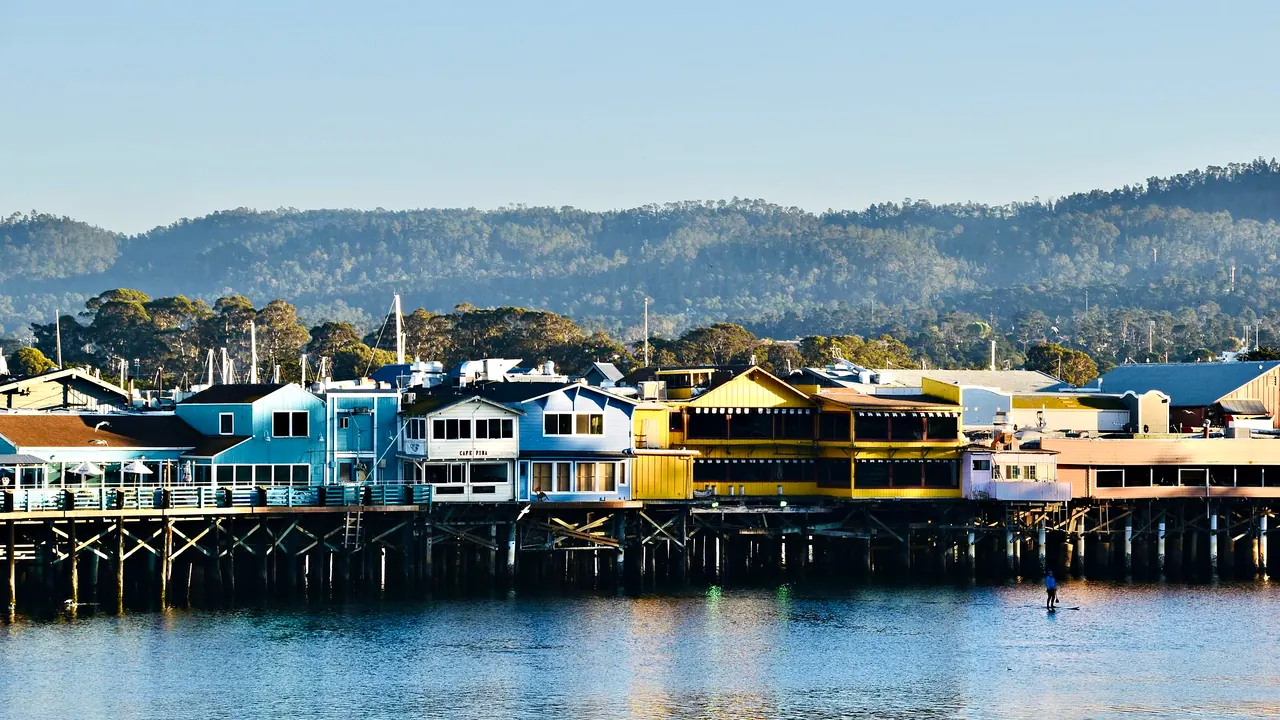
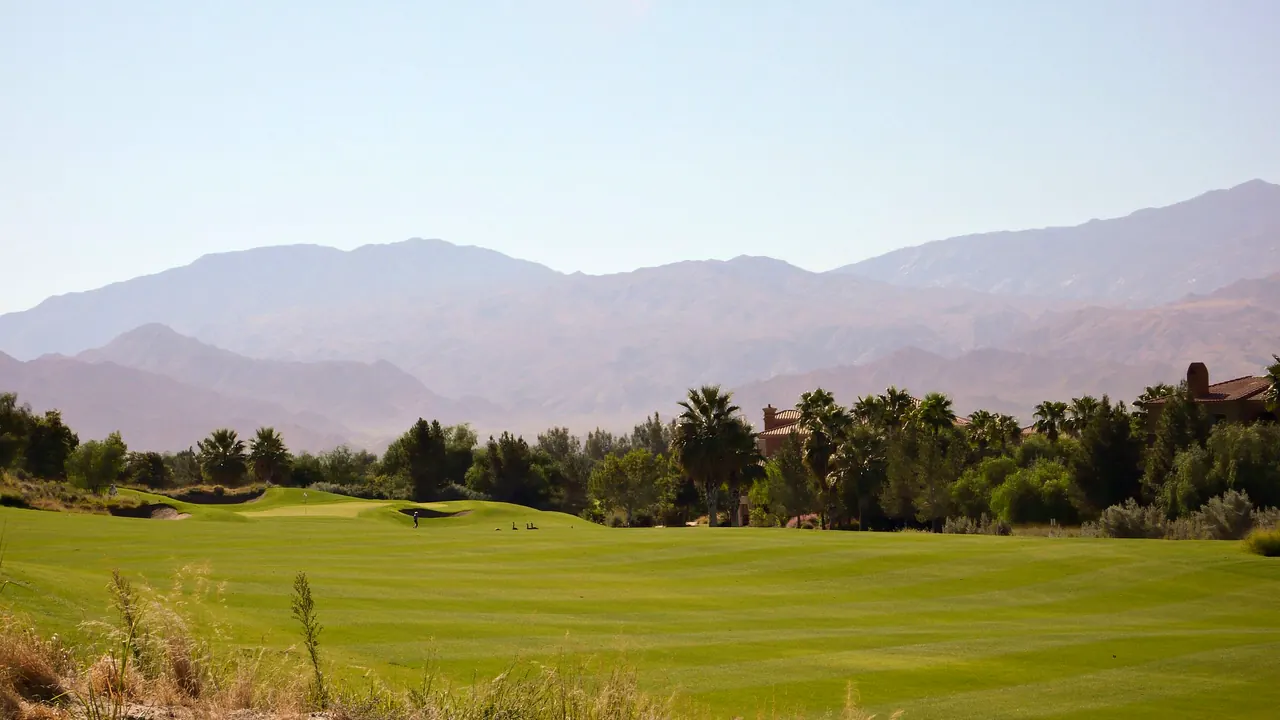
Photos: Monterey by Lesli Whitecotton, Pexels License; Palm Desert by David Balmer, CC BY 3.0, cropped.
Monterey or Palm Desert?
Our verdict in twelve categories, each scored against the same fixed benchmark cities, and the climate month by month, so you can choose for your trip.
Choose Monterey for
- getting around
- beaches
- culture and sights
Monterey suits travellers who want the coast and its wildlife: whales offshore, otters in the kelp, the aquarium, Point Lobos and the start of Big Sur. Its old adobes and missions add some history, and the waterfront trail lets you leave the car for a day. It is the better pick for families and anyone who enjoys being outdoors, as long as they don't mind cold water and a high bill.
Choose Palm Desert for
- wellness
- shopping
- prices
Palm Desert is for slowing down in the sun. Its winters are dry and warm, with resort spas, pools under the palms, golf and the boutiques of El Paseo. Hot mineral springs are half an hour away and the McCallum Theatre has a winter season. It costs a little less and is far easier to relax in, but you will drive everywhere, and in summer the heat shuts down life outdoors.
Scoreboard
Twelve categories on one fixed scale from 0 to 100. The shaded stretch is the gap between the two.
Your match
Pick a travel style or drag the sliders, and both match scores follow your weighting.
Wins on getting around and beaches with your weighting.
Wins on wellness and shopping with your weighting.
What matters to you?
Category by category
What the scores mean for a trip.
Beaches & swimming
Neither is a beach destination, but only Monterey has a coast. Del Monte Beach, the white sand at Carmel and the Asilomar dunes are lovely for walks and picnics. The water stays too cold for long swims and rip currents are common.
Palm Desert has no sand at all. The Pacific is about two hours away over the mountains, and the salty Salton Sea is no place to swim. In practice, the resort pool takes the place of the beach.
Food & drink
The two are broadly level on food, but the cooking is very different. Monterey eats from the bay and the Salinas Valley, with squid, Dungeness crab, sand dabs and artichokes, and Pinot Noir from the Santa Lucia Highlands to go with them. Skip the tourist places on the wharf and look in Old Monterey's side streets and in Carmel.
Palm Desert's restaurants are polished resort steakhouses and patio bistros on El Paseo, reliable but much alike. Its local character comes from the Mexican taquerias of Indio and Coachella and the date shakes sold at the groves.
Culture & sights
Monterey has real history to walk through. It was the capital of Spanish and Mexican California, and the adobe Custom House, Colton Hall, where the state's first constitution was written, and the Royal Presidio Chapel stand within a short stroll of each other, with the Carmel Mission ten minutes south. Cannery Row adds Steinbeck's sardine era. There are no great museums, but the old capital fills a couple of satisfying days.
Palm Desert was built after the Second World War and has little history to show. Beyond a branch of the Palm Springs Art Museum with its sculpture garden, most visitors drive to Palm Springs for its mid-century modern houses.
Nightlife
Both towns go to bed early, and neither is a place for a night out. Monterey's evenings mean a pub or wine bar on Alvarado Street, mixed in with students from the language and naval schools. In Palm Desert they mean patio cocktails around El Paseo with an older, golfing crowd.
What differs is where you go for more. Palm Desert's tribal casinos stay open into the small hours and Palm Springs is twenty minutes away. From Monterey, the nearest real night out is in Santa Cruz.
Nature & outdoors
Both are built around their landscapes, and Monterey's is the richer of the two. The submarine canyon brings humpbacks and orcas close to shore, otters float in the kelp beside the town, and Point Lobos and the redwood canyons of Big Sur are a short drive south. Diving, kayaking and coastal walking work for most of the year.
Palm Desert has desert drama instead. Trails climb straight into the Santa Rosa Mountains, palm oases hide in the Indian Canyons, and Joshua Tree's boulders are an hour away. All of this is mainly for the cooler half of the year.
Day trips
Monterey's outings are close and varied. Carmel's cottages and Pacific Grove's Victorian streets are minutes away, then come the Carmel Valley wineries and Steinbeck's Salinas, with the Santa Cruz boardwalk under an hour north.
Palm Desert's list is shorter and needs longer drives: Palm Springs first, then Temecula's wine country, cool Idyllwild and the folk-art oddity of Salvation Mountain. Los Angeles and San Diego are really separate trips.
Good for families
Monterey keeps children busier. The aquarium alone can fill a day, and tide pools, whale-watching boats, sea lions on the wharf and Dennis the Menace Park round out the stay. Cold water means building sandcastles rather than swimming.
Palm Desert has one big draw, the Living Desert zoo and gardens, plus resort pools with slides. Beyond that the valley is set up for adults and golf, and midday summer heat is hard on small children.
Getting around
A flat waterfront trail is what makes Monterey the easier base. It links the wharf, downtown, Cannery Row and the aquarium, and carries on to Pacific Grove, so on foot or by hired bike the heart of a visit needs no car. Big Sur and Carmel Valley still mean driving, and parking gets tight on summer weekends.
Palm Desert is a low spread of resorts and shopping centres along wide boulevards, and only a few blocks of El Paseo are pleasant to walk, so you drive almost everywhere. The roads are quiet and parking is easy, which helps.
Shopping & style
Palm Desert is the better place to shop. El Paseo's boutiques, jewellers and galleries are a social outing in themselves, there is a large mall, and the designer outlets west on the highway pull in bargain hunters. Palm Springs adds vintage and mid-century furniture.
In Monterey itself, shopping means taffy and sea-otter gifts on Cannery Row. For galleries and independent boutiques you go to Carmel, and for antiques to Pacific Grove.
Affordability
Monterey is the dearer of the two overall. Peninsula hotels are priced for Californian weekenders, rates peak on summer weekends and during the Pebble Beach classic-car week in August, and dinner in Carmel or on Cannery Row is costly. The savings come from staying in Seaside or Marina, coming midweek or in winter, and filling the days with free wildlife watching from the shore.
Palm Desert's prices follow the opposite calendar. Winter and spring are its expensive months, so a winter stay there may cost about as much as one in Monterey. From June to September the heat empties the resorts and rooms fall to a fraction of their winter rates. Chain hotels and rentals keep costs down all year, though a hire car and golf or spa days add up quickly.
Live music & performing arts
Palm Desert has the steadier programme. The McCallum Theatre hosts touring Broadway shows, ballet and orchestras through the winter, and casinos and an arena bring big concerts. In spring Coachella and Stagecoach take over the Indio polo grounds.
Monterey's strength is its festival heritage: the Monterey Jazz Festival every September and the Carmel Bach Festival in summer. Between those seasons there is little more than the local symphony and shows at the Golden State Theatre.
Wellness & relaxation
Palm Desert was made for this. Resort spas, long afternoons by the pool and dry, sunny winters set the pace, and Desert Hot Springs half an hour north fills its spa pools straight from natural mineral springs.
Monterey relaxes you in a different way, with fog lifting off the bay, evening walks along Pacific Grove's shore and the vineyard spas of Carmel Valley. It has no bathing culture to match, and summer weekend crowds work against a quiet stay.
When should you go?
Pick your month. The climate figures are measured averages, not a forecast.
Monterey in July
Palm Desert in July
Daytime high, °C
Rainfall in the month, mm
Where the figures come from
Palm Desert has no rain gauge within 25 km of the centre, so its rainfall comes from a gridded climate dataset read at the city rather than from a gauge further away.
Temperature and rainfall are climate normals, averaged over the years shown. Monterey: 1991-2020 normals, Monterey / Pacific Grove Acres (5 km from centre). Palm Desert: 2006-2020 (rainfall 1991-2020) normals, Palm Springs (17.2 km from centre).
Monterey stays mild all year, with daytime highs between the high teens and about 23°C. It is never hot, so walking and cycling suit any month. Winter is the wet season, with about 86mm of rain in January, and from May to October it is almost dry. Early summer often brings fog, and September and October are usually the warmest, clearest weeks. The bay stays cold all year and peaks at about 15°C, so it is never really swimming water.
Palm Desert is the opposite. From November to April the days are dry and warm, around 21°C in midwinter and warmer each month into spring, which is ideal for hiking, golf and lying by the pool. From June to September highs reach 42°C, and you can only go outdoors around dawn. So for a winter trip Palm Desert has the better weather, and from late spring to autumn Monterey does.
Which traveller are you?
For a relaxing and wellness trip, Palm Desert is the clear choice. Resort spas, pools under the palms and the mineral springs of Desert Hot Springs suit an unhurried stay. Monterey can be restful midweek, but it has no bathing tradition and summer weekends bring crowds.
On a family trip with children, Monterey has more to offer. The aquarium, tide pools, whale-watching boats and the otters seen from the waterfront path fill several days. Palm Desert has the Living Desert zoo and resort pools, but little else is aimed at children.
On a shopping trip, Palm Desert wins. El Paseo is a palm-lined boulevard of fashion boutiques, jewellers and galleries, and a big designer outlet centre is half an hour away. Monterey's own shops are mostly souvenirs, and the better browsing is over in Carmel.
Before you go
| Measure | Monterey | Palm Desert |
|---|---|---|
| Currency | US Dollar (USD) | US Dollar (USD) |
| Sockets | AB120 V, 60 Hz | AB120 V, 60 Hz |
| Driving side | Right | Right |
| Time zone | UTC-8, UTC-7 in summer | UTC-8, UTC-7 in summer |
| Emergency number | 911 | 911 |
| Elevation | 8 m | 67 m |
| Main airport | Mineta San Jose International Airport (SJC)85 km from centre38 non-stop destinations | Palm Springs International Airport (PSP)17 km from centre29 non-stop destinations |
| Public holidays this year | 13 days | 13 days |
By the numbers
| Measure | Monterey | Palm Desert |
|---|---|---|
| City population | 30,218 | 51,163 |
| People per km² | 991 | 731 |
| Museums within 10 km | 5 | 2 |
| UNESCO World Heritage sites within 50 km | 0 | 0 |
| Swim season, months above 21 °C | None | - |
Where else could you go?
Every comparison below shares a destination with this one, so you can follow Monterey or Palm Desert somewhere new.
- Palm Springsvs Palm Desert
- San Josevs Monterey
- Laguna Beachvs Palm Desert
- San Diegovs Palm Desert
- San Franciscovs Monterey
- Newport Beachvs Palm Desert