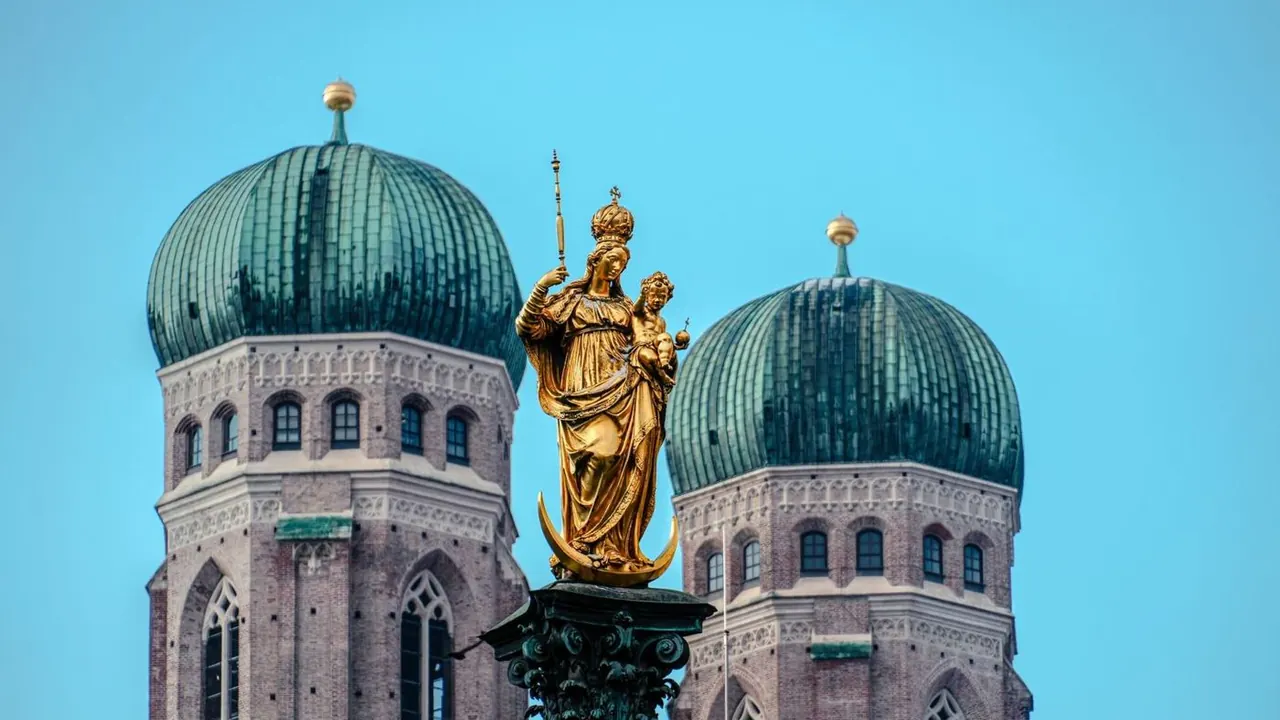
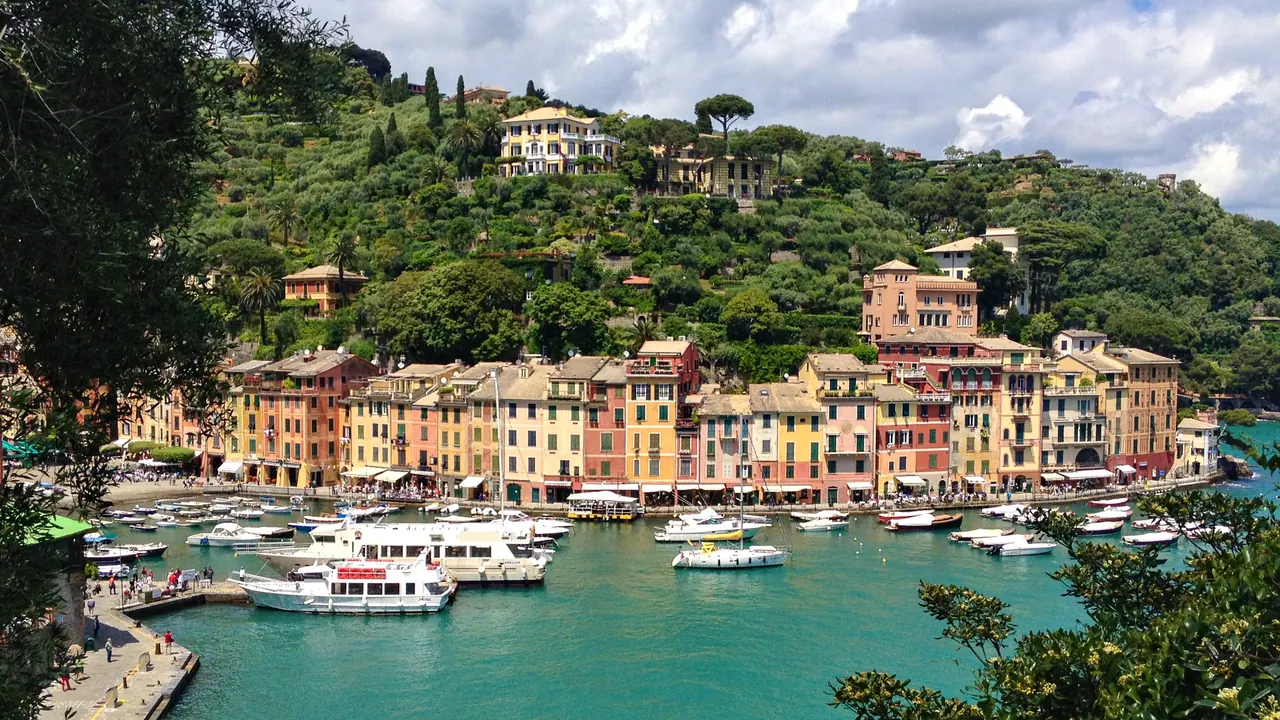
Photos: Munich by 0xd1ma, Pexels License; Portofino by Michal Osmenda, CC BY 2.0, cropped.
Munich or Portofino?
Our verdict in twelve categories, each scored against the same fixed benchmark cities, and the climate month by month, so you can choose for your trip.
Choose Munich for
- live music and the arts
- culture and sights
- families
Munich suits a traveller who wants plenty to do in one place: great art collections and palaces, a world-class opera house, beer gardens, good shopping and a rail network that reaches the Alps, Salzburg and the royal castles without a car. It also works far better with children and costs less, though it is still not cheap.
Choose Portofino for
- beaches
Portofino is a different sort of trip, a few slow days in one small and very beautiful harbour village. Pick it for clear-water swimming off the rocks, cliff paths through a protected headland, diving in the marine reserve and boat rides along the Riviera. Do not expect museums, nightlife or easy prices, and come with a budget that can take it or a bed in a cheaper town along the coast.
Scoreboard
Twelve categories on one fixed scale from 0 to 100. The shaded stretch is the gap between the two.
Your match
Pick a travel style or drag the sliders, and both match scores follow your weighting.
Wins on live music and the arts and culture and sights with your weighting.
Wins on beaches with your weighting.
What matters to you?
Category by category
What the scores mean for a trip.
Beaches & swimming
Munich's swimming happens inland. People sunbathe on the gravel banks of the Isar at the Flaucher, and the real swims are in the Starnberger See and the Ammersee, under an hour away by S-Bahn. The water there is alpine-fed and refreshing rather than warm, and a lake day is a break from sightseeing rather than a reason to visit.
Portofino puts the sea at your feet. You swim from rock platforms and ladders towards the lighthouse in deep, very clear water, or go to the sandy cove at Paraggi and the pebbles below San Fruttuoso. The catch is size: the spots are small, much of Paraggi belongs to paid beach clubs, and summer fills them quickly.
Food & drink
Munich gives you more to eat and more ways to eat it. There are brewery beer halls, beer gardens under chestnut trees where you can bring a picnic, white sausage and pretzels in the morning, the stalls of the Viktualienmarkt and a respectable choice of starred restaurants. Beyond Bavarian cooking the range thins out, though Italian, Turkish and Balkan food is good.
Portofino offers Ligurian classics such as trofie with pesto, pansoti in walnut sauce and the cheese-filled focaccia from Recco. They are served at a handful of harbour terraces where you pay mainly for the view of the yachts. Anyone who travels to eat will do better in Camogli or the hill trattorie.
Culture & sights
Munich is a full cultural destination. The Kunstareal alone holds the Alte Pinakothek's old masters, the Blue Rider painters at the Lenbachhaus and Greek sculpture in the Glyptothek. Add the Residenz, Nymphenburg and the vast Deutsches Museum, and a week will not exhaust it.
In Portofino the village is the sight: the painted houses round the harbour, San Giorgio above the bay, Castello Brown and its gardens, and the medieval abbey of San Fruttuoso in its roadless cove. It is lovely, but a day or so covers it.
Nightlife
Munich has a real night out on offer. You can spend a long evening in a beer hall, go on to the cocktail and gay bars around Gärtnerplatz and the Glockenbachviertel, and finish at a techno club that runs until morning at weekends. Oktoberfest turns the whole city into a party for a fortnight from late September.
Portofino's evening is an aperitivo and dinner facing the yachts, dressed up, and then not much else. There are no clubs, and the village quietens early outside July and August. For anything later you go to Santa Margherita, Rapallo or Genoa.
Nature & outdoors
Both are strong for the outdoors, but in very different ways. From Munich the Alps are a train ride away: hiking and skiing around Garmisch-Partenkirchen and the Zugspitze, and cycling and sailing in the Five Lakes region. In town there is the English Garden, with surfers riding the Eisbach wave at its edge.
In Portofino the protected headland starts at the edge of the village. Cliff paths, some of them with chains, climb through holm oak and pine to the Semaforo Nuovo and drop down to San Fruttuoso. Offshore, the marine reserve offers diving among red coral and down to the Christ of the Abyss statue, which Munich has no answer to.
Day trips
Munich has the longer and more varied list of day trips, almost all of them by train. Augsburg is half an hour away, Nuremberg and Regensburg are within easy reach, and Salzburg and Innsbruck are across the border. Then there are the royal castles, from Neuschwanstein to Herrenchiemsee on its lake island.
Portofino's outings run along one coast and are often made by boat. Camogli and Santa Margherita are close, Genoa's medieval centre and palaces are under an hour away, and in summer ferries go to the Cinque Terre and Portovenere. Outside the ferry season it takes more planning.
Good for families
Munich is easy with children. The Hellabrunn zoo is spread along the Isar meadows, the Deutsches Museum has a children's area, many beer gardens have playgrounds, and buses and trains take pushchairs without fuss. Legoland Deutschland and the lake beaches are good for longer days out.
Portofino is safe, and children enjoy the boats and the castle walk. Otherwise it is built for adults: there are no playgrounds, the steps are steep and the sand at Paraggi is mostly paid beach clubs. Families usually stay in Santa Margherita or Rapallo and take a trip to the aquarium in Genoa.
Getting around
In Munich, getting around takes little thought. The pedestrianised old town is walkable, the U-Bahn, S-Bahn, trams and buses run as one network out to Nymphenburg, the lakes and the airport, and the flat streets suit cycling. Delays on the central S-Bahn line are the main annoyance.
Portofino is tiny on foot, though the paths up to the church, castle and lighthouse are steep. Getting in and out is the problem. A single narrow road runs about 5km from Santa Margherita, parking is very limited, and summer buses are packed. The ferries that run from spring to autumn are the more pleasant way to arrive.
Shopping & style
Munich has proper city shopping. The luxury houses are on Maximilianstrasse, the department stores line Kaufingerstrasse, and there are independent boutiques in Glockenbach and Schwabing. For something particular to the city you can buy Tracht from specialist tailors, browse Dallmayr's historic food halls or visit the craft stalls of the December Christmas markets.
Portofino has a few lanes of big-name fashion and jewellery boutiques, resort wear, lace and jars of pesto, and you can see it all in under an hour. For markets or a longer browse, people go to Chiavari's arcades, Rapallo or Genoa.
Affordability
Neither is cheap, but Munich is the easier place to keep costs under control. Hotels are dear, especially during Oktoberfest and the big trade fairs. Against that, beer-hall meals are fair value, you can take a picnic into a beer garden, the parks and lakes are free and some museums charge only a token fee on Sundays.
Portofino is among the most expensive places to stay in Italy. A few luxury hotels, piazzetta prices that charge for the view, and paid loungers, boat hire and parking add up quickly. The usual way round it is to sleep in Camogli, Rapallo or Santa Margherita and visit for the day.
Live music & performing arts
Munich is one of Europe's great music cities. The Bavarian State Opera plays in the National Theatre for most of the year, and three orchestras of real standing perform in halls such as the Herkulessaal. There is chamber opera in the rococo Cuvilliés Theatre, as well as German-language drama, jazz clubs and big concerts in the Olympic Park.
Portofino has only an occasional summer concert in the piazzetta or at the castle. An evening of opera or theatre means going to the Teatro Carlo Felice in Genoa.
Wellness & relaxation
Munich has a real bathing culture. You can swim under the vaults of the Art Nouveau Müller'sches Volksbad, try the German textile-free saunas with their infusion rituals, or go to the huge thermal complex at Erding, about forty minutes away. The spa towns of Bad Tölz and Bad Reichenhall lie towards the mountains.
Portofino has no public spas, so pampering means the hotel spas on the hillside. Its calm comes from quiet mornings, shaded paths and the months either side of summer. At midday in high summer, the tour-boat crowds in the harbour break that calm.
When should you go?
Pick your month. The climate figures are measured averages, not a forecast.
Munich in July
Portofino in July
Daytime high, °C
Rainfall in the month, mm
Where the figures come from
Portofino's temperatures are measured 31 km from the centre, at Genova / Sestri.
Portofino has no rain gauge within 25 km of the centre, so its rainfall comes from a gridded climate dataset read at the city rather than from a gauge further away.
Temperature and rainfall are climate normals, averaged over the years shown. Munich: 1991-2020 normals, München (1.9 km from centre). Portofino: 1991-2020 normals, Genova / Sestri (31 km from centre).
Munich is at its warmest from June to August, when afternoons reach about 25°C and the long, sunny days suit lake swims and beer gardens. Those are also its wettest months, with around 120mm of rain in each, so expect some showery days. May and September are fresher and good for walking the city and the hills. In winter, highs drop to about 4°C under grey skies. That is fine for museums, the opera and the Christmas markets, but not for lingering outdoors.
Portofino is milder all year and best from June to September. The sea warms to about 25°C in August, and swimming is comfortable from June into early October. July is its driest month. Spring is also kind there: it is warmer than Munich, and May is drier, so it is a good time for the headland trails. Then the autumn rain arrives in force, with about 225mm in October and nearly as much in November. Munich is the drier of the two in late autumn, but it is cold and dull by then, while Portofino stays milder but wet.
Which traveller are you?
For a beach and sun trip, Portofino is the obvious pick. It has warm, clear Mediterranean water off the rocks, the sandy cove at Paraggi and boat rides to San Fruttuoso. Munich can only offer fresh alpine lakes and gravel banks on the Isar.
On a culture and arts trip, Munich wins by a long way. The Pinakotheken, the Residenz and the Deutsches Museum fill several days, and the Bavarian State Opera and three fine orchestras fill the evenings. Portofino's sights take a day, and there is no stage to speak of.
On a family trip with children, Munich is far easier. It has a big zoo, hands-on museums, playgrounds next to beer gardens and transport that takes pushchairs. Portofino's steep steps, lack of children's attractions and paid beach clubs make it hard work with small children.
Before you go
| Measure | Munich | Portofino |
|---|---|---|
| Official language | German | Italian |
| Currency | Euro (EUR) | Euro (EUR) |
| Sockets | CF230 V, 50 Hz | CFL230 V, 50 Hz |
| Driving side | Right | Right |
| Time zone | UTC+1, UTC+2 in summer | UTC+1, UTC+2 in summer |
| Emergency number | 112 | 112 |
| Elevation | 519 m | 20 m |
| Main airport | Munich Airport (MUC)29 km from centre210 non-stop destinations | Genoa Cristoforo Colombo Airport (GOA)32 km from centre25 non-stop destinations |
| Public holidays this year | 12 days | 13 days |
By the numbers
| Measure | Munich | Portofino |
|---|---|---|
| City population | 1,505,036 | 355 |
| People per km² | 4,844 | 142 |
| Museums within 10 km | 74 | 14 |
| UNESCO World Heritage sites within 50 km | 1 | 2 |
| Swim season, months above 21 °C | - | 4 months |
Where else could you go?
Every comparison below shares a destination with this one, so you can follow Munich or Portofino somewhere new.