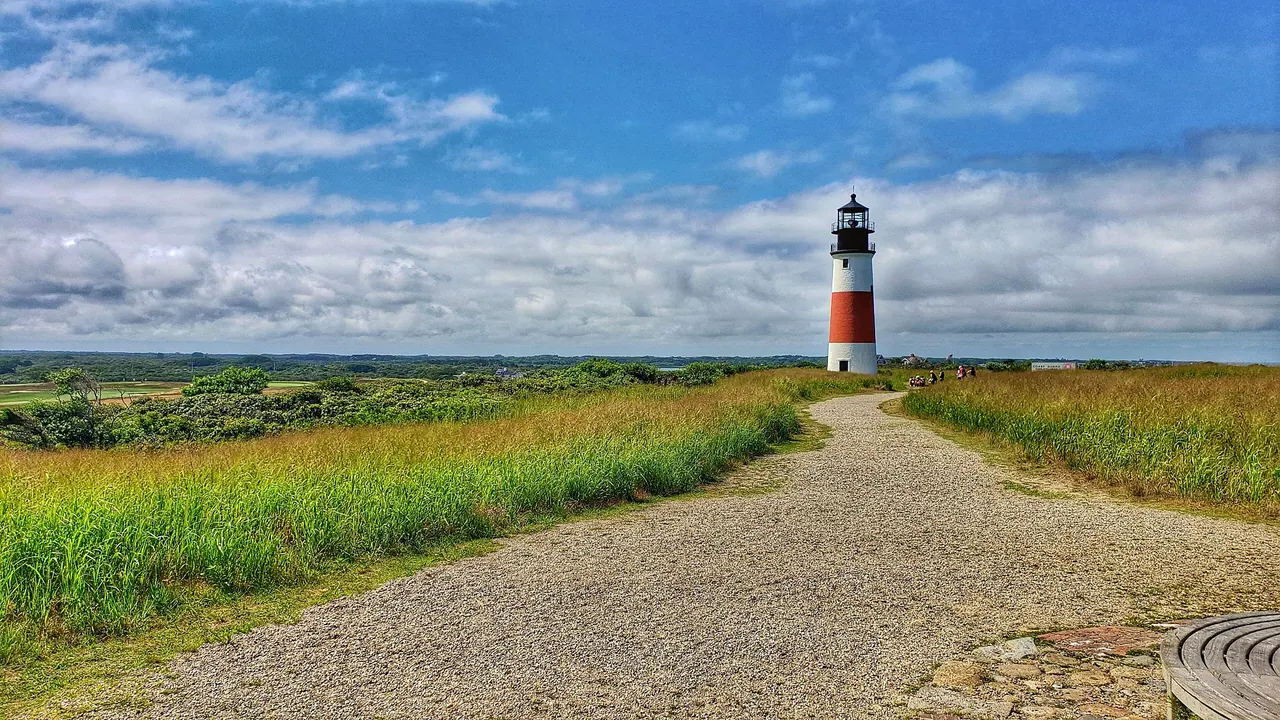
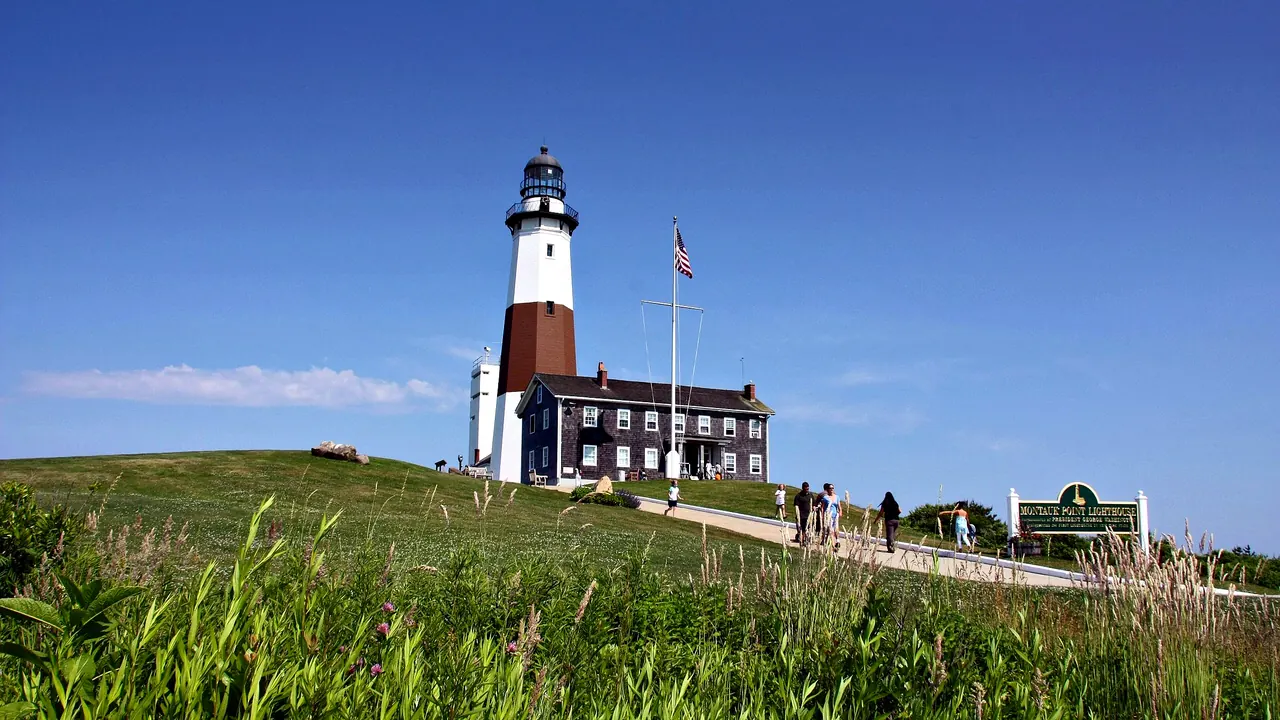
Photos: Nantucket by Jeff Dell, CC BY 2.0, cropped; The Hamptons by Tomás Fano, CC BY-SA 2.0, cropped.
Nantucket or The Hamptons?
Our verdict in twelve categories, each scored against the same fixed benchmark cities, and the climate month by month, so you can choose for your trip.
Choose Nantucket for
- getting around
- culture and sights
- families
Nantucket is for those who want to park the car for good and live by bicycle. The island packs an intact whaling town, calm harbour beaches and open moorland into a place you can cross on flat paths, and the evenings end quietly after dinner. Getting there takes a ferry or a flight, and once you arrive there is little reason to leave.
Choose The Hamptons for
- day trips
- nightlife
- live music and the arts
The Hamptons suit a summer trip with more going on in it. The choice of restaurants and wineries is wider, Montauk's bars stay loud late, and Guild Hall and Bay Street Theater give you an evening out. The North Fork and Block Island are easy to reach for a change of scene. The price is driving almost everywhere, often in slow traffic on Montauk Highway.
Scoreboard
Twelve categories on one fixed scale from 0 to 100. The shaded stretch is the gap between the two.
Your match
Pick a travel style or drag the sliders, and both match scores follow your weighting.
Too close to call, 2 points apart
Wins on getting around and culture and sights with your weighting.
Wins on day trips and nightlife with your weighting.
What matters to you?
Category by category
What the scores mean for a trip.
Beaches & swimming
The two are equally good for a beach vacation, and both have the same pairing of surf beaches on the open Atlantic and calm, shallow water on the sheltered side. The difference is scale and access. The Hamptons have one long ocean strand from Westhampton to Montauk, with Cooper's Beach and Main Beach as well-known stops and gentle bay beaches on Peconic and Gardiners Bays, but many car parks need a permit.
On Nantucket both kinds of beach are a short bike ride apart. Jetties and Children's Beach face the sound, while Surfside, Cisco and Madaket take the surf, and Madaket is where people gather for the sunset.
Food & drink
The Hamptons have more to eat and drink, mostly because they cover more ground. Roadside farm stands, Montauk's seafood shacks, village bakeries and delis, and vineyards on both forks give a fuller picture of local produce than any single village could.
Nantucket's kitchens are ambitious for an island its size and serve the same oysters, scallops and striped bass. Its drink comes from the brewery, distillery and winery on the Madaket road. The choice is narrower, though, and most of it sits in one small town.
Culture & sights
Nantucket has the stronger heritage because it has kept a whole town intact. Its historic district of Federal-style captains' houses and shingled lanes, the Whaling Museum with its sperm whale skeleton and the rose-covered cottages of Siasconset make two full days of walking and looking.
The Hamptons have a whaling port too, in Sag Harbor, plus village windmills and old burial grounds, but these are scattered. Where they do better is art: the Pollock-Krasner House in Springs and the Parrish Art Museum have no equal on the island.
Nightlife
The Hamptons have far more to offer after dark. In midsummer Montauk's bars fill with a young beach crowd and stay loud late, and Southampton and Bridgehampton have clubs and lounges with strict doors. Plenty of the social life still happens at private parties, though, and you need a taxi home on unlit roads.
Nantucket keeps things simple: pubs and hotel bars around the harbour, one long-standing dance bar with live bands, and an early close. In both places the evenings fade once summer ends.
Nature & outdoors
Both landscapes are gentle and flat, and neither is a place for serious hiking, so the difference is in the setting. The Hamptons save their best ground for the eastern end, with clay bluffs at Montauk, the Walking Dunes and Hither Hills, while Mashomack Preserve on Shelter Island has woodland and marsh. Montauk is also a major sport-fishing harbour.
Much of Nantucket's interior is protected moorland, cranberry bog and pond, best seen by bike. Its standout outing is the trip to Great Point and Coatue to see grey seals and shorebirds.
Day trips
The Hamptons give you much more choice. Small ferries via Shelter Island lead to the North Fork's tasting rooms and Greenport's working waterfront, and in summer a boat from Montauk reaches Block Island in about an hour. The villages themselves are worth moving between too.
Nantucket's distance from the mainland makes it a stay-put island. Martha's Vineyard, reached by the summer inter-island ferry, is the one obvious outing, and a day on Cape Cod spends much of its time on the crossing.
Good for families
For children the two are about equal, and both give you calm, lifeguarded beaches and safe small towns without any large attractions. What differs is how the days run. In the Hamptons you get pick-your-own fields, the lighthouse climb and the Long Island Aquarium, but nearly everything means time in the car.
On Nantucket, flat bike paths away from the traffic and a compact town give older children some freedom. The cobbles are hard work with a pushchair, though, and the south shore surf is too rough for small swimmers.
Getting around
Nantucket is much easier to get around once you are there. Bike paths run to Sconset, Madaket, Surfside and Cisco, a summer shuttle links town with the beaches, and most visitors never miss a car. The effort comes earlier, on the ferry from Hyannis or the short flight in.
The Hamptons are simpler to reach, by train or coach from New York, but then a car is all but essential. On summer weekends Montauk Highway crawls, and a 30km trip can take over an hour. Cycling only works over short distances from wherever you are staying.
Shopping & style
Both have a similar range of shops aimed at wealthy summer visitors, but they differ in what they sell. The Hamptons spread across several villages, with fashion outposts in East Hampton and Southampton, bookshops in Sag Harbor and antiques dealers along the highway near Bridgehampton and Water Mill.
Nantucket fits everything into Main Street and its side lanes, which you can browse on foot. Its local specialities are lightship baskets, scrimshaw and the island's faded-red trousers, things you will not find in the Hamptons.
Affordability
Neither is a place to save money. In July and August both cost more than most big cities for rooms, meals and getting about, and both are noticeably cheaper in June and September. The Hamptons give you more ways to cut costs: you can stay further west or on the North Fork and drive in.
On Nantucket every bed is on the island, and bringing a car over on the ferry adds a lot to the bill. On the other hand, the free bike paths mean you need nothing more than a hired bike.
Live music & performing arts
The Hamptons have the fuller summer programme. You can see plays at Guild Hall and Bay Street Theater, touring acts at the Westhampton Beach arts centre, and the Bridgehampton Chamber Music Festival in its churches, and an autumn film festival extends the season.
Nantucket has two small theatre companies, readings and chamber concerts at the Atheneum, and a June film festival that people do travel for. Beyond that there is little, and almost nothing outside summer.
Wellness & relaxation
Both are places to slow down, not to book treatments, and neither has a bathing tradition. The Hamptons have more resort spas, the best of them in Montauk and Southampton with seawater pools, but midsummer weekends bring crowded roads and a busy social calendar.
Nantucket has fewer spas and makes up for it with calm. There are no traffic lights, the moorland roads are quiet and the days follow an easy round of bike, beach and dinner.
When should you go?
Pick your month. The climate figures are measured averages, not a forecast.
Nantucket in July
The Hamptons in July
Daytime high, °C
Rainfall in the month, mm
Where the figures come from
Nantucket's temperatures are measured 44 km from the centre, at Chatham.
Nantucket has no rain gauge within 25 km of the centre, so its rainfall comes from a gridded climate dataset read at the destination rather than from a gauge further away.
The Hamptons has no rain gauge within 25 km of the centre, so its rainfall comes from a gridded climate dataset read at the destination rather than from a gauge further away.
Temperature and rainfall are climate normals, averaged over the years shown. Nantucket: 1991-2020 normals, Chatham (44 km from centre). The Hamptons: 2016-2025 (rainfall 1991-2020) normals, Easthampton / Midhampton (5.6 km from centre).
Both have a short summer and a long, cool off-season, so plan around July and August. The Hamptons run a little warmer, with afternoons near 27°C in July against about 24°C on Nantucket, and the ocean there reaches about 22°C in August, a couple of degrees above the water off Nantucket at around 20°C. June is pleasant for walking in both places, but the sea is still too cold for most swimmers. In early September the water stays warm enough to swim for a little longer, a touch more so off the Hamptons.
Rain falls steadily in the Hamptons all year, with no truly dry month. Nantucket has the drier summer, with only about 64mm in July. May, late September and October are mild enough for walks and cycling in both places, though not for the beach. November and March are cool and damp. From December to February both are cold and grey, with daytime highs only a few degrees above freezing.
Which traveller are you?
On a food and nightlife trip, the Hamptons win clearly. They have farm-stand produce, Peconic oysters, two wine regions within reach and a choice of villages to dine in, and Montauk's bars and Southampton's lounges carry on long after Nantucket's pubs have closed.
For a culture trip centred on history, Nantucket is the stronger choice. Its whole town is a protected whaling seaport, with captains' houses, cobbled Main Street and the Whaling Museum. In the Hamptons the heritage is spread thinly between villages, with Sag Harbor the best of it.
On a family trip with children, Nantucket's car-free routine is the draw. Flat bike paths lead to calm beaches, and the town is small enough for older children to roam. The Hamptons offer pick-your-own farms and an aquarium, but most days start with a drive.
Before you go
| Measure | Nantucket | The Hamptons |
|---|---|---|
| Currency | US Dollar (USD) | US Dollar (USD) |
| Sockets | AB120 V, 60 Hz | AB120 V, 60 Hz |
| Driving side | Right | Right |
| Time zone | UTC-5, UTC-4 in summer | UTC-5, UTC-4 in summer |
| Emergency number | 911 | 911 |
| Main airport | Nantucket Memorial Airport (ACK)12 non-stop destinations | John F. Kennedy International Airport (JFK)188 non-stop destinations |
| Public holidays this year | 12 days | 13 days |
By the numbers
| Measure | Nantucket | The Hamptons |
|---|---|---|
| Population | 14,255 | - |
| People per km² | 115 | - |
| Swim season, months above 21 °C | None | 1 month |
Where else could you go?
Every comparison below shares a destination with this one, so you can follow Nantucket or The Hamptons somewhere new.
- Martha's Vineyardvs Nantucket
- Cape Codvs Nantucket
- Martha's Vineyardvs The Hamptons
- Cape Codvs The Hamptons
- Hudson Valleyvs The Hamptons
- Catskillsvs The Hamptons