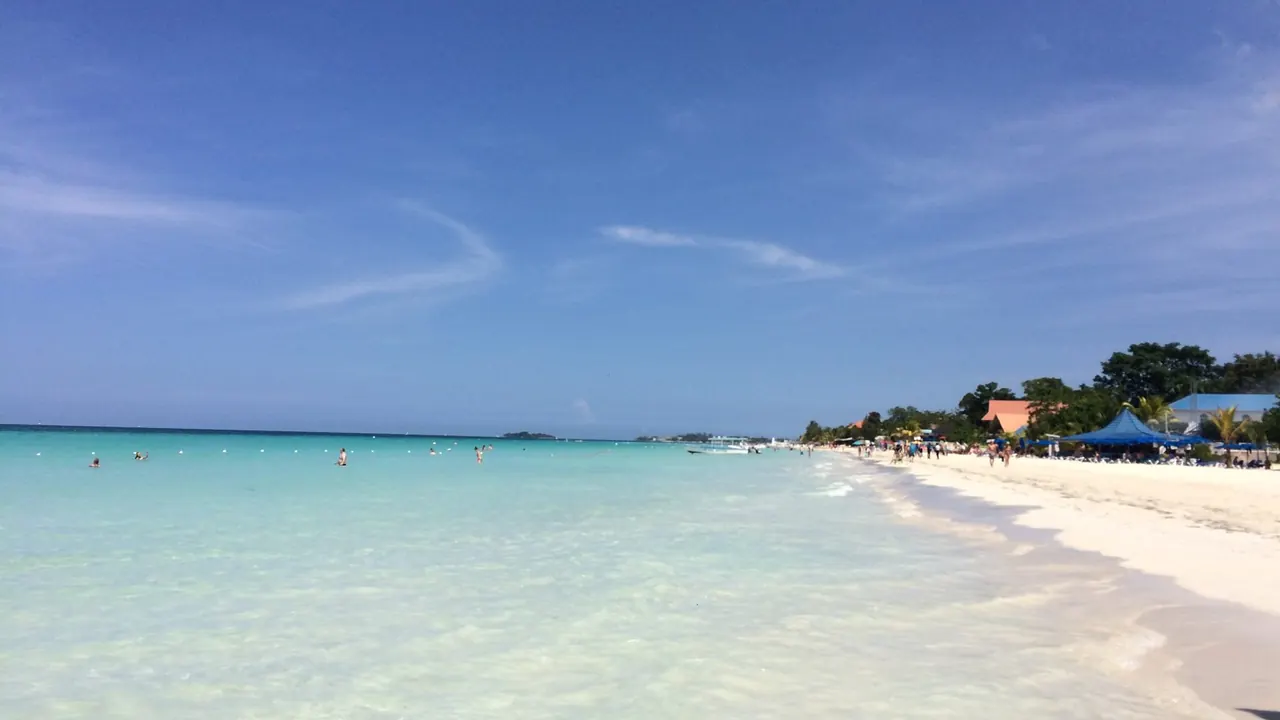
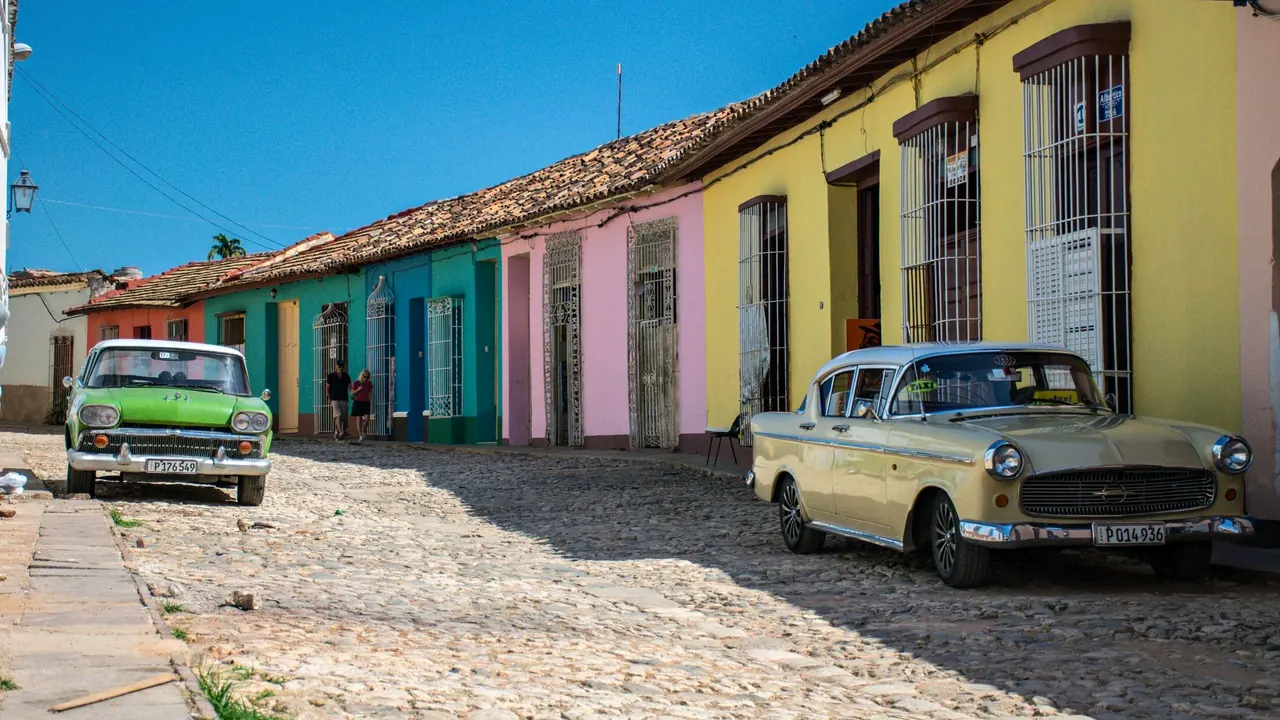
Photos: Negril by gustavo.kunst, CC BY-SA 3.0, cropped; Trinidad, Cuba by Ákos Helgert, Pexels License.
Negril or Trinidad, Cuba?
Our verdict in twelve categories, each scored against the same fixed benchmark cities, and the climate month by month, so you can choose for your trip.
Choose Negril for
- wellness
- beaches
- families
Negril is the better choice for a vacation built around the sea. Seven Mile Beach gives you soft sand and flat, clear water right outside the door. The West End cliffs add snorkelling, cliff jumping and sunsets, and cliff-top yoga decks and beach massages set a slow pace. It suits couples who want to do very little and families after an easy resort stay, as long as nobody expects sights beyond the lighthouse.
Choose Trinidad, Cuba for
- culture and sights
- day trips
- prices
Travellers who want a place with some history to it should head for Trinidad. Each day can look different: the cobbled UNESCO-listed old town, the ruined sugar mills of the Valle de los Ingenios, trails in the Escambray and son and salsa beside the Plaza Mayor every night. A room in a casa particular keeps the cost down. Playa Ancon is a fine beach, but most visitors treat it as an afternoon out rather than the reason for the trip.
Scoreboard
Twelve categories on one fixed scale from 0 to 100. The shaded stretch is the gap between the two.
Your match
Pick a travel style or drag the sliders, and both match scores follow your weighting.
Wins on wellness and beaches with your weighting.
Wins on culture and sights and day trips with your weighting.
What matters to you?
Category by category
What the scores mean for a trip.
Beaches & swimming
Negril's whole day revolves around the shore. Seven Mile Beach is long, soft and gently shelving, with water flat enough to swim far out. Bloody Bay offers a quieter stretch, and at the West End you swim off cliffs, using ladders and rock platforms to get in and out of deep water.
Trinidad has only two options. Playa Ancon is a good strip of pale sand with reef snorkelling, about 15 minutes away on its peninsula, and La Boca is a smaller beach used by locals. You go to the beach between days in town rather than living on it.
Food & drink
Neither town is a reason to travel for the food, but the two kitchens are very different. In Negril the good meals are jerk from smoking roadside drums, fish and lobster grilled at beach shacks, and ital vegetable stews from Rastafarian stalls. The beachfront restaurants tend towards international resort menus.
Trinidad serves Cuban home cooking of rice, black beans and roast pork in paladares set in colonial houses or at your casa's own table. You drink canchanchara from a clay cup. Supply shortages mean menus repeat from place to place.
Culture & sights
This is where the two differ most. Negril grew from a fishing village into a resort within living memory, and apart from the 1890s lighthouse on the West End cliffs it has nothing to visit.
Trinidad is a sugar-era town preserved almost whole. It has cobbled lanes, pastel houses with wooden window grilles, the Plaza Mayor with its church and planters' mansions, the Museo Romantico and the San Francisco bell tower. The museums are small, and wandering the streets is the real pleasure.
Nightlife
The two are about equally lively after dark, in different settings. Negril starts the evening with sunset and cliff divers on the West End, then moves to bars on Seven Mile Beach that take turns hosting party nights, with barefoot rum punch drinking until late in winter.
In Trinidad people gather on the stone steps by the Plaza Mayor to dance salsa, and the late finish is in a nightclub inside a cave above town. Each town offers only a few nights before the routine repeats.
Nature & outdoors
Trinidad has more to offer on land. The Escambray mountains rise behind the town, and Topes de Collantes, under an hour away, has forest trails down to the Salto del Caburni waterfall and on to El Nicho. Horse rides cross the Valle de los Ingenios, and Ancon has a reef for diving.
Negril's outdoors is mostly the water. You can snorkel off the cliffs, dive walls and wrecks, or paddle and sail from the beach, and the Great Morass wetland lies just inland. It has no mountains or real hiking, and waterfalls such as YS Falls are one to two hours away.
Day trips
Trinidad has far better trips on its doorstep. The sugar mills and Manaca Iznaga tower of the Valle de los Ingenios start just outside town. French-founded Cienfuegos and old Sancti Spiritus are each about an hour and a half away, and Santa Clara's Che Guevara memorial is a little further.
From Negril, almost every outing means a long drive on slow coast roads. Montego Bay and the great houses of Rose Hall and Greenwood take a full day, and the Appleton rum estate and Treasure Beach are around two hours off.
Good for families
Negril is the easier choice with children. The beach shelves gently into calm water, and several large resorts on the strip have pools, kids' clubs and meals on site. Parents should expect persistent vendors and openly smoked ganja on the beach and the road.
Trinidad is friendly to children, and Ancon's shallow water makes a good family day. But the old town's big uneven cobbles defeat pushchairs, and power cuts and gaps in familiar foods and medicines make it hard going with small children.
Getting around
Trinidad is the easier place to get about, at least in the centre. The old town is compact, many lanes are closed to cars and everything is a short walk away, though the cobbles and slopes call for good shoes.
Negril stretches along a single road, with a long, hot walk between the beach and the West End and few pavements on the cliff road. Shared route taxis help. Outside the centre, both towns depend on taxis, tours or a hired car, and in Negril that means driving on the left on narrow roads.
Shopping & style
Neither town is for serious shopping, but Trinidad has more worth buying. Its craft lanes sell hand embroidery and crochet tablecloths and blouses, family workshops throw pottery at the wheel, and small galleries sell paintings by local artists.
Negril offers carvings, beads and T-shirts from the craft market and from vendors on the sand. The best things to take home are Jamaican rum, coffee and hot sauce.
Affordability
Trinidad costs less day to day. Most visitors stay in a casa particular with breakfast included, much of the music is free and the old town needs no transport. Taxis, tours and paladar meals push the bill up, and you need cash because cards are often refused.
Negril's beachfront resorts and visitor restaurants charge international prices, and boat trips and taxis add up quickly. Cheaper stays are possible in the cliff cottages on the West End, eating at jerk stands and patty shops.
Live music & performing arts
Trinidad's music is richer and more varied. Every night there is son and salsa at the Casa de la Musica and older musicians singing traditional Cuban song at the Casa de la Trova. The Palenque de los Congos Reales hosts Afro-Cuban drumming and rumba rooted in the town's slave history.
Negril offers reggae, ska and dancehall from beach stages most nights, with well-known Jamaican artists in winter. Neither town has theatre, classical concerts or opera.
Wellness & relaxation
Negril is much better for a restful stay. The West End has small cliff-top retreats with yoga decks over the water and open-air massage huts, and the big resorts run full spas. It is calmest away from the busy middle of the beach, where vendors and touts gather.
Trinidad's slow pace means rocking chairs on doorsteps and shaded courtyards rather than treatments. Roosters at dawn, horse carts on the cobbles, music late into the night and power cuts that stop the fans all make deep rest hard.
When should you go?
Pick your month. The climate figures are measured averages, not a forecast.
Negril in July
Trinidad, Cuba in July
Daytime high, °C
Rainfall in the month, mm
Where the figures come from
Negril's temperatures are measured 52 km from the centre, at Montego Bay / Sangster.
Negril has no rain gauge within 25 km of the centre, so its rainfall comes from a gridded climate dataset read at the city rather than from a gauge further away.
Trinidad, Cuba's temperatures are measured 59 km from the centre, at Cienfuegos, Las Villas.
Trinidad, Cuba has no rain gauge within 25 km of the centre, so its rainfall comes from a gridded climate dataset read at the city rather than from a gauge further away.
Temperature and rainfall are climate normals, averaged over the years shown. Negril: 1991-2020 normals, Montego Bay / Sangster (51.8 km from centre). Trinidad, Cuba: 2014-2025 (rainfall 1991-2020) normals, Cienfuegos, Las Villas (59.3 km from centre).
Both towns are warm enough for the beach all year, with daytime highs that never fall much below 29°C. They follow the same Caribbean pattern: a dry season from December to April, then heavy rain from May to October. In Negril the wet season peaks in October at 225mm, when there is also less sunshine, and November stays fairly damp. Trinidad dries out a month earlier, and December there is almost rainless.
The heat matters more in Trinidad, because you spend your days there walking cobbled streets. July reaches 34°C, and through the summer sightseeing in the middle of the day is hard work, so December to April is the time to go. Negril's sea stays warm all year. Trinidad's cools a little to 26°C in February and March, which is still comfortable for swimming. Negril's sunniest months are March, April and July.
Which traveller are you?
For a beach and sun trip, Negril is the clear choice. Seven Mile Beach starts at your door, with soft sand and calm, shallow water. Trinidad's Playa Ancon is good too, but it is a taxi or bike ride from town.
On a culture and arts trip, choose Trinidad. Its colonial old town, the planters' mansions around the Plaza Mayor, the sugar valley and nightly traditional Cuban music fill several days. Negril has little to see beyond its lighthouse.
For a relaxing and wellness trip, Negril is the better bet. You can stay in a garden cottage on the West End, swim off quieter Bloody Bay and book a day in a resort spa. Trinidad is a town for exploring on foot, not for resting.
Before you go
| Measure | Negril | Trinidad, Cuba |
|---|---|---|
| Official language | English, Jamaican Patois | Spanish |
| Currency | Jamaican Dollar (JMD) | Cuban Peso (CUP) |
| Sockets | AB116 V, 50 Hz | AB110 V, 60 Hz |
| Driving side | Left | Right |
| Time zone | UTC-5 | UTC-5, UTC-4 in summer |
| Emergency number | Police 110/112/119/911, ambulance 110, fire 110 | Police 106, ambulance 104, fire 105 |
| Elevation | 10 m | 60 m |
| Main airport | Sangster International Airport (MBJ)52 km from centre49 non-stop destinations | Abel Santamaria International Airport (SNU)77 km from centre1 non-stop destination |
| Public holidays this year | 10 days | 9 days |
By the numbers
| Measure | Negril | Trinidad, Cuba |
|---|---|---|
| City population | 4,500 | 51,994 |
| People per km² | - | 45 |
| Museums within 10 km | 0 | 4 |
| UNESCO World Heritage sites within 50 km | 0 | 1 |
| Swim season, months above 21 °C | 12 months | 12 months |
Where else could you go?
Every comparison below shares a destination with this one, so you can follow Negril or Trinidad, Cuba somewhere new.
- Montego Bayvs Negril
- Ocho Riosvs Negril
- Kingstonvs Negril
- Varaderovs Trinidad, Cuba
- Havanavs Trinidad, Cuba
- Montego Bayvs Trinidad, Cuba