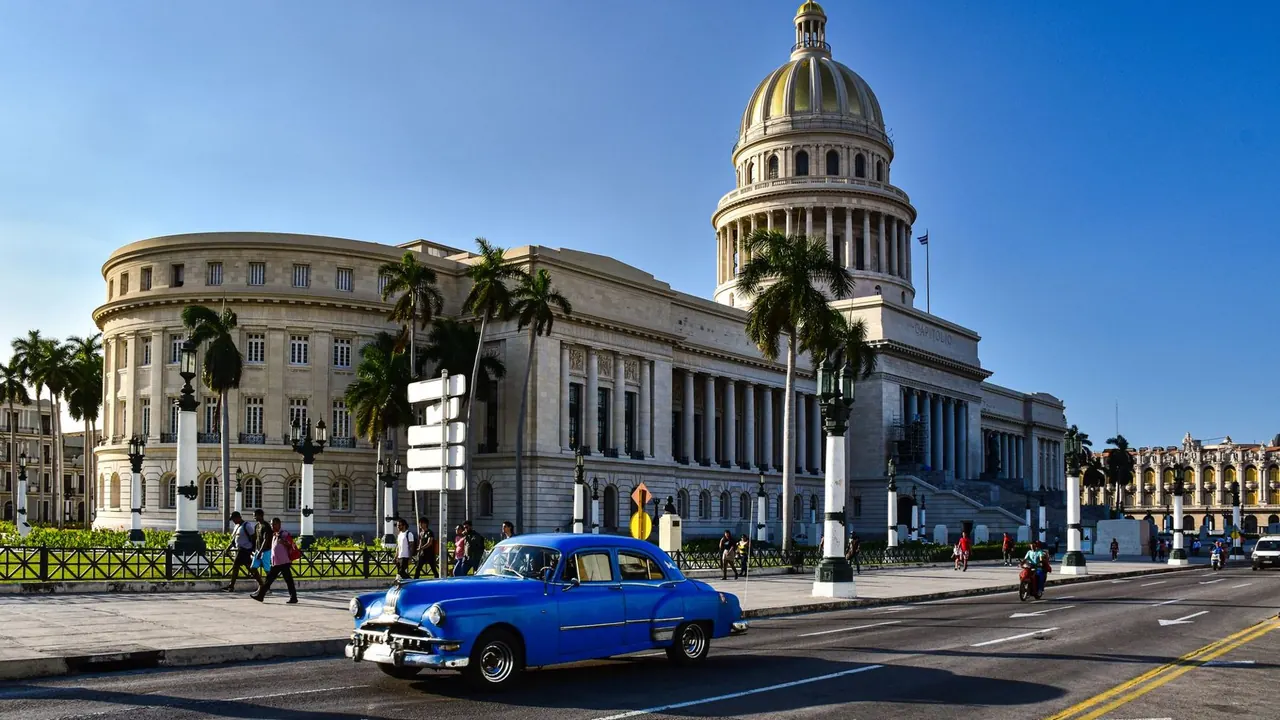
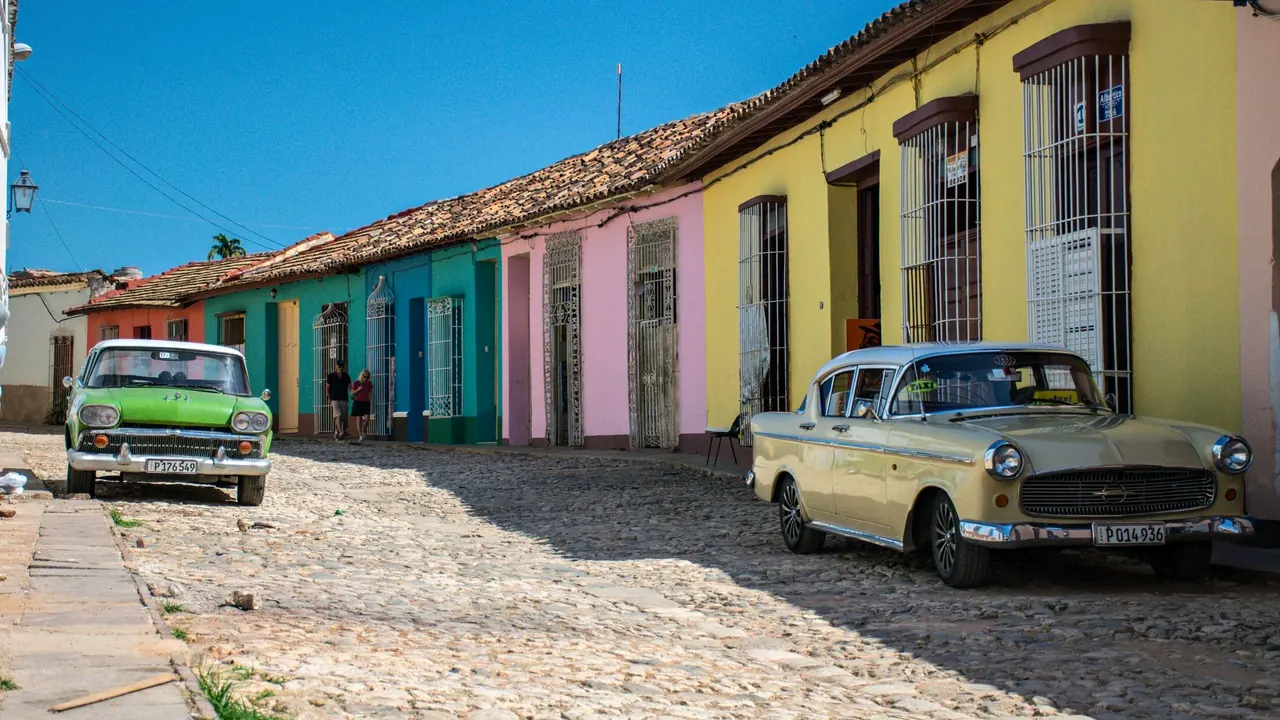
Photos: Havana by AXP Photography, Pexels License; Trinidad, Cuba by Ákos Helgert, Pexels License.
Havana or Trinidad, Cuba?
Our verdict in twelve categories, each scored against the same fixed benchmark cities, and the climate month by month, so you can choose for your trip.
Choose Havana for
- live music and the arts
- nightlife
- culture and sights
Havana is the choice for a traveller who wants a capital with depth. Its colonial squares, art deco streets and fortresses fill several days. Its music goes from street-corner son to the Ballet Nacional, and its nights carry on across neighbourhoods into the small hours. It suits someone who will happily take taxis and live with some chaos in exchange for range.
Choose Trinidad, Cuba for
- nature and the outdoors
- day trips
- prices
Trinidad suits a slower trip built around one beautifully preserved small town and the country that surrounds it. The Escambray mountains, the sugar valley and a calm Caribbean beach are all close by, and staying in a family home costs less. Pick it if you would rather swap museum days for waterfalls and horse rides and spend your evenings on the steps by the Plaza Mayor, and accept that a few nights cover what the town has.
Scoreboard
Twelve categories on one fixed scale from 0 to 100. The shaded stretch is the gap between the two.
Your match
Pick a travel style or drag the sliders, and both match scores follow your weighting.
Too close to call, 2 points apart
Wins on live music and the arts and nightlife with your weighting.
Wins on nature and the outdoors and day trips with your weighting.
What matters to you?
Category by category
What the scores mean for a trip.
Beaches & swimming
Trinidad has the edge, mainly because its beach is closer and better. Playa Ancon is a long pale strand about 15 minutes away by taxi, bus or even bicycle, with calm water and a reef for snorkelling. La Boca offers a more local alternative.
Havana's Malecón is all rock and sea wall, so swimming means half an hour by taxi to the Playas del Este. Strands like Santa María del Mar are lovely and turn lively with local families at weekends. From either town the sea is a day off rather than the main event.
Food & drink
Both serve the same Cuban repertoire of ropa vieja, black beans, roast pork and lobster, and neither has street food or market halls worth the name. Havana comes out ahead because its paladares are spread across Vedado, Miramar and the old town, and some of them actually experiment.
Trinidad's menus repeat from one place to the next, and the best meal is often dinner at your casa. The drinks tell the same story. Trinidad has its honeyed canchanchara in a clay cup, while Havana has the historic bars where the daiquiri and mojito made their name.
Culture & sights
Havana has far more to see. Habana Vieja has four great colonial squares and baroque churches, the Morro and La Cabaña fortresses guard the harbour, and beyond the old town lie Centro and Vedado with their art deco, along with serious museums of art and revolution. All of that takes days.
Trinidad is a single preserved sugar-era town of pastel houses, red roofs and cobbles centred on the Plaza Mayor. Its museums, such as the Museo Romántico and the Palacio Cantero tower, are small. The charm is the intact whole, and two or three days are enough to take it in.
Nightlife
Havana's nights are bigger and more varied. They take in old town bars, salsa clubs in Vedado and Miramar where locals dance seriously, arts centres with DJs, and the Malecón as an open-air meeting place, with taxis linking it all.
In Trinidad everything happens on the steps by the Plaza Mayor, in a few courtyard bars and in a club inside a hillside cave. It is friendly, with locals and visitors dancing together, but after a few nights you will have seen all of it.
Nature & outdoors
This is where Trinidad pulls well ahead. The Escambray rises right behind the town, and Topes de Collantes has forest trails down to Salto del Caburní, with El Nicho and Guanayara further in. Horse rides cross the sugar valley, and there is diving off Ancon.
Havana's outdoors is mostly the Malecón at sunset and the shade of the Almendares park. Las Terrazas is an hour west and Viñales around three hours away, so nature is an excursion from the capital rather than something next door.
Day trips
Trinidad is the better base for outings. The Valle de los Ingenios, with its ruined mills and the Manaca Iznaga tower, starts at the edge of town. Elegant Cienfuegos and old Sancti Spíritus are each about an hour and a half away, and Santa Clara's Che memorial is around two.
Havana's easy trips are Hemingway's Finca Vigía, Cojímar and Matanzas. Trinidad, Viñales and Cienfuegos are three hours or more from the capital and really need overnight stays. From both places, trips usually mean a car with a driver or a tour.
Good for families
Neither town is easy with small children, though both welcome them warmly. Havana has more to fill a day, with the National Aquarium in Miramar, classic-car rides and cannons at the fortresses, but it also has heavier traffic and broken pavements.
Trinidad is calmer and has shallow water at Ancon close by. Its huge cobbles rule out pushchairs, though, and power cuts make the heat harder to bear. In either town older children do better than toddlers.
Getting around
Both are walkable at the core and awkward beyond it. In Havana you can walk the old town and follow the Malecón to Vedado, but further than that you depend on taxis of every kind, from classic cars to shared almendrones and coco-taxis.
Trinidad's centre is smaller and largely closed to cars, though the steep, rough cobbles call for good shoes. Leaving town to reach the beach or the hills means a shuttle, a taxi or a hired bike.
Shopping & style
Neither is a place to shop. Havana's best buys are art from the studios of Habana Vieja and Vedado, plus cigars and aged rum, with a large harbourside craft market for souvenirs. Trinidad's speciality is handmade: embroidered and crocheted tablecloths and blouses along its craft lanes, plus pottery thrown in family workshops.
Affordability
Trinidad is the cheaper stay. Casas particulares there cost little and often serve dinner as well as breakfast, the town is all on foot and music in the squares is mostly free. What adds up are the taxis to Ancon and the mountains.
Havana can be just as cheap if you stay in private homes and eat simply. Its state hotels and better paladares, though, quickly push spending towards Southern European levels. Bring cash to both, as cards are unreliable.
Live music & performing arts
Both towns live on son, salsa and rumba, and the standard is high in both. Havana adds a full formal stage on top: the Ballet Nacional at the Gran Teatro, the National Symphony at the Amadeo Roldán, jazz clubs in Vedado, the Jazz Plaza festival, Sunday rumba in the Callejón de Hamel and cabaret at the Tropicana.
Trinidad offers one tradition done with real warmth. Bands play nightly at the Casa de la Música and the Casa de la Trova, and Afro-Cuban drumming fills the Palenque de los Congos Reales. There is no theatre or classical music, though.
Wellness & relaxation
Havana's kind of rest is a pause in a big city: an afternoon on a shaded balcony, a rocking chair in a colonial courtyard, an evening watching the sea from the Malecón. Traffic noise and exhaust fumes are never far off, so if calm matters, stay in a quiet guesthouse in leafy Vedado or Miramar.
Trinidad slows down the way a small town does, with rocking chairs on doorsteps and long afternoons in shaded family courtyards, but roosters at dawn, horse carts and late music break the quiet. Spas are scarce in both, limited to a few hotels, and from Trinidad the better escape is the cooler air of the Escambray hills.
When should you go?
Pick your month. The climate figures are measured averages, not a forecast.
Havana in July
Trinidad, Cuba in July
Daytime high, °C
Rainfall in the month, mm
Where the figures come from
Trinidad, Cuba's temperatures are measured 59 km from the centre, at Cienfuegos, Las Villas.
Trinidad, Cuba has no rain gauge within 25 km of the centre, so its rainfall comes from a gridded climate dataset read at the city rather than from a gauge further away.
Temperature and rainfall are climate normals, averaged over the years shown. Havana: 1991-2020 normals, Casa Blanca, La Habana (3.5 km from centre). Trinidad, Cuba: 2014-2025 (rainfall 1991-2020) normals, Cienfuegos, Las Villas (59.3 km from centre).
Both towns are warm all year, and the sea stays swimmable even in winter. The two differ mostly in heat and in when the rain falls. Trinidad has a very clear dry season from November to April, with almost no rain in December, and that is the best time for walking the cobbles and hiking in the hills. From May to October heavy showers set in and midsummer highs reach 34°C, which makes afternoons in town draining.
Havana is a little cooler, around 27°C in midwinter, which is pleasant for walking the streets. Its driest weeks fall in March, but its dry season is less sharply defined than Trinidad's. Rain builds from June and peaks in September at about 185mm, and November stays wetter than it does in Trinidad. Summer is best for the beach in both places, with the water near 30°C, but it is also the stickiest time for sightseeing. For a trip that combines the two, December to April is the best time.
Which traveller are you?
On a culture and arts trip, Havana is the stronger pick. Habana Vieja's squares, the Capitolio, the art deco of Vedado and the Bellas Artes collection outlast Trinidad's small museums. The Gran Teatro and its national ballet give the evenings a formal stage as well.
For an outdoors trip, Trinidad wins clearly. Topes de Collantes and its waterfall trails are under an hour away, horses cross the Valle de los Ingenios, and there is a reef off Playa Ancon. From Havana, real hiking means a long drive west.
On a food and nightlife trip, Havana gives more. Its paladares in old mansions are more varied, its old bars made the daiquiri famous, and the salsa clubs of Vedado and Miramar stay full late. Trinidad's nights follow one pleasant pattern around a single square.
Before you go
| Measure | Havana | Trinidad, Cuba |
|---|---|---|
| Official language | Spanish | Spanish |
| Currency | Cuban Peso (CUP) | Cuban Peso (CUP) |
| Sockets | AB110 V, 60 Hz | AB110 V, 60 Hz |
| Driving side | Right | Right |
| Time zone | UTC-5, UTC-4 in summer | UTC-5, UTC-4 in summer |
| Emergency number | Police 106, ambulance 104, fire 105 | Police 106, ambulance 104, fire 105 |
| Elevation | 59 m | 60 m |
| Main airport | José Martí International Airport (HAV)17 km from centre22 non-stop destinations | Abel Santamaria International Airport (SNU)77 km from centre1 non-stop destination |
| Public holidays this year | 9 days | 9 days |
By the numbers
| Measure | Havana | Trinidad, Cuba |
|---|---|---|
| City population | 2,492,618 | 51,994 |
| People per km² | 3,423 | 45 |
| Museums within 10 km | 13 | 4 |
| UNESCO World Heritage sites within 50 km | 1 | 1 |
| Swim season, months above 21 °C | 12 months | 12 months |
Where else could you go?
Every comparison below shares a destination with this one, so you can follow Havana or Trinidad, Cuba somewhere new.
- Varaderovs Havana
- Varaderovs Trinidad, Cuba
- Negrilvs Trinidad, Cuba
- Montego Bayvs Trinidad, Cuba
- Ocho Riosvs Trinidad, Cuba
- Cancunvs Havana