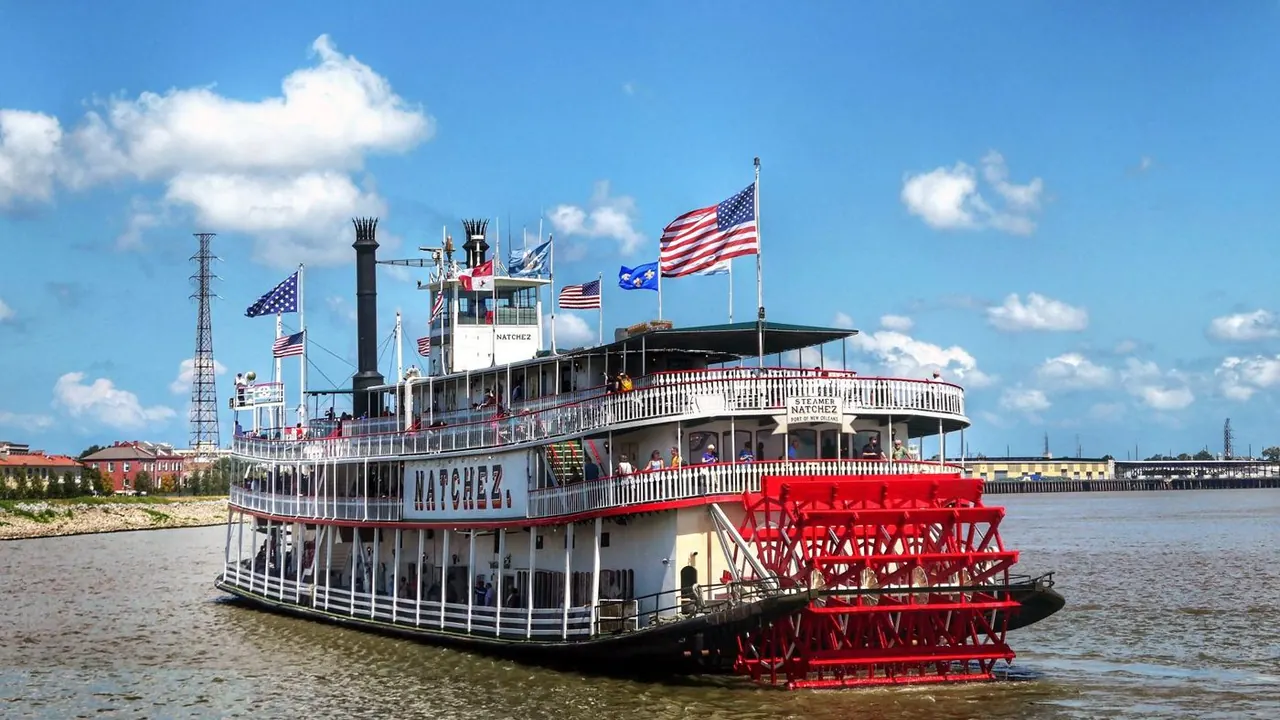
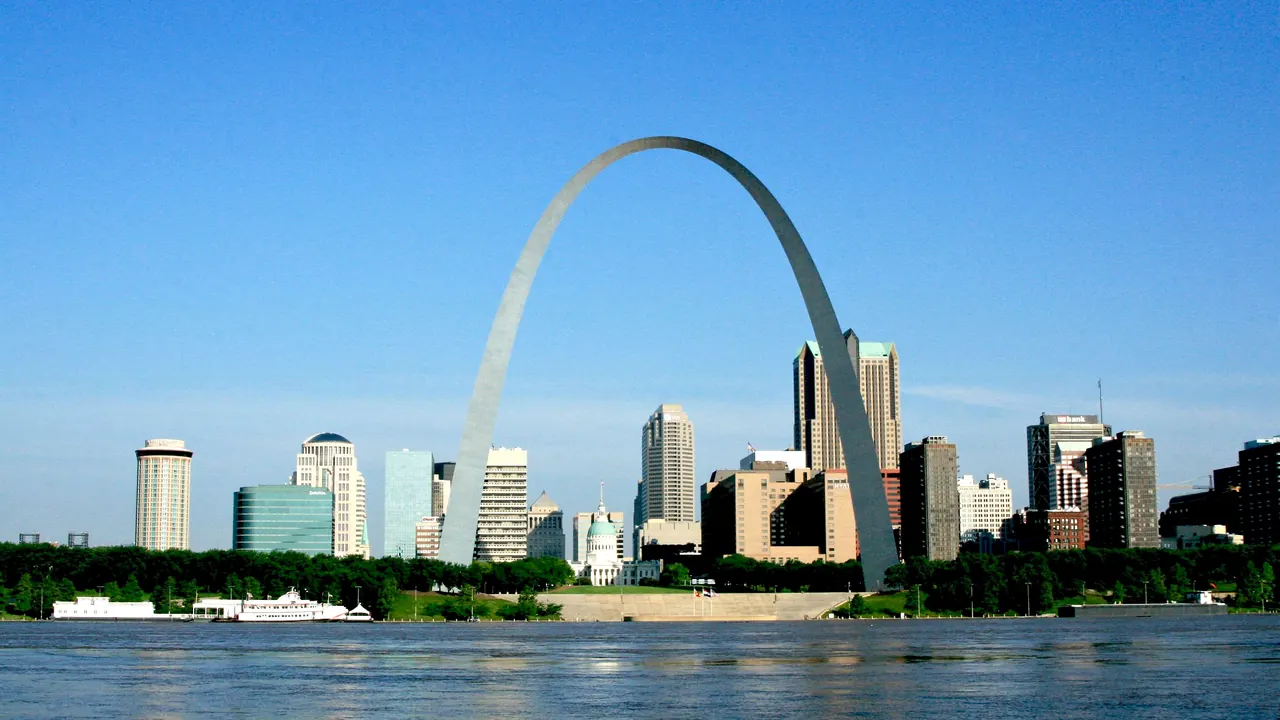
Photos: New Orleans by Bernard Spragg, CC0; St. Louis by Holly Cheng, CC BY 2.0, cropped.
New Orleans or St. Louis?
Our verdict in twelve categories, each scored against the same fixed benchmark cities, and the climate month by month, so you can choose for your trip.
Choose New Orleans for
- nightlife
- food and drink
- getting around
New Orleans is the city for travellers who want the trip to revolve around eating, drinking and music. Its Creole and Cajun cooking, its brass bands and jazz clubs and its late, street-level nights have no real equivalent in St. Louis, and the French Quarter gives it an old town you can explore on foot. Couples, groups of friends and anyone after a lively few days will get more out of it.
Choose St. Louis for
- families
- nature and the outdoors
- prices
St. Louis suits families and travellers who would rather go at an easy pace. The City Museum, the free zoo and science centre in Forest Park, and the climb up the Gateway Arch keep children busy far more easily than New Orleans can. The Ozark foothills and a wide spread of historic day trips reward visitors with a car, and it has a proper symphony and summer opera for those who prefer a concert hall to a bar.
Scoreboard
Twelve categories on one fixed scale from 0 to 100. The shaded stretch is the gap between the two.
Your match
Pick a travel style or drag the sliders, and both match scores follow your weighting.
Wins on nightlife and food and drink with your weighting.
Wins on families and nature and the outdoors with your weighting.
What matters to you?
Category by category
What the scores mean for a trip.
Beaches & swimming
Neither city is for a beach vacation. New Orleans at least has the Mississippi Gulf Coast around Bay St. Louis well over an hour away, where the water is warm but shallow and murky.
St. Louis sits in the middle of the continent with no coast within reach. On a hot day the choice is a pool, or a long drive to a reservoir lake in the Ozarks.
Food & drink
Eating is one of the main reasons people go to New Orleans. Creole and Cajun dishes such as gumbo, étouffée and turtle soup are served in French Quarter dining rooms that are over a century old, and what is on the menu changes with the seasons, from spring crawfish to winter oysters. The Sazerac and the Vieux Carré were both invented here. The cooking is rich, though, and there is little beyond the local tradition.
St. Louis has quirky local favourites rather than a cuisine: toasted ravioli, Provel pizza and gooey butter cake. It makes up for this with range, from the Italian trattorias on the Hill to the Bosnian grills on South Grand, plus a strong brewing tradition. It is good for eating well and cheaply, but nobody plans a trip around it.
Culture & sights
The French Quarter gives New Orleans the edge. It is an intact colonial town of iron balconies and courtyards around Jackson Square and the Cabildo. Add the mansions of the Garden District and the above-ground tombs, and the sightseeing is mostly done on foot in the streets.
St. Louis has the stronger museums, and many of them are free. The Saint Louis Art Museum and the history museum are in Forest Park, and the Cathedral Basilica has its mosaics. With the Gateway Arch and the early skyscrapers downtown on top of that, two or three days of focused sightseeing is enough. It lacks a historic quarter with the atmosphere of New Orleans.
Nightlife
Here the cities are furthest apart. In New Orleans there is no closing time and drinks can be carried along the street. Nights run from neon Bourbon Street to the music bars of Frenchmen Street and the dive bars of the Bywater. Carnival turns the whole city into one long party.
In St. Louis a night out is a local affair spread across separate districts: taverns in Soulard, dance bars on Washington Avenue, the Grove and the Loop. You need a taxi between them, and outside weekends and baseball season many streets are quiet early.
Nature & outdoors
St. Louis has more variety. Within an hour the Ozark foothills offer river bluffs, caves and trails at Castlewood and Meramec, and further south are the rocks and pools of Johnson's Shut-Ins. The Katy Trail gives cyclists a long route, and in winter bald eagles gather along the river bluffs.
The landscape around New Orleans is flat and wet, and it is all about water. Boat and kayak trips through cypress swamps and the Barataria Preserve to see alligators are memorable, but there is nothing to climb, and the humidity makes summer days outdoors hard.
Day trips
Both cities offer a solid handful of outings, and they differ in kind. From New Orleans most people follow the River Road to the sugar plantations, where the Whitney tells the story of the people enslaved there. Alternatively, you can drift along the quiet Gulf towns or drive out to the Cajun prairie.
St. Louis has more variety. There are the ancient mounds of Cahokia just across the river, French colonial Ste. Genevieve, the German wine towns of Hermann and Augusta, Mark Twain's Hannibal and Lincoln's Springfield, but nearly all of them need a car.
Good for families
St. Louis is the easier choice with children. The City Museum, a climbable maze in an old shoe warehouse, is a highlight for every age. The zoo and science centre in Forest Park are free, and the Magic House and a theme park are within reach.
New Orleans has a good zoo with a swamp area, the riverfront aquarium and the children's attractions of City Park. Its parades and paddle steamers are fun too. However, the party streets and the heavy summer heat mean parents have to plan more carefully.
Getting around
New Orleans is far easier without a car. The French Quarter, the Marigny and the Warehouse District sit close together on flat ground, and the slow but charming St. Charles streetcar runs out to Uptown. Ride-hailing covers the airport and the swamps.
St. Louis is laid out for driving. MetroLink links the airport, Forest Park and downtown, but the Hill, Soulard, South Grand and every day trip need wheels. The upside is quiet roads and easy parking.
Shopping & style
New Orleans offers more distinctive browsing. Royal Street in the French Quarter has a long run of antique dealers selling chandeliers and estate jewellery, and Magazine Street stretches for miles through Uptown with boutiques, vintage shops and local art. Carnival masks and costumes are the city's own speciality, though the streets near Bourbon Street are mostly T-shirts and souvenirs, and designer labels are thin on the ground.
St. Louis is good for a pleasant afternoon rather than a reason to come. Cherokee Street has antiques, records and Latin American shops, and the independent shops along the Delmar Loop have a student feel. Big names are out in suburban malls rather than in the centre.
Affordability
Overall costs are similar, but they fall in different places. In New Orleans the expense is the room: hotels near the Quarter charge big-city rates, and these jump at Mardi Gras and Jazz Fest. On the other hand, getting around on foot and by streetcar costs little, and the street music is free.
St. Louis rooms are cheaper and its major museums and zoo are free, which gives it a slight edge. The saving is partly cancelled out by the hire car or taxis that the spread-out city requires.
Live music & performing arts
For live music, New Orleans comes out ahead. Jazz, brass bands, zydeco and funk play every night on Frenchmen Street and in neighbourhood bars across Tremé. Second-line parades fill the streets on Sundays, and Jazz Fest is a pilgrimage in its own right. Formal concerts and opera are a minor part of what the city offers.
St. Louis is stronger on the formal side. It has a long-established symphony in Powell Hall, summer musicals at the Muny in Forest Park and an acclaimed opera festival. Its blues heritage, from Chuck Berry to the National Blues Museum, keeps a smaller club scene going.
Wellness & relaxation
Neither city has a spa culture, and both offer only hotel spas and studios. Where they differ is in their quiet corners. In New Orleans that means a courtyard guesthouse and a streetcar ride under the oaks. In St. Louis the Missouri Botanical Garden and its Japanese garden offer the calmest morning.
When should you go?
Pick your month. The climate figures are measured averages, not a forecast.
New Orleans in July
St. Louis in July
Daytime high, °C
Rainfall in the month, mm
Temperature and rainfall are climate normals, averaged over the years shown. New Orleans: 1991-2020 (sunshine 1981-2010) normals, New Orleans Airport (2.7 km from centre). St. Louis: 2006-2020 (sunshine 1981-2010, rainfall 1991-2020) normals, Cahokia / Maplewood Park (7.2 km from centre).
New Orleans is mild when St. Louis is cold. In January New Orleans reaches around 17°C, pleasant for walking, while St. Louis manages only about 5°C and feels wintry. Spring comes early on the Gulf, so March to May is New Orleans at its best. Summer is hot and sticky in both cities, but New Orleans is also very wet then, with June the rainiest month at close to 194mm. The Gulf water near New Orleans is warm enough for swimming from May to September.
St. Louis comes into its own in May and from September to October. Those months are warm without the heavy midsummer humidity, and the autumn colour in the Ozark foothills is a bonus. Its wettest spell is spring, while July is its sunniest month. Late autumn suits both cities, though St. Louis cools quickly from November.
Which traveller are you?
On a food and nightlife trip, New Orleans is the clear choice. Gumbo, po'boys and crawfish boils are followed by nights that drift from bar to bar along Frenchmen Street with no closing time, and St. Louis has nothing comparable after dark.
On a family trip with children, St. Louis works better. The City Museum's tunnels and slides, the free zoo and science centre and the Magic House fill several days, whereas in New Orleans Bourbon Street and the summer heat take more planning around.
For a short city break, New Orleans is easier. The French Quarter, the Marigny and the Warehouse District all lie within walking distance, and the streetcar handles the rest. In St. Louis the sights are spread out, so a weekend there means taxis or a hire car.
Before you go
| Measure | New Orleans | St. Louis |
|---|---|---|
| Currency | US Dollar (USD) | US Dollar (USD) |
| Sockets | AB120 V, 60 Hz | AB120 V, 60 Hz |
| Driving side | Right | Right |
| Time zone | UTC-6, UTC-5 in summer | UTC-6, UTC-5 in summer |
| Emergency number | 911 | 911 |
| Elevation | -2 m | 149 m |
| Main airport | Louis Armstrong New Orleans International Airport (MSY)18 km from centre51 non-stop destinations | St. Louis Lambert International Airport (STL)20 km from centre64 non-stop destinations |
| Public holidays this year | 14 days | 14 days |
By the numbers
| Measure | New Orleans | St. Louis |
|---|---|---|
| City population | 383,997 | 301,578 |
| People per km² | 423 | 1,764 |
| Museums within 10 km | 16 | 18 |
| UNESCO World Heritage sites within 50 km | 0 | 1 |
| Swim season, months above 21 °C | 7 months | - |
Where else could you go?
Every comparison below shares a destination with this one, so you can follow New Orleans or St. Louis somewhere new.
- Gulf Shoresvs New Orleans
- Orange Beachvs New Orleans
- Pensacolavs New Orleans
- Bransonvs St. Louis
- Destinvs New Orleans
- Kansas Cityvs St. Louis