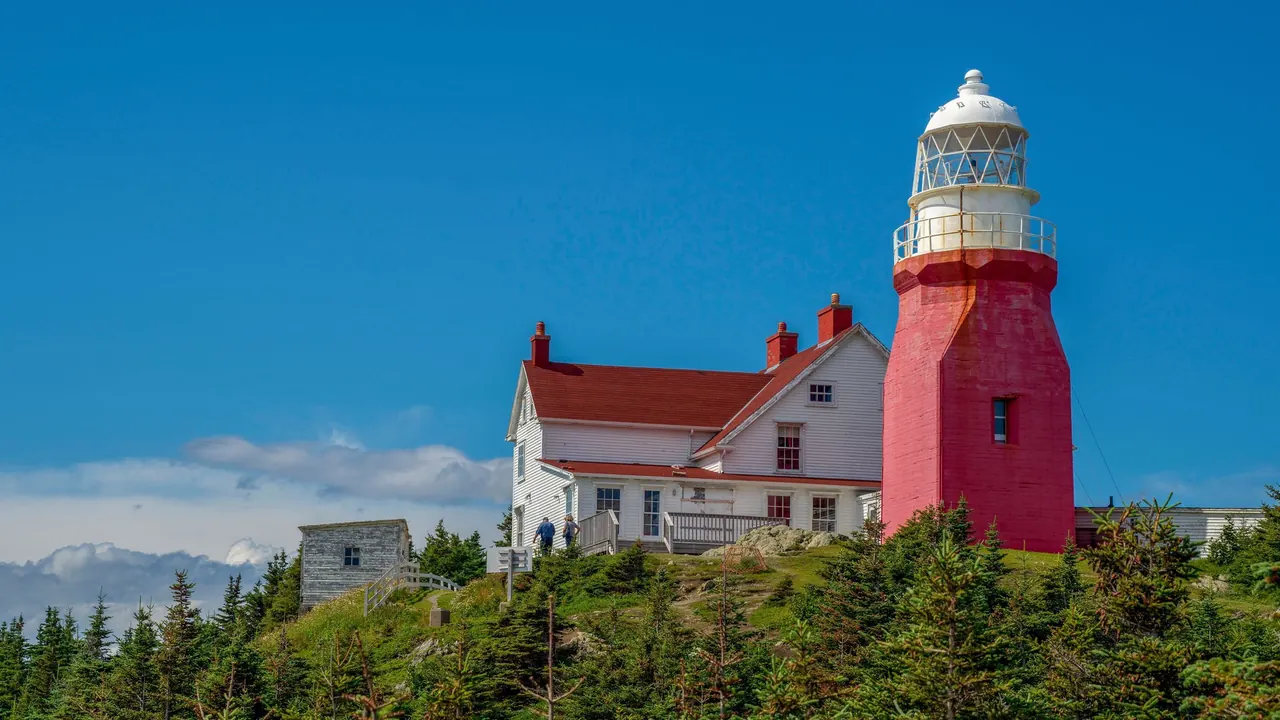
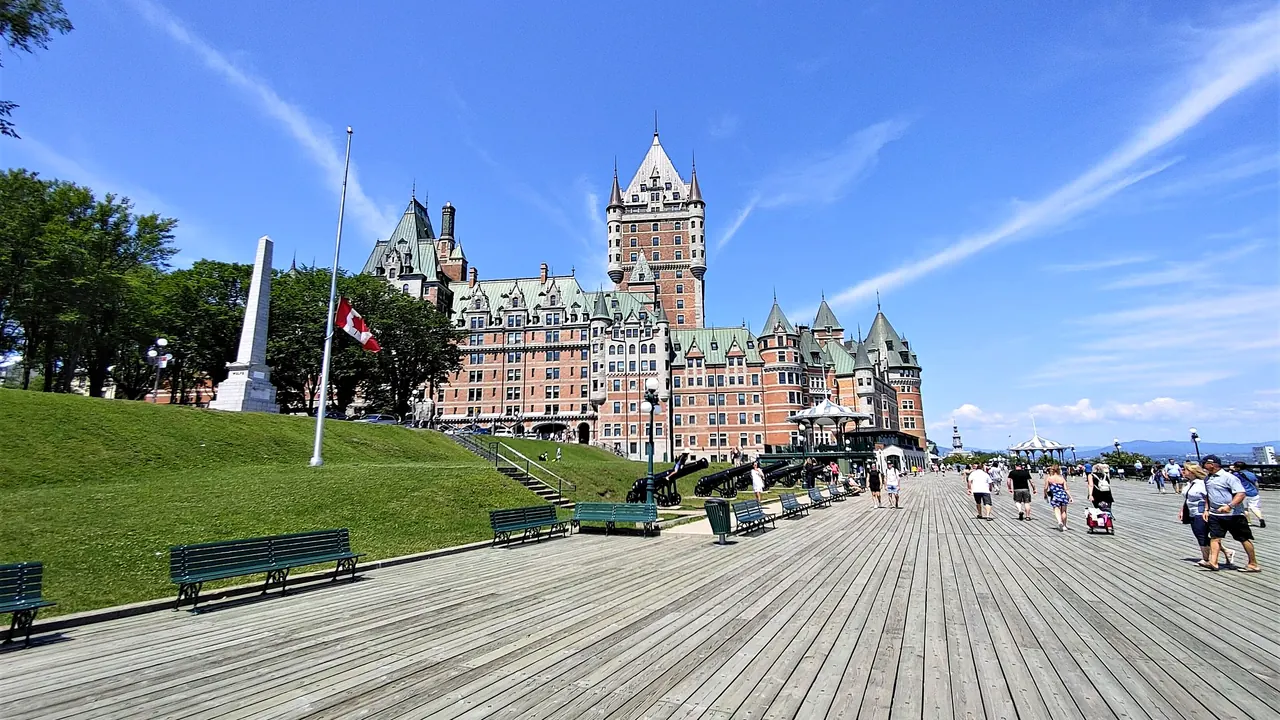
Photos: Newfoundland by Hyukman Kwon, Pexels License; Quebec City by Jeangagnon, CC BY-SA 4.0, cropped.
Newfoundland or Quebec City?
Our verdict in twelve categories, each scored against the same fixed benchmark cities, and the climate month by month, so you can choose for your trip.
Choose Newfoundland for
- nightlife
- nature and the outdoors
Newfoundland suits travellers who want a road trip through wild country rather than a city stay. Its draws are the fjords and bare rock of Gros Morne, icebergs and humpbacks off the Avalon, the puffin and gannet colonies, and evenings of pub music in St. John's. The price is a hire car, long drives between bases, cool summers and a sea too cold for swimming.
Choose Quebec City for
- culture and sights
- getting around
- wellness
For a compact, easy trip, Quebec City is the better pick. You can reach its walled old town, bistro cooking, Nordic spas and family sights on foot or by bus, and the outings to the Île d'Orléans and Charlevoix are short. It also works in deep winter as well as summer, while the island's season is essentially June to September.
Scoreboard
Twelve categories on one fixed scale from 0 to 100. The shaded stretch is the gap between the two.
Your match
Pick a travel style or drag the sliders, and both match scores follow your weighting.
Wins on nightlife and nature and the outdoors with your weighting.
Wins on culture and sights and getting around with your weighting.
What matters to you?
Category by category
What the scores mean for a trip.
Beaches & swimming
Neither is a beach destination, and the difference lies in the kind of water you get. Newfoundland's sea is held cold all summer by the Labrador Current, with icebergs still drifting past the headlands early in the season, so the sand at Shallow Bay in Gros Morne and the dunes at Sandbanks are for walking. If you do swim on the island, make it a short, bracing dip in a freshwater pond late in the summer.
Quebec City has no sea at all, and its river beach at the Baie de Beauport is used for sunbathing, volleyball and paddling rather than for real swimming. The lakes half an hour or so north, Lac Saint-Joseph and Lac-Beauport, warm to about 20°C in July and August, which makes a proper afternoon in the water possible.
Food & drink
Quebec City eats better and with more range. Its strengths are the bistros of Saint-Roch and Saint-Jean-Baptiste, which cook with produce from the Île d'Orléans and Charlevoix, the Marché du Vieux-Port, ice cider and maple all year, and a sugar-shack feast in early spring. Newfoundland's cooking is just as much its own: fish and brewis, toutons, cod tongues and bakeapples, plus a small set of careful restaurants on Water Street and Duckworth Street in St. John's.
The gap opens once you leave the centre. Outside St. John's the island's choice shrinks to diners and fish and chips, which are good when the cod is fresh but repetitive over a week. Quebec's farm country is close enough to keep the city's menus varied.
Culture & sights
Quebec City's heritage is far more concentrated. The walled upper and lower towns, the Château Frontenac, the Citadelle, Place Royale and the Plains of Abraham all sit in one walkable UNESCO-listed core, along with two substantial museums. You can see it properly in a few days without a car.
Newfoundland has the oldest European site of either, the Norse settlement at L'Anse aux Meadows, as well as Signal Hill, The Rooms, Cape Spear and the historic outport of Trinity. These are hundreds of kilometres apart, though, so on the island culture comes as stops on a road trip rather than as a visit in itself.
Nightlife
St. John's gives the livelier night out, mostly thanks to George Street, a short pedestrian block of pubs that stays loud into the small hours on summer weekends. The crowd there pulls strangers into rounds quickly. Quebec City spreads its evenings across the terraces of the Grande Allée, the taprooms of Rue Saint-Jean and the wine and cocktail bars of Saint-Roch.
In both places a night out means drinking rather than dancing. The limit on the island is that the scene exists only in St. John's, while Quebec's weak spot is how early it goes quiet on winter weeknights.
Nature & outdoors
Both are outstanding for the outdoors, in different ways. Newfoundland's nature is the sea and raw landscape: the fjords and Tablelands of Gros Morne, icebergs off the Avalon, humpbacks at Witless Bay, the gannets at Cape St. Mary's and over 300km of the East Coast Trail. Its season runs mainly from June to September, with fog and wind.
Quebec City's nature is closer to town and lasts all year. Montmorency Falls is a short ride from the centre and the Jacques-Cartier valley is within an hour. Winter is the main season, with downhill skiing at Mont-Sainte-Anne and Le Massif, cross-country trails, and skating and ice canoeing on the river.
Day trips
Quebec City has the easier and richer set of outings. The Île d'Orléans is twenty minutes away over a bridge, and Sainte-Anne-de-Beaupré, Wendake on the city's edge and the galleries of Baie-Saint-Paul are all close. Newfoundland's day trips are drives to fishing villages: Petty Harbour, Quidi Vidi, Brigus and Cupids from St. John's, or Bonavista and Elliston from Trinity.
On the island each base gives only a handful of options. Twillingate and Fogo Island need a long drive and a ferry, so most visitors change base instead of taking day trips.
Good for families
Quebec City is the easier family trip. The centre is compact, the aquarium has polar bears and walruses, the Musée de la civilisation has hands-on exhibits and Montmorency Falls has a cable car. In winter there is tobogganing, skating and the carnival. Newfoundland gives children something different and memorable: whales beside the boat, puffins and grounded icebergs, plus the Geo Centre and Salmonier Nature Park.
What counts against the island is the hours in the car and summer weather that can turn cold and wet. Quebec's own drawbacks are stairways that are hard going with pushchairs and winter cold that needs serious clothing.
Getting around
In Quebec City you can manage without a car. The old town, the Plains of Abraham and Saint-Roch are walkable, buses cover the centre and the funicular saves the climb up the cliff. You only need to drive for the parks, the ski hills and the Île d'Orléans.
Newfoundland is the opposite. A car is essential, St. John's to Gros Morne takes most of a day, and moose make driving after dark risky. That is why many visitors fly in at one end of the island and out at the other.
Shopping & style
Neither is a shopping destination, but Quebec City gives you more to browse. There are craft workshops and milliners in Petit-Champlain, antiques on Rue Saint-Paul and independent shops on Rue Saint-Joseph, plus maple, ice cider and Inuit art to take home. Newfoundland's shopping comes down to a few craft shops and galleries in St. John's and studios in the outports, best for knitwear, hooked rugs and labradorite jewellery.
Affordability
Quebec City is the cheaper of the two, although neither is a budget trip. Its main sights cost nothing, the buses spare you car hire, and staying in Saint-Roch rather than inside the walls saves money.
Newfoundland's costs come from its short season. Car hire can't be avoided, rooms in Trinity and Rocky Harbour fill early for July and August, and boat tours add up over a week. On the other hand, the trails, headlands and iceberg viewpoints are free, and village B&Bs and diner meals are reasonable.
Live music & performing arts
The two are close on live music and performance, but the style is different. Newfoundland's strength is informal: sessions of fiddle, accordion and bodhrán in St. John's pubs most nights, summer theatre in Trinity and Cow Head, and community festivals in the outports.
Quebec City has the more formal stage. The Orchestre symphonique de Québec and the city's opera company play at the Grand Théâtre, and Robert Lepage's Le Diamant stages experimental work, mostly in French. In July the Festival d'été fills the Plains of Abraham with big outdoor concerts.
Wellness & relaxation
For a restful trip with some structure, Quebec City is clearly ahead. Its Nordic spas, with outdoor hot pools, saunas and cold plunges, sit around Lac-Beauport, along the river and even in the old port, and they are at their best in snow. Newfoundland has no bathing tradition of its own. Its rest is the quiet of a few nights in Trinity, Woody Point or on Fogo Island, with fog on the water and early nights.
When should you go?
Pick your month. The climate figures are measured averages, not a forecast.
Newfoundland in July
Quebec City in July
Daytime high, °C
Rainfall in the month, mm
Where the figures come from
Newfoundland has no rain gauge within 25 km of the centre, so its rainfall comes from a gridded climate dataset read at the destination rather than from a gauge further away.
Temperature and rainfall are climate normals, averaged over the years shown. Newfoundland: 1991-2020 normals, St. John's International Airport (7.3 km from centre). Quebec City: 1991-2020 normals, Beauport (3.2 km from centre).
Newfoundland's season is short. Around St. John's, where most visitors stay, days only turn properly mild in July and August, at about 21°C. June and September are cool but fine for hiking. The sea peaks at around 14°C in August, too cold for anything more than a quick plunge. Rain falls all year and is heaviest from October to January, at up to about 160mm a month, while winter highs sit around freezing.
Quebec City swings much further through the year. July and August are warm, at about 25°C, which is good for walking the old town and swimming in the lakes, and May, June and September are pleasant for sightseeing. From December to February highs stay below freezing, with January near -6°C. That suits skiing, skating and the Nordic spas better than long walks around the streets. Its rain is spread more evenly across the year, with summer and autumn slightly the wettest.
Which traveller are you?
For a culture and arts trip, Quebec City is the clear choice. The walled old town, the Citadelle, the Plains of Abraham and two major museums are all within walking distance of each other, while Newfoundland's heritage is scattered along long drives.
On an outdoors trip in summer, Newfoundland has the edge if you want a wild coast: hiking in Gros Morne and on the East Coast Trail, and whales and icebergs off the Avalon. For a winter outdoors trip, Quebec City's nearby ski hills win.
For a relaxing and wellness trip, Quebec City fits better. Nordic spas with hot pools, saunas and cold plunges are within half an hour, and the city moves at a gentle pace. Newfoundland has quiet outports but few treatments.
Before you go
| Measure | Newfoundland | Quebec City |
|---|---|---|
| Official language | French, English | French, English |
| Currency | Canadian Dollar (CAD) | Canadian Dollar (CAD) |
| Sockets | AB120 V, 60 Hz | AB120 V, 60 Hz |
| Driving side | Right | Right |
| Time zone | UTC-3:30, UTC-2:30 in summer | UTC-5, UTC-4 in summer |
| Emergency number | 911 | 911 |
| Elevation | - | 98 m |
| Main airport | St. John's International Airport (YYT)22 non-stop destinations | Quebec Jean Lesage International Airport (YQB)13 km from centre34 non-stop destinations |
| Public holidays this year | 14 days | 10 days |
By the numbers
| Measure | Newfoundland | Quebec City |
|---|---|---|
| Population | 479,538 | 574,482 |
| People per km² | - | 1,184 |
| Museums within 10 km | - | 16 |
| UNESCO World Heritage sites within 50 km | - | 1 |
| Swim season, months above 21 °C | None | - |
Where else could you go?
Every comparison below shares a destination with this one, so you can follow Newfoundland or Quebec City somewhere new.
- Montrealvs Quebec City
- Stowevs Quebec City
- Lake Placidvs Quebec City
- Bar Harborvs Quebec City
- Portland, Mainevs Quebec City
- Ottawavs Quebec City