Canada
Newfoundland
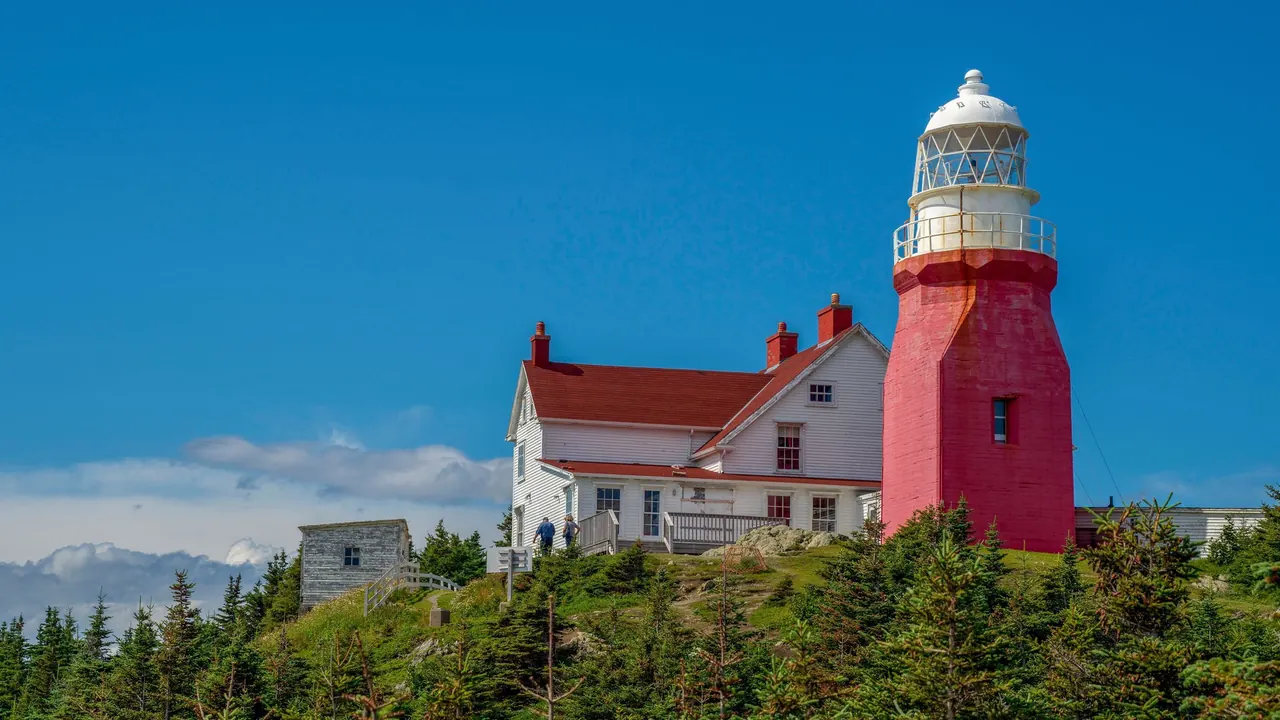
Long Point lighthouse at Twillingate
- Nature & outdoors84
- Nightlife50
- Live music & the arts48
Photo: Hyukman Kwon, Pexels License
Match
41
Every category weighted equally
- Beach & sun38
- Culture & arts41
- Food & nightlife39
- Family trip40
- Outdoors45
- Relax & unwind40
- Shopping & style38
- On a budget40
Newfoundland in twelve categories
Our verdict on each, scored 0 to 100 against the same fixed benchmark cities, so a score means the same thing on every page.
Beaches & swimming. Scores 15 out of 100.
Food & drink. Scores 45 out of 100.
Culture & sights. Scores 45 out of 100.
Nightlife. Scores 50 out of 100.
Nature & outdoors. Scores 84 out of 100.
Day trips. Scores 42 out of 100.
Good for families. Scores 45 out of 100.
Getting around. Scores 25 out of 100.
Shopping & style. Scores 25 out of 100.
Affordability. Scores 36 out of 100.
Live music & performing arts. Scores 48 out of 100.
Wellness & relaxation. Scores 30 out of 100.
Newfoundland category by category
Beaches & swimming
15Newfoundland is not a place to swim in the sea. The North Atlantic and the Labrador Current keep the water cold even in high summer, often around 10°C to 14°C on the east coast, and icebergs drift past the headlands into early summer. There are sandy stretches, such as Shallow Bay in Gros Morne National Park and the dunes at Sandbanks on the south-west coast, but people walk them more than they swim from them.
Locals who do swim use the freshwater ponds that cover the island, which warm up a little in late July and August. Treat any swim as a brief, bracing plunge rather than a beach day.
Food & drink
45The island has a kitchen of its own, built from salt cod, root vegetables and preserves made to last a winter. Fish and brewis, toutons fried in pork fat, Jiggs dinner, cod tongues and cod au gratin turn up on menus across the island, along with wild berries such as partridgeberries and bakeapples. In summer the fish is fresh off the wharf, and fish and chips in the outports can be excellent.
St. John's is where most of the cooking happens, with a small but serious set of restaurants on Water Street and Duckworth Street that cook local seafood, game and foraged plants with care, plus good craft brewing. Outside the capital the choice narrows quickly to family diners and takeaways. Screech, a dark Jamaican rum, is the drink tied to local tradition.
Culture & sights
45The island's most important site is L'Anse aux Meadows, the only confirmed Norse settlement in North America, with reconstructed sod houses on a windswept shore at the very northern tip. It is a long drive from anywhere else, so it suits visitors touring the west coast rather than those based in the capital.
St. John's has the steep streets of painted wooden row houses, Signal Hill with Cabot Tower above the harbour narrows, the Basilica of St. John the Baptist and The Rooms, the provincial museum and gallery. Around the Avalon Peninsula are the colonial dig at Ferryland and the lighthouse at Cape Spear on the continent's easternmost point. On the Bonavista Peninsula, Trinity is one of the best kept historic outports, with merchant houses and churches from the fishing era. The heritage is real, but it is spread thin across long distances.
Nightlife
50Going out on the island means St. John's, and in St. John's it means George Street, a short pedestrian block packed with pubs and bars that stays loud until the small hours on summer weekends. Water Street and the lanes around it add quieter pubs and cocktail bars. The mood is friendly and talkative, and strangers get pulled into conversations and rounds quickly.
The scene is pub-based rather than club-based, and it is busiest in summer and during festival weekends. Outside the capital, evenings in the outports usually end at the local pub or a community hall, and many villages have nothing open late at all.
Nature & outdoors
84This is the island's great strength. On the west coast, Gros Morne National Park has landlocked fjords such as Western Brook Pond, where boats run beneath sheer cliffs, the bare orange rock of the Tablelands, where the earth's mantle lies exposed, and hard summit hikes up Gros Morne Mountain. Rocky Harbour and Woody Point make good bases, and moose are a common sight along the roads.
On the east side, the Avalon Peninsula is about the sea. From late spring icebergs drift down Iceberg Alley, and in June and July humpbacks feed close to shore off Witless Bay, where boat trips also pass puffin islands. Cape St. Mary's has a gannet colony seen from a few metres away. The East Coast Trail follows over 300km of clifftop south of St. John's, and the Skerwink Trail near Trinity is a classic short walk. The season runs roughly June to September, and fog and wind are part of it.
Day trips
42Day trips here are drives to small fishing outports rather than to towns or cities. From St. John's, Petty Harbour, Quidi Vidi and Cape Spear are close, and the Irish Loop runs south to Ferryland and its colonial dig. Brigus and Cupids on Conception Bay, with their stone walls, old churches and early settlement history, make an easy afternoon.
From a base in Trinity, Bonavista and the puffin viewing point at Elliston are short drives, and from Gros Morne you can reach Corner Brook and the villages of Bonne Bay. Twillingate and Fogo Island, with its distinctive art and craft life, need a longer drive and a ferry. The list is charming but modest, and the long distances between areas mean each base gives you only a handful of options.
Good for families
45Children tend to remember Newfoundland for whales surfacing beside the boat, puffins on the rocks and icebergs grounded in a harbour, and these trips run from the Avalon and Trinity Bay through the summer. St. John's adds the Johnson Geo Centre dug into Signal Hill and The Rooms, and Salmonier Nature Park nearby shows moose, caribou and owls along a boardwalk.
The island is safe and the people are warm towards families, but there is little built just for children, the weather can turn cold and wet in midsummer, and the hours in a car between areas test younger travellers. A trip based on the Avalon, with one other area at most, works best.
Getting around
25You need a car. Public transport outside St. John's is minimal, and the sights are scattered along hundreds of kilometres of coast. The Trans-Canada Highway crosses the island in good condition, but St. John's to Gros Morne takes most of a day, so many visitors fly into one end and out of the other, or pick a single region. Side roads to the outports are slower and winding, and moose on the roads make driving after dark a real hazard.
Downtown St. John's can be walked, though the hills between the harbour and the upper streets are steep. Fogo Island and other offshore communities are reached by car ferry.
Shopping & style
25Shopping is a small affair centred on Water Street and Duckworth Street in St. John's, where craft shops and galleries sell local knitwear, hooked rugs, pottery, jewellery set with labradorite and prints by island artists. In the outports, Trinity, Twillingate and Fogo Island have craft studios selling quilts, furniture and woollens. There is little else, and visitors do not come here to shop.
Affordability
36Newfoundland is not a cheap trip. The season is short, so rooms in St. John's and in the popular outports such as Trinity and Rocky Harbour fill early and cost more in July and August, and car hire, which is effectively mandatory, is expensive and needs booking well ahead. Boat tours and national park fees add up over a week.
On the other hand, simple diner meals and fish and chips are reasonable, B&Bs in smaller villages are fair, and most of what you come for, the trails, headlands and iceberg viewing points, costs nothing.
Live music & performing arts
48Music is part of daily life in Newfoundland. Its traditional songs, with jigs and reels played on fiddle, button accordion and bodhrán, come from Irish and West Country roots, and in St. John's you can hear live sessions in pubs on George Street and Water Street most nights of the week, from old ballads to the island's folk-rock. The Newfoundland Symphony Orchestra and the Arts and Culture Centre cover the formal programme, and the LSPU Hall has long been the home of local theatre.
In summer, Trinity has an outdoor theatre season about local history, and Gros Morne has a summer theatre festival in Cow Head. Folk festivals and community 'times' in the outports round out the season. Outside summer the offer shrinks to the capital.
Wellness & relaxation
30There is no bathing or spa culture to speak of, and spa treatments are limited to a few hotels in St. John's and the larger resorts. What the island offers is quiet. A few nights in an outport such as Trinity, Woody Point or on Fogo Island, with fog on the water, little traffic and early nights, is restful in its own way, and some remote inns are built for exactly that. Visitors looking for treatments, thermal pools or a structured retreat will find little.
Where to stay in Newfoundland
St. John's is the obvious first base. A downtown room puts the harbour, Signal Hill, the best restaurants on the island and the pubs of George Street and Water Street within walking distance, though the hills are steep. It suits food, live music and evenings out, and families can easily reach the whale and puffin boats at Witless Bay, Cape Spear and the East Coast Trail.
Trinity, on the Bonavista Peninsula, is the quiet one: a preserved outport with early nights, the Skerwink Trail, summer theatre and Bonavista and Elliston a short drive away. Together with St. John's it makes the easiest first trip. On the west coast, Rocky Harbour and Woody Point are the bases for Gros Morne National Park and suit hikers and anyone drawn to the fjords and the Tablelands. Rocky Harbour is the more practical choice, while Woody Point, across Bonne Bay, is calmer.
The island is big. St. John's to Gros Morne takes most of a day by car, so keep a first visit to the Avalon and Trinity, or fly into one end and out of the other. Gros Morne with the long drive north to L'Anse aux Meadows makes a strong second trip. Twillingate and Fogo Island, reached by road and ferry, reward a slower stay for craft and quiet. For a week, plan on two bases, three at most.
When should you go?
Pick a month to see what it is like. The climate figures are measured averages, not a forecast.
Newfoundland in July
Daytime high, °C
Rainfall in the month, mm
The whole year
Shaded against this destination’s own year: the deepest cell is its best month for that figure and the palest its weakest.
Where the figures come from
Newfoundland has no rain gauge within 25 km of the centre, so its rainfall comes from a gridded climate dataset read at the destination rather than from a gauge further away.
Temperature and rainfall are climate normals, averaged over the years shown. Newfoundland: 1991-2020 normals, St. John's International Airport (7.3 km from centre).
Before you go
| Measure | Newfoundland |
|---|---|
| Official language | French, English |
| Currency | Canadian Dollar (CAD) |
| Sockets | AB120 V, 60 Hz |
| Driving side | Right |
| Time zone | UTC-3:30, UTC-2:30 in summer |
| Emergency number | 911 |
| Main airport | St. John's International Airport (YYT)22 non-stop destinations |
| Public holidays this year | 14 days |
By the numbers
| Measure | Newfoundland |
|---|---|
| Population | 479,538 |
| Swim season, months above 21 °C | None |
Compare Newfoundland with
Every comparison with a written verdict behind it.