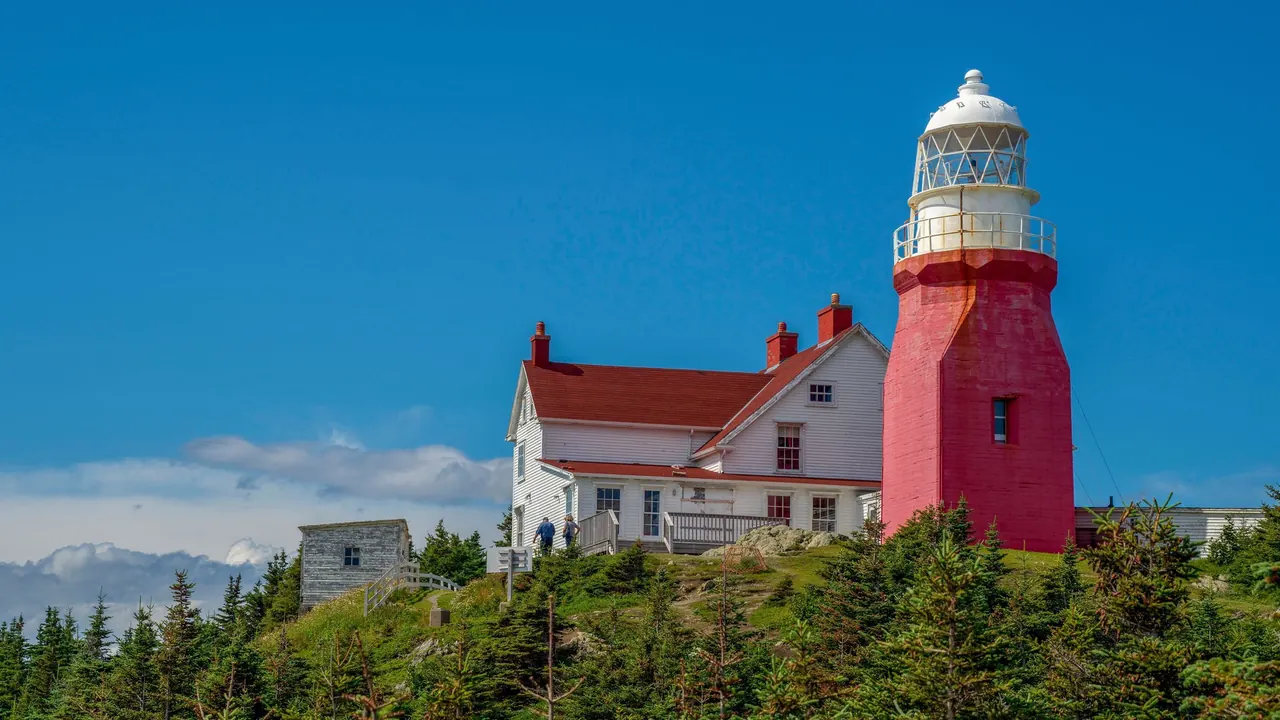
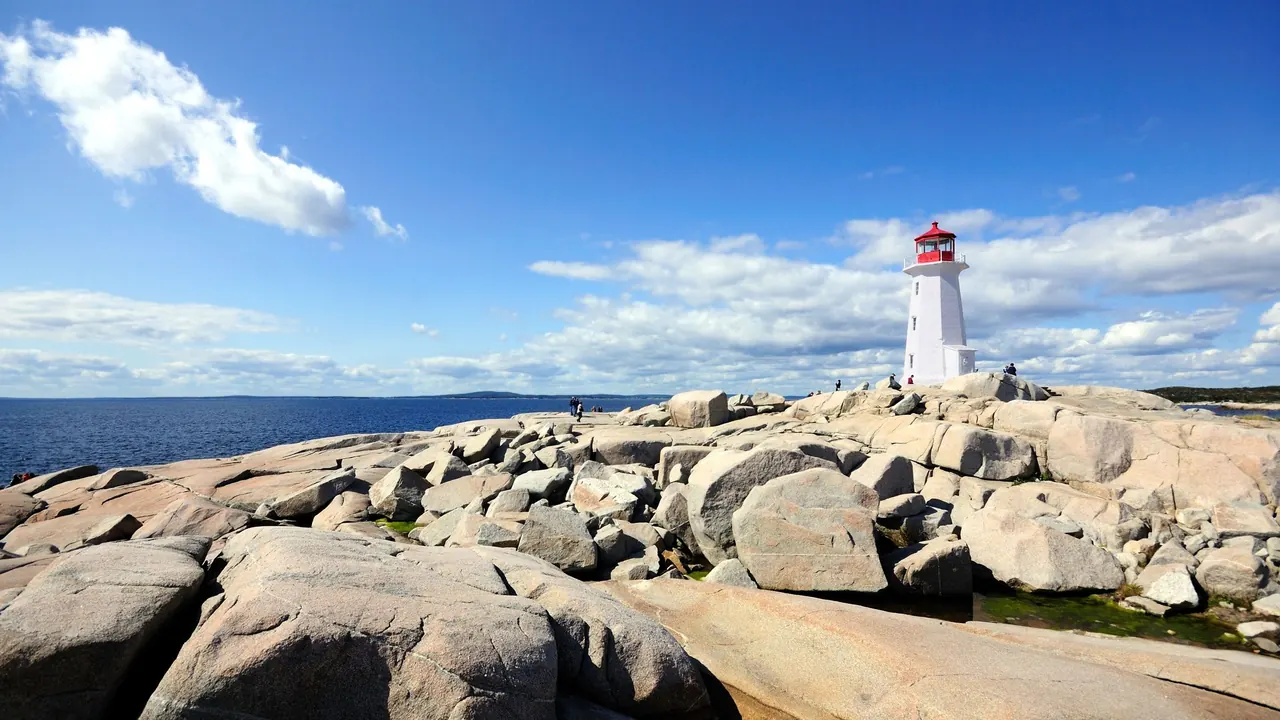
Photos: Newfoundland by Hyukman Kwon, Pexels License; Nova Scotia by Taxiarchos228, CC BY-SA 3.0, cropped.
Newfoundland or Nova Scotia?
Our verdict in twelve categories, each scored against the same fixed benchmark cities, and the climate month by month, so you can choose for your trip.
Choose Newfoundland for
- nightlife
- nature and the outdoors
Newfoundland suits travellers who want the North Atlantic at its wildest and don't mind driving to reach it. It has icebergs off the Avalon, humpbacks feeding close to shore, the fjords and bare rock of Gros Morne, and an evening of fiddle music and talk on George Street afterwards. It asks more of you, with longer distances, colder water and fewer comforts. In return you get a stronger sense of being somewhere remote.
Choose Nova Scotia for
- beaches
- getting around
- day trips
For an easier touring trip with more variety, pick Nova Scotia. Halifax makes a more useful base, the South Shore and the Annapolis Valley are a short drive away, and the Cabot Trail has scenery nearly as grand as Newfoundland's. Its warm Northumberland beaches, seafood, Valley wine and heritage towns such as Lunenburg make it the better choice for families and for anyone who wants a real swim.
Scoreboard
Twelve categories on one fixed scale from 0 to 100. The shaded stretch is the gap between the two.
Your match
Pick a travel style or drag the sliders, and both match scores follow your weighting.
Wins on nightlife and nature and the outdoors with your weighting.
Wins on beaches and getting around with your weighting.
What matters to you?
Category by category
What the scores mean for a trip.
Beaches & swimming
Newfoundland's sea is chilled by the Labrador Current and stays cold even in August, with icebergs offshore into early summer. Shallow Bay in Gros Morne and the dunes at Sandbanks are lovely for a walk, but swimming means a freshwater pond.
Nova Scotia has a sea you can actually swim in. Along the Northumberland Strait, around Pugwash and Tatamagouche, long red-sand beaches with shallow sandbars warm up enough in late summer for proper swimming, and Inverness on Cape Breton adds another sandy strand. Its Atlantic beaches, such as Crystal Crescent and Lawrencetown, are colder and better for paddling or surfing.
Food & drink
Both kitchens are built on the North Atlantic, but in different ways. Newfoundland cooks for winter, with salt cod, toutons, Jiggs dinner and berries such as bakeapples. The few ambitious restaurants are in St. John's, and the outports mostly offer diners and fish and chips.
Nova Scotia eats better over a whole trip, thanks to its seafood and a second food region outside the capital. Lobster, Digby scallops and Eastern Shore oysters are the staples. Halifax has the wider choice of modern restaurants and its waterfront farmers' market, and the Annapolis Valley adds Tidal Bay white wine and cideries.
Culture & sights
Newfoundland's heritage has a few high points, far apart. There is the Norse site at L'Anse aux Meadows on the northern tip, the painted row houses and Signal Hill in St. John's, and Trinity, an outport from the fishing era. Seeing all of them takes days of driving.
Nova Scotia has more to see, and it is easier to link up. Three World Heritage sites, Lunenburg, Grand-Pré and the Joggins Fossil Cliffs, are joined by the reconstructed Fortress of Louisbourg. Halifax adds the Citadel, Pier 21 and the maritime museum's Titanic and Halifax Explosion galleries, which gives a curious traveller more days of material.
Nightlife
In both places a night out means pubs rather than clubs, and in both it happens in the capital, but St. John's has the livelier scene. George Street, a single pedestrian block of pubs and bars, stays loud into the small hours on summer weekends, and the local habit of pulling strangers into rounds makes it easy to join in.
Halifax spreads its evenings between Argyle Street downtown and the taprooms and cocktail bars of the North End. Students keep weekends going, and there are a few dance clubs. It is a good night out, just less concentrated, and in both provinces the small towns go quiet early.
Nature & outdoors
Nature is the main reason to visit either one, and they are closely matched. The difference is in character. Newfoundland is rawer, with icebergs drifting down Iceberg Alley, humpbacks and puffins off Witless Bay and gannets at Cape St. Mary's. Gros Morne has the landlocked fjord of Western Brook Pond and the bare mantle rock of the Tablelands, and the East Coast Trail runs for over 300km along clifftops, often in fog and wind.
In Nova Scotia the big draw is where land meets tide. The Cabot Trail and the Skyline Trail give the big highland views. On the Bay of Fundy you can walk the sea floor at Burntcoat Head at low tide or ride the tidal bore on the Shubenacadie, and Kejimkujik adds canoeing and dark skies. Its outdoor season also runs into the autumn colour of early October.
Day trips
Newfoundland's day trips are drives to fishing outports, and each base reaches only a handful. From St. John's there are Petty Harbour, Quidi Vidi, Cape Spear and the Irish Loop down to Ferryland. Trinity has Bonavista and the puffins at Elliston. From Gros Morne you can reach Corner Brook and the villages of Bonne Bay. Twillingate is a long drive away, and Fogo Island needs a ferry on top of the drive.
Nova Scotia gives you more from a single base. From Halifax, Peggy's Cove, Chester and Mahone Bay line the South Shore within an hour or so, and the orchards and wineries around Wolfville lie in the other direction, so several days fill up without changing hotel. The province has no second city to visit, but a base in Baddeck on Cape Breton adds the Gaelic villages and the Acadian fishing community of Cheticamp.
Good for families
Newfoundland's family highlights are few but memorable: whales beside the boat, puffins, icebergs grounded in a harbour, and moose and caribou at Salmonier Nature Park. Cold days in midsummer and long drives make it harder with small children.
Nova Scotia gives children more to do between the big moments. The warm, shallow Northumberland beaches suit toddlers, and the Fundy tidal flats are good for fossil hunting. At Louisbourg, costumed soldiers fire muskets, and Halifax has a hands-on science centre and a harbour ferry. Neither has a zoo or theme park of any size.
Getting around
You need a hire car in both, but Newfoundland makes you drive further. St. John's to Gros Morne takes most of a day on the Trans-Canada Highway, the side roads to the outports are slow and winding, and moose make driving after dark risky. That is why many visitors fly in at one end of the island and out at the other.
Nova Scotia is more forgiving. Distances are shorter, traffic is light and intercity buses link the main towns. Halifax's downtown and waterfront are compact enough to walk, with a harbour ferry to Dartmouth. The Cabot Trail is still a long drive from the city, so most people drive a loop.
Shopping & style
Neither is a place to go shopping, and both sell crafts rather than fashion. Newfoundland's best buys are labradorite jewellery, hooked rugs and knitwear from the galleries on Water Street and Duckworth Street, plus quilts and furniture from the studios on Fogo Island. Nova Scotia has a little more choice: craft studios along the South Shore and on Cape Breton, tartan and maple products, and bookshops and local designers around Spring Garden Road in Halifax.
Affordability
Both are expensive in July and August, when rooms fill and car hire is a big part of the bill. Newfoundland costs more of the two. Its season is shorter, Trinity and Rocky Harbour book up early, and boat trips to see whales and puffins add up.
Nova Scotia has more ways to spend less, with rural motels, cottages and campgrounds, and prices drop noticeably in June and late September. In both, the coastal walks, beaches and viewpoints are free.
Live music & performing arts
Newfoundland's music lives mainly in St. John's, where pubs on George Street and Water Street hold sessions of jigs, reels and old ballads most nights, and the LSPU Hall stages local theatre. Summer adds outdoor history plays at Trinity and a theatre festival at Cow Head, but for the rest of the year almost everything shrinks back to the capital.
Nova Scotia has the richer music life because it reaches further into the countryside and further into the year. On Cape Breton's west coast, around Mabou, Judique and Inverness, fiddlers and step dancers fill village halls at summer ceilidhs, and the Gaelic college at St Ann's keeps the tradition going. In October, Celtic Colours spreads concerts through the island's communities, and Halifax adds a professional theatre and a summer jazz festival.
Wellness & relaxation
Neither has a spa or bathing tradition, so rest in either comes from silence rather than treatments, and Newfoundland takes the silence further. Its quiet bases are outports at the edge of things: Trinity on its bay, Woody Point across the water from Gros Morne, or Fogo Island beyond a ferry crossing. There, empty evenings and the sound of the sea do most of the unwinding. If you want a massage or a pool, you will find little outside a handful of hotels, most of them in the capital.
Nova Scotia is the easier place to slow down, because its quiet comes with a few more comforts. The South Shore and Cape Breton have plenty of country inns and cottages by the water, in milder summer weather and within easier reach of Halifax. A massage or a day of treatments is not hard to book at the resort hotels and day spas around the city or at one of the larger inns. It still suits long walks and early nights better than a pampering break.

When should you go?
Pick your month. The climate figures are measured averages, not a forecast.
Newfoundland in July
Nova Scotia in July
Daytime high, °C
Rainfall in the month, mm
Where the figures come from
Newfoundland has no rain gauge within 25 km of the centre, so its rainfall comes from a gridded climate dataset read at the destination rather than from a gauge further away.
Temperature and rainfall are climate normals, averaged over the years shown. Newfoundland: 1991-2020 normals, St. John's International Airport (7.3 km from centre). Nova Scotia: 1991-2020 (sunshine 1981-2010) normals, Shearwater Airport (6 km from centre).
Newfoundland warms late and only briefly. Days turn mild in June, July and August are the warm months at around 21°C, and by October it is cool again. It is never dry: rain falls steadily every month, and the wettest stretch runs from October to January. Where most visitors stay, the sea peaks at only 14°C in August, so any swim is a quick plunge. June is good for icebergs and whales, and July and August are best for walking.
Nova Scotia is a few degrees warmer and its good weather lasts longer. August reaches about 23°C and is its driest month, and July and August are also its sunniest. September stays pleasant for walking and touring. Where the figures are measured, the sea reaches 17°C in August, though the Northumberland shore is warmer still. From November to March both are cold, grey and wet, and sightseeing is not comfortable.
Which traveller are you?
On a beach and sun trip, Nova Scotia is the clear choice. The shallow red-sand beaches of the Northumberland Strait warm up enough in late summer for a proper swim. Newfoundland's sea stays so cold that even locals swim in freshwater ponds instead.
On a family trip with young children, Nova Scotia is easier going. Warm shallow beaches, the costumed soldiers at Louisbourg and a science centre in Halifax fill the days. The drives between bases are also shorter than Newfoundland's long hours in the car.
On an outdoors trip, Newfoundland has the edge for sheer wildness: icebergs off the Avalon, humpbacks near Witless Bay, and the Tablelands and fjords of Gros Morne. Nova Scotia's Cabot Trail and Fundy tides come close and are easier to reach.
Before you go
| Measure | Newfoundland | Nova Scotia |
|---|---|---|
| Official language | French, English | French, English |
| Currency | Canadian Dollar (CAD) | Canadian Dollar (CAD) |
| Sockets | AB120 V, 60 Hz | AB120 V, 60 Hz |
| Driving side | Right | Right |
| Time zone | UTC-3:30, UTC-2:30 in summer | UTC-4, UTC-3 in summer |
| Emergency number | 911 | 911 |
| Main airport | St. John's International Airport (YYT)22 non-stop destinations | Halifax / Stanfield International Airport (YHZ)37 non-stop destinations |
| Public holidays this year | 14 days | 12 days |
By the numbers
| Measure | Newfoundland | Nova Scotia |
|---|---|---|
| Population | 479,538 | 969,383 |
| Swim season, months above 21 °C | None | None |
Where else could you go?
Every comparison below shares a destination with this one, so you can follow Newfoundland or Nova Scotia somewhere new.
- Prince Edward Islandvs Nova Scotia
- Acadiavs Nova Scotia
- Cape Codvs Nova Scotia
- Prince Edward Islandvs Newfoundland
- Quebec Cityvs Newfoundland
- Vancouver Islandvs Nova Scotia