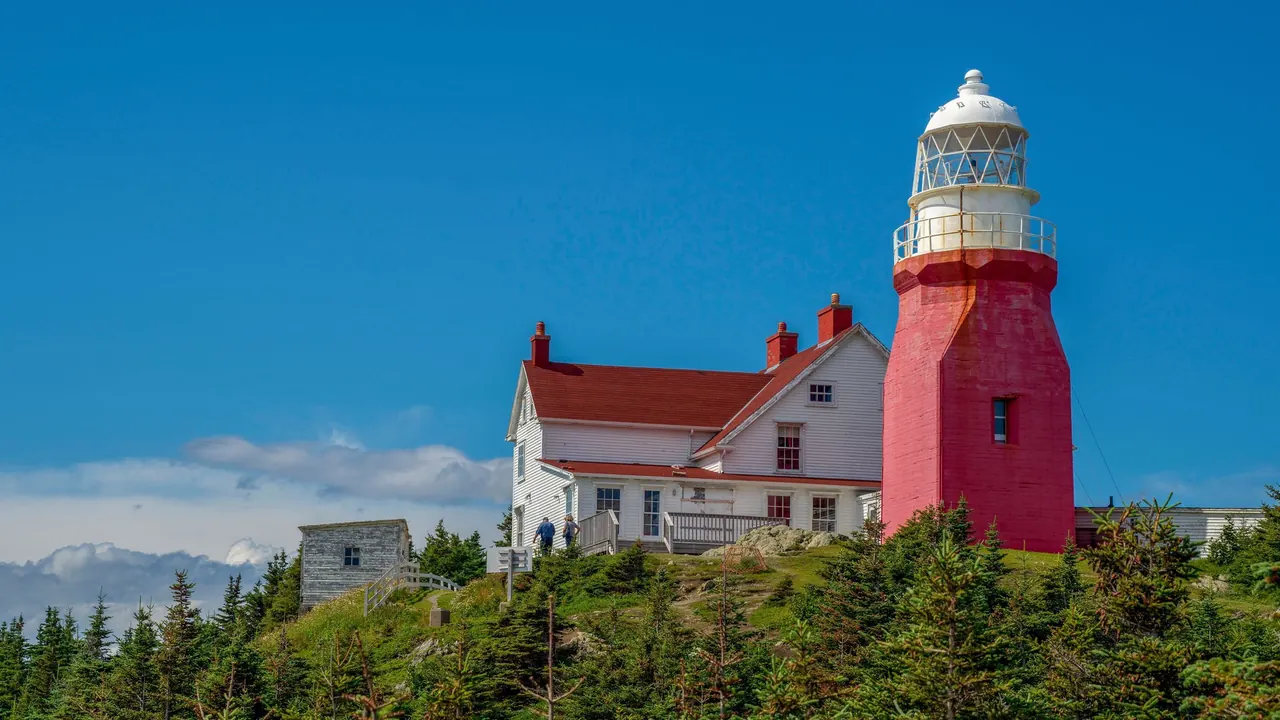
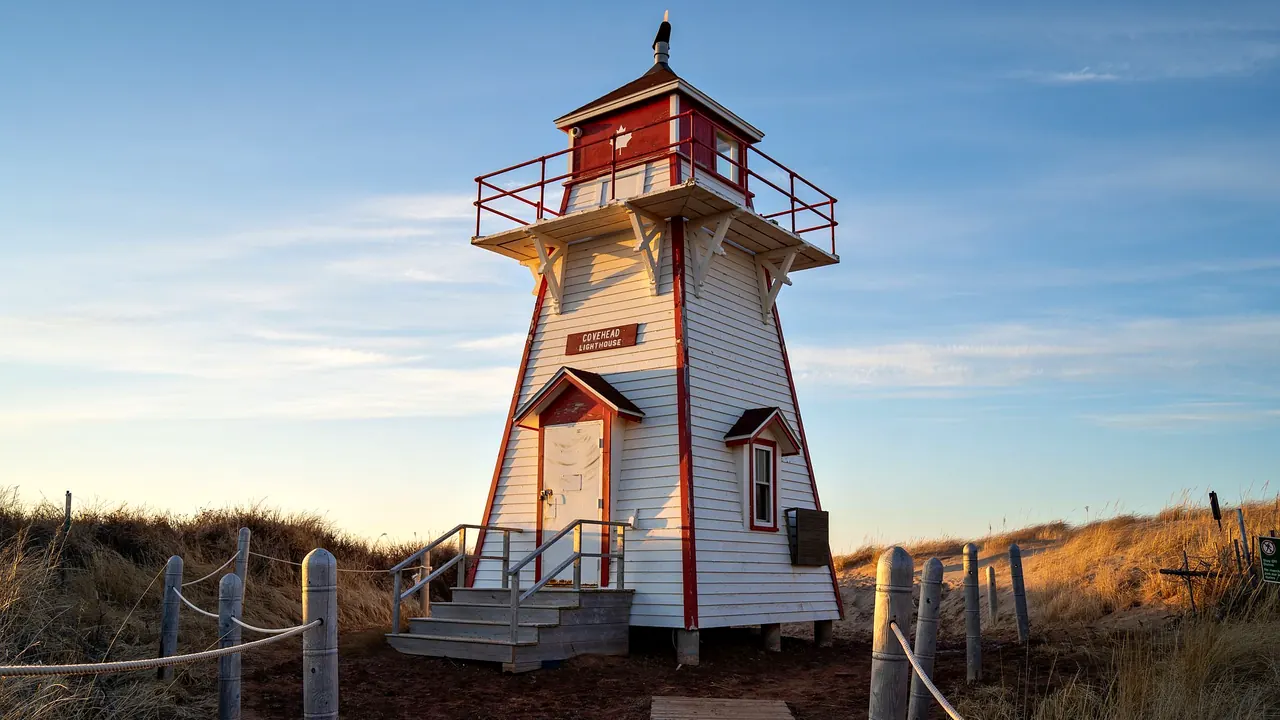
Photos: Newfoundland by Hyukman Kwon, Pexels License; Prince Edward Island by Sebastian Velandia, Pexels License.
Newfoundland or Prince Edward Island?
Our verdict in twelve categories, each scored against the same fixed benchmark cities, and the climate month by month, so you can choose for your trip.
Choose Newfoundland for
- nature and the outdoors
- nightlife
- culture and sights
Newfoundland is for travellers who want big, raw scenery and don't mind driving to reach it. It has the fjords and Tablelands of Gros Morne, whales and icebergs off the Avalon and clifftop walking on the East Coast Trail. It also has the deeper history, from the Norse site at L'Anse aux Meadows to the painted streets of St. John's, and a livelier night out in the pubs of George Street. In return you get a cold sea, fog and long days in the car.
Choose Prince Edward Island for
- beaches
- getting around
- families
Prince Edward Island suits a slower summer trip built around sand and shellfish. Of the two, it is the one where swimming is a real part of the day, thanks to its north-shore beaches and the warm, shallow water of the south shore. Cavendish is set up for children. Distances are short, so you can stay in one cottage and still see most of the island, though the landscape is gentle farmland and the evenings are quiet.
Scoreboard
Twelve categories on one fixed scale from 0 to 100. The shaded stretch is the gap between the two.
Your match
Pick a travel style or drag the sliders, and both match scores follow your weighting.
Wins on nature and the outdoors and nightlife with your weighting.
Wins on beaches and getting around with your weighting.
What matters to you?
Category by category
What the scores mean for a trip.
Beaches & swimming
This is the widest gap between the two islands. The Labrador Current chills Newfoundland's sea, so its sandy stretches at Shallow Bay and Sandbanks are for walking. The only swimming most people do there is a brief dip in a freshwater pond in late summer.
For a few weeks each summer, Prince Edward Island is a real beach destination. You can spend whole days by the water on the dune-backed red sand around Cavendish and Brackley, the squeaking white sand of Basin Head, or the warm, shallow south shore at Argyle Shore and Panmure Island.
Food & drink
Both islands cook from the sea, but Prince Edward Island eats better on the whole. Its strength is shellfish: Malpeque oysters, island mussels and lobster suppers in church halls. Behind that it has Charlottetown's farm-to-table kitchens and market, and seafood shacks in harbour villages such as North Rustico.
Newfoundland's food is heartier and more its own: salt cod, fish and brewis, toutons and Jiggs dinner, plus a short list of serious restaurants on Water Street and Duckworth Street in St. John's. Away from the capital, the choice thins out faster than on its neighbour.
Culture & sights
Newfoundland has more to see, and its sites carry more weight. L'Anse aux Meadows is a Norse settlement of world importance. St. John's adds Signal Hill, The Rooms and its painted row houses, and further out are Ferryland and the outport of Trinity. Seeing it all takes long drives, though.
Prince Edward Island's heritage is gentler and quicker to cover: the Confederation story at Province House in Charlottetown, Green Gables in Cavendish, Acadian communities and small museums. Readers of the Anne books will love it. Others will be done in a couple of days.
Nightlife
Neither island is a clubbing destination, but St. John's gives Newfoundland a proper night out. George Street packs its pubs into one pedestrian block that stays loud late on summer weekends, and strangers draw you into conversation easily.
Charlottetown's patios on Victoria Row are pleasant for a drink, but few places stay open past midnight. Elsewhere on Prince Edward Island, the evening is usually dinner and a sunset.
Nature & outdoors
Newfoundland is in a different league outdoors. Gros Morne has freshwater fjords under sheer cliffs, the exposed mantle rock of the Tablelands and a hard summit climb. The Avalon brings icebergs, feeding humpbacks, puffins and the gannets at Cape St. Mary's, with over 300km of the East Coast Trail along the cliffs.
By comparison, Prince Edward Island's landscape is pastoral: red farmland, sandstone cliffs and the dunes at Greenwich. Its best outdoor days are on a bike along the flat Confederation Trail or in a kayak in a sheltered bay, and serious hikers will find nothing to climb.
Day trips
Day trips on both islands go to small places rather than notable towns, so the two come out about even. In Newfoundland each base has its own short list: Petty Harbour and the Irish Loop from St. John's, Bonavista and Elliston from Trinity. Fogo Island needs a ferry as well.
Prince Edward Island's outings are closer together: Summerside, Victoria-by-the-Sea and the Acadian villages. It is also the only one of the two you can leave easily, over the Confederation Bridge to Shediac and Moncton or by the summer ferry to Nova Scotia.
Good for families
Prince Edward Island is built for a family summer in a way Newfoundland is not. Around Cavendish there are cottages near the beaches, a water park, mini-golf and go-karts. The south shore has shallow, calm water for toddlers, and the drives are short.
Newfoundland gives children bigger moments: whales beside the boat, puffins and icebergs, plus the Geo Centre and Salmonier Nature Park near St. John's. But little there is made for children, and cold spells and long drives work against younger ones.
Getting around
You need a car on both islands, but the distances are very different. Newfoundland is big. St. John's to Gros Morne takes most of a day, the roads to the outports wind slowly, and moose make night driving risky, so many visitors fly in at one end and out at the other.
On Prince Edward Island, most beaches are within an hour of Charlottetown and the whole island is a few hours from tip to tip. The Confederation Trail also gives you a way across by bike, without a car.
Shopping & style
Neither island is a place to shop, and both sell crafts rather than fashion. In Newfoundland the best buys are knitwear, hooked rugs and labradorite jewellery from Water Street or the studios of Fogo Island. Prince Edward Island leans towards pottery, preserves, sea-glass jewellery and Anne souvenirs around Cavendish.
Affordability
Both are moderately expensive summer trips, with short seasons, rooms that book out in July and August and a car to pay for, so there is little between them. In Newfoundland the cost comes from distance: expensive car hire, long drives, boat tours and park fees, though the trails and headlands are free. On Prince Edward Island the beach cottages cost the most, and going in June or September brings the bill down.
Live music & performing arts
Music runs deep on both islands and they are broadly level, but it happens in different settings. In St. John's, sessions of jigs, reels and ballads fill the pubs of George Street and Water Street most nights. The city also has a symphony orchestra and the theatre at the LSPU Hall, and there is summer theatre in Trinity and Cow Head.
On Prince Edward Island the music happens at ceilidhs in parish halls, with fiddle and step dancing. Its main stage is the musical theatre of the Charlottetown Festival, with summer concerts in the wooden hall at Indian River as well. Both islands go quiet outside summer, though St. John's keeps more going.
Wellness & relaxation
What separates the two is how much effort rest takes. In Newfoundland, quiet means fog on the water and early nights in a remote outport such as Woody Point or on Fogo Island, where some inns are built for retreat. Getting there takes long drives, and the few spa treatments on the island are mostly in hotels in St. John's.
Prince Edward Island makes slowing down easier. Distances are short and the country roads are empty, and a handful of resort and country-inn spas offer treatments. Summer evenings end with the sun setting over the strait. Neither island has a bathing tradition, but on Prince Edward Island the calm takes less work to reach.
When should you go?
Pick your month. The climate figures are measured averages, not a forecast.
Newfoundland in July
Prince Edward Island in July
Daytime high, °C
Rainfall in the month, mm
Where the figures come from
Newfoundland has no rain gauge within 25 km of the centre, so its rainfall comes from a gridded climate dataset read at the destination rather than from a gauge further away.
Temperature and rainfall are climate normals, averaged over the years shown. Newfoundland: 1991-2020 normals, St. John's International Airport (7.3 km from centre). Prince Edward Island: 1991-2020 normals, Charlottetown Airport (5.6 km from centre).
Newfoundland's season is short and cool. Highs reach only about 21°C in July, and the sea peaks near 14°C in August, too cold for more than a quick plunge. June and July are the months for humpbacks feeding close to shore and for icebergs, if you dress for cool, foggy days. July to September suits hiking in Gros Morne and on the East Coast Trail. Newfoundland is the wetter of the two islands all year, and wettest from October to January.
Prince Edward Island is a few degrees warmer through the summer, with highs near 24°C in July and a sea that climbs to about 19°C in August. That makes July and August real beach months there, and June and September are mild enough for cycling and coastal walks. From December to March both islands stay around freezing, and neither suits sightseeing on foot.
Which traveller are you?
For an outdoors trip, Newfoundland is by far the stronger island. Gros Morne's fjords and summit hike, the East Coast Trail and boat trips out to whales, puffins and icebergs fill a varied week. Prince Edward Island offers mostly flat cycling and dune walks.
On a beach and sun trip, Prince Edward Island is the only sensible pick. Its red-sand north shore and the calm Northumberland Strait warm up enough for proper swims in July and August. Newfoundland's water stays cold right through summer.
On a family trip with young children, Prince Edward Island makes life easier, with short drives, shallow beaches, the water park and mini-golf at Cavendish, and Green Gables. Newfoundland's whales and icebergs are thrilling, but long days in the car and cold, wet spells test small children.
Before you go
| Measure | Newfoundland | Prince Edward Island |
|---|---|---|
| Official language | French, English | French, English |
| Currency | Canadian Dollar (CAD) | Canadian Dollar (CAD) |
| Sockets | AB120 V, 60 Hz | AB120 V, 60 Hz |
| Driving side | Right | Right |
| Time zone | UTC-3:30, UTC-2:30 in summer | UTC-4, UTC-3 in summer |
| Emergency number | 911 | 911 |
| Main airport | St. John's International Airport (YYT)22 non-stop destinations | Charlottetown Airport (YYG)6 non-stop destinations |
| Public holidays this year | 14 days | 13 days |
By the numbers
| Measure | Newfoundland | Prince Edward Island |
|---|---|---|
| Population | 479,538 | 154,331 |
| People per km² | - | 27 |
| Swim season, months above 21 °C | None | None |
Where else could you go?
Every comparison below shares a destination with this one, so you can follow Newfoundland or Prince Edward Island somewhere new.
- Nova Scotiavs Prince Edward Island
- Acadiavs Prince Edward Island
- Cape Codvs Prince Edward Island
- Nova Scotiavs Newfoundland
- Quebec Cityvs Newfoundland
- Reykjavikvs Newfoundland