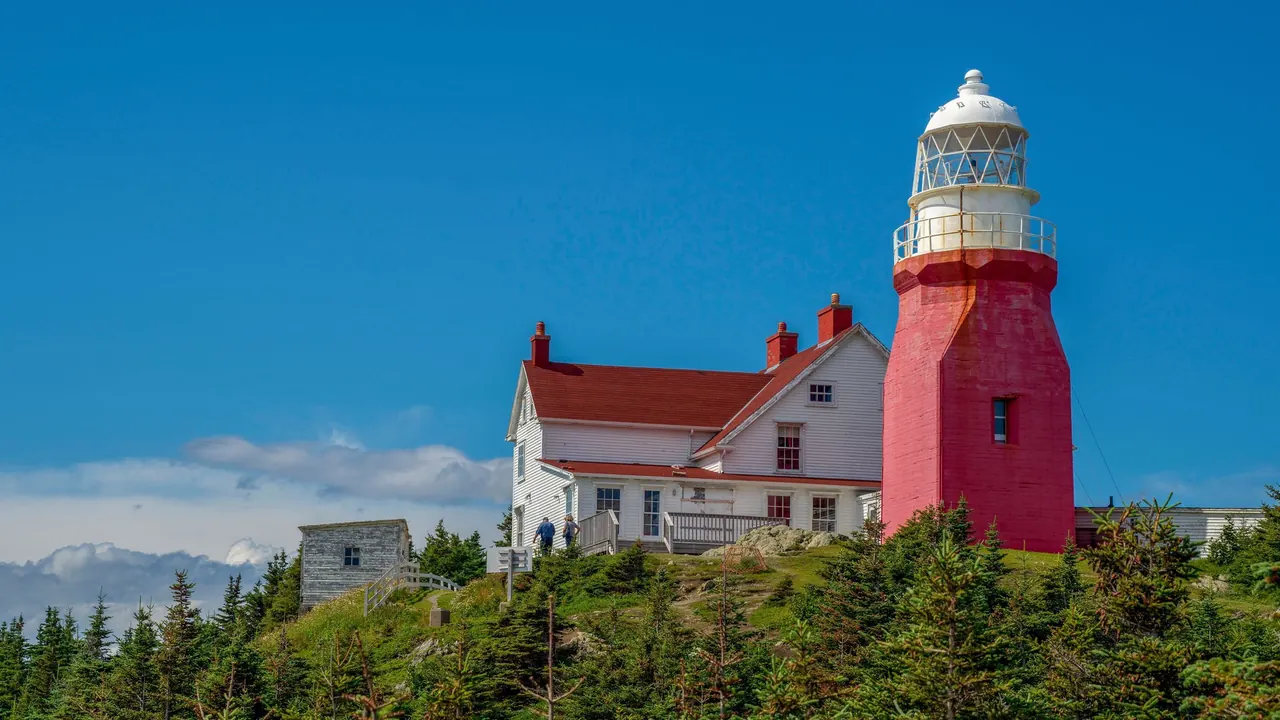
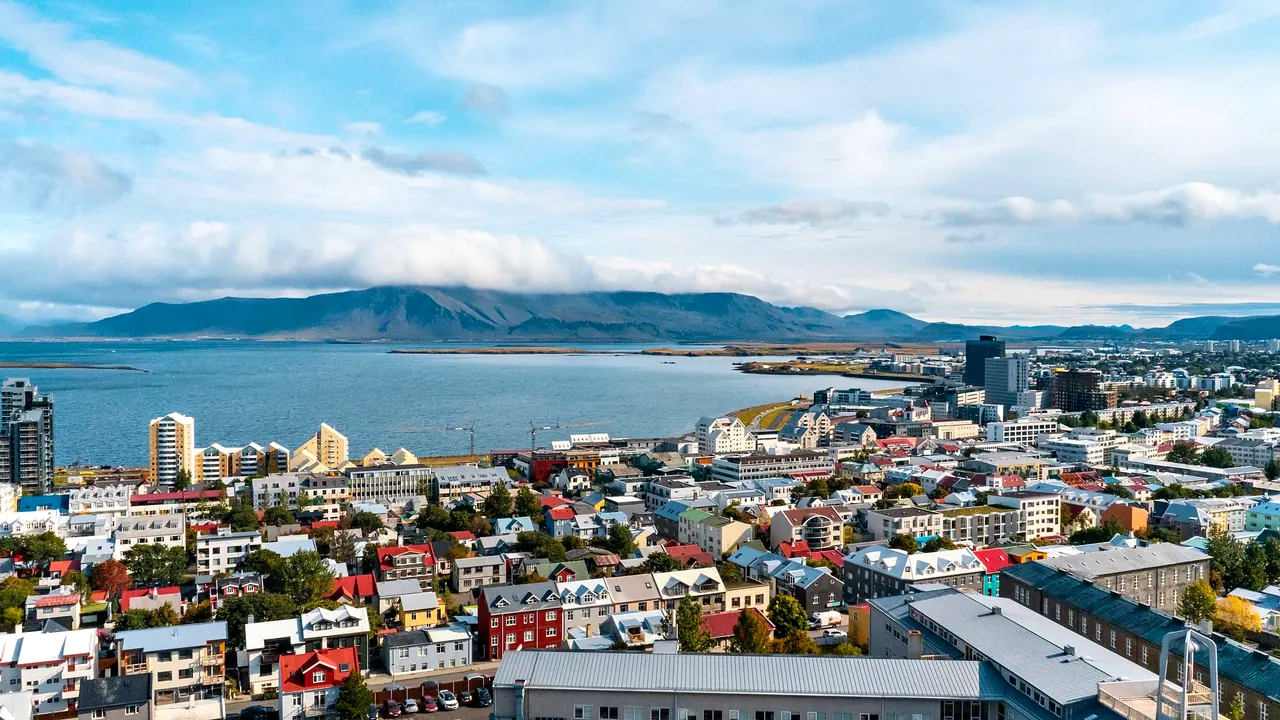
Photos: Newfoundland by Hyukman Kwon, Pexels License; Reykjavik by Atlantic Ambience, Pexels License.
Newfoundland or Reykjavik?
Our verdict in twelve categories, each scored against the same fixed benchmark cities, and the climate month by month, so you can choose for your trip.
Choose Newfoundland for
- prices
- culture and sights
- day trips
Newfoundland suits a slower road trip, for travellers who want a week or more with a hire car. Its history goes deeper, from the Norse site at L'Anse aux Meadows to the merchant houses of Trinity. St. John's has pub music every night of the week, and the whole trip costs noticeably less. The price is distance: the island's sights are spread over hundreds of kilometres, so you have to choose a region or spend whole days driving between them.
Choose Reykjavik for
- wellness
- getting around
- families
Reykjavik is the better choice for a compact trip with one base. Geysers, rift valleys, waterfalls and glacier walks are all within a day's outing of a small, walkable capital, and the geothermal pools and lagoons make the evenings restful. Families, short-stay visitors and anyone who wants nature without long transfers will find it easier. The catch is the cost, which is among the steepest anywhere, and a city with few sights of its own.
Scoreboard
Twelve categories on one fixed scale from 0 to 100. The shaded stretch is the gap between the two.
Your match
Pick a travel style or drag the sliders, and both match scores follow your weighting.
Wins on prices and culture and sights with your weighting.
Wins on wellness and getting around with your weighting.
What matters to you?
Category by category
What the scores mean for a trip.
Beaches & swimming
Neither is a beach destination, and both have water far too cold for a proper swim. What differs is how people make up for it. On Newfoundland, sandy shores such as Shallow Bay in Gros Morne and the dunes at Sandbanks are for walking, and the brave swim in freshwater ponds in late summer.
Reykjavik has its own fix: the geothermally warmed cove at Nauthólsvík, where a cold dip in the sea is followed by a hot tub. For real swimming, visitors use the heated outdoor pools.
Food & drink
The two are broadly level, but they cook in different styles. Newfoundland's food is hearty and old-fashioned: fish and brewis, toutons, Jiggs dinner, cod tongues and berries like bakeapples. Its better cooking is found in a few kitchens on Water Street and Duckworth Street in St. John's, with diners and fish and chips across the rest of the island.
Reykjavik serves lighter New Nordic food, cooking local lamb, Arctic char, langoustine and greenhouse vegetables. Lamb soup and harbour hot dogs make simpler meals, but eating out is expensive at every level.
Culture & sights
Newfoundland has more history to see, though it is spread out. L'Anse aux Meadows, at the far northern tip, is the only confirmed Norse settlement in North America. St. John's has Signal Hill, the Basilica and The Rooms, and Ferryland and Trinity cover the colonial and fishing past.
Reykjavik's Norse story is told indoors, at the Settlement Exhibition's buried longhouse and the National Museum. Add Hallgrímskirkja, Harpa and the old houses around Tjörnin and you have seen most of the city's sights within a day or two.
Nightlife
There is little between them, but the rhythm differs. In St. John's, George Street is a single block of pubs, and on summer weekends it stays loud until the small hours. Live music and easy conversation keep the pubs busy on weeknights too, while the outports go quiet early.
In Reykjavik, the night out is the weekend runtur. Small bars around Laugavegur turn into dance floors after midnight, and in midsummer you walk home in daylight. Midweek it is calm, and drinks are heavily taxed.
Nature & outdoors
Both are superb, but Reykjavik puts more of it within easy reach. From one base you can see Þingvellir's rift valley, the Strokkur geyser, Gullfoss, the south-coast waterfalls and a glacier walk at Sólheimajökull. Winter adds ice caves and the northern lights.
Newfoundland's nature is just as striking but more spread out and more tied to the season. Gros Morne's fjords and Tablelands are on the west coast, while the icebergs, humpbacks, puffins and the East Coast Trail are on the Avalon. Most of it is at its best from June to September.
Day trips
Newfoundland has the edge for days out, because most outings end in a village with a past. From St. John's, Quidi Vidi, Petty Harbour and the Irish Loop down to the dig at Ferryland are all close, and Brigus and Cupids on Conception Bay make an easy afternoon. From Trinity you can reach Bonavista and the Elliston puffins. Each base still offers only a handful of options.
From Reykjavik, the drive itself is usually the point, because there are few settlements worth the trip for their own sake. Þingvellir, where the open-air parliament first met in 930, is the one stop with real historical weight, and Skálholt sits on the same loop. The saga sites at Borgarnes and Reykholt and the merchant houses of Eyrarbakki are good breaks on a scenic road, but they hold less than a day in an outport like Brigus or Ferryland.
Good for families
Reykjavik is the easier choice with children. Its pools are open in all weathers, with slides and warm shallow water, and Laugardalur has a park with farm animals. Perlan's ice cave and the whale boats leave from a safe, compact city.
Newfoundland gives children memorable moments too, from whales beside the boat to icebergs in the harbour and moose at Salmonier Nature Park. But there is little built for children, and the long drives are hard on young ones.
Getting around
Reykjavik is much simpler. The centre can be walked in half an hour, buses run to the pools and Perlan, and organised tours reach the Golden Circle and the south coast if you would rather not drive.
On Newfoundland a car is essential. St. John's to Gros Morne takes most of a day, there are moose on the roads after dark, and ferries are needed for Fogo Island. Many visitors fly in at one end of the island and out of the other.
Shopping & style
Both offer craft shopping on a small scale, enough for an afternoon, and knitwear is the main buy in each. In St. John's and the outport studios, look for hooked rugs, quilts and labradorite jewellery. In Reykjavik, it is the round-yoked lopapeysa sweater, along with lava-stone and fish-leather design, outdoor clothing and local records along Laugavegur and Skólavörðustígur.
Affordability
Neither is cheap, but Newfoundland is far easier on the wallet. The big costs are car hire, which you cannot do without, and rooms in July and August. From day to day, though, diner meals, fish and chips and village B&Bs are reasonably priced, and the trails, headlands and iceberg viewpoints cost nothing.
Reykjavik is expensive at every step, from guesthouses and plain meals to drinks, tours and fuel. The cheap public pools, supermarkets and a self-catering flat soften the bill, but you should budget for high prices from the outset.
Live music & performing arts
Newfoundland's music is folk, while Reykjavik's is orchestral and alternative. On the island, fiddle, accordion and bodhrán sessions fill the pubs on George Street and Water Street most nights. Summer adds theatre at Trinity and Cow Head and community 'times' in the outports.
In Reykjavik, the Iceland Symphony Orchestra plays at Harpa, and small venues in the centre put on local bands at weekends. In late autumn, Iceland Airwaves fills those venues with new acts. Most theatre is in Icelandic, so for a visitor, music is the easier way in.
Wellness & relaxation
This is where Reykjavik is far ahead. Soaking in hot water is a daily habit there, in neighbourhood pools like Vesturbæjarlaug and Laugardalslaug with their hot tubs, cold plunges and steam rooms. The Blue Lagoon and the hot springs along the Golden Circle are a short drive away.
Newfoundland has no bathing culture and few spas. What it offers instead is quiet: a few slow nights in Trinity, Woody Point or on Fogo Island.
When should you go?
Pick your month. The climate figures are measured averages, not a forecast.
Newfoundland in July
Reykjavik in July
Daytime high, °C
Rainfall in the month, mm
Where the figures come from
Newfoundland has no rain gauge within 25 km of the centre, so its rainfall comes from a gridded climate dataset read at the destination rather than from a gauge further away.
Temperature and rainfall are climate normals, averaged over the years shown. Newfoundland: 1991-2020 normals, St. John's International Airport (7.3 km from centre). Reykjavik: 1991-2020 normals, Reykjavik (2.3 km from centre).
Both are summer destinations for the outdoors, but their summers differ. Where most visitors stay on Newfoundland, July and August are the warm months, with highs around 21°C. The island stays wet all year, though, and from October the rain gets heavier and the winters freeze. Reykjavik never gets as warm, peaking at about 15°C in July, but late spring and early summer are much drier, with June bringing only around 41mm of rain. May and June are also the sunniest months.
Neither sea is for swimming. Off Newfoundland the water reaches about 14°C in August at best, and around Reykjavik it is a little colder. In winter Reykjavik is milder than Newfoundland, which drops below freezing, but the days are very short and there is almost no sunshine in December. That suits a trip built around the pools and the northern lights, not long walks around the streets.
Which traveller are you?
On a relaxing and wellness trip, Reykjavik is the obvious choice. Every neighbourhood has a geothermal pool with hot tubs, and the Blue Lagoon is near the airport. Newfoundland's rest is the quiet of a foggy outport, with few treatments and no thermal bathing.
For a culture and arts trip, Newfoundland gives more. It has a Norse settlement, colonial digs at Ferryland, the painted streets and museum of St. John's and the historic outport of Trinity. Reykjavik's churches and small museums take a day or two at most.
On a trip on a tight budget, Newfoundland is the less painful of two costly options. Diner meals, village B&Bs and free trails keep a week manageable. In Reykjavik even simple meals and guesthouses cost a lot, so travellers end up cooking for themselves and counting every tour.
Before you go
| Measure | Newfoundland | Reykjavik |
|---|---|---|
| Official language | French, English | Icelandic |
| Currency | Canadian Dollar (CAD) | Iceland Krona (ISK) |
| Sockets | AB120 V, 60 Hz | CF230 V, 50 Hz |
| Driving side | Right | Right |
| Time zone | UTC-3:30, UTC-2:30 in summer | UTC |
| Emergency number | 911 | 112 |
| Elevation | - | 8 m |
| Main airport | St. John's International Airport (YYT)22 non-stop destinations | Keflavik International Airport (KEF)37 km from centre88 non-stop destinations |
| Public holidays this year | 14 days | 16 days |
By the numbers
| Measure | Newfoundland | Reykjavik |
|---|---|---|
| Population | 479,538 | 138,772 |
| People per km² | - | 569 |
| Museums within 10 km | - | 23 |
| UNESCO World Heritage sites within 50 km | - | 1 |
| Swim season, months above 21 °C | None | None |
Where else could you go?
Every comparison below shares a destination with this one, so you can follow Newfoundland or Reykjavik somewhere new.
- Prince Edward Islandvs Newfoundland
- Nova Scotiavs Newfoundland
- Quebec Cityvs Newfoundland
- Bergenvs Reykjavik
- Oslovs Reykjavik
- Tromsovs Reykjavik