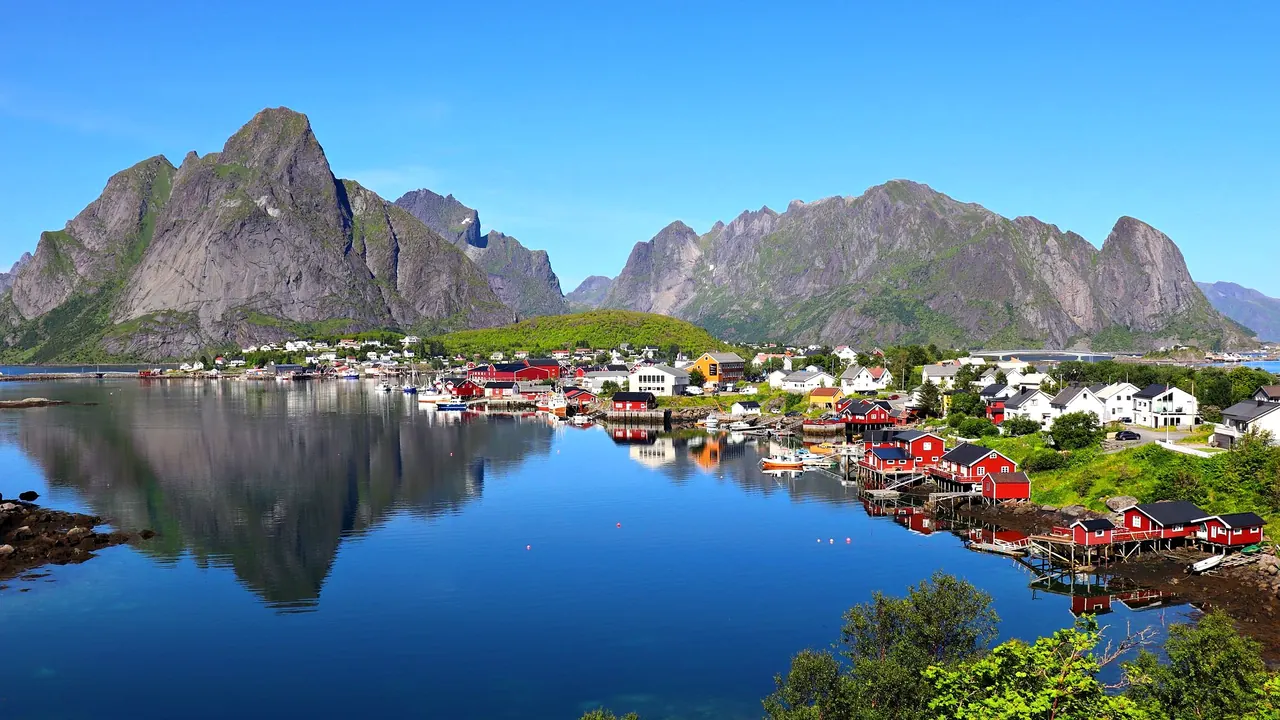
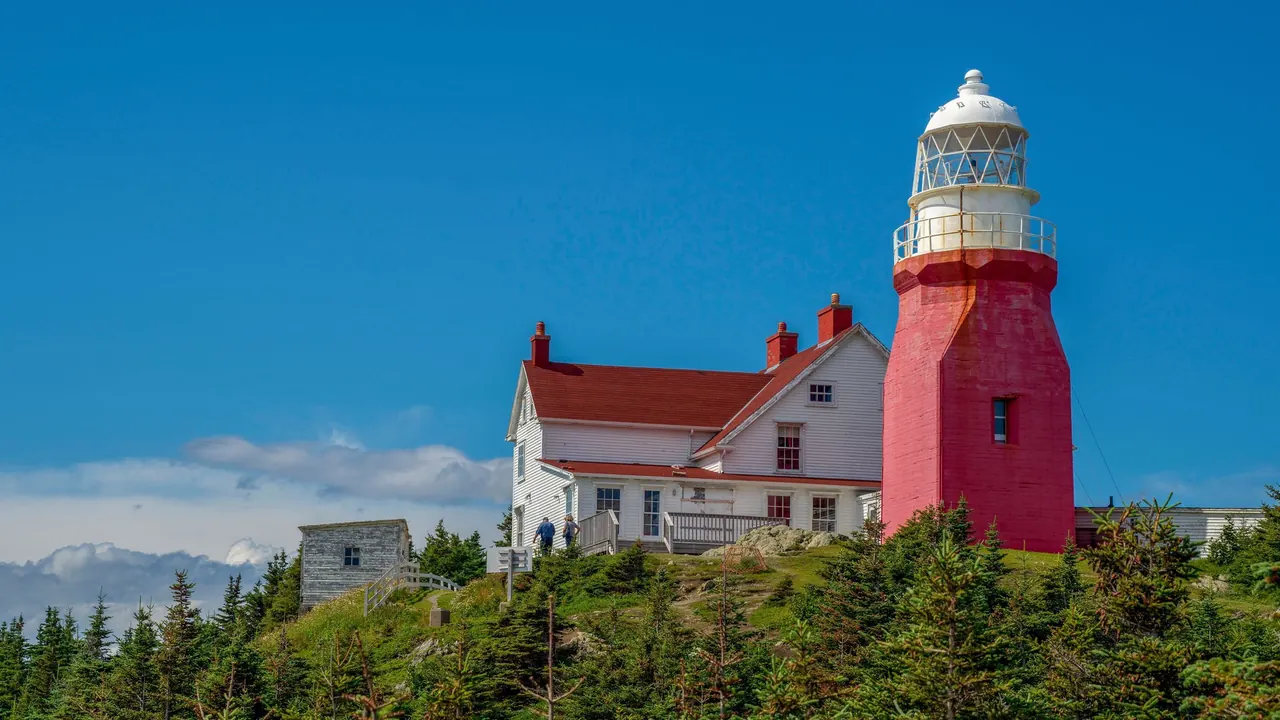
Photos: Lofoten by Mario Vogt, Pexels License; Newfoundland by Hyukman Kwon, Pexels License.
Lofoten or Newfoundland?
Our verdict in twelve categories, each scored against the same fixed benchmark cities, and the climate month by month, so you can choose for your trip.
Choose Lofoten for
- beaches
- nature and the outdoors
- getting around
Lofoten suits travellers who want the landscape to be the whole trip. Granite peaks rise straight out of the sea, short steep hikes give enormous views, and everything sits along a single road you can drive end to end in an afternoon. Come for midnight hikes in early summer or the northern lights in winter, and accept quiet evenings and some of the highest costs anywhere in Europe.
Choose Newfoundland for
- nightlife
- live music and the arts
- prices
Newfoundland is the better pick if you want wild country with a social side. Whales, icebergs, puffins and the fjords of Gros Morne fill the days, and St. John's gives you pubs, fiddle sessions most nights and a kitchen with its own dishes. The island is far bigger and the drives far longer, but it costs less and its evenings are livelier and more varied.
Scoreboard
Twelve categories on one fixed scale from 0 to 100. The shaded stretch is the gap between the two.
Your match
Pick a travel style or drag the sliders, and both match scores follow your weighting.
Wins on beaches and nature and the outdoors with your weighting.
Wins on nightlife and live music and the arts with your weighting.
What matters to you?
Category by category
What the scores mean for a trip.
Beaches & swimming
Lofoten has the better-looking beaches. Haukland, Uttakleiv and Skagsanden have pale sand and turquoise water under the peaks, and they are worth a visit for walks, picnics and a brisk dip, often followed by a sauna.
Newfoundland's sand at Shallow Bay and Sandbanks is fine for walking, but the Labrador Current keeps the sea colder still, and icebergs drift by into early summer. Locals swim in freshwater ponds instead. Neither island works for a beach vacation.
Food & drink
Both islands live on cod, but Newfoundland has more to show for it. It has a full repertoire of its own, from fish and brewis and toutons to Jiggs dinner and bakeapple desserts, and St. John's has a cluster of careful restaurants and craft brewers on Water Street and Duckworth Street.
Lofoten's cooking is excellent at its source: stockfish, klippfisk, cod tongues, and skrei at its best in late winter. Restaurants are few and spread out, though, and many visitors buy fish from the quay and cook it in their cabin.
Culture & sights
Each island has a Norse story. In Lofoten it is the Lofotr longhouse at Borg, and in Newfoundland it is L'Anse aux Meadows, the only confirmed Norse site in North America. Newfoundland goes further beyond that: St. John's adds Signal Hill, the basilica and The Rooms, and Trinity and Ferryland add colonial and fishing-era history, though all of it is spread over long distances.
Lofoten's heritage is compact and almost entirely about the cod fishery. The preserved trading post at Nusfjord, the museums at Å and Vågan Church are enough for a few rainy afternoons.
Nightlife
This is one of the clearest gaps between the two. George Street in St. John's is a whole block of pubs that stays loud into the small hours on summer weekends, and strangers quickly pull you into their round.
In Lofoten, a night out is a drink in a Svolvær harbour pub or on a quay in Henningsvær. There are no clubs and nothing runs late. The real late-night activity is hiking under the midnight sun.
Nature & outdoors
Lofoten has the more concentrated landscape. Granite walls rise straight from the sea, and the hikes, beaches and fishing harbours all sit within a short drive. It also has two distinct seasons: the midnight sun in summer, and in winter the aurora and ski touring.
Newfoundland's outdoors are more about wildlife and scale. You get humpbacks off Witless Bay, gannets at Cape St. Mary's, icebergs, and moose along the roads. Gros Morne adds its fjords and the bare Tablelands, and the East Coast Trail runs for over 300km. These are spread across a huge island and packed into a short summer.
Day trips
Newfoundland has more variety within reach. From St. John's you can drive the Irish Loop to Ferryland or visit Brigus and Cupids, and from other bases you can reach Bonavista's puffins or take a ferry to Fogo Island and its craft life.
Lofoten's outings are mostly drives to the next harbour village. They are lovely, but after a couple they start to feel the same. Beyond the main road there are only the seabird islands of Værøy and Røst, or a long drive up to Vesterålen.
Good for families
The two are broadly level for families, and both are safe and calm. Lofoten is easier to manage: rock pools at Ramberg and Haukland, the Viking museum at Borg with its costumes and boats, the seals and otters in Kabelvåg's small aquarium, and shorter drives between them.
Newfoundland's best moments are bigger: whales beside the boat, puffins and grounded icebergs, plus the Geo Centre and Salmonier Nature Park. The catch is long hours in the car, so stay on the Avalon.
Getting around
Both need a hire car, but Lofoten is much simpler. The E10 links everything by bridge and tunnel, and Svolvær to Å takes about two hours, though the road is narrow and busy with campervans in summer.
Newfoundland's distances are another order. St. John's to Gros Morne takes most of a day, side roads to the outports wind slowly, and moose make night driving risky. Many visitors fly in at one end and out at the other.
Shopping & style
Neither island is a shopping trip, but Newfoundland has a little more. Water Street and Duckworth Street in St. John's have craft shops selling hooked rugs, labradorite jewellery and local prints, and Fogo Island and Twillingate have studios too.
In Lofoten, shopping means galleries in Henningsvær and Svolvær, village glassblowers, wool sweaters and stockfish to take home.
Affordability
Lofoten is by far the heavier bill of the two. Norwegian prices reach every part of the trip, from restaurant meals and alcohol to groceries, fuel and car hire, and because the islands have few rooms, cabins sell out early in both the midnight-sun summer and the aurora winter. The peaks cost nothing to look at, and most rorbuer come with a kitchen, which is how visitors keep the total in check.
In Newfoundland the expensive parts are fewer and easier to plan around. They are rooms in St. John's, Trinity and Rocky Harbour in July and August, car hire that has to be booked well ahead, and boat tours and park fees over a week. From day to day, outport diners and small-village B&Bs keep spending moderate.
Live music & performing arts
Newfoundland is far ahead here, because music is part of everyday life. St. John's has jigs, reels and ballads in pubs most nights, alongside the symphony orchestra and the LSPU Hall's local theatre. Trinity and Cow Head hold summer theatre seasons.
In Lofoten, it is a matter of luck: a summer festival, a concert in a church or an old fish-processing building, or a band in Svolvær now and then.
Wellness & relaxation
Neither has thermal baths or a real spa scene, so both come down to quiet. Lofoten at least has a ritual: wood-fired saunas by the water, some floating in the harbour, with plunges into the cold sea in between.
In Newfoundland, rest means a few foggy, early nights in Trinity, Woody Point or on Fogo Island, where some remote inns are built for exactly that. Spa treatments are limited to a few hotels.
When should you go?
Pick your month. The climate figures are measured averages, not a forecast.
Lofoten in July
Newfoundland in July
Daytime high, °C
Rainfall in the month, mm
Where the figures come from
Lofoten has no rain gauge within 25 km of the centre, so its rainfall comes from a gridded climate dataset read at the destination rather than from a gauge further away.
Newfoundland has no rain gauge within 25 km of the centre, so its rainfall comes from a gridded climate dataset read at the destination rather than from a gauge further away.
Temperature and rainfall are climate normals, averaged over the years shown. Lofoten: 2011-2025 (rainfall 1991-2020) normals, Svolvaer Airport (4.4 km from centre). Newfoundland: 1991-2020 normals, St. John's International Airport (7.3 km from centre).
Neither destination is ever warm enough for a beach day. Lofoten peaks in July at around 17°C, and June is its driest month. From late May to mid July the sun never sets, which suits long hikes. From September the rain builds and the days darken, but that is also when the northern lights season begins, and it runs through the cold, wet winter for anyone who wants it. The sea stays cold all year and only just reaches double figures in high summer.
Newfoundland gets a little warmer in summer, with highs of about 21°C in July, but it is a much wetter island in every month, and in December the rain reaches about 167mm. Its season is shorter and sharper, roughly June to September. Icebergs arrive in late spring, and the whales feed close to shore in June and July. Fog and wind come with the summer. Winter is snowy and largely shut, whereas in Lofoten winter is a second season with its own reason to visit.
Which traveller are you?
On an outdoors trip, Lofoten wins on drama and convenience. Reinebringen, Ryten and Festvågtind are short climbs that start beside the road, the summer brings kayaking and surfing at Unstad, and in winter you can ski tour down to the sea.
For a food and nightlife trip, Newfoundland is the clear choice. St. John's has serious seafood restaurants, craft beer and George Street's pubs, which stay loud late. Lofoten's evenings rarely go beyond a quiet beer on a harbour quay.
On a tight budget, Newfoundland is the easier island to afford. Diner meals, fish and chips and village B&Bs keep costs down, while in Lofoten Norwegian prices apply to food, fuel and rooms, and many visitors end up cooking to cope.
Before you go
| Measure | Lofoten | Newfoundland |
|---|---|---|
| Official language | Norwegian, Nynorsk, Bokmål, Sámi | French, English |
| Currency | Norwegian Krone (NOK) | Canadian Dollar (CAD) |
| Sockets | CF230 V, 50 Hz | AB120 V, 60 Hz |
| Driving side | Right | Right |
| Time zone | UTC+1, UTC+2 in summer | UTC-3:30, UTC-2:30 in summer |
| Emergency number | Police 112, ambulance 113, fire 110 | 911 |
| Main airport | Svolvær Airport, Helle (SVJ)3 non-stop destinations | St. John's International Airport (YYT)22 non-stop destinations |
| Public holidays this year | 13 days | 14 days |
By the numbers
| Measure | Lofoten | Newfoundland |
|---|---|---|
| Population | - | 479,538 |
| Swim season, months above 21 °C | None | None |
Where else could you go?
Every comparison below shares a destination with this one, so you can follow Lofoten or Newfoundland somewhere new.
- Tromsovs Lofoten
- Laplandvs Lofoten
- Prince Edward Islandvs Newfoundland
- Norwegian Fjordsvs Lofoten
- Nova Scotiavs Newfoundland
- Svalbardvs Lofoten