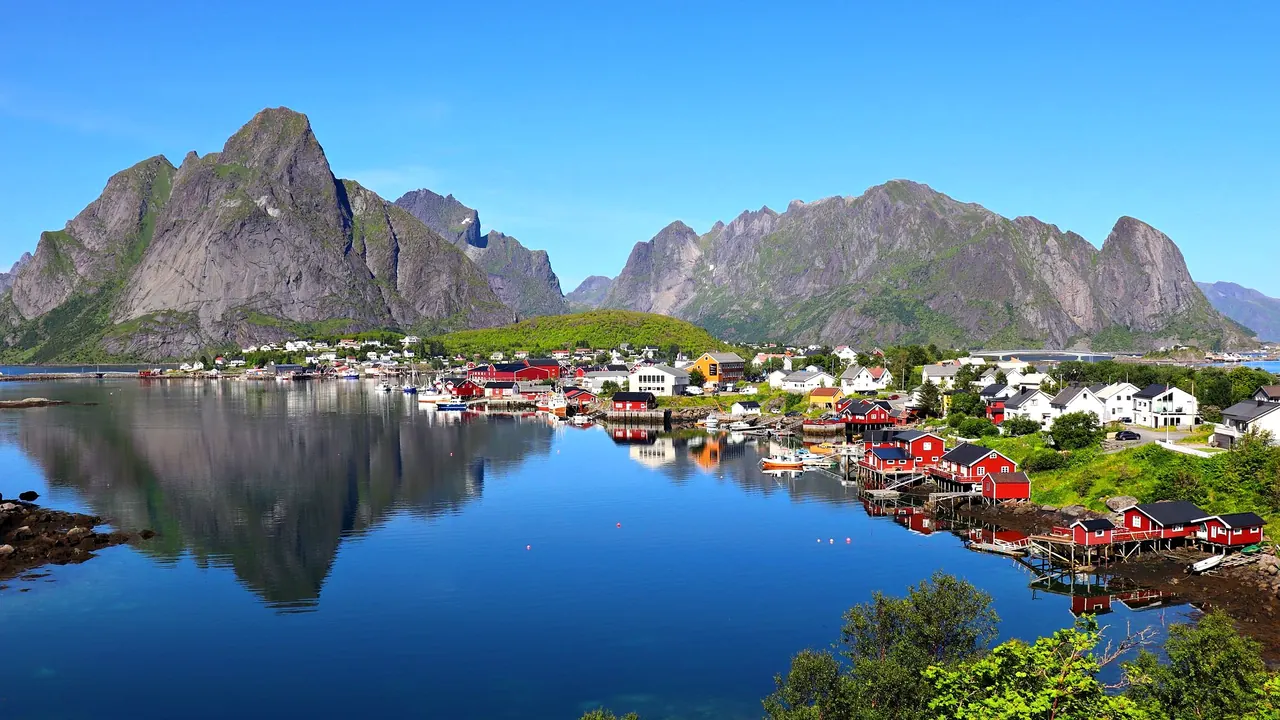
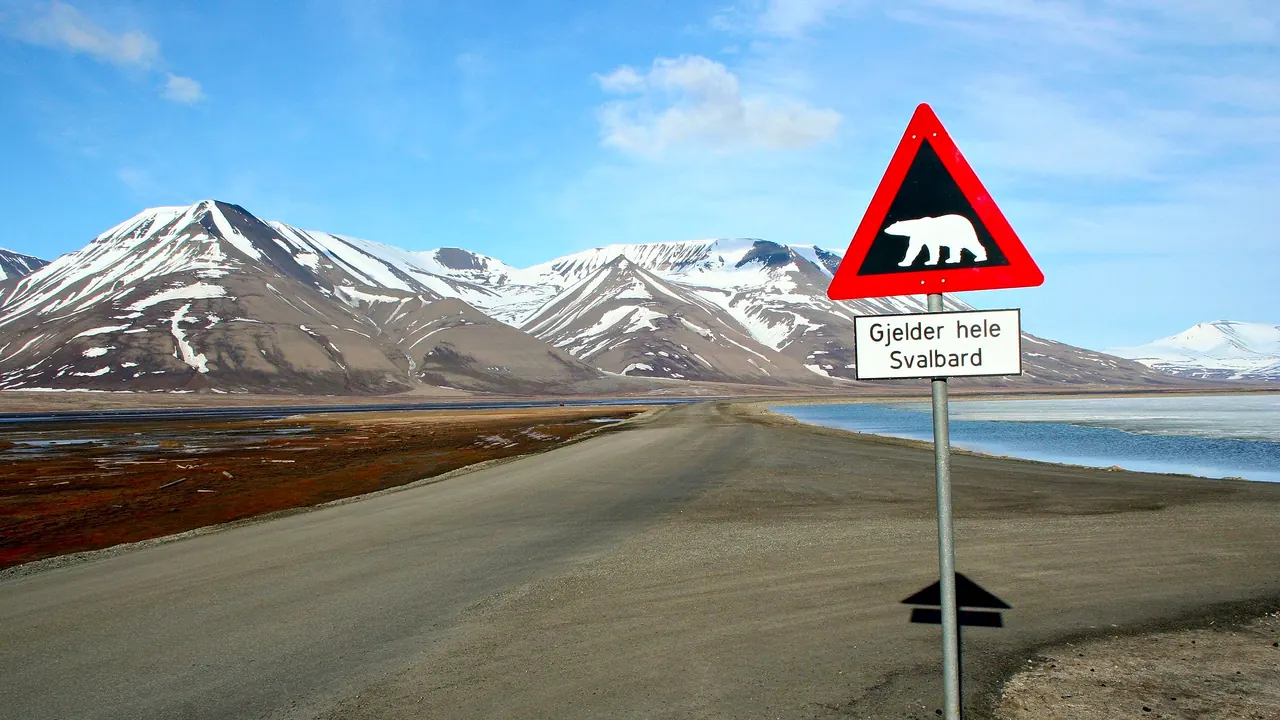
Photos: Lofoten by Mario Vogt, Pexels License; Svalbard by Sprok, CC BY-SA 3.0, cropped.
Lofoten or Svalbard?
Our verdict in twelve categories, each scored against the same fixed benchmark cities, and the climate month by month, so you can choose for your trip.
Choose Lofoten for
- beaches
- culture and sights
- families
Lofoten suits a road trip through mountains and fishing villages that you plan yourself. With a hire car you can stop at whichever beach, trailhead or harbour looks good, sleep in a rorbu cabin over the water and climb a peak straight from the road. It is also the easier of the two with children, and the one with more to do when the weather closes in, thanks to Nusfjord, Å and the Viking longhouse at Borg.
Choose Svalbard for
- day trips
- live music and the arts
- nightlife
Pick Svalbard if what you want is the high Arctic itself: glaciers, sea ice, walrus and the chance of a polar bear, reached by boat, dog sled or snowmobile with a guide. You give up the freedom to wander, the milder weather and most comforts beyond Longyearbyen's main street. In return you get a trip for adults and adventurous teenagers who are happy for every day out to be an organised expedition.
Scoreboard
Twelve categories on one fixed scale from 0 to 100. The shaded stretch is the gap between the two.
Your match
Pick a travel style or drag the sliders, and both match scores follow your weighting.
Wins on beaches and culture and sights with your weighting.
Wins on day trips and live music and the arts with your weighting.
What matters to you?
Category by category
What the scores mean for a trip.
Beaches & swimming
Neither is a beach destination, but Lofoten at least has real beaches. Haukland, Uttakleiv and Skagsanden have pale sand and turquoise water, and they are good for picnics, walks and a bracing dip in a summer sea of roughly 12-15°C.
Svalbard's shores are grey shingle and driftwood, the fjords stay only a few degrees above freezing, and walking along them outside town needs protection against polar bears. Swimming there means a polar plunge off a boat or the indoor pool in Longyearbyen.
Food & drink
Both places eat well for somewhere so remote. The difference lies in what is on the plate and where you find it. Lofoten's cooking is built on cod, fresh and dried, and it is at its best in the late-winter skrei season. Its restaurants are spread across Svolvær, Henningsvær, Reine and the smaller villages, and many visitors buy fish straight off the quay to cook in their own kitchen.
Svalbard's few serious restaurants are all in Longyearbyen. They serve reindeer, seal and king crab alongside char and cod, and one long-established restaurant keeps one of the largest wine cellars in Scandinavia. Outside town, meals are packed lunches on boats or food at expedition lodges.
Culture & sights
Lofoten has more to see on a wet day. The Lofotr Viking Museum at Borg, the preserved trading post at Nusfjord, the fishing and stockfish museums at Å and the wooden Vågan Church at Kabelvåg add up to several afternoons of fishing and Viking history along the island chain.
Svalbard's heritage is exploration, whaling and coal mining. The Svalbard Museum in Longyearbyen tells that story best, the abandoned mine works on the slopes above town are protected monuments, and you can see the Seed Vault from outside. Together they fill about a day.
Nightlife
Both are quiet after dark, and neither has a club. Lofoten's evenings out are spread across the villages, with a beer by the harbour in Svolvær or a drink on a quay in Henningsvær. Svalbard's are all in a few pubs on Longyearbyen's main street, where guides, miners and researchers make for livelier company at weekends in the dark months.
Nature & outdoors
Both are outstanding, and the difference is between dramatic scenery and true wilderness. Lofoten is granite peaks rising straight out of the sea. You can do short, steep hikes such as Reinebringen and Ryten, climbing, sea kayaking and surfing at Unstad on your own, starting from the road.
Svalbard is high-Arctic wilderness with no roads at all, where glaciers break off into the fjords and walrus, foxes and polar bears live along the coasts. You explore it by boat, dog sled or snowmobile with an armed guide, which means less freedom but a remoteness Lofoten cannot match.
Day trips
Lofoten's outings are look-alike harbours, and Svalbard's are Soviet outposts. From Lofoten you drive to the next fishing village, such as Henningsvær, Reine or Hamnøy, each pretty but much like the last. The ferry out to the seabird islands of Værøy and Røst makes the one real change of scene.
Svalbard has fewer places to go, but they are far stranger. Barentsburg is a working Russian mining town, and Pyramiden is a Soviet ghost town left as it was in 1998. Each is several hours away by boat or snowmobile, and the research village of Ny-Ålesund lies further off still.
Good for families
Lofoten is the more workable choice for families. It is safe and uncrowded, children can fish off the quays, and an active family staying in a rorbu cabin can set its own pace. Long drives and changeable weather can wear on younger ones, though.
Svalbard really suits older children. Husky kennels and boat trips to the glaciers make lasting memories, but minimum ages, serious cold and the rule that nobody leaves town without an armed guide rule out much of it for little ones.
Getting around
In Lofoten you hire a car and go where you like along the E10, which takes about two hours from Svolvær to Å. Buses are sparse, so the car matters, and the main nuisances are narrow bridges and crowded trailhead parking in summer.
Svalbard has no roads between its settlements. Longyearbyen is easy to walk and a bus runs to the airport, but every trip beyond the valley is a guided boat, sled, snowmobile or plane, and ice or weather can cancel it at short notice.
Shopping & style
In Lofoten you shop for things made in the islands: paintings and photographs from the galleries in Henningsvær and Svolvær, glass and ceramics from village workshops, and stockfish to take home. Svalbard's shopping is one main street of serious outdoor clothing and polar bear souvenirs. Because it is outside the Norwegian VAT system, it is a sensible place to buy an extra layer you find you need.
Affordability
Lofoten leaves you room to keep costs down. The hiking is free, most cabins come with a kitchen, and you can cook fish bought on the quay instead of eating out or booking tours. Rooms and car hire still cost a lot.
Svalbard gives you no such way out. Almost every day beyond Longyearbyen needs a guide, a boat, a snowmobile or a sled, and you pay for all of that on top of expensive rooms and meals. Tax-free shopping helps only at the edges.
Live music & performing arts
Live performance is thin in both, and it comes at opposite times of year. Lofoten's is a summer affair of small festivals and concerts in churches and old fish-processing buildings. Svalbard's comes in the dark season, with a winter jazz festival and an autumn blues festival as the polar night sets in, plus local choirs and a big band at the culture house.
Wellness & relaxation
Lofoten is the better place to unwind. Its wood-fired saunas by the water give you a proper routine of heat followed by a plunge into the cold sea, and a quiet cabin over the harbour does the rest.
Svalbard is just as silent, but it has less to soak in: an indoor pool in Longyearbyen and saunas at a few hotels and lodges after a cold day out.
When should you go?
Pick your month. The climate figures are measured averages, not a forecast.
Lofoten in July
Svalbard in July
Daytime high, °C
Rainfall in the month, mm
Where the figures come from
Lofoten has no rain gauge within 25 km of the centre, so its rainfall comes from a gridded climate dataset read at the destination rather than from a gauge further away.
Temperature and rainfall are climate normals, averaged over the years shown. Lofoten: 2011-2025 (rainfall 1991-2020) normals, Svolvaer Airport (4.4 km from centre). Svalbard: 1991-2020 normals, Svalbard Lufthavn (5.1 km from centre).
Lofoten is much the milder of the two. Summer is short and cool, with highs of around 17°C in July, and the sea only reaches about 13°C in August, so beach days mean walking and a quick dip rather than lying in the sun. Late spring and early summer are the driest time for hiking. From September the rain builds to around 115mm in October and stays heavy through the dark months, although daytime highs stay above freezing all winter.
Svalbard is far colder but also far drier, with little rain or snow in any month. Even July only reaches about 9°C, and that is the season for boat trips and guided hikes. From late winter into spring, highs sit around -9°C, and that cold, dry stretch is when the dog sledding and snowmobile trips run. Lofoten is the place for comfortable summer walking, and Svalbard for a real Arctic winter.
Which traveller are you?
On a family trip with children, Lofoten is much the easier choice. Sandy bays and rock pools at Ramberg and Haukland, the costumes and boats at Borg and the seals in Kabelvåg's aquarium all suit young children. Svalbard really works only for adventurous teenagers.
For a culture and arts trip, Lofoten gives you more. Its fishing heritage and Viking past are spread along the road, and you can look at local painting and photography in the galleries of Svolvær and Henningsvær. Svalbard's exploration and mining story fills about a day.
For travellers who come to see Arctic wildlife, Svalbard is the place. Reindeer graze between Longyearbyen's houses, and guided boats and sleds take you to walrus colonies and polar bear country. In Lofoten the wildlife is mostly sea eagles overhead and the whale trips that run from further north.
Before you go
| Measure | Lofoten | Svalbard |
|---|---|---|
| Official language | Norwegian, Nynorsk, Bokmål, Sámi | Norwegian, Nynorsk, Bokmål, Sámi |
| Currency | Norwegian Krone (NOK) | Norwegian Krone (NOK) |
| Sockets | CF230 V, 50 Hz | CF230 V, 50 Hz |
| Driving side | Right | Right |
| Time zone | UTC+1, UTC+2 in summer | UTC+1, UTC+2 in summer |
| Emergency number | Police 112, ambulance 113, fire 110 | Police 112, ambulance 113, fire 110 |
| Main airport | Svolvær Airport, Helle (SVJ)3 non-stop destinations | Svalbard Airport, Longyear (LYR)3 non-stop destinations |
| Public holidays this year | 13 days | 13 days |
By the numbers
| Measure | Lofoten | Svalbard |
|---|---|---|
| Population | - | 2,668 |
| Swim season, months above 21 °C | None | - |
Where else could you go?
Every comparison below shares a destination with this one, so you can follow Lofoten or Svalbard somewhere new.
- Tromsovs Lofoten
- Laplandvs Lofoten
- Norwegian Fjordsvs Lofoten
- Tromsovs Svalbard
- Orkneyvs Lofoten
- Laplandvs Svalbard