Photos: Lapland by Petr Vodička, CC BY-SA 4.0, cropped; Lofoten by Mario Vogt, Pexels License.
Lapland or Lofoten?
Our verdict in twelve categories, each scored against the same fixed benchmark cities, and the climate month by month, so you can choose for your trip.
Choose Lapland for
- wellness
- families
- nightlife
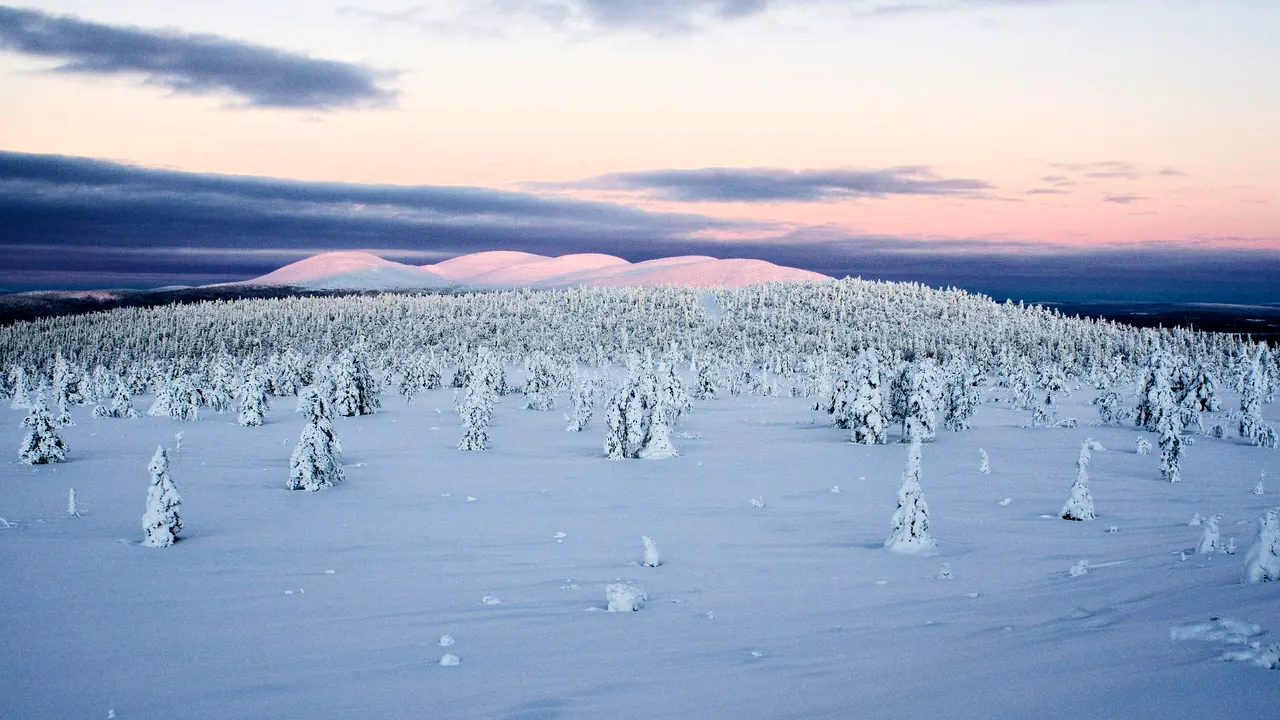
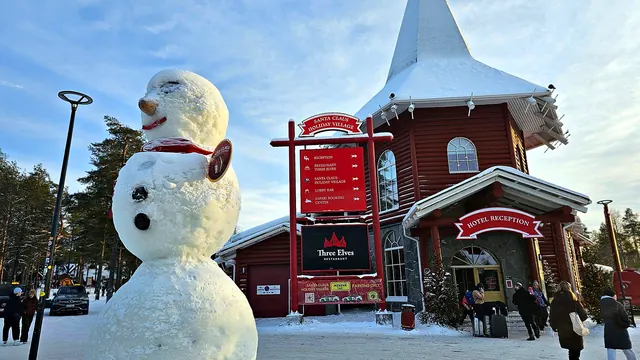
Lapland suits a winter trip built around snow, saunas and children. Its resorts at Levi, Ylläs and Saariselkä run on husky and reindeer rides, groomed ski trails and cabins that each have a sauna. Santa Claus Village and Ranua Wildlife Park make it the obvious choice for a Christmas trip with young children. It also has the livelier evenings, with Levi's après-ski bars, and moving around is easier: you fly to one base and stay there.
Choose Lofoten for
- beaches
- culture and sights
- nature and the outdoors
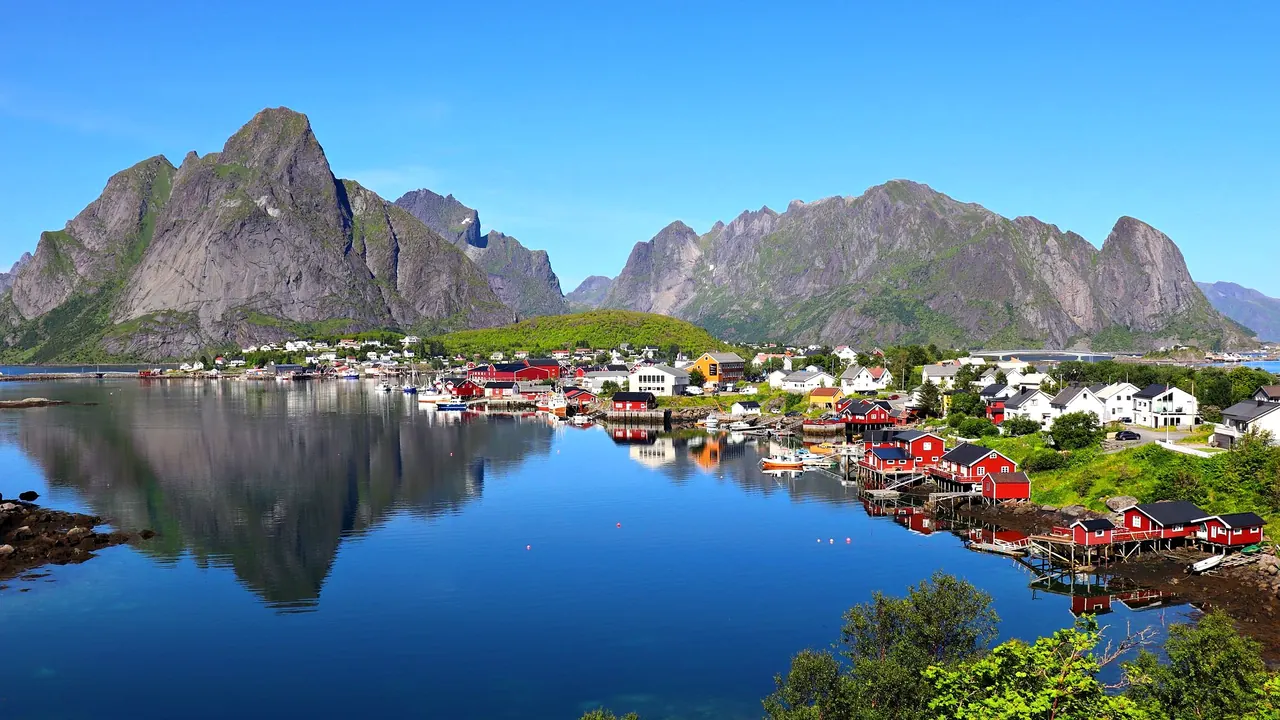
Lofoten is for travellers who come for the landscape and little else. Granite peaks rise straight out of the sea above white bays and red fishing cabins, and short, steep hikes give views that few places in Europe can match. Everything is spread along one road, so you need a hire car, prices run even higher than in Finland, and evenings are quiet. In return you get midnight-sun ridges, sea kayaking and fishing villages such as Nusfjord and Å.
Scoreboard
Twelve categories on one fixed scale from 0 to 100. The shaded stretch is the gap between the two.
Your match
Pick a travel style or drag the sliders, and both match scores follow your weighting.
Wins on wellness and families with your weighting.
Wins on beaches and culture and sights with your weighting.
What matters to you?
Category by category
What the scores mean for a trip.
Beaches & swimming
Neither is a beach destination, but Lofoten at least has beaches worth seeing. Haukland, Uttakleiv, Ramberg and Kvalvika have pale sand and turquoise water under the peaks. The sea there stays cold, so a swim is a quick plunge, and the sand is better for picnics and photographs.
In Lapland, summer swimming means a lake or river bank on the Ounasjoki or around Inari, in water that is slightly warmer but far less striking. The dip most visitors remember is the one through the ice after a sauna.
Food & drink
The food is broadly level, and both kitchens rely on what the land and water give them. Lapland cooks with the forest and the fells: sautéed reindeer with lingonberries, fire-flamed salmon, cloudberries and squeaky baked cheese, plus Sámi smoked meats around Inari. Most of it is eaten at a resort or a campfire on safari.
Lofoten is all about cod. You can eat stockfish, klippfisk, fish soup and cod tongues, and the fish is at its best in the late-winter skrei season. Places to eat are scattered across the villages, so many visitors simply buy fish off the quay and cook it in their cabin.
Culture & sights
Lofoten has the slightly richer heritage, and it sits where it began, in the harbours. The rorbuer on stilts, the preserved trading post at Nusfjord, the fishing museums at Å and the reconstructed chieftain's longhouse at Borg tell one clear story of cod and Vikings.
Lapland's past was largely burned away in 1944, so its culture lives in museums. Siida in Inari explains Sámi life, and the Arktikum in Rovaniemi covers the Arctic, which sits among Alvar Aalto's rebuilt civic buildings. Both destinations make good rainy-day material rather than a reason to travel.
Nightlife
Lapland has a real night out, but only in its ski resorts. Levi fills with Finnish skiers from late winter to Easter, and its après-ski bars and a few clubs stay loud late. Rovaniemi has student pubs.
Lofoten has nothing like this. A beer on a harbourside in Svolvær or Henningsvær is as far as it goes, and the late-night activity is a ridge walk under the midnight sun.
Nature & outdoors
Both are outstanding, and Lofoten edges ahead on sheer drama. Its jagged granite wall rises straight from the sea, and short climbs like Reinebringen or Ryten look down on fjords and white bays. Kayaking, climbing, surfing and ski touring down to the shore all add variety.
Lapland's appeal is space rather than spectacle: rounded fells, endless forest and the big national parks of Pallas-Yllästunturi and Urho Kekkonen. Winter there is drier and deeper, with hundreds of kilometres of groomed trails and husky sledding. Kilpisjärvi's Saana fell has the sharpest scenery.
Day trips
Lofoten offers a little more to fill a day. You can drive along the E10 to Henningsvær, Kabelvåg, Reine or Hamnøy, or take a ferry out to the seabird islands of Værøy and Røst. After a few villages, though, the pattern of harbour, cabins and fish racks repeats.
Lapland's outings are fewer and further apart. From Rovaniemi you can ride an icebreaker off Kemi or walk across the border to Haparanda in Sweden. From Saariselkä, Inari is close by. Beyond that, the towns are hours from each other.
Good for families
Lapland is much the stronger choice with children. Santa Claus Village, the cave theme park and Ranua's Arctic animals fill several days, and the resorts add beginner slopes, ski schools and cabins with saunas. The main drawback is the deep cold and short daylight of December.
Lofoten works for an active family happy to go slowly. Rock pools at Ramberg, fishing off the quays and the Viking longhouse at Borg keep children busy, but there is little else built for them.
Getting around
Lapland is the easier of the two, because each resort has its own airport a short transfer away. The overnight train from Helsinki is another way in, and safaris pick you up from your lodging. Touring between areas means long drives on winter roads, so most people pick one base and stay there.
Lofoten more or less requires a hire car, since buses are sparse and the sights are spread along the narrow E10. The road has single-lane bridges and crowded trailhead parking, and getting to the islands by plane or ferry takes some planning.
Shopping & style
Neither is a place to shop. The best buys in each reflect the place. In Lapland, look for Sámi duodji in antler, leather and silver around Inari, along with puukko knives. In Lofoten, the galleries in Henningsvær and Svolvær sell paintings and photography, alongside local glass, ceramics and stockfish.
Affordability
Both are costly. Lapland is the less painful of the two, especially in late winter or summer rather than at Christmas. Cooking in a rented cabin and skiing the free trails help keep costs down, although safaris add up fast.
Lofoten charges Norwegian prices for everything from fuel to car hire, and rooms are scarce and sell out early in high season. The saving grace is that its main attraction, the hiking, costs nothing.
Live music & performing arts
Both are thin on live performance, but what they offer differs. Lapland has the Lapland Chamber Orchestra's season in Rovaniemi and yoik at Inari's Sámi music festival. Lofoten has small summer festivals and concerts held in churches and old fish-processing buildings.
Wellness & relaxation
Lapland is the place for this. Almost every cabin has its own sauna, and lakeside smoke saunas, ice-hole dips and spa hotels in Levi and Saariselkä make heat and rest the centre of the stay. The silence of the snow does the rest.
Lofoten's version is simpler: a wood-fired sauna by the harbour, a plunge into the cold sea and a quiet rorbu over the water. It is restful, but most days there go on hiking rather than unwinding.
When should you go?
Pick your month. The climate figures are measured averages, not a forecast.
Lapland in July
Lofoten in July
Daytime high, °C
Rainfall in the month, mm
Where the figures come from
Lapland has no rain gauge within 25 km of the centre, so its rainfall comes from a gridded climate dataset read at the destination rather than from a gauge further away.
Lofoten has no rain gauge within 25 km of the centre, so its rainfall comes from a gridded climate dataset read at the destination rather than from a gauge further away.
Temperature and rainfall are climate normals, averaged over the years shown. Lapland: 2008-2020 (rainfall 1991-2020) normals, Rovaniemi Rautatieasema / Kuusela (0.6 km from centre). Lofoten: 2011-2025 (rainfall 1991-2020) normals, Svolvaer Airport (4.4 km from centre).
These are two different climates. Inland Lapland has a hard continental winter, with daytime highs around -8°C in January and snow from November to April. That is the season for sledding, skiing and the aurora, but the cold and the darkness are tough on small children. Summer is short and warm, reaching about 21°C in July, and this is also the wettest stretch of the year. Early September, with the ruska colours, is the best time for walking.
Lofoten sits on the Gulf Stream, so its winters are far milder, hovering just above freezing, and its summers are cooler, peaking around 17°C in July. The wet season runs from autumn into winter, with about 115mm falling in October, while late spring and early summer are the driest months. The sea warms to only about 13°C in August, so you can take a dip but not a long swim. June to August is the best time for hiking, and from late winter on the peaks can be skied.
Which traveller are you?
On a family trip with young children, choose Lapland. It is set up for a Christmas visit, with Santa Claus Village, Ranua's bears, husky rides, sledging and gentle ski slopes. In Lofoten, children spend long hours in the car, and the famous hikes are too steep for small legs.
For a relaxing and wellness trip, Lapland is the better choice. Almost every cabin has its own sauna, there are lakeside smoke saunas and ice-hole dips, and Levi and Saariselkä have spa hotels. Lofoten is calm too, but beyond a few waterside saunas it has little bathing culture.
On an outdoors trip, Lofoten has the edge if you want drama: peaks above the sea, midnight-sun ridge walks, kayaking among the skerries and surfing at Unstad. Lapland is the place for wide wilderness on skis, snowshoes or a dog sled.
Before you go
| Measure | Lapland | Lofoten |
|---|---|---|
| Official language | Finnish, Swedish | Norwegian, Nynorsk, Bokmål, Sámi |
| Currency | Euro (EUR) | Norwegian Krone (NOK) |
| Sockets | CF230 V, 50 Hz | CF230 V, 50 Hz |
| Driving side | Right | Right |
| Time zone | UTC+2, UTC+3 in summer | UTC+1, UTC+2 in summer |
| Emergency number | 112 | Police 112, ambulance 113, fire 110 |
| Main airport | Rovaniemi Airport (RVN)44 non-stop destinations | Svolvær Airport, Helle (SVJ)3 non-stop destinations |
| Public holidays this year | 15 days | 13 days |
By the numbers
| Measure | Lapland | Lofoten |
|---|---|---|
| Population | 176,215 | - |
| Swim season, months above 21 °C | - | None |
Where else could you go?
Every comparison below shares a destination with this one, so you can follow Lapland or Lofoten somewhere new.
- Tromsovs Lofoten
- Tromsovs Lapland
- Norwegian Fjordsvs Lofoten
- Norwegian Fjordsvs Lapland
- Isle of Skyevs Lofoten
- Reykjavikvs Lapland