Finland
Rovaniemi
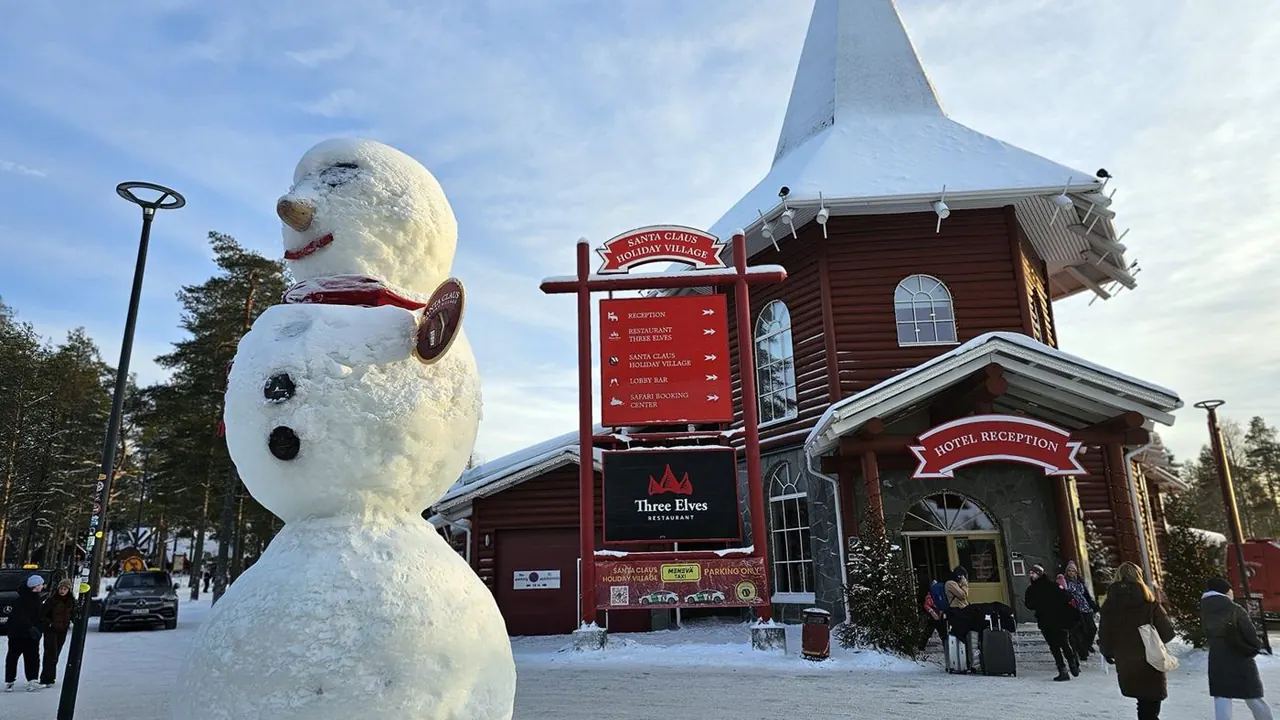
Santa Claus Village in winter
- Nature & outdoors78
- Families72
- Wellness & relaxation60
Photo: Moskenes, CC BY-SA 4.0, cropped
Match
32
Every category weighted equally
- Beach & sun32
- Culture & arts27
- Food & nightlife24
- Family trip37
- Outdoors36
- Relax & unwind36
- Shopping & style29
- On a budget30
Rovaniemi in twelve categories
Our verdict on each, scored 0 to 100 against the same fixed benchmark cities, so a score means the same thing on every page.
Beaches & swimming. Scores 10 out of 100.
Food & drink. Scores 25 out of 100.
Culture & sights. Scores 22 out of 100.
Nightlife. Scores 15 out of 100.
Nature & outdoors. Scores 78 out of 100.
Day trips. Scores 8 out of 100.
Good for families. Scores 72 out of 100.
Getting around. Scores 36 out of 100.
Shopping & style. Scores 18 out of 100.
Affordability. Scores 18 out of 100.
Live music & performing arts. Scores 22 out of 100.
Wellness & relaxation. Scores 60 out of 100.
Rovaniemi category by category
Beaches & swimming
10Rovaniemi is not a beach destination. There are small sandy river shores along the Kemijoki and Ounasjoki and lakes in the surrounding forest, and in a warm July the shallow water can reach about 18°C, so a summer dip is possible for a few weeks. For most of the year the water is frozen or close to it, and the local way into it is a plunge through a hole in the ice after a sauna rather than an afternoon on the sand.
Food & drink
25Eating here is built around a short list of Lappish ingredients: sautéed reindeer with mashed potato and lingonberries, Arctic char and salmon from northern waters, cloudberries, bilberries and the squeaky baked cheese served warm with jam. A handful of restaurants in the centre cook these well, some with real care for local produce, and a meal in a log cabin or Lappish tent is part of many tours.
Beyond that, the range is narrow. Much of what is on offer is hotel dining and pizza or burger places, and the town has no market hall, street-food culture or café scene to explore. Food is something to enjoy along the way, not a reason to come.
Culture & sights
22The town was almost entirely burned in 1944, so there is no old quarter to wander. What it has instead is a compact modern centre laid out by Alvar Aalto in the shape of a reindeer's head and antlers, with his library, city hall and Lappia Hall grouped together as one of the clearer sets of his civic architecture.
The main sight is Arktikum, a long glass gallery reaching towards the river, which explains Arctic nature, the Sámi and the history of Lapland and is genuinely worth a few hours. Korundi, a contemporary art museum in a brick post-bus depot, and the Pilke science centre on northern forests round out a modest list that fills a day at most.
Nightlife
15Going out is a small-town affair. A few pubs, a couple of hotel bars and one or two nightclubs sit around the main streets of the centre, livelier on Friday and Saturday when the university students are in term. On weekday nights the town is quiet early, and in winter many visitors spend the evening out in the dark watching for the northern lights rather than in a bar.
Nature & outdoors
78Nature is the reason to come, and it changes completely with the seasons. From late autumn to spring the town sits in snow-covered taiga on the Arctic Circle, and the days are spent on husky and reindeer sledding, snowmobile and snowshoe trips, cross-country skiing and, on clear nights, watching the northern lights over frozen rivers and lakes. Ounasvaara, a forested fell on the edge of town, has ski slopes, trails and views over the confluence of the two rivers.
In summer the light never fully fades, and the forest opens up for hiking, canoeing, fishing and berry picking. The Korouoma canyon and the rounded fells of Pyhä-Luosto national park are within about two hours. The landscape is gentle rather than dramatic, and midwinter cold can fall well below -20°C.
Day trips
8There is very little to visit as a separate day out. The surrounding country is forest, rivers and small villages, and the trips on offer are activities in that landscape rather than visits to other places. Kemi and Tornio on the Gulf of Bothnia, with the Swedish border town of Haparanda alongside, are about an hour and a half away, but they are small, ordinary towns. Plan to use Rovaniemi for what is around it, not as a base for touring.
Good for families
72For families with young children this is the home of Santa Claus, and the town is organised around it. Santa Claus Village straddles the Arctic Circle just north of town, with Santa's office, his post office and elf workshops, and a Christmas-themed theme park built into a cave nearby. Husky rides, reindeer sleighs, sledging and snow play are easy to arrange, and the Arctic zoo at Ranua, about an hour south, has polar bears, lynx and wolverines.
The town itself is small, safe and calm. The difficulties are the climate and the light: in December the sun barely rises and temperatures can drop sharply, so children need proper gear and short outings. Outside the Christmas period much of the magic is quieter.
Getting around
36The centre is small and easy to walk, with hotels, restaurants and Arktikum all close together, and the airport is a short ride out of town. Santa Claus Village, about 8km north, is reached by a local bus or a taxi. Beyond that, public transport is thin. Most of what visitors come for, from husky and snowmobile trips to aurora outings, is run by tour operators who collect guests from their hotels, and a hired car is the practical way to reach the fells, the zoo at Ranua or the lakes on your own. In winter, packed snow and ice on the pavements call for good boots, and some people add slip-on grips.
Shopping & style
18Shopping is mostly souvenirs and practical gear. Santa Claus Village has a run of gift shops selling Christmas decorations, reindeer hides and Arctic trinkets, and the centre has a small pedestrian street, a couple of shopping centres and outdoor shops for thermal clothing. The most worthwhile buys are traditional Lappish crafts: puukko knives, carved birch cups and Sámi-made handicrafts in silver, leather and textile. Nobody comes here to shop.
Affordability
18This is an expensive place to visit. Eating out and drinking follow Nordic price levels, and the experiences most people come for, husky safaris, snowmobile trips, reindeer rides and aurora tours, are all guided and priced accordingly. Rooms, especially glass-roofed cabins and lodges, are in high demand around Christmas, when the town fills up. Summer and early autumn are noticeably easier on the budget, and supermarkets and self-catering cabins help keep costs down.
Live music & performing arts
22The performing arts are modest but real. The Lapland Chamber Orchestra, the world's northernmost professional orchestra, gives concerts in a hall inside the Korundi building, and the regional theatre plays in Aalto's Lappia Hall, though almost entirely in Finnish. Beyond that there are occasional touring concerts and small gigs, so a visitor should treat an evening performance as a lucky find rather than a plan.
Wellness & relaxation
60Sauna is the heart of it. Saunas come as standard in cottages, lodges and many hotel suites, and most hotels have a shared one for guests. The Finnish ritual of heating up, cooling off in the open air and going back in is part of daily life here, not a spa treatment. A wood-heated or smoke sauna in a lakeside cabin outside town is a classic evening out, slower and more communal than anything a hotel offers.
Outside the Christmas rush the town is quiet, and the long blue twilight of winter or the light that never fades in summer slows a stay right down. There are no grand public bathhouses and only a small spa scene, so this suits people who want simple, deeply rooted bathing rather than pampering.
When should you go?
Pick a month to see what it is like. The climate figures are measured averages, not a forecast.
Rovaniemi in July
Daytime high, °C
Rainfall in the month, mm
The whole year
Shaded against this city’s own year: the deepest cell is its best month for that figure and the palest its weakest.
Where the figures come from
Rovaniemi has no rain gauge within 25 km of the centre, so its rainfall comes from a gridded climate dataset read at the city rather than from a gauge further away.
Temperature and rainfall are climate normals, averaged over the years shown. Rovaniemi: 2008-2020 (rainfall 1991-2020) normals, Rovaniemi Rautatieasema / Kuusela (0.6 km from centre).
Before you go
| Measure | Rovaniemi |
|---|---|
| Official language | Finnish, Swedish |
| Currency | Euro (EUR) |
| Sockets | CF230 V, 50 Hz |
| Driving side | Right |
| Time zone | UTC+2, UTC+3 in summer |
| Emergency number | 112 |
| Elevation | 88 m |
| Main airport | Rovaniemi Airport (RVN)8 km from centre44 non-stop destinations |
| Public holidays this year | 15 days |
By the numbers
| Measure | Rovaniemi |
|---|---|
| City population | 65,329 |
| People per km² | 9 |
| Museums within 10 km | 6 |
| UNESCO World Heritage sites within 50 km | 0 |
Compare Rovaniemi with
Every comparison with a written verdict behind it.