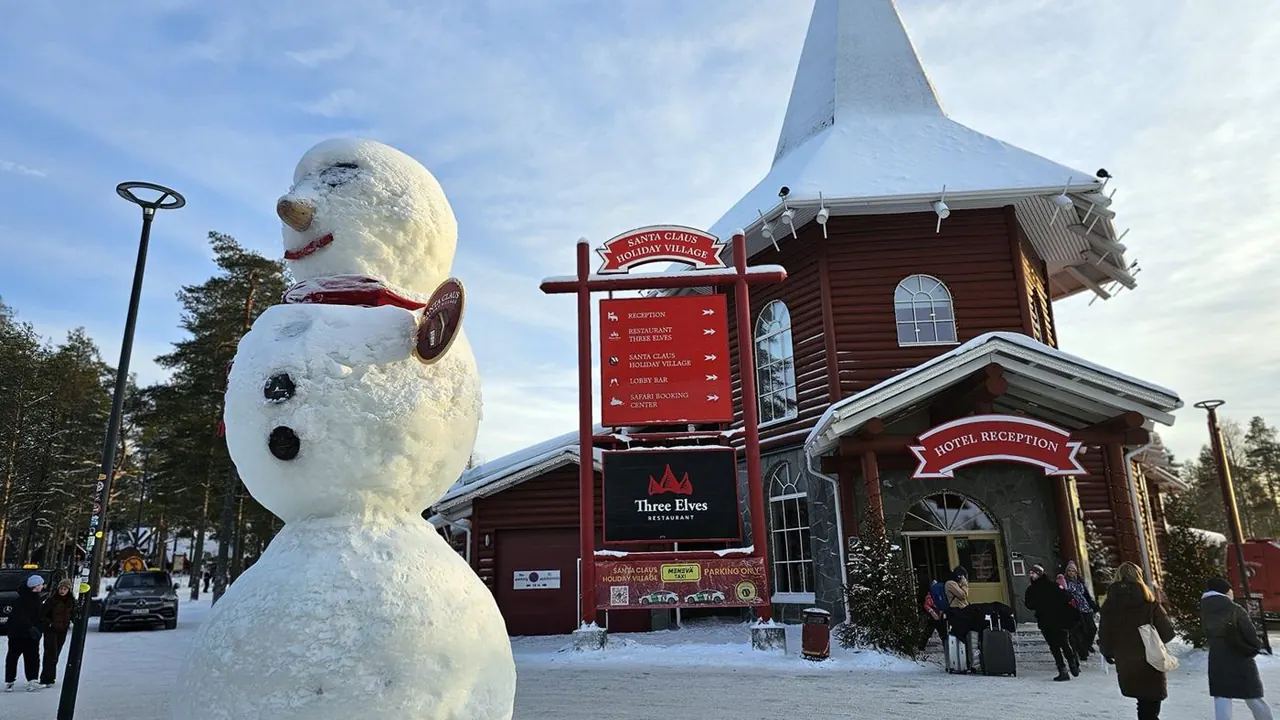
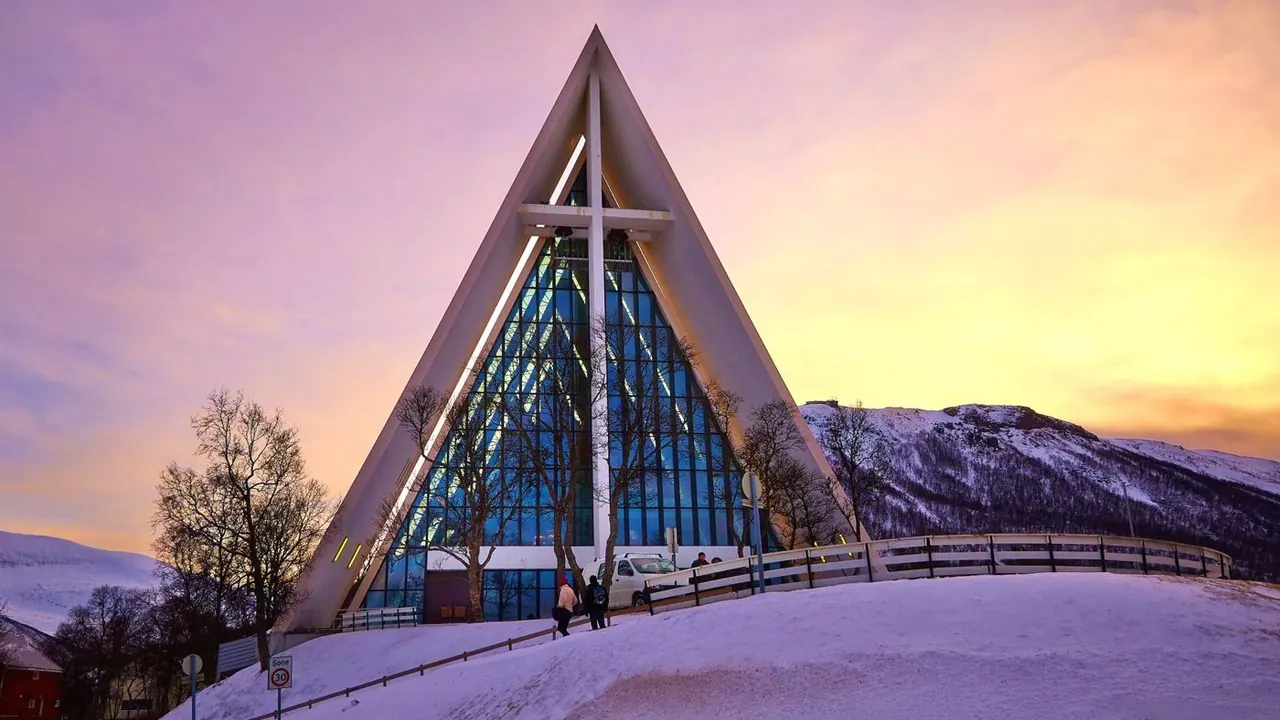
Photos: Rovaniemi by Moskenes, CC BY-SA 4.0, cropped; Tromso by Moyan Brenn, CC BY 2.0, cropped.
Rovaniemi or Tromso?
Our verdict in twelve categories, each scored against the same fixed benchmark cities, and the climate month by month, so you can choose for your trip.
Choose Rovaniemi for
- families
- wellness
- prices
Rovaniemi suits a winter family trip built around Santa Claus Village, husky and reindeer sledding and play in the snow. It also suits adults who want a slow stay of wood-heated saunas in lakeside cabins and long blue twilight. The country around it is gentle taiga rather than mountains, the winter is colder and drier, and the town is a little easier on the wallet than its Norwegian neighbour, though neither is cheap.
Choose Tromso for
- getting around
- nightlife
- nature and the outdoors
Tromso is the pick for scenery and evenings out. Steep peaks ring the island, whales feed in the winter fjords and the Lyngen Alps are within reach, so hikers, aurora hunters and anyone who wants a view from a cable-car ridge will get more here. Back in town there are seafood tables on the harbour, a real weekend bar scene, concerts and festivals, and a centre where a short walk or a bus gets you to most places.
Scoreboard
Twelve categories on one fixed scale from 0 to 100. The shaded stretch is the gap between the two.
Your match
Pick a travel style or drag the sliders, and both match scores follow your weighting.
Wins on families and wellness with your weighting.
Wins on getting around and nightlife with your weighting.
What matters to you?
Category by category
What the scores mean for a trip.
Beaches & swimming
Neither is a place for a beach vacation, and the difference lies in the water itself. Rovaniemi's small sandy shores are on rivers and forest lakes, which warm to about 18°C in a good July and allow a proper swim for a few weeks.
Tromso's beaches face the Arctic sea, which barely reaches 10°C, so Telegrafbukta or the white sand of Sommaroy are for looking at and a quick, gasping dip. In both places the most natural way into cold water is straight out of a sauna.
Food & drink
Tromso eats better, largely because it is a harbour town. It has skrei cod in late winter, king crab, halibut and fish soup served along the old wooden quays, plus a brewery dating from the nineteenth century and serious coffee.
Rovaniemi's table is narrower: a short list of Lappish classics such as sautéed reindeer, Arctic char and warm baked cheese with cloudberries, cooked well in a few central restaurants or served in a tent on a tour. Neither town has street food or much cheap eating, but in Tromso dinner can be the best part of an evening, while in Rovaniemi it is mostly fuel between excursions.
Culture & sights
Neither town has much of an old quarter, and the sights in either take a day or two at most, but what you see differs in kind. Rovaniemi is about modern design: after the town burned in 1944, Alvar Aalto laid out its civic centre with his library, city hall and Lappia Hall, and the glass gallery of Arktikum makes a fine few hours on Arctic nature and the Sámi.
Tromso offers a landmark and a story instead. There is the white, triangular Arctic Cathedral across the bridge, the Polar Museum on Amundsen and Nansen and the Arctic trappers, and a few streets of painted wooden houses from the nineteenth century.
Nightlife
Tromso is the place for a night out. Students and the long dark keep Storgata and the streets around the harbour busy at weekends, with cocktail bars and dance floors open late, and in summer the midnight sun makes those nights feel endless.
Rovaniemi goes quiet early except on Fridays and Saturdays in term time, with a few pubs, hotel bars and a club or two. Many of its winter visitors spend the evening outside watching for the aurora instead.
Nature & outdoors
Both towns exist for the outdoors, but Tromso's setting is more dramatic. Its island is ringed by steep mountains, and the cable car puts you on a ridge above the fjords within minutes. In winter you can see orcas and humpbacks or go ski touring in the Lyngen Alps, and summer brings midnight-sun climbs and the wild coast of Senja.
Rovaniemi offers gentler country: snowbound taiga, frozen rivers and the forested fell of Ounasvaara. It has the classic Lapland mix of husky and reindeer sledding, snowmobiling and cross-country skiing in winter, and canoeing and berry picking in summer. Its bigger landscapes, Korouoma canyon and the Pyhä-Luosto fells, are about two hours away.
Day trips
From Rovaniemi, the nearest change of scene is Kemi and Tornio on the Gulf of Bothnia, with Haparanda just over the Swedish border. They are about an hour and a half away and are fairly ordinary towns, so the forest and rivers around Rovaniemi are a better use of a day.
Tromso has a little more to aim for along its coast. The fishing village of Sommaroy sits among skerries about an hour out, and the old trading post and church at Hillesoy and the hamlets of Kvaloya give a scenic drive somewhere to stop. Still, most people's longer outings from here are fjord or aurora trips rather than visits to other towns.
Good for families
For children, Rovaniemi is the clear choice, because it is Santa's home town. It has Santa Claus Village on the Arctic Circle with his post office and elf workshops, a Christmas theme park in a cave, and the polar bears and wolverines at Ranua's Arctic zoo. Husky rides, reindeer sleighs and sledging are easy to arrange.
Tromso is safe and relaxed with children, and the bearded seals at Polaria fill a morning, but little else is aimed at young visitors and aurora tours run late into the night. Both towns have very short days in midwinter. Rovaniemi's deeper cold calls for more layers, while Tromso's wet weather calls for waterproofs.
Getting around
Tromso is easier to manage without a car. You can cross its centre on foot in a quarter of an hour, local buses run to the airport and the mainland, and the walk over the long bridge to the Arctic Cathedral is an outing in itself, though the streets above the harbour are steep and icy in winter.
Rovaniemi's centre is just as compact, but Santa Claus Village, about 8km north, needs a bus or a taxi, and the zoo, fells and lakes realistically need a hire car. In both towns, hotel pick-ups for organised trips do most of the work.
Shopping & style
Rovaniemi's souvenirs come with a Christmas theme. Santa Claus Village has a row of gift shops selling decorations, reindeer hides and Arctic trinkets, and the better buys are Lappish crafts such as puukko knives, carved birch cups and Sámi silverwork. Tromso's Storgata is where to find Norwegian knitwear, Sámi crafts and aurora prints alongside the usual trolls. Each town also has outdoor shops worth visiting for thermal layers, and very little else to tempt a shopper.
Affordability
Both are expensive, and the guided husky, snowmobile and aurora excursions drive up the bill in each. Rovaniemi is the somewhat lighter of the two, especially in summer and early autumn, though its glass-roofed cabins are in heavy demand at Christmas.
In Tromso, restaurant meals, drinks and whale safaris add up quickly, and hunting the aurora yourself from the hills above town is one of the few real savings. In either town, supermarkets and self-catering are the way to stretch a budget.
Live music & performing arts
Rovaniemi's best evening out is a concert by the Lapland Chamber Orchestra, the world's northernmost professional orchestra, which plays in its hall inside the Korundi building. The regional theatre in Aalto's Lappia Hall performs almost entirely in Finnish, and otherwise there are only occasional touring gigs, so catching a performance is a matter of luck rather than planning.
Tromso gives you more to plan an evening around. The Arctic Philharmonic plays through the season, the Northern Lights Festival brings classical and contemporary music in the depths of winter, the international film festival fills the cinemas each January, and summer has midnight concerts in the Arctic Cathedral. The Halogaland Theatre works mostly in Norwegian, so here too music is the safer choice for visitors.
Wellness & relaxation
Rovaniemi is the better place to unwind. Sauna is part of daily life there, built into cottages, lodges and many hotel suites, and a wood-heated or smoke sauna by a lake outside town makes for a slow, communal evening. Outside the Christmas rush, the quiet town and long twilight do the rest.
Tromso's signature is a floating sauna in the harbour with a plunge into the fjord and snowy peaks across the water, plus a large public swimming hall for dark afternoons. A stay full of late aurora tours and early whale trips leaves less room to slow down, and neither town has much of a spa scene.
When should you go?
Pick your month. The climate figures are measured averages, not a forecast.
Rovaniemi in July
Tromso in July
Daytime high, °C
Rainfall in the month, mm
Where the figures come from
Rovaniemi has no rain gauge within 25 km of the centre, so its rainfall comes from a gridded climate dataset read at the city rather than from a gauge further away.
Temperature and rainfall are climate normals, averaged over the years shown. Rovaniemi: 2008-2020 (rainfall 1991-2020) normals, Rovaniemi Rautatieasema / Kuusela (0.6 km from centre). Tromso: 1991-2020 normals, Tromso (0.9 km from centre).
Rovaniemi has the harsher inland climate. January days hover around -8°C, and it stays at or below freezing from November to March, but winter is fairly dry. That makes December to March reliable for sledding, skiing and snow play, as long as you dress for real cold. Summer is the warmer of the two, peaking around 21°C in July, which is pleasant for walking and the short river-swimming season. June to August are also Rovaniemi's wettest months, and April and late autumn are slushy in-between seasons.
Tromso's winters are milder because of the sea, with January highs near -1°C. Its autumn, winter and spring are much wetter than Rovaniemi's, and October is the soggiest month at about 128mm, though in summer the two towns get similar rain. Summers are cool, only reaching the mid-teens, and the sea peaks near 11°C in August, so summer is for hiking rather than swimming. Sunshine swings between extremes: almost none from November to January, then long bright weeks from April to July.
Which traveller are you?
On a family trip with young children, Rovaniemi wins easily. Santa Claus Village, the elf workshops, the Christmas theme park in a cave, reindeer sleighs and the Arctic zoo at Ranua fill a child's days, while Tromso has an aquarium and outdoor rides but little made for children.
For a food and nightlife trip, Tromso is the stronger choice. The old harbour quays serve king crab, halibut and late-winter skrei, beer has a long local history, and weekends on Storgata run late. Rovaniemi offers sautéed reindeer and a few pubs that go quiet early.
On a relaxing and wellness trip, choose Rovaniemi. Saunas come with almost every cottage and lodge, an evening in a lakeside smoke sauna is the classic ritual, and the quiet pace suits slowing down. A typical Tromso stay fills up with late tours and early starts.
Before you go
| Measure | Rovaniemi | Tromso |
|---|---|---|
| Official language | Finnish, Swedish | Norwegian, Nynorsk, Bokmål, Sámi |
| Currency | Euro (EUR) | Norwegian Krone (NOK) |
| Sockets | CF230 V, 50 Hz | CF230 V, 50 Hz |
| Driving side | Right | Right |
| Time zone | UTC+2, UTC+3 in summer | UTC+1, UTC+2 in summer |
| Emergency number | 112 | Police 112, ambulance 113, fire 110 |
| Elevation | 88 m | 20 m |
| Main airport | Rovaniemi Airport (RVN)8 km from centre44 non-stop destinations | Tromsø Airport (TOS)4 km from centre49 non-stop destinations |
| Public holidays this year | 15 days | 13 days |
By the numbers
| Measure | Rovaniemi | Tromso |
|---|---|---|
| City population | 65,329 | 79,943 |
| People per km² | 9 | 32 |
| Museums within 10 km | 6 | 8 |
| UNESCO World Heritage sites within 50 km | 0 | 0 |
| Swim season, months above 21 °C | - | None |
Where else could you go?
Every comparison below shares a destination with this one, so you can follow Rovaniemi or Tromso somewhere new.