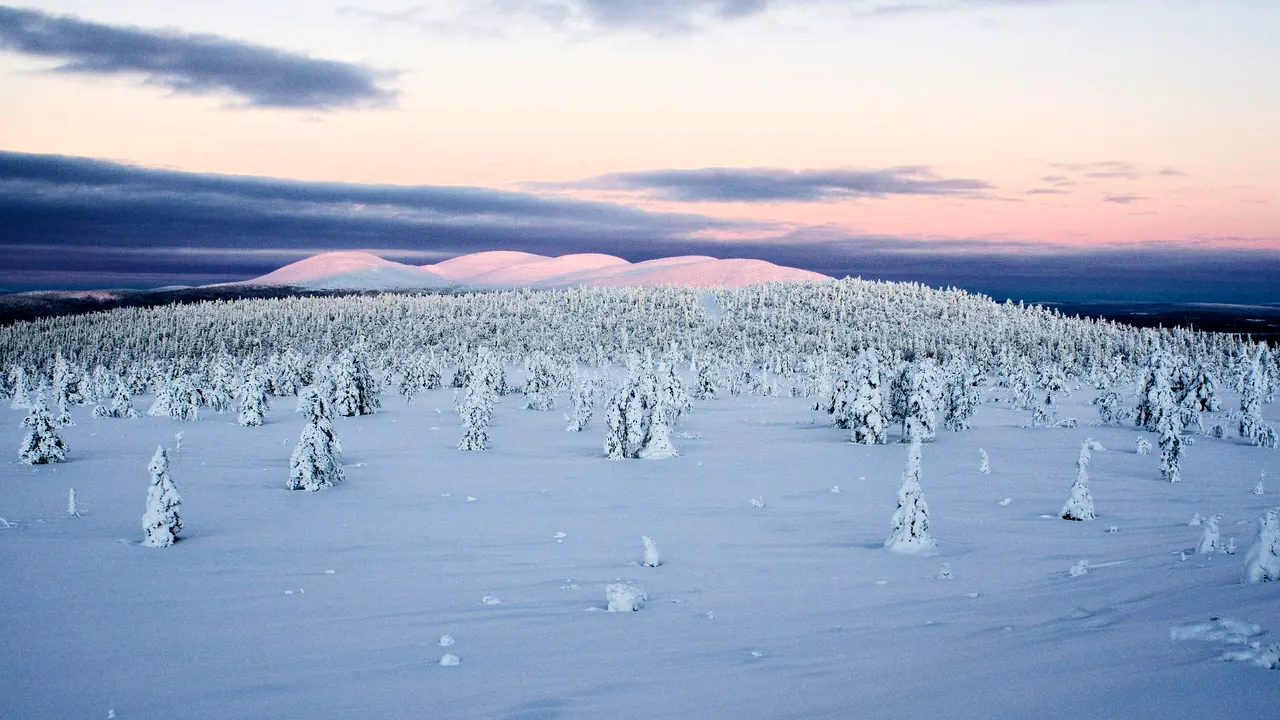
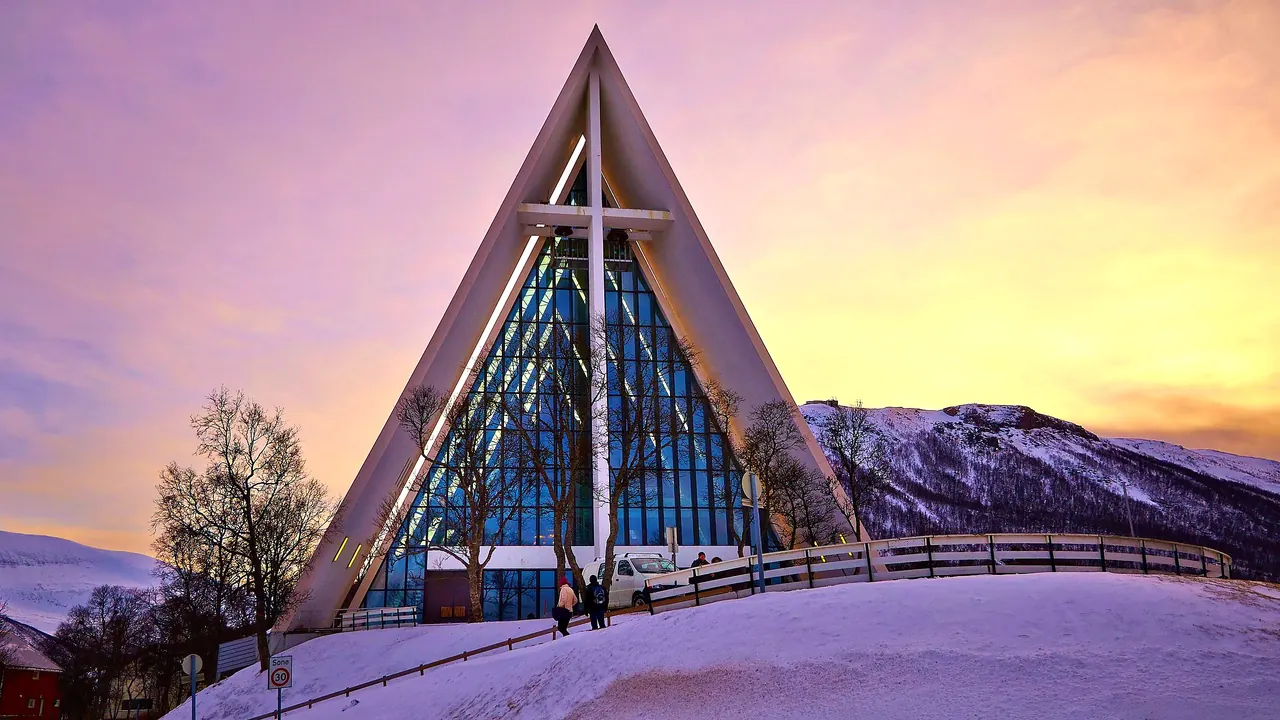
Photos: Lapland by Petr Vodička, CC BY-SA 4.0, cropped; Tromso by Moyan Brenn, CC BY 2.0, cropped.
Lapland or Tromso?
Our verdict in twelve categories, each scored against the same fixed benchmark cities, and the climate month by month, so you can choose for your trip.
Choose Lapland for
- wellness
- families
- beaches
Lapland suits a slower, deeper winter stay from one base. That might be a family Christmas around Rovaniemi with Santa, reindeer and husky rides, or a week in a cabin at Levi, Ylläs or Saariselkä where the sauna, the cross-country trails and the snowy quiet are the whole point. It is the better choice for children and for anyone who wants to switch off. In return you accept harder cold and long distances between places.
Choose Tromso for
- getting around
- live music and the arts
- nightlife
Pick Tromso if you want the Arctic with a town attached. Fjords, mountains and whale-watching start right outside a walkable centre with harbour restaurants, weekend bars and a winter music festival. Couples and friends can fill the day with excursions and still have an evening out. Its winters are milder but wetter, and it is no kinder to the budget.
Scoreboard
Twelve categories on one fixed scale from 0 to 100. The shaded stretch is the gap between the two.
Your match
Pick a travel style or drag the sliders, and both match scores follow your weighting.
Too close to call, 2 points apart
Wins on wellness and families with your weighting.
Wins on getting around and live music and the arts with your weighting.
What matters to you?
Category by category
What the scores mean for a trip.
Beaches & swimming
Neither suits a beach trip, but Lapland has slightly better summer swimming. There are sandy river banks along the Ounasjoki and Kemijoki and lake shores around Inari, where the water reaches the high teens in a good July. Tromso's sea barely gets above 10°C, so the sand at Telegrafbukta and the white beaches of Sommaroy are for looking at, with a quick, gasping plunge at most. In both places, the swim people remember is the cold one between sauna rounds.
Food & drink
Both cook from the same northern larder of reindeer, cloudberries and cold-water fish, and neither is a reason to travel. Tromso has a small edge because it is a real harbour town. It has skrei cod in late winter, king crab and halibut on the old wooden quays, fish soup after an excursion, and a long-standing local brewery at the heart of its drinking life.
In Lapland most meals are eaten at a resort, a lodge or a safari campfire, with salmon flamed on a board and squeaky cheese with coffee. The dried and smoked Sámi dishes around Inari have the strongest sense of place.
Culture & sights
Both have a short list of sights, mostly indoors, but the stories differ. Lapland's culture is Sámi and post-war. Siida and the Sajos parliament at Inari explain Sámi life best. Rovaniemi was rebuilt after the burning of 1944 and adds the Arktikum and Aalto's library and town hall.
Tromso tells the story of polar exploration and has one striking building, the Arctic Cathedral across the bridge. There is also the Polar Museum's account of Amundsen and Nansen and a few streets of painted wooden houses. All of Tromso fits into a day or two on foot, while Lapland's sights are spread hours apart.
Nightlife
Tromso has the livelier evenings, all in one place. Students and the long nights fill Storgata and the harbour streets at weekends, with pubs, cocktail bars and a couple of late dance floors. Lapland's going out is seasonal and tied to the resorts. Levi's après-ski bars are loud from late winter to Easter, Ylläs and Saariselkä are quieter, and elsewhere the evening is a sauna and an early night.
Nature & outdoors
Lapland's wilderness is broad and inland. Tromso's is steep and set against the sea, and that coastline gives Tromso a slight edge. In Lapland, low rounded fells rise above endless forest, bog and lake. There are long walks in Pallas-Yllästunturi, Urho Kekkonen and Lemmenjoki, groomed cross-country trails between the resorts, and sharper country under Saana at Kilpisjärvi. It suits skiers and long-distance walkers.
Tromso sits on an island ringed by sharp mountains. A cable car runs straight up to a ridge above the fjords, orcas and humpbacks feed in the fjords in winter, and the Lyngen Alps and the coast of Senja are within reach. It suits whale-watchers and anyone who wants peaks and sea in the same view.
Day trips
Day trips are thin in both, because the outings that matter are into snow and forest. Lapland has a little more to visit. From Rovaniemi you can reach the coast at Kemi and Tornio for icebreaker cruises and the walk over the border to Haparanda, and from Saariselkä the Sámi museum at Inari. From Tromso the options are small, such as the fishing village of Sommaroy and the old trading post at Hillesoy, and most visitors book another fjord or aurora tour instead.
Good for families
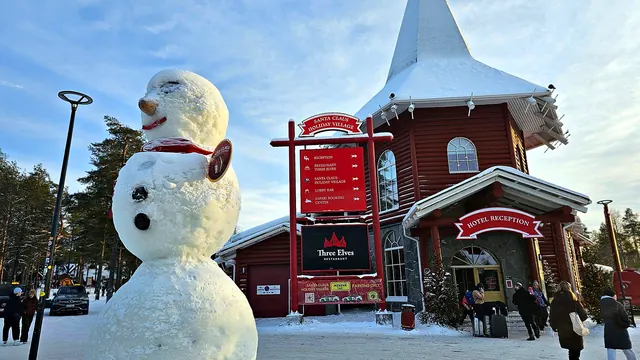
Lapland is far better with children, above all at Christmas. Santa Claus Village on the Arctic Circle, the Santa park in a cave and Ranua Wildlife Park fill several days. Levi, Ylläs and Saariselkä add gentle slopes, ski schools and family cabins with saunas.
Tromso is safe and calm, but beyond Polaria's bearded seals and the science centre little is made for children, and the aurora tours run late into the night. Both are dark in midwinter, but Lapland's inland cold is the harder of the two on toddlers.
Getting around
Tromso is much simpler to get around. You can cross the centre on foot in a quarter of an hour, buses run to the airport and the mainland, and the walk over the bridge to the Arctic Cathedral is a pleasure in itself. Only the steep, icy streets above the harbour slow you down.
Lapland works best if you choose one base. Flights into Rovaniemi, Kittilä or Ivalo, or the overnight train from Helsinki, bring you close, and safaris collect you from your lodging. Moving between areas, though, means long winter drives in darkness, with reindeer on the road.
Shopping & style
Neither is a shopping destination, and in both the useful buys are warm clothing and local craft. Lapland's most worthwhile purchase is Sámi duodji around Inari, along with puukko knives and woollens. Tromso puts outdoor gear shops and Norwegian knitwear together on Storgata, which is handier if you arrive underdressed.
Affordability
Lapland is the cheaper of the two, though only for those who plan around the cost. Renting a cabin with a kitchen and sauna, skiing the free trails and coming in late winter or summer rather than December all bring the bill down a good deal. Glass-roofed aurora cabins at Christmas are where it climbs most steeply.
Tromso has Norwegian prices for meals, drink and rooms, and its hotels fill in the aurora season. In both places the sledding, whale and aurora excursions that make the trip add up fast. In Tromso the main ways to save are self-catering and hunting for the lights yourself from the hills above town.
Live music & performing arts
Tromso has a real, if small, cultural calendar. The Arctic Philharmonic and the Halogaland Theatre perform through the season, the Northern Lights Festival fills midwinter with music, a film festival runs in January and there are midnight concerts in the Arctic Cathedral in summer. Lapland has the Lapland Chamber Orchestra in Rovaniemi and yoik at Inari's Sámi music festival, and little beyond a band in a resort bar.
Wellness & relaxation
Lapland is the place to slow down. Nearly every cabin and lodge has its own sauna, lakeside smoke saunas show the tradition at its deepest, and a dip through the lake ice ends the round. Cabins far from roads give the quiet the rest of the trip needs, and Levi and Saariselkä have spa hotels for bad-weather days.
Tromso offers a more sociable sauna: floating saunas in the harbour, with a fjord plunge and snowy peaks opposite, plus a large public swimming hall. Stays there are built around late aurora tours and early starts, so there is less room to switch off.
When should you go?
Pick your month. The climate figures are measured averages, not a forecast.
Lapland in July
Tromso in July
Daytime high, °C
Rainfall in the month, mm
Where the figures come from
Lapland has no rain gauge within 25 km of the centre, so its rainfall comes from a gridded climate dataset read at the destination rather than from a gauge further away.
Temperature and rainfall are climate normals, averaged over the years shown. Lapland: 2008-2020 (rainfall 1991-2020) normals, Rovaniemi Rautatieasema / Kuusela (0.6 km from centre). Tromso: 1991-2020 normals, Tromso (0.9 km from centre).
Lapland's figures are taken inland, where most visitors stay, and the climate is continental. Summer is warm enough for a lake swim, with July highs around 21°C. January sits near -8°C and midwinter can be far colder. From about November to April there is snow for sledding and skiing. Summer is also the wettest stretch and brings the mosquitoes, so the cool, colourful days of early September are the best for walking.
Tromso, on the coast, is milder and much wetter. Winter highs hover around -1°C, but rain and snow are heavy through autumn and winter, peaking at about 128mm in October, and December has no sunshine at all. May to July are the sunniest months, yet the sea stays near 10°C even in July, so a Tromso summer is for hiking under the midnight sun rather than swimming. For deep, dry winter cold, choose Lapland. For a gentler Arctic winter by the sea, choose Tromso.
Which traveller are you?
On a family trip with young children, Lapland is the stronger pick. Santa Claus Village, Ranua's bears and Arctic animals, gentle ski slopes with ski schools and cabins with their own sauna give children far more than Tromso's aquarium and science centre.
For a relaxing and wellness trip, choose Lapland. Almost every cabin has a private sauna, lakeside smoke saunas carry the tradition at its deepest and the snowy silence makes switching off easy. In Tromso, late aurora tours and early excursions leave less time to rest.
For a short city break, Tromso wins clearly. Its compact centre puts the Polar Museum, harbourside fish restaurants, weekend bars and concerts within a few minutes' walk of each other. In Lapland the towns and resorts lie hours apart and need a car or transfers.
Before you go
| Measure | Lapland | Tromso |
|---|---|---|
| Official language | Finnish, Swedish | Norwegian, Nynorsk, Bokmål, Sámi |
| Currency | Euro (EUR) | Norwegian Krone (NOK) |
| Sockets | CF230 V, 50 Hz | CF230 V, 50 Hz |
| Driving side | Right | Right |
| Time zone | UTC+2, UTC+3 in summer | UTC+1, UTC+2 in summer |
| Emergency number | 112 | Police 112, ambulance 113, fire 110 |
| Elevation | - | 20 m |
| Main airport | Rovaniemi Airport (RVN)44 non-stop destinations | Tromsø Airport (TOS)4 km from centre49 non-stop destinations |
| Public holidays this year | 15 days | 13 days |
By the numbers
| Measure | Lapland | Tromso |
|---|---|---|
| Population | 176,215 | 79,943 |
| People per km² | - | 32 |
| Museums within 10 km | - | 8 |
| UNESCO World Heritage sites within 50 km | - | 0 |
| Swim season, months above 21 °C | - | None |
Where else could you go?
Every comparison below shares a destination with this one, so you can follow Lapland or Tromso somewhere new.
- Lofotenvs Tromso
- Rovaniemivs Tromso
- Lofotenvs Lapland
- Norwegian Fjordsvs Lapland
- Flåmvs Tromso
- Oslovs Tromso