Finland
Lapland
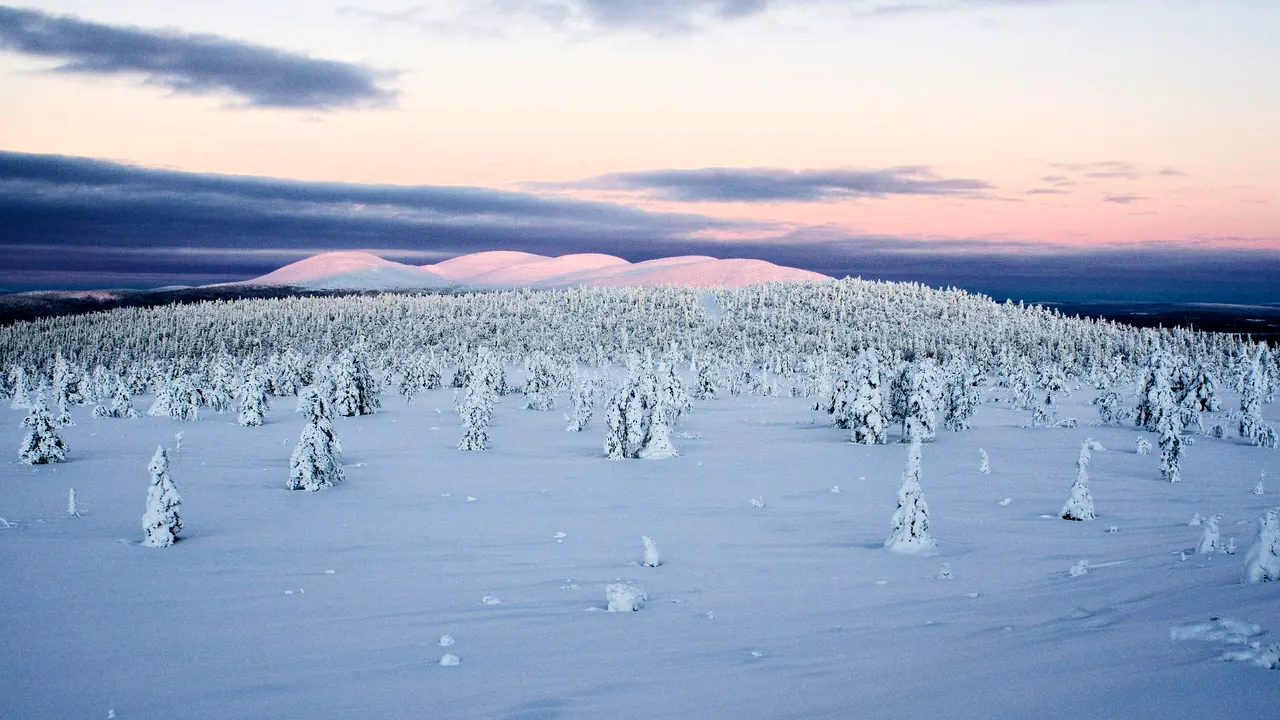
The Pallastunturi fells from Sammaltunturi
- Nature & outdoors87
- Wellness & relaxation76
- Families72
Photo: Petr Vodička, CC BY-SA 4.0, cropped
Match
37
Every category weighted equally
- Beach & sun38
- Culture & arts31
- Food & nightlife29
- Family trip41
- Outdoors42
- Relax & unwind42
- Shopping & style33
- On a budget35
Lapland in twelve categories
Our verdict on each, scored 0 to 100 against the same fixed benchmark cities, so a score means the same thing on every page.
Beaches & swimming. Scores 14 out of 100.
Food & drink. Scores 30 out of 100.
Culture & sights. Scores 30 out of 100.
Nightlife. Scores 28 out of 100.
Nature & outdoors. Scores 87 out of 100.
Day trips. Scores 20 out of 100.
Good for families. Scores 72 out of 100.
Getting around. Scores 40 out of 100.
Shopping & style. Scores 15 out of 100.
Affordability. Scores 17 out of 100.
Live music & performing arts. Scores 12 out of 100.
Wellness & relaxation. Scores 76 out of 100.
Lapland category by category
Beaches & swimming
14Lapland is not a beach destination. In July and early August people swim in the lakes and rivers, with sandy river banks along the Ounasjoki and Kemijoki, lake shores around Inari, and a little sand on the Bothnian Bay coast near Kemi and Tornio. The water is cool, usually 15°C to 18°C in a good summer, and the season is short.
The swimming most visitors actually try is the cold dip between sauna rounds, through a hole cut in the lake ice in winter. If a summer stay with real beach time is what you want, this is the wrong place.
Food & drink
30The food comes from the land. Sautéed reindeer with mashed potato and lingonberries, salmon flamed on a board by an open fire, whitefish and Arctic char from the lakes, cloudberries, and squeaky baked cheese served with coffee. Sámi cooking around Inari brings dried and smoked meats and fish, and the best restaurants in Rovaniemi, Levi and Saariselkä cook these ingredients with real care.
That is about the whole range. Towns are small, most meals are eaten at a resort, a lodge or a campfire meal on a safari, and street food or a café culture worth seeking out barely exists. Visitors eat well and remember a few dishes, but they do not come here to eat.
Culture & sights
30The region's culture is mostly told in museums, because the retreating German army burned most of Lapland's towns in 1944. The Arktikum in Rovaniemi explains Arctic life and the region's history well. Siida in Inari, the Sámi museum and nature centre, is the most rewarding cultural visit in the north. The Sámi parliament building Sajos nearby, and Inari's Pielpajärvi wilderness church, a long walk from the village, add to it. Rovaniemi was largely rebuilt to plans by Alvar Aalto, and his library and town hall are worth a look.
Old wooden churches at Sodankylä and Tornio, and the Struve Geodetic Arc points near Tornio, complete a short list. Santa Claus Village on the Arctic Circle is more spectacle than heritage.
Nightlife
28Going out happens in the ski resorts, above all in Levi. From late winter into April it fills with Finnish skiers, and the après-ski bars and a few clubs in the village stay loud late, especially at weekends and around Easter. Ylläs and Saariselkä are quieter, with bars that suit a drink after skiing. Rovaniemi has a handful of pubs and bars that get busy with students.
Away from the resorts the evening is spent in a sauna, a cabin or outside watching the sky. Most visitors go to bed early because the next day starts with a husky ride or a ski.
Nature & outdoors
87This is Europe's great accessible wilderness. Low, rounded fells rise above endless spruce and pine forest, bogs and lakes, with the high fells of Pallas-Yllästunturi, Urho Kekkonen and Lemmenjoki national parks among the finest walking country in the north. Kilpisjärvi in the far north-west has the sharpest landscape, under Saana fell. Winter brings deep snow from about November to April, husky and reindeer sledding, snowshoeing, snowmobiling and hundreds of kilometres of groomed cross-country trails between the resorts. The northern lights are a real chance on clear nights from late August to March.
Summer has the midnight sun, canoeing on the rivers and hiking in clouds of mosquitoes. Ruska, the autumn colours of early September, is the best hiking season. Midwinter is dark and can fall below -30°C.
Day trips
20Outings here are mostly into the snow and forest, not to other places. From Rovaniemi the coast is about an hour and a half south, where Kemi and Tornio offer winter icebreaker trips on the frozen Gulf of Bothnia, a snow castle in the colder months and the walk across the border to Haparanda in Sweden. From Saariselkä, Inari and its Sámi museum are a short drive north, and the resorts of Levi and Ylläs are close to each other.
Beyond that the towns are small and hours apart. A visitor who wants a varied list of towns and sights for day trips will run out quickly.
Good for families
72Lapland is built for a Christmas trip with young children. Santa Claus Village on the Arctic Circle outside Rovaniemi, the Santa theme park in a cave nearby, and Ranua Wildlife Park with its bears and Arctic animals about an hour south, make a full few days. Husky and reindeer rides, sledging, snow everywhere and the chance of the northern lights do the rest. The resorts of Levi, Ylläs and Saariselkä have gentle ski slopes, ski schools and family cabins with a sauna.
The country is safe, clean and relaxed about children. The hard part is the climate. In December there are only a few hours of twilight and temperatures can sink below -25°C, which is tough on toddlers, and outside the Christmas season there is much less made for children.
Getting around
40Most visitors fly into Rovaniemi, Kittilä for Levi, or Ivalo for Saariselkä and Inari, and each airport is a short transfer from its resort. The overnight train from Helsinki to Rovaniemi or Kolari is a classic way to arrive. Once at a resort, villages are compact enough to walk or ski around, and most safaris and excursions collect guests from their lodgings.
Moving between areas is the hard part. Distances are long, buses are few, and touring means driving on snow and ice, in darkness for much of the winter, watching for reindeer on the road. The roads are well kept, but it suits confident winter drivers. Most visitors pick one base and stay there.
Shopping & style
15Shopping is limited to things that belong here. Sámi duodji, the handicraft of reindeer antler, leather, silver and woven bands, is the most worthwhile purchase, best found around Inari. Lapland-made puukko knives, woollens and good cold-weather clothing are the other useful buys. Rovaniemi has a small centre with ordinary shops, and Santa Claus Village sells souvenirs in quantity. Nobody comes here to shop.
Affordability
17Lapland is expensive in the season people come for. Rooms around Christmas and New Year, and the glass-roofed cabins built for watching the aurora, cost a great deal. Restaurant meals and alcohol carry Nordic prices, and the activities that make the trip, husky and reindeer safaris, snowmobile tours and aurora hunts, add up quickly. Families who rent a cabin with a kitchen and sauna, cook for themselves and ski on the free trails can bring the cost down a lot. Late winter and summer are cheaper than December.
Live music & performing arts
12There is little live performance to plan a trip around. Rovaniemi is home to the Lapland Chamber Orchestra, which plays a respected season in the town's concert venue, and Inari holds a Sámi music festival where you can hear yoik, the traditional Sámi song. Otherwise live music means a band in a ski-resort bar or a staged show for visitors.
Wellness & relaxation
76The sauna is the heart of a stay. Almost every cabin, lodge and hotel room has its own, and lakeside smoke saunas, heated for hours and softened with steam from the stove, are the deepest form of the tradition. In winter the ritual ends with a dip through a hole in the lake ice and a slow cool-down in the snow. Saariselkä and Levi have spa hotels with pools and treatments for days of bad weather.
The pace does the rest. Snow-muffled silence, long blue twilight in winter, light all night in summer and cabins far from roads make it easy to switch off. It suits people who want quiet and warmth after cold air more than polished spa luxury.
Where to stay in Lapland
Most visitors pick one base and stay there, because the areas are hours apart and moving between them means driving on snow and ice, often in the dark. For a first visit, and above all a Christmas trip with children, Rovaniemi is the obvious choice. It has the main airport and the overnight train from Helsinki, Santa Claus Village sits on the Arctic Circle just outside town, and Ranua Wildlife Park is about an hour south. It is also the one real town, with the Arktikum, Aalto's library and town hall and a few pubs, so it suits anyone who wants some sights between husky rides.
Levi is the base for skiing with evenings out. The compact village gets loud with après-ski in late winter and around Easter. Ylläs is close by but quieter, with gentle slopes, long cross-country trails and Pallas-Yllästunturi on the doorstep, so it suits families and couples who want a cabin with a sauna. Saariselkä, reached through Ivalo, sits beside Urho Kekkonen National Park and is a short drive from Inari, which makes it the best base for walkers and for Sámi culture.
On a second visit, perhaps for the autumn colours of ruska or the midnight sun, Kilpisjärvi in the far north-west has the sharpest fells, under Saana, and very little else around it.
When should you go?
Pick a month to see what it is like. The climate figures are measured averages, not a forecast.
Lapland in July
Daytime high, °C
Rainfall in the month, mm
The whole year
Shaded against this destination’s own year: the deepest cell is its best month for that figure and the palest its weakest.
Where the figures come from
Lapland has no rain gauge within 25 km of the centre, so its rainfall comes from a gridded climate dataset read at the destination rather than from a gauge further away.
Temperature and rainfall are climate normals, averaged over the years shown. Lapland: 2008-2020 (rainfall 1991-2020) normals, Rovaniemi Rautatieasema / Kuusela (0.6 km from centre).
Before you go
| Measure | Lapland |
|---|---|
| Official language | Finnish, Swedish |
| Currency | Euro (EUR) |
| Sockets | CF230 V, 50 Hz |
| Driving side | Right |
| Time zone | UTC+2, UTC+3 in summer |
| Emergency number | 112 |
| Main airport | Rovaniemi Airport (RVN)44 non-stop destinations |
| Public holidays this year | 15 days |
By the numbers
| Measure | Lapland |
|---|---|
| Population | 176,215 |
Compare Lapland with
Every comparison with a written verdict behind it.