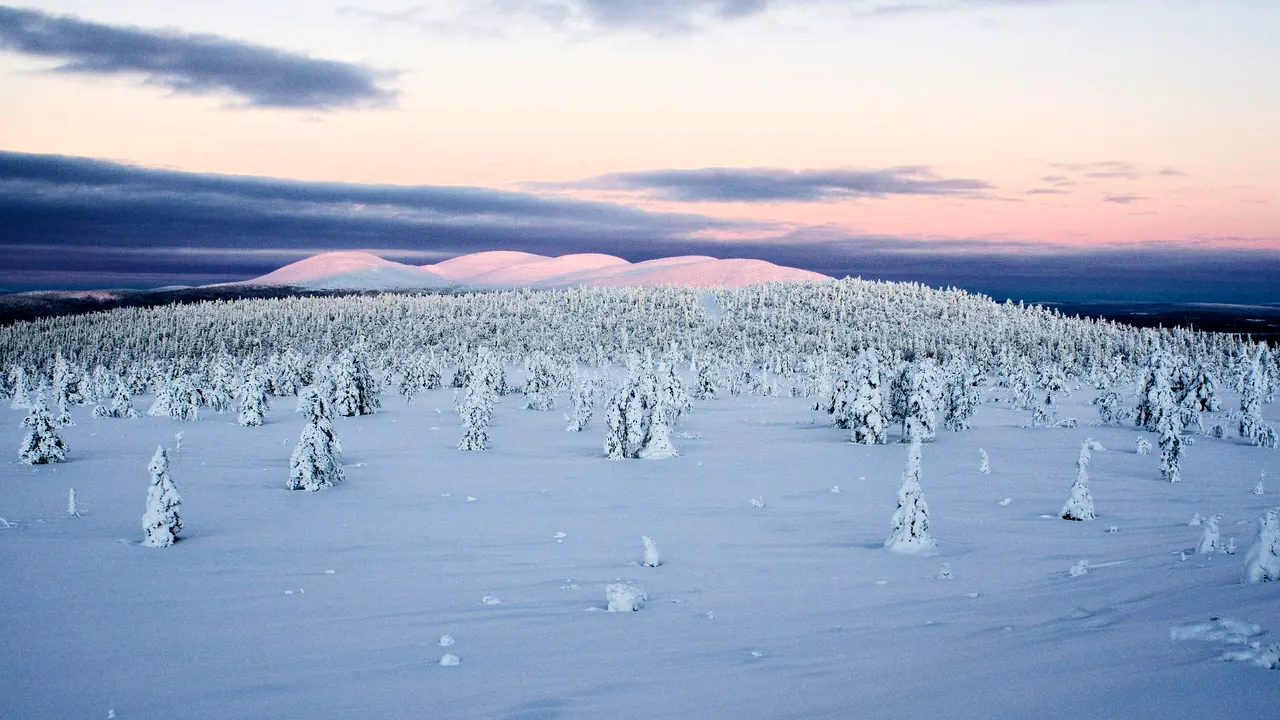
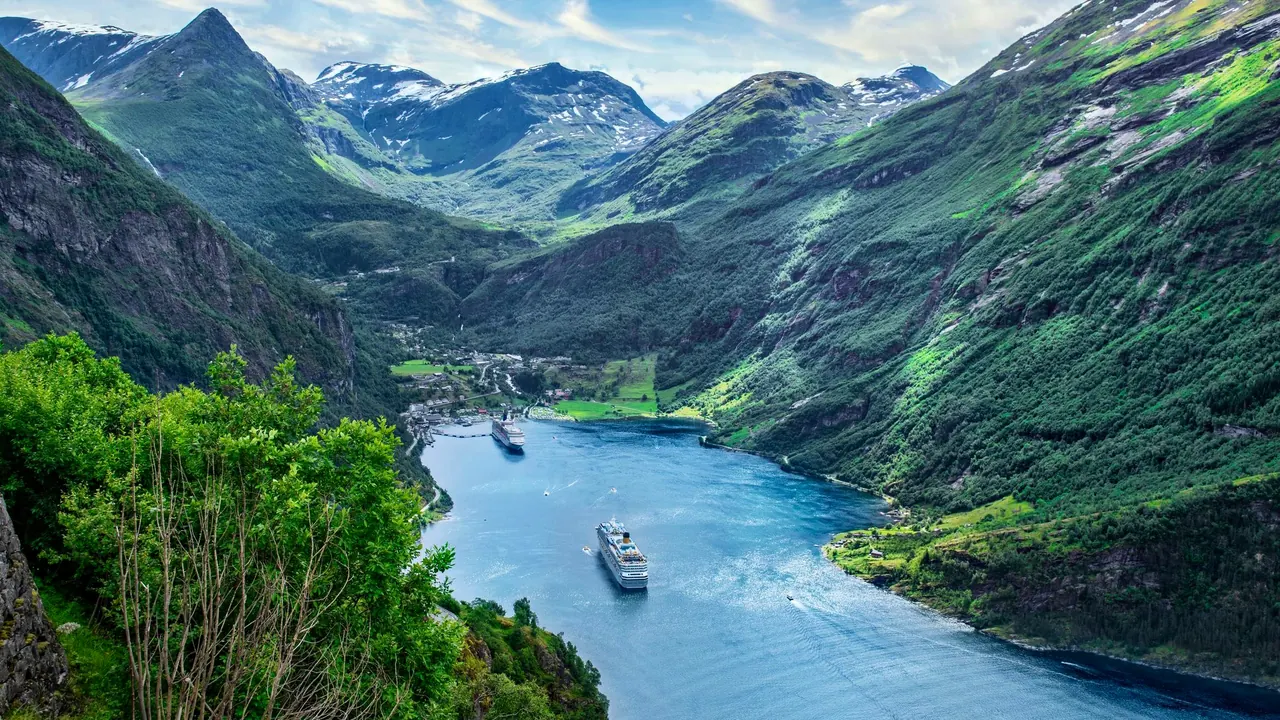
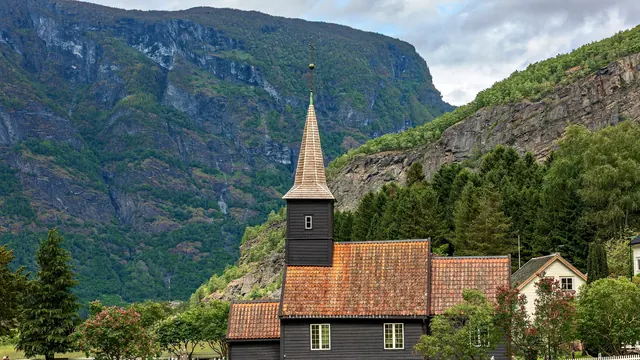
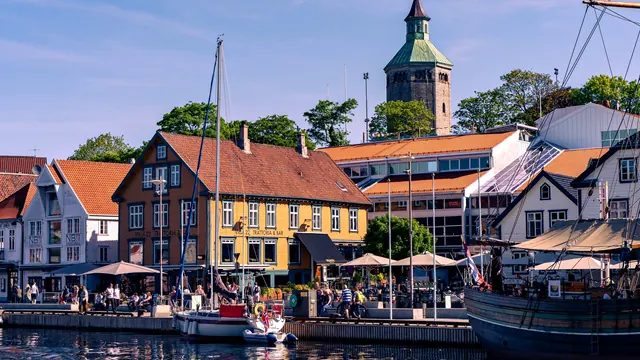
Photos: Lapland by Petr Vodička, CC BY-SA 4.0, cropped; Norwegian Fjords by Enrique, Pexels License.
Lapland or Norwegian Fjords?
Our verdict in twelve categories, each scored against the same fixed benchmark cities, and the climate month by month, so you can choose for your trip.
Choose Lapland for
- wellness
- families
- prices
Choose Lapland for a winter trip built around snow and dark skies: husky and reindeer sledding, cross-country skiing between the resorts, the chance of the northern lights and a sauna at the end of every day. It is the better pick for families, above all at Christmas around Rovaniemi, and for anyone who wants to settle into one cabin and switch off. In return you give up nearly everything urban, because food, sights and evenings out are thin.
Choose Norwegian Fjords for
- live music and the arts
- day trips
- culture and sights
The Norwegian Fjords suit travellers who want the landscape to be the main event in summer, with cliff walks above the Lysefjord, glacier hikes and boat trips under waterfalls, and who also want a proper city alongside it. Bergen adds Bryggen, Grieg, a serious orchestra and the region's best seafood, and outings by train and boat give the trip more variety. Expect a lot of rain and some of the highest costs in Europe.
Scoreboard
Twelve categories on one fixed scale from 0 to 100. The shaded stretch is the gap between the two.
Your match
Pick a travel style or drag the sliders, and both match scores follow your weighting.
Wins on wellness and families with your weighting.
Wins on live music and the arts and day trips with your weighting.
What matters to you?
Category by category
What the scores mean for a trip.
Beaches & swimming
Neither is a place for a beach trip, but the fjords give a little more. The Jæren coast near Stavanger has long dune beaches on the North Sea, and on warm days in July and August Norwegians swim from rocks and jetties in the sheltered inner fjords.
Lapland's swimming is confined to a short July season on the sandy banks of the Ounasjoki and Kemijoki and the lake shores around Inari. The dip most visitors remember is the plunge through the ice between sauna rounds, which is a sauna ritual rather than a swim.
Food & drink
The fjords eat better, mainly because they have the sea and two real food towns. Shellfish, halibut and cod from cold water, the klippfisk tradition around Ålesund, Hardanger cider and summer cherries, and the restaurants and fish market of Bergen and Stavanger give a food lover something to plan around.
Lapland's cooking is good but narrow: reindeer with lingonberries, salmon flamed by an open fire, Arctic char, cloudberries, and Sámi smoked meats around Inari. Most meals are eaten at a lodge or around a safari campfire, and there are no towns big enough for a real restaurant scene.
Culture & sights
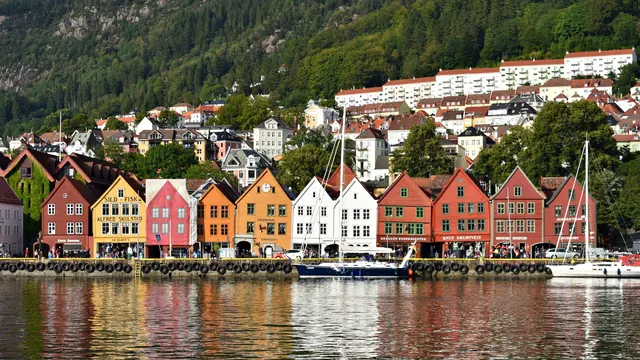
The fjords have far more to see. Bergen holds Bryggen's timbered wharf, Håkon's Hall, the Munch collection at KODE and Grieg's villa at Troldhaugen, Ålesund is a whole town of Art Nouveau facades, and the stave churches at Urnes and Borgund are among Norway's oldest buildings.
Lapland lost most of its old towns when they were burned in 1944, so its culture lives in museums. Siida in Inari, on Sámi life, and the Arktikum in Rovaniemi are both worthwhile, as are Aalto's buildings in Rovaniemi. After that the list ends quickly, and Santa Claus Village is a show rather than a piece of heritage.
Nightlife
Both are quiet, and the difference is the setting and the season. Lapland's going out is après-ski, centred on Levi, where bars and a few clubs stay loud late from late winter to Easter, especially at weekends.
The fjords' nights belong to the cities instead: Bergen's student pubs and cocktail bars around the harbour on Fridays and Saturdays, and Stavanger's waterfront on summer evenings. In the villages of both regions the evening ends early, whether in a sauna or on a hotel terrace.
Nature & outdoors
Both are among the finest outdoor destinations in Europe, but for sheer scenery the fjords stand above. Rock walls fall hundreds of metres into the Geirangerfjord and Nærøyfjord, and the summer brings hikes to Trolltunga and Preikestolen, walks on arms of the Jostedalsbreen glacier and kayaking under the cliffs.
Lapland's wilderness is wide rather than steep: rounded fells, endless forest and lakes in Pallas-Yllästunturi and Urho Kekkonen national parks. Its advantage is winter, with husky trails, groomed ski tracks and the northern lights, at a time of year when snow has closed the fjords' high trails.
Day trips
The fjords give much more scope for outings. From Bergen the train runs to Voss and Flåm, with boats on to Undredal, and express boats reach Balestrand on the Sognefjord. Hardanger's orchard villages and Utstein Abbey near Stavanger make good days out, and even the journey there is part of the scenery.
From a Lapland base the excursions are mostly into the snow. The real trips to other places are the icebreaker cruises and the border walk to Haparanda from Kemi and Tornio, or Inari's Sámi museum from Saariselkä.
Good for families
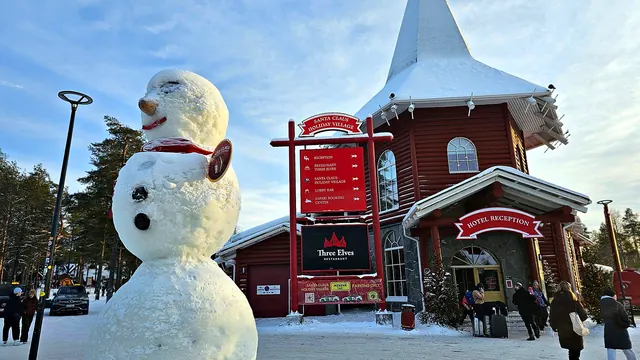
Lapland is the easier sell to children, especially at Christmas. Santa Claus Village, the Santa cave park and Ranua Wildlife Park's bears sit close to Rovaniemi, and sledging, husky rides and ski schools at Levi and Ylläs fill the rest. The catch is the deep cold and the short December days, and there is far less for children outside that season.
The fjords work well with older children: Bergen's aquarium and VilVite science centre, the funicular up Fløyen and the Flåm railway. Long drives on winding roads and the frequent rain make it a harder trip with toddlers.
Getting around
Both are slow to cross, but in different ways. In Lapland you fly or take the overnight train to one resort and stay put, since safaris collect you from your lodging and touring means driving on ice in the dark.
The fjords reward movement. The car-free chain of train to Myrdal, the steep Flåm railway and a boat along the Nærøyfjord is a trip in itself, and a car adds freedom at the cost of ferries, tunnels and hairpin passes. Outside summer, boats thin out and some high roads close.
Shopping & style
Neither region is worth visiting for the shopping, but the fjords come out ahead because they have real towns. In Lapland, shopping means a few specialist buys made for the place: Sámi craftwork, best found around Inari, a Lapland knife, or warm clothing you will put to use on the trip. Rovaniemi's centre is small and ordinary, and Santa Claus Village is mostly about souvenirs.
Bergen and Stavanger give you something Lapland lacks, which is a town centre where you can spend an afternoon browsing, with artists' and craft workshops tucked into Bryggen's wooden buildings. Out in the fjord villages the buys are mostly knitwear and farm goods like goat cheese and cider. Prices are high and the choice is narrow in both regions.
Affordability
Both are expensive, and Lapland is slightly less so. Its costs peak around Christmas and in the glass-roofed aurora cabins, so a late-winter or summer visit, a cabin with a kitchen and the free cross-country trails make a real difference.
The fjords stay costly all through the summer season that matters. Hotels in Flåm and Geiranger, restaurant meals, heavily taxed alcohol, ferries and scenic railways all add up, and only camping, supermarket picnics and hiking bring the bill down much.
Live music & performing arts
This is a clear win for the fjords, which in practice means Bergen. The Bergen Philharmonic, one of the world's oldest orchestras, plays in Grieghallen, the Bergen International Festival fills late spring, and Grieg recitals are held at Troldhaugen in summer. Molde's jazz festival and Stavanger's symphony orchestra add more.
Lapland has the Lapland Chamber Orchestra in Rovaniemi and a Sámi music festival in Inari where you can hear yoik, and little else beyond bands in ski bars.
Wellness & relaxation
Lapland is the better choice for rest. The sauna is part of daily life: nearly every cabin has one, the lakeside smoke saunas are the deepest form of the tradition, and the evening ends with a dip through the ice. Saariselkä and Levi add spa hotels for bad-weather days.
The fjords offer stillness above the water and long summer light, with wood-fired saunas on jetties in Bergen and some villages. Beyond those, the hotel spas are facilities rather than a tradition.
When should you go?
Pick your month. The climate figures are measured averages, not a forecast.
Lapland in July
Norwegian Fjords in July
Daytime high, °C
Rainfall in the month, mm
Where the figures come from
Lapland has no rain gauge within 25 km of the centre, so its rainfall comes from a gridded climate dataset read at the destination rather than from a gauge further away.
Norwegian Fjords's temperatures are measured 27 km from the centre, at Fjaerland Bremuseet Bøyum.
Norwegian Fjords has no rain gauge within 25 km of the centre, so its rainfall comes from a gridded climate dataset read at the destination rather than from a gauge further away.
Temperature and rainfall are climate normals, averaged over the years shown. Lapland: 2008-2020 (rainfall 1991-2020) normals, Rovaniemi Rautatieasema / Kuusela (0.6 km from centre). Norwegian Fjords: 2006-2020 (rainfall 1991-2020) normals, Fjaerland Bremuseet Bøyum (27.2 km from centre).
Lapland is at its best in winter. Snow lies from about November to April and daytime highs stay below freezing from November to March, around -8°C in January where most visitors stay, with midwinter reduced to a few hours of twilight. Late winter, from March into early April, brings deep snow, returning daylight and the driest weather of the year. Summer is mild, about 21°C in July, with the midnight sun but more rain and plenty of mosquitoes, and early September brings the autumn colours, the best weeks for hiking.
The fjords run the other way. Winters on the coast are far milder, hovering near freezing, but very wet, with about 184mm of rain in December at the measuring point, and snow closes the high roads and trails. The good window is May to September: May is the driest month at about 71mm, July reaches around 20°C, and the rain builds again from August, so early summer is the safest bet for clear fjord views.
Which traveller are you?
On a family trip with young children, Lapland is the stronger choice. Santa Claus Village, Ranua Wildlife Park, reindeer rides and gentle ski slopes make a full Christmas week, whereas the fjords mean long, winding car days and hikes too exposed for small legs.
For a culture and arts trip, the Norwegian Fjords win clearly. Bergen alone has the Hanseatic wharf, KODE's Munch collection, Grieg's villa and the Bergen Philharmonic, and the stave churches add rarities, while Lapland's culture comes down to a handful of good museums.
On a relaxing and wellness trip, Lapland has the deeper tradition. Almost every cabin has its own sauna, lakeside smoke saunas and ice-hole dips are part of daily life, and snow-muffled silence does the rest. The fjords give quiet, but their saunas are occasional extras.
Before you go
| Measure | Lapland | Norwegian Fjords |
|---|---|---|
| Official language | Finnish, Swedish | Norwegian, Nynorsk, Bokmål, Sámi |
| Currency | Euro (EUR) | Norwegian Krone (NOK) |
| Sockets | CF230 V, 50 Hz | CF230 V, 50 Hz |
| Driving side | Right | Right |
| Time zone | UTC+2, UTC+3 in summer | UTC+1, UTC+2 in summer |
| Emergency number | 112 | Police 112, ambulance 113, fire 110 |
| Main airport | Rovaniemi Airport (RVN)44 non-stop destinations | Bergen Airport, Flesland (BGO)64 non-stop destinations |
| Public holidays this year | 15 days | 13 days |
By the numbers
| Measure | Lapland | Norwegian Fjords |
|---|---|---|
| Population | 176,215 | - |
Where else could you go?
Every comparison below shares a destination with this one, so you can follow Lapland or Norwegian Fjords somewhere new.
- Tromsovs Lapland
- Lofotenvs Lapland
- Scottish Highlandsvs Norwegian Fjords
- Lofotenvs Norwegian Fjords
- Reykjavikvs Lapland
- Alaskavs Norwegian Fjords