Norway
Flåm
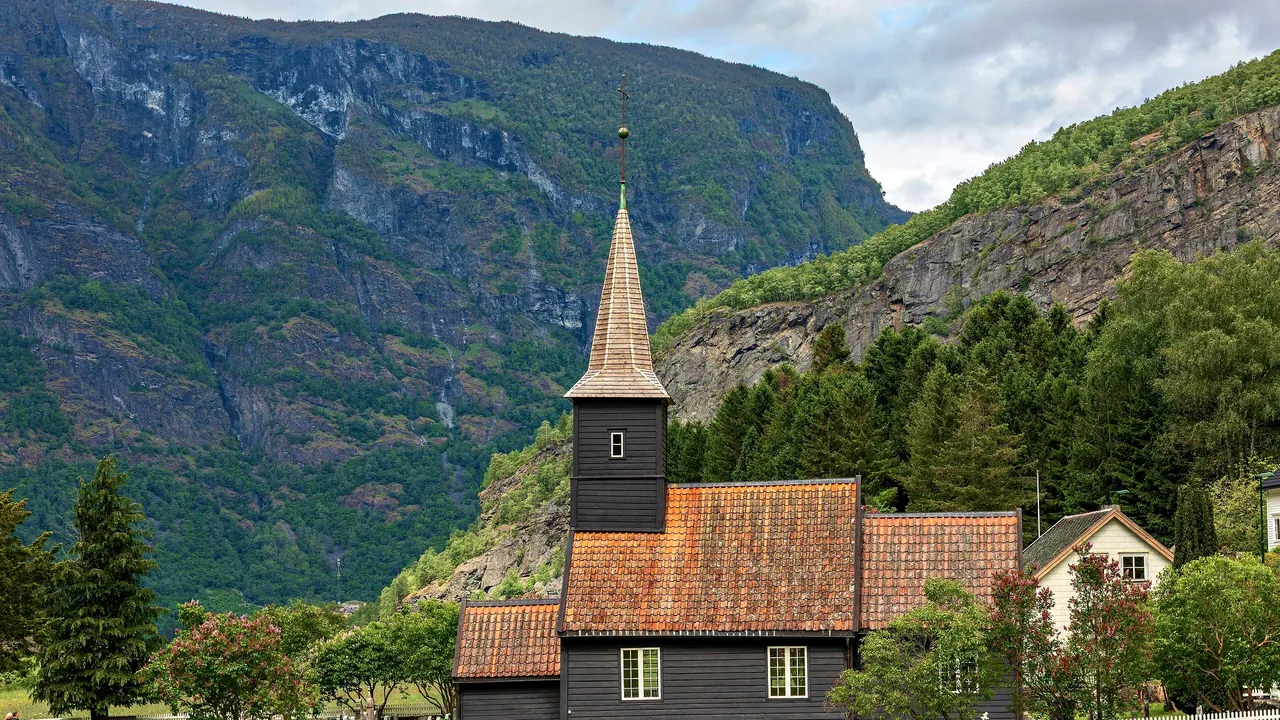
Flåm church below the steep sides of the valley
- Nature & outdoors92
- Getting around62
- Families40
Photo: Ximonic (Simo Räsänen), CC BY-SA 4.0, cropped
Match
29
Every category weighted equally
- Beach & sun29
- Culture & arts25
- Food & nightlife21
- Family trip34
- Outdoors39
- Relax & unwind33
- Shopping & style25
- On a budget26
Flåm in twelve categories
Our verdict on each, scored 0 to 100 against the same fixed benchmark cities, so a score means the same thing on every page.
Beaches & swimming. Scores 15 out of 100.
Food & drink. Scores 22 out of 100.
Culture & sights. Scores 10 out of 100.
Nightlife. Scores 5 out of 100.
Nature & outdoors. Scores 92 out of 100.
Day trips. Scores 38 out of 100.
Good for families. Scores 40 out of 100.
Getting around. Scores 62 out of 100.
Shopping & style. Scores 8 out of 100.
Affordability. Scores 8 out of 100.
Live music & performing arts. Scores 3 out of 100.
Wellness & relaxation. Scores 40 out of 100.
Flåm category by category
Beaches & swimming
15Flåm has no beach in any ordinary sense. The village sits at the head of the Aurlandsfjord, where the shore is shingle, rock and quayside, and the water is cooled by snowmelt and rivers coming off the mountains, so it rarely gets much above 16°C even in July. Some visitors take a quick, bracing dip from the rocks or after a sauna, and that is the extent of swimming here. Anyone who wants to lie on sand by warm water should plan that for a different part of the trip.
Food & drink
22Eating in Flåm comes down to a few places around the harbour and station: hotel dining rooms, cafés feeding day visitors off the train and the cruise ships, and a brewery pub in a timber hall that pours its own beers with hearty smoked and grilled dishes. Local produce does show up, such as fjord salmon, lamb from the valleys, cured meats and the brown and white goat cheeses made in nearby Undredal. There is no depth or choice, though, and in the evening the options shrink further. Treat meals as fuel between days outdoors rather than a reason to come.
Culture & sights
10Flåm has very little to see beyond its setting. The small railway museum by the station tells how the mountain line was built through tunnels and hairpin curves, and a short walk up the valley brings you to the old wooden church from 1670, painted inside and set among farm fields. The rest is a cluster of station buildings, hotels and shops. The real sights of the area, the stave churches and old fjord villages, are outings rather than part of the village itself.
Nightlife
5There is no nightlife to speak of. The brewery pub and a couple of hotel bars stay open for a beer after dinner, and on light summer evenings people linger outside by the fjord, but nothing runs late and there are no clubs. Evenings here are for a walk along the water and an early night before the next day's hike or boat trip.
Nature & outdoors
92This is why people come. Flåm sits at the inner end of the Aurlandsfjord, a branch of the Sognefjord, with mountainsides rising almost straight from the water and waterfalls pouring down them for much of the year. Next door is the Nærøyfjord, a narrow UNESCO-listed arm, best seen by boat or kayak, where cliffs close in to a few hundred metres apart. The Stegastein viewpoint juts out 650m above the Aurlandsfjord, and the mountain railway climbs through the valley to the high plateau at Myrdal.
The outdoor options are wide. You can walk the Flåm valley back down from Myrdal, or hike the classic Aurlandsdalen route past old summer farms. Cyclists ride the Rallarvegen, the old navvies' road across the mountains, and paddle the fjord or take a RIB boat out on it. You might spot seals and eagles. Summer brings long light and green slopes; winter is dark and quiet, with snow above the village and much less on offer for walkers.
Day trips
38Within easy reach are small places rather than towns. Undredal, a tiny goat-cheese village with one of Norway's smallest churches, sits along the fjord, and Aurland is next door. At Gudvangen, the end of the Nærøyfjord boat trip, there is a reconstructed Viking village. Through the long Lærdal tunnel, you reach the wooden lanes of old Lærdalsøyri and the Borgund stave church, one of the best preserved in the country. Voss, with its lake and mountain-sports town feel, is about an hour or so away by bus or train.
The list is short and rural. Bergen is the obvious city outing, but it takes close to three hours each way, so it works better as a stop on the way in or out than as a day trip.
Good for families
40Children tend to love the main things to do here: the steep mountain railway, which stops beside a thundering waterfall, the boats up the fjord, and the reconstructed Viking village at Gudvangen. The village is small and safe, with little traffic, and the hotels and self-catering cabins are used to families. Beyond that, nothing is designed for children. There are no play parks of note and no aquarium or museum aimed at them, and the long hikes suit older children better than toddlers. Midday cruise-ship crowds can make the harbour and station heavy going in summer. Flåm works best for active families whose children can manage a proper walk.
Getting around
62The village itself takes ten minutes to cross on foot, with the station, harbour, hotels and cabins all side by side. The Flåm railway climbs to Myrdal, where it meets the main Oslo to Bergen line, fjord boats run to Gudvangen and further along the Sognefjord, and buses link to Gudvangen, Aurland and Voss. Many visitors do the whole region without a car. Services are less frequent outside summer, though, and connections need planning. A car makes reaching the stave churches, Stegastein and Lærdal much easier, but expect tunnels and narrow roads shared with coaches.
Shopping & style
8Shopping means the souvenir and gift shops around the station and harbour, selling trolls, Norwegian knitwear, outdoor clothing and local products such as goat cheese and cured meat. It is aimed squarely at day visitors, and nobody comes to Flåm to shop.
Affordability
8Flåm is an expensive place to stay. Norwegian prices for food and especially alcohol meet a tiny village with limited rooms and heavy summer demand, and the famous railway and fjord boat trips are not cheap. Even a simple meal costs far more than visitors from most countries expect. Self-catering cabins, the campsite and food bought at the village supermarket are the main ways to keep costs in hand, and the hiking, of course, costs nothing.
Live music & performing arts
3There is no theatre, concert hall or regular live music in Flåm. At most you might find the occasional musician in the pub on a summer evening. Visitors looking for performances should look to Bergen.
Wellness & relaxation
40The restorative side of Flåm is its quiet. Once the day visitors and cruise passengers leave, the village falls silent, and a summer evening by the fjord under long light is about as calm as a vacation gets. A floating sauna on the fjord offers the Nordic routine of heat followed by a plunge into cold water, and a few hotels have small spa facilities. There is no wider spa or bathing culture, however, and between late morning and late afternoon in summer the harbour can feel crowded rather than peaceful.
When should you go?
Pick a month to see what it is like. The climate figures are measured averages, not a forecast.
Flåm in July
Daytime high, °C
Rainfall in the month, mm
The whole year
Shaded against this city’s own year: the deepest cell is its best month for that figure and the palest its weakest.
Where the figures come from
Flåm's temperatures are measured 59 km from the centre, at Evanger.
Flåm has no rain gauge within 25 km of the centre, so its rainfall comes from a gridded climate dataset read at the city rather than from a gauge further away.
Temperature and rainfall are climate normals, averaged over the years shown. Flåm: 2010-2025 (rainfall 1991-2020) normals, Evanger (59.3 km from centre).
Before you go
| Measure | Flåm |
|---|---|
| Official language | Norwegian, Nynorsk, Bokmål, Sámi |
| Currency | Norwegian Krone (NOK) |
| Sockets | CF230 V, 50 Hz |
| Driving side | Right |
| Time zone | UTC+1, UTC+2 in summer |
| Emergency number | Police 112, ambulance 113, fire 110 |
| Elevation | 49 m |
| Main airport | Bergen Airport, Flesland (BGO)121 km from centre64 non-stop destinations |
| Public holidays this year | 13 days |
By the numbers
| Measure | Flåm |
|---|---|
| City population | 293 |
| Museums within 10 km | 0 |
| UNESCO World Heritage sites within 50 km | 1 |
Compare Flåm with
Every comparison with a written verdict behind it.