Photos: Flåm by Ximonic (Simo Räsänen), CC BY-SA 4.0, cropped; Oslo by Beata May, CC BY-SA 4.0, cropped.
Flåm or Oslo?
Our verdict in twelve categories, each scored against the same fixed benchmark cities, and the climate month by month, so you can choose for your trip.
Choose Flåm for
- nature and the outdoors
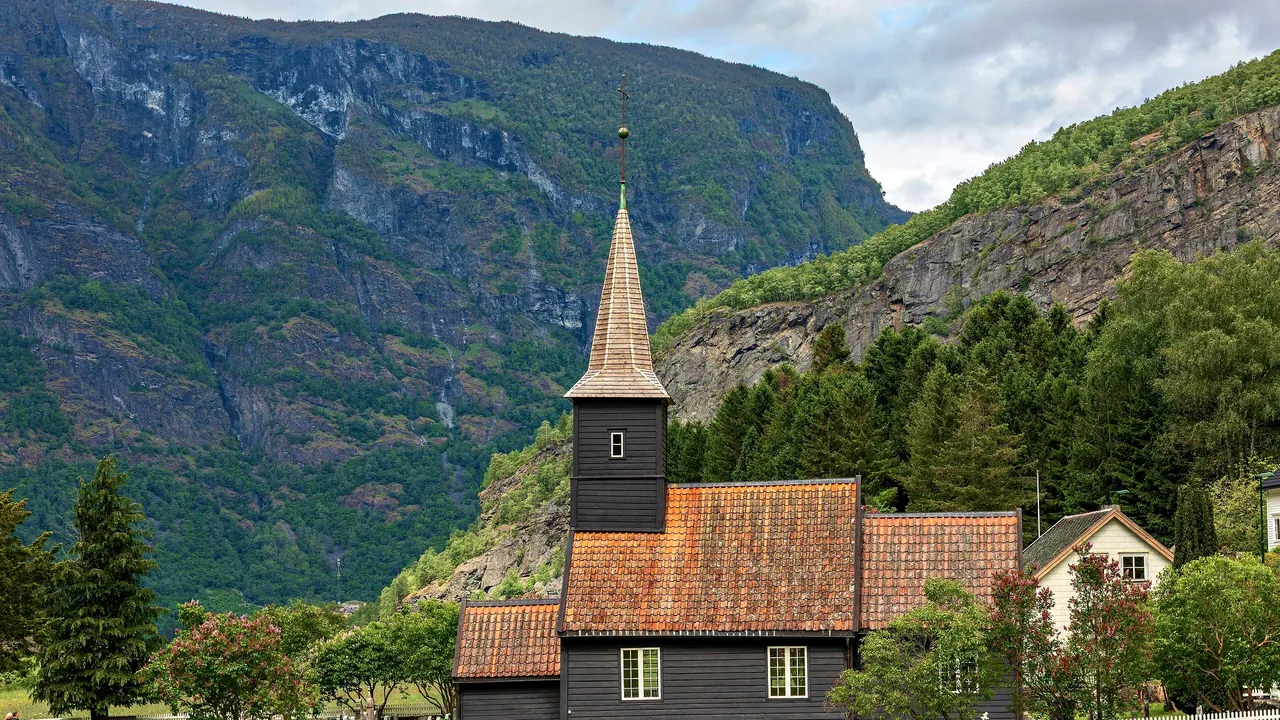
Flåm is for travellers who want the fjords themselves. It has sheer rock walls above the Aurlandsfjord, a boat into the narrow Nærøyfjord, the mountain railway up to Myrdal and long walks back down the valley. It suits a few days of hiking, cycling and paddling with quiet evenings and early nights, as long as you accept that there is little to eat, see or do once the boats stop.
Choose Oslo for
- live music and the arts
- culture and sights
- nightlife
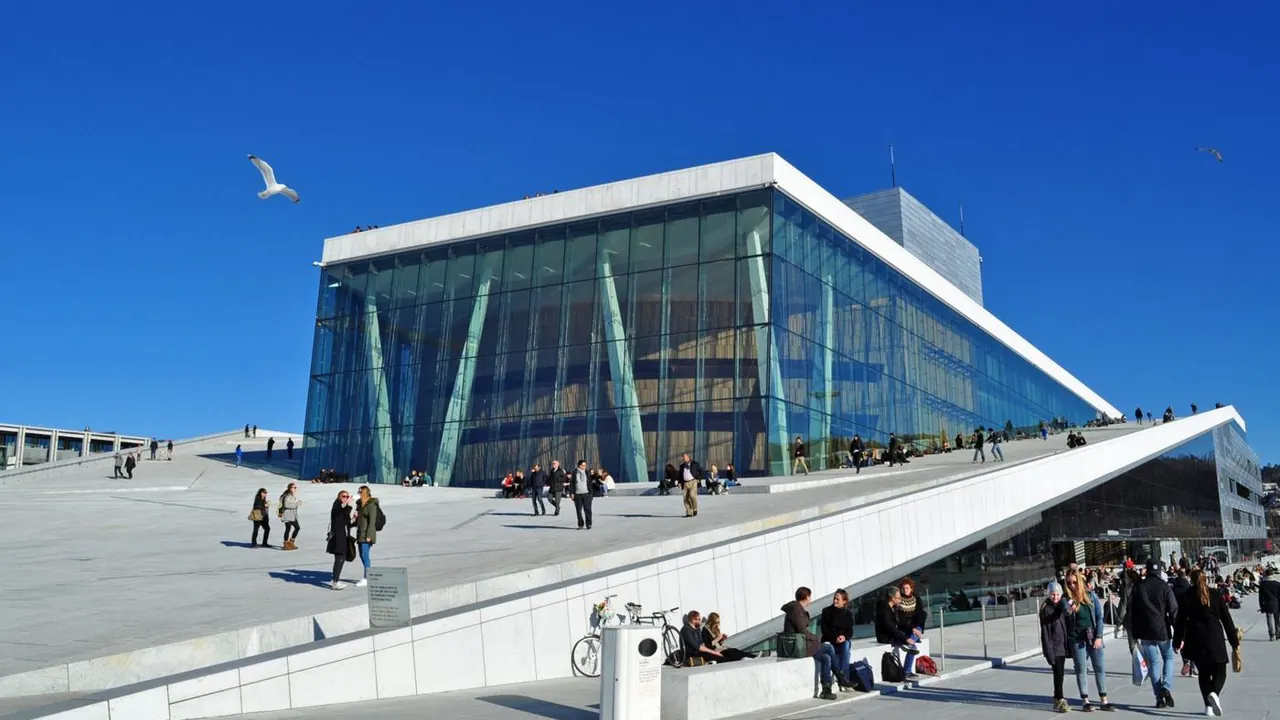
Oslo makes more sense for a rounded trip. Its museums, the Opera House, a real choice of restaurants and bars and an easy transport network fill a long weekend, and the Nordmarka forest and the fjord islands are a metro or ferry ride away. Families and anyone who wants variety rather than scenery alone will find more here. The dramatic western fjord landscape, though, is a long way off.
Scoreboard
Twelve categories on one fixed scale from 0 to 100. The shaded stretch is the gap between the two.
Your match
Pick a travel style or drag the sliders, and both match scores follow your weighting.
Wins on nature and the outdoors with your weighting.
Wins on live music and the arts and culture and sights with your weighting.
What matters to you?
Category by category
What the scores mean for a trip.
Beaches & swimming
Flåm has only shingle, rock and quayside at the head of the fjord, and snowmelt keeps the water cold, so a swim is a brief plunge, often straight out of the sauna.
Oslo is no beach destination either, but it has a proper summer swimming habit. Ferries run to the rocky shores and small coves of Hovedøya and Langøyene, there are diving platforms at Sørenga, and lakes such as Sognsvann sit at the end of a metro line.
Food & drink
Meals in Flåm come from a few hotel dining rooms, cafés serving day visitors and a brewery pub with smoked and grilled dishes. The local produce is good, notably fjord salmon and Undredal goat cheese, but there is little choice and even less in the evening.
Oslo gives you a real range, from Nordic tasting menus built on fish, game and berries to the food hall at Mathallen and the streets of Grünerløkka. Its light-roast coffee culture is a pleasure in itself.
Culture & sights
Flåm's own sights come down to the railway museum by the station and the painted wooden church of 1670 up the valley. The stave churches and old villages the area is known for lie further out.
Oslo has a proper museum city: Munch and The Scream, the National Museum, the Fram and Kon-Tiki on Bygdøy and the open-air Folk Museum. Akershus Fortress, the City Hall murals, Vigeland Park and the Opera House roof round out two or three full days, even without an old townscape.
Nightlife
After dinner in Flåm you have the brewery pub, a couple of hotel bars and a walk by the water, and nothing stays open late.
Oslo offers a real night out, if not a famous one. Grünerløkka and the streets around Youngstorget have craft beer and natural wine bars and a few electronic clubs, and in summer people drink outdoors on the waterfront at Aker Brygge. Weekends are far busier than weeknights.
Nature & outdoors
Both put serious nature on the doorstep, but Flåm's is the more spectacular. Mountainsides rise almost straight out of the Aurlandsfjord, the UNESCO-listed Nærøyfjord narrows to a few hundred metres, and the Stegastein platform juts out 650m above the water. Walking down from Myrdal or riding the Rallarvegen are proper mountain days.
Oslo's strengths are easy access and winter. The metro climbs straight into Nordmarka's lakes and trails, which become floodlit ski tracks when Flåm has far less for walkers, and ferries reach the skerries of the Oslofjord. The hills are gentle, though, and nothing near Oslo matches the western fjords.
Day trips
Outings from Flåm are rural: goat-cheese Undredal, the Viking village at Gudvangen, and, through the Lærdal tunnel, Borgund stave church and the wooden lanes of Lærdalsøyri. Bergen is close to three hours away and works better as a stop on the way in or out.
Oslo has a wider spread of towns reached by train or boat. Among them are the star-shaped fortress town of Fredrikstad, white-painted Drøbak, Viking-age Tønsberg and Lillehammer on Lake Mjøsa. None is a highlight on its own, but together they give you more variety.
Good for families
Flåm suits active families. The railway stopping beside a waterfall, the fjord boats and Gudvangen's Viking village go down well, but nothing else is designed for children, and the long hikes suit older ones better.
Oslo is easier with small children. There are playgrounds in most parks and prams on every tram, and the Bygdøy museums make a full family day, with a polar ship to climb aboard and farm animals at the Folk Museum. The hands-on science museum, Tusenfryd amusement park and winter sledding near Holmenkollen add more, though there is no zoo or aquarium.
Getting around
Flåm takes ten minutes to cross on foot, and the railway, fjord boats and buses connect it to Myrdal, Gudvangen and Voss. Outside summer, though, services thin out, and a car helps for reaching Stegastein and Lærdal.
Oslo needs almost no planning. It has a walkable centre, and trams, metro, buses and harbour ferries form one network, with an airport express train into the centre and the metro running right up to the forest edge.
Shopping & style
In Flåm, shopping means the gift shops by the station and harbour, selling trolls, knitwear and goat cheese to day visitors. Oslo is no shopping capital, but it has proper streets for it: the chains on Karl Johans gate, the old Steen & Strøm department store, Bogstadveien, and the vintage, record and design shops of Grünerløkka. Patterned knitwear and outdoor clothing are sold in both, with far more choice in Oslo.
Affordability
Both are costly by any standard, and Flåm is the harder on the wallet. Norwegian prices meet a tiny village with few rooms, and the railway and boat trips add up. Self-catering cabins, the campsite and the supermarket are the main ways to save, and the hiking is free.
Oslo is expensive too, but a city leaves more room to economise. Vigeland Park, the Opera House roof, the forest trails and the fjord islands cost nothing, and one transport pass covers the ferries.
Live music & performing arts
Apart from the odd musician in the pub on a summer evening, Flåm has no stage at all. Oslo has the national opera and ballet in the Opera House, the Oslo Philharmonic at the Konserthus, Ibsen at the National Theatre (mostly in Norwegian), small jazz and rock clubs, and outdoor festivals in summer. The scene is not large, so a short stay may not line up with much, but the choice is real.
Wellness & relaxation
Both build relaxation around the Nordic routine of sauna and cold plunge. Flåm has one floating sauna and the deep quiet of its evenings once the day visitors leave, though the harbour is crowded from late morning in summer. Oslo has a row of wood-fired saunas at the Opera House and Sørenga, many of them public and sociable and used in every season, inside a calm, green city that suits slow days.
When should you go?
Pick your month. The climate figures are measured averages, not a forecast.
Flåm in July
Oslo in July
Daytime high, °C
Rainfall in the month, mm
Where the figures come from
Flåm's temperatures are measured 59 km from the centre, at Evanger.
Flåm has no rain gauge within 25 km of the centre, so its rainfall comes from a gridded climate dataset read at the city rather than from a gauge further away.
Temperature and rainfall are climate normals, averaged over the years shown. Flåm: 2010-2025 (rainfall 1991-2020) normals, Evanger (59.3 km from centre). Oslo: 1991-2020 normals, Oslo-Blindern (4.3 km from centre).
Both are summer places. In Flåm the walking season runs from May to September, with highs around 21°C in July. The valley is driest in spring. From September the rain builds to around 100mm a month and stays there through a winter close to freezing. Oslo follows a similar curve but is a touch warmer at its peak and much drier in winter. Late spring and summer bring the most sunshine, with May and July the brightest months. The fjord reaches about 18°C in July and August, which is enough for a quick swim but not a beach day, and August is also Oslo's wettest month.
For a trip that takes in both, June and July are the best fit, with long, mild days for hiking in Flåm and for sitting outdoors in Oslo. From November to March both are cold and dark. In those months Oslo still works as a city break with skiing in its hills, while Flåm turns quiet and has less on offer for walkers.
Which traveller are you?
On an outdoors trip, Flåm is the stronger choice. You can kayak the Nærøyfjord, hike Aurlandsdalen past old summer farms and cycle the Rallarvegen, all among high mountains and waterfalls that Oslo's wooded hills and gentle islands cannot match.
For a culture and arts trip, Oslo wins easily. The Munch Museum, the National Museum, the Bygdøy exploration museums and an evening of opera or ballet fill several days. Flåm offers a small railway museum and a painted country church.
On a food and nightlife trip, Oslo is the only real option. Nordic tasting menus, specialty coffee and the bars of Grünerløkka and Youngstorget give your evenings some choice. Flåm has a handful of harbour places and a brewery pub that does not stay open late.
Before you go
| Measure | Flåm | Oslo |
|---|---|---|
| Official language | Norwegian, Nynorsk, Bokmål, Sámi | Norwegian, Nynorsk, Bokmål, Sámi |
| Currency | Norwegian Krone (NOK) | Norwegian Krone (NOK) |
| Sockets | CF230 V, 50 Hz | CF230 V, 50 Hz |
| Driving side | Right | Right |
| Time zone | UTC+1, UTC+2 in summer | UTC+1, UTC+2 in summer |
| Emergency number | Police 112, ambulance 113, fire 110 | Police 112, ambulance 113, fire 110 |
| Elevation | 49 m | 23 m |
| Main airport | Bergen Airport, Flesland (BGO)121 km from centre64 non-stop destinations | Oslo-Gardermoen International Airport (OSL)37 km from centre147 non-stop destinations |
| Public holidays this year | 13 days | 13 days |
By the numbers
| Measure | Flåm | Oslo |
|---|---|---|
| City population | 293 | 717,710 |
| Museums within 10 km | 0 | 60 |
| UNESCO World Heritage sites within 50 km | 1 | 0 |
| Swim season, months above 21 °C | - | None |
Where else could you go?
Every comparison below shares a destination with this one, so you can follow Flåm or Oslo somewhere new.