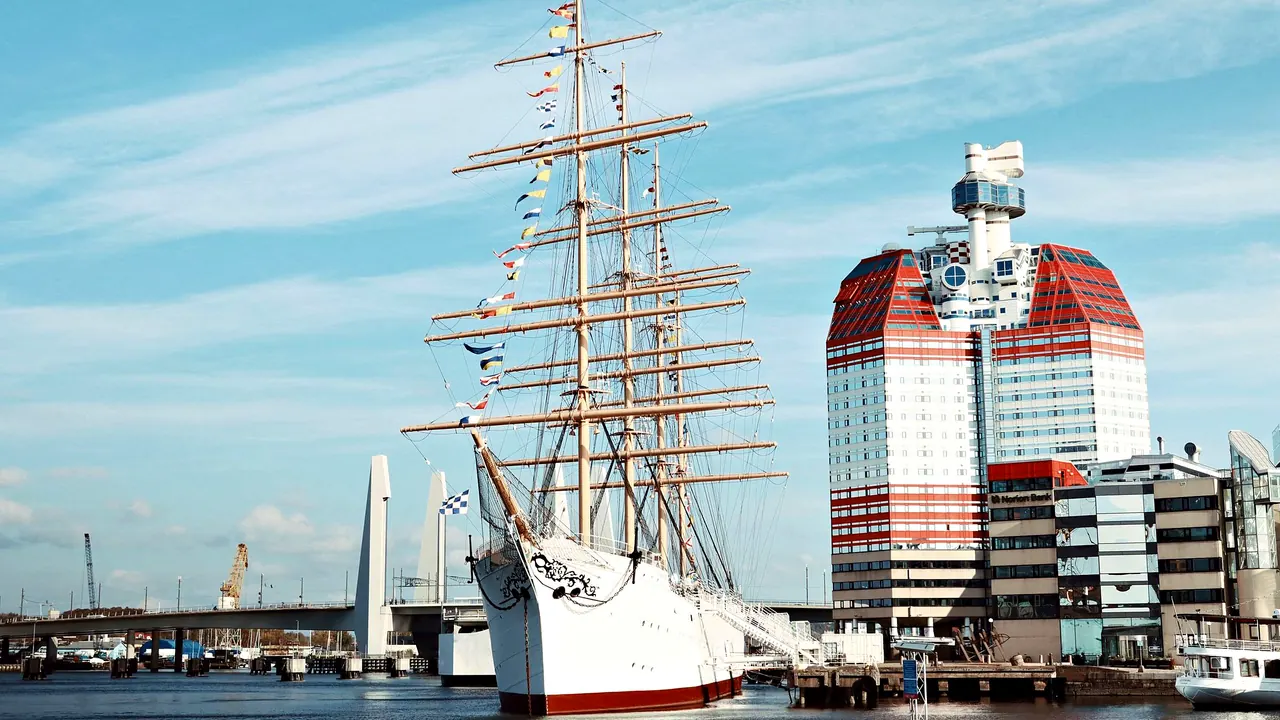
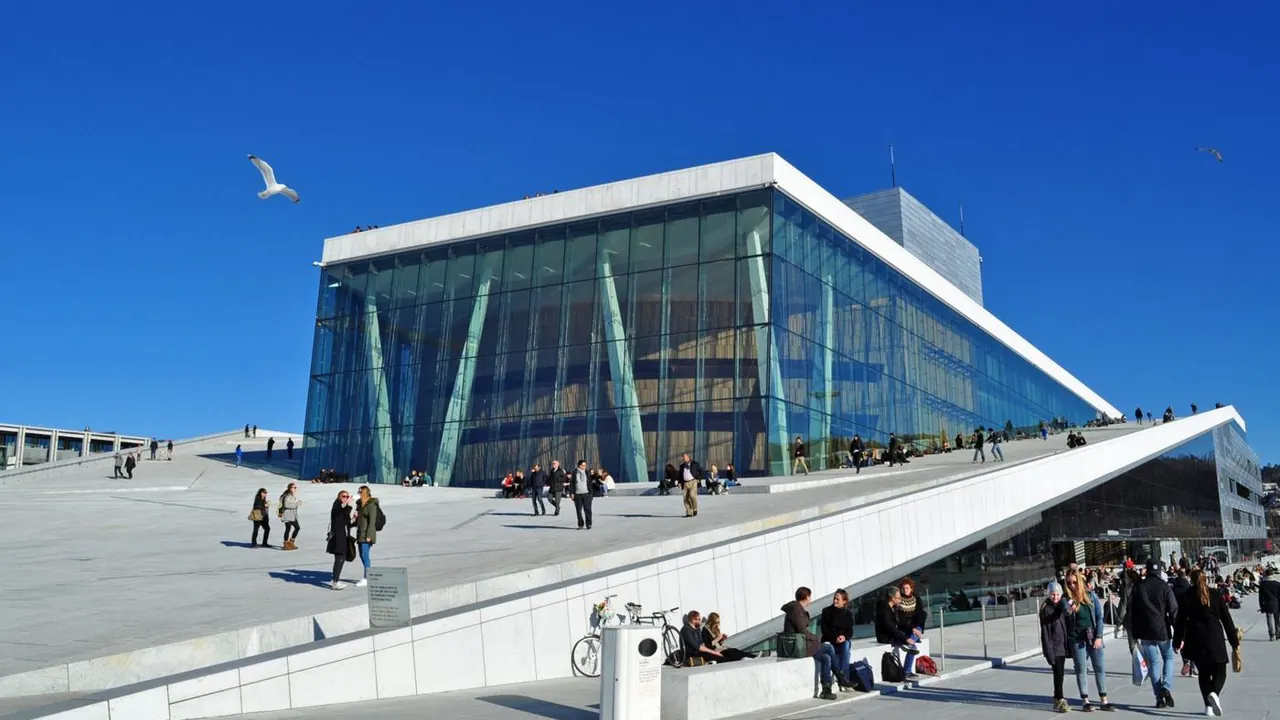
Photos: Gothenburg by Efrem Efre, Pexels License; Oslo by Beata May, CC BY-SA 4.0, cropped.
Gothenburg or Oslo?
Our verdict in twelve categories, each scored against the same fixed benchmark cities, and the climate month by month, so you can choose for your trip.
Choose Gothenburg for
- prices
- families
- food and drink
Gothenburg suits families, seafood lovers and anyone who wants Scandinavia without paying Oslo's prices. Liseberg and Universeum are a short walk from the canals, the fish halls show the Bohuslän catch, and a tram and ferry take you out to car-free granite islands. It is the easier and cheaper choice for a relaxed trip on the coast, and the better base for day trips along the shore.
Choose Oslo for
- culture and sights
- nature and the outdoors
- wellness
Oslo is for travellers who want famous museums and wild country on the doorstep. Munch, The Scream and the Bygdøy exploration museums give it far more to see, and the metro runs straight up into a forest that becomes a ski area in winter. Add the floating harbour saunas and it is the stronger city for culture, the outdoors and unwinding, as long as you can live with its prices.
Scoreboard
Twelve categories on one fixed scale from 0 to 100. The shaded stretch is the gap between the two.
Your match
Pick a travel style or drag the sliders, and both match scores follow your weighting.
Too close to call, 1 point apart
Wins on prices and families with your weighting.
Wins on culture and sights and nature and the outdoors with your weighting.
What matters to you?
Category by category
What the scores mean for a trip.
Beaches & swimming
Neither city is a beach destination, and the summer swimming season is equally short in both. The difference is the setting. Gothenburg looks out to the open Kattegat, so swimming means granite rocks and small coves along the southern shore at Askim and Hovås, or on the car-free islands such as Styrsö and Vrångö, a tram and ferry ride away.
Oslo swims in a sheltered fjord. You can jump off the boardwalks at Sørenga in the middle of town, take a harbour ferry to Hovedøya or Langøyene, or ride the metro to Sognsvann for a freshwater lake in the forest.
Food & drink
Gothenburg eats better, and the reason is seafood. Shrimp, langoustines, oysters and autumn lobster come straight off the Bohuslän coast, Feskekôrka and Stora Saluhallen show you what is in season, and the shrimp sandwich and the fika cafés of Haga give everyday eating a strong local identity.
Oslo has fine Nordic tasting menus at the top and excellent coffee, but the middle ground of brunch places and international bistros is more ordinary. Both are expensive to eat out in, and Oslo noticeably more so.
Culture & sights
Gothenburg is more interesting as a city than for its collections. The canal grid laid out by Dutch engineers, the wooden houses of Haga below the Skansen Kronan redoubt and the island fortress of Nya Älvsborg at the harbour mouth give it a real historic feel. Its art, city and design museums are good rather than famous, and a couple of days covers the essentials.
Oslo has far less old townscape but much more to see. The Munch Museum and the National Museum hold the core of Norwegian art, and the Bygdøy peninsula adds the Fram and Kon-Tiki museums and an open-air folk museum with a medieval stave church. With Vigeland Park, Akershus Fortress and the Opera House roof as well, Oslo needs a day or so more than Gothenburg.
Nightlife
The two are much alike: friendly, expensive, busy at weekends and quiet midweek. Gothenburg's nights have a student edge, with two universities filling the pubs and dive bars around Järntorget and Andra Långgatan, while Avenyn handles the mainstream clubs.
Oslo leans towards craft beer, natural wine and cocktail rooms in Grünerløkka and Grønland, with a few electronic clubs. In summer, its waterfront at Aker Brygge is the place for drinking outdoors in the long evening light.
Nature & outdoors
Oslo has more and wilder country close by. The metro climbs straight into Nordmarka, a huge forest of lakes, marked trails and waffle cabins, and in winter its floodlit cross-country tracks, downhill slopes and toboggan run are all on the public transport network. The fjord islands add kayaking and coastal walks in summer.
Gothenburg's outdoors is mostly the sea. It has bare granite islands for sailing and sea kayaking, the inlets of the Bohuslän coast and the Delsjön lakes for woodland walks. Its winters are wet and windy rather than snowy, so there is no ski season to match Oslo's.
Day trips
Gothenburg has the slightly better choice of day trips, almost all of them along the coast. You can visit the island town of Marstrand under its fortress, the seaside fortress at Varberg, or the canal locks at Trollhättan, and with a car you can reach the fishing villages of Smögen and Fjällbacka and the Bronze Age rock carvings at Tanum.
Oslo's outings are pleasant but less striking. They include the star-shaped fortress town of Fredrikstad, the white wooden houses of Drøbak, and Lillehammer's Olympic jumps two hours north. Norway's famous fjords are well out of reach.
Good for families
Gothenburg is the stronger family city because its big attractions are concentrated in the centre. Liseberg, Scandinavia's largest amusement park, and Universeum, with its aquarium and indoor rainforest, are a short walk from the centre. Slottsskogen has free seals and penguins, and children can climb through a destroyer and a submarine at the harbour.
Oslo has good family days of its own: climbing aboard the polar ship Fram, the farm animals at the Folk Museum and sledding near Holmenkollen. But it has no zoo, aquarium or major theme park in town, and it costs a family more.
Getting around
Both have walkable centres and integrated tickets that include the island ferries, and you need a car in neither. Oslo is a little smoother. Its metro runs fast across the city and up into the forested hills, and an express train links the airport to the centre.
Gothenburg has no metro. It relies on Scandinavia's largest tram network, which reaches almost everywhere but slows down where the lines meet in the centre. A car is useful only for the fishing villages up the coast.
Shopping & style
Shopping is on a similar level and mostly Scandinavian high street in both. Gothenburg spreads its independent shops more widely. There are crafts in Haga, vintage and record shops in Linnéstaden and Majorna, and the long pedestrian run of Kungsgatan for Nordic labels.
Oslo has more luxury under one roof at Steen & Strøm, a department store dating from the eighteenth century, and better traditional souvenirs, such as patterned knitwear, silver and outdoor clothing.
Affordability
Neither is cheap, but Gothenburg costs clearly less. Hotels, meals and especially drinks are dear by European standards, yet not punishing. The weekday set lunch and summer hotel rates, when business travel stops, help a lot.
Oslo is among the most expensive cities you can visit, and a day of museums, coffee and taxis adds up fast. Its free pleasures help balance this: Vigeland Park, the Opera House roof, the forest trails and the fjord islands.
Live music & performing arts
The two are broadly level, with different strengths. Gothenburg's highlight is its orchestra, the Gothenburg Symphony, Sweden's national orchestra, in the 1930s Konserthuset. Its harbour-side opera house is known for contemporary dance, and its club stages have a long indie and metal tradition.
Oslo's highlight is the Opera House itself, home to the national opera and ballet, along with Ibsen at the National Theatre and a jazz scene with a long festival history. Both cities hold a big outdoor music festival in a park in August.
Wellness & relaxation
Oslo makes more of the Nordic way to relax. Wood-fired saunas, many of them floating, line the harbour by the Opera House and at Sørenga. They are public and sociable, and people climb down into the fjord in every season, which makes it easy for a visitor to join in.
Gothenburg has the same sauna-and-sea habit, but it is quieter and found on bathing jetties and rocks. Its main bath, Valhallabadet, is plainly municipal. You go there for calm parks and slow ferry rides rather than any real bathing culture.
When should you go?
Pick your month. The climate figures are measured averages, not a forecast.
Gothenburg in July
Oslo in July
Daytime high, °C
Rainfall in the month, mm
Temperature and rainfall are climate normals, averaged over the years shown. Gothenburg: 1991-2020 normals, Goteborg Save Airport (9.8 km from centre). Oslo: 1991-2020 normals, Oslo-Blindern (4.3 km from centre).
Both cities are at their best from June to August, when the days are long and warm enough for walking and swimming. Gothenburg peaks at about 21°C, Oslo slightly warmer at about 23°C, and in both the sea reaches about 18°C at its warmest, so a dip is pleasant only in high summer. Oslo gets more sunshine in May and June, but late summer there is wetter, with August its rainiest month at about 104mm. Gothenburg's rain is more evenly spread and builds up in autumn.
Winter is where they part. Gothenburg stays mild and damp, with grey, wet days just above freezing and very little sun. Oslo is colder, with highs around 0°C in January, and the drier, snowier weather makes it a real winter destination for skiing and sledding in the hills. Gothenburg has nothing like that. For city walking, May and September suit both.
Which traveller are you?
On a family trip with children, Gothenburg is the clear pick. Liseberg's rides, Universeum's aquarium and rainforest, and the free animal park in Slottsskogen are all close to the centre. Oslo is friendly to children but has nothing on that scale.
For a culture and arts trip, choose Oslo. The Munch Museum, the National Museum and the Bygdøy museums of polar and ocean exploration outweigh Gothenburg's pleasant but modest collections, and an evening of opera or ballet inside the Opera House rounds it off.
On a tight budget, Gothenburg is the more forgiving of the two. It is still expensive, but Oslo is one of the costliest cities in Europe. The weekday set lunch and a transport ticket that includes the island ferries make your money go further.
Before you go
| Measure | Gothenburg | Oslo |
|---|---|---|
| Official language | Swedish | Norwegian, Nynorsk, Bokmål, Sámi |
| Currency | Swedish Krona (SEK) | Norwegian Krone (NOK) |
| Sockets | CF230 V, 50 Hz | CF230 V, 50 Hz |
| Driving side | Right | Right |
| Time zone | UTC+1, UTC+2 in summer | UTC+1, UTC+2 in summer |
| Emergency number | 112 | Police 112, ambulance 113, fire 110 |
| Elevation | 12 m | 23 m |
| Main airport | Göteborg Landvetter Airport (GOT)19 km from centre79 non-stop destinations | Oslo-Gardermoen International Airport (OSL)37 km from centre147 non-stop destinations |
| Public holidays this year | 16 days | 13 days |
By the numbers
| Measure | Gothenburg | Oslo |
|---|---|---|
| City population | 674,529 | 717,710 |
| People per km² | 2,484 | - |
| Museums within 10 km | 39 | 60 |
| UNESCO World Heritage sites within 50 km | 0 | 0 |
| Swim season, months above 21 °C | None | None |
Where else could you go?
Every comparison below shares a destination with this one, so you can follow Gothenburg or Oslo somewhere new.
- Aarhusvs Gothenburg
- Copenhagenvs Gothenburg
- Malmovs Gothenburg
- Stavangervs Oslo
- Bergenvs Oslo
- Stavangervs Gothenburg