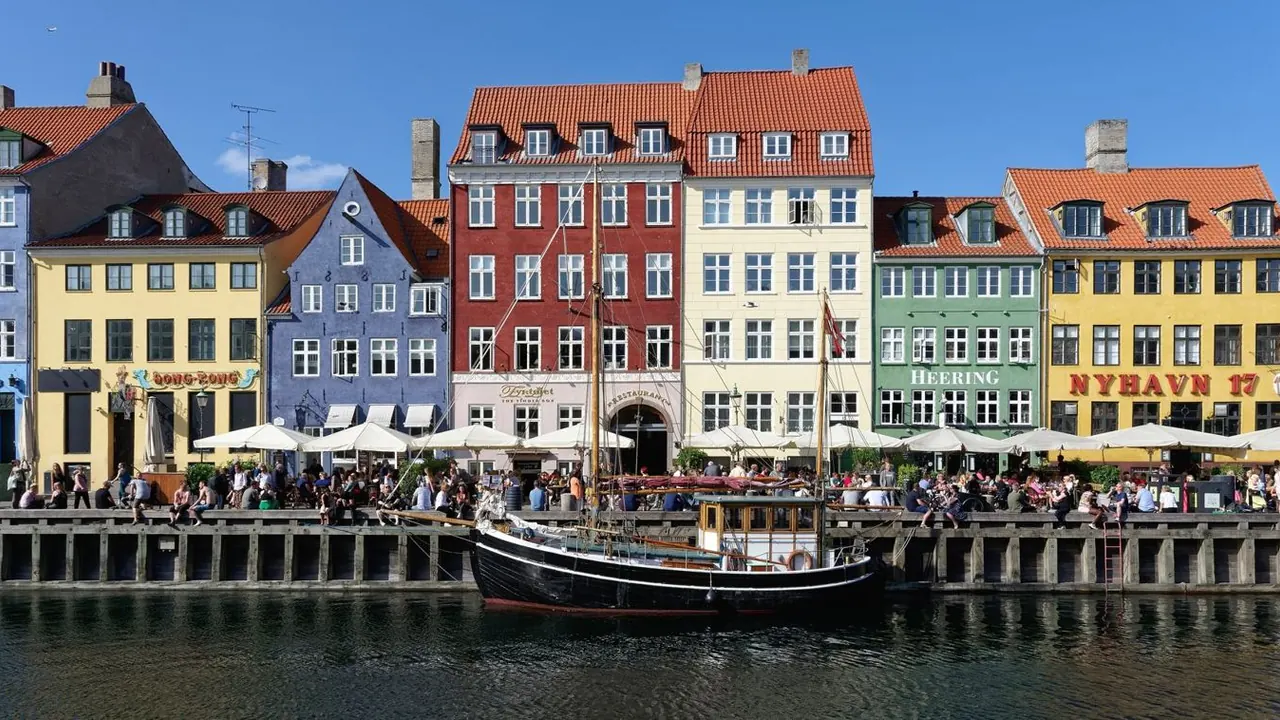
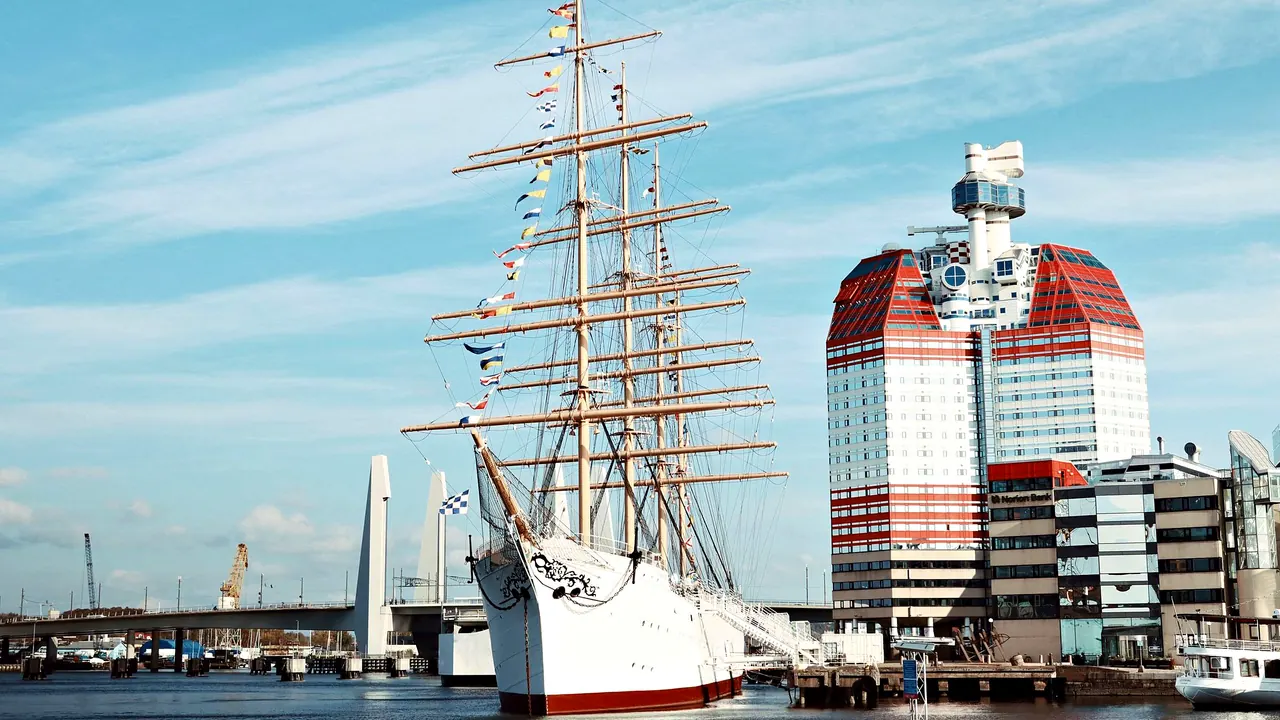
Photos: Copenhagen by Jakub Hałun, CC BY-SA 4.0, cropped; Gothenburg by Efrem Efre, Pexels License.
Copenhagen or Gothenburg?
Our verdict in twelve categories, each scored against the same fixed benchmark cities, and the climate month by month, so you can choose for your trip.
Choose Copenhagen for
- culture and sights
- shopping
- nightlife
Copenhagen is the better pick for a full city break with plenty to see. It has royal palaces and crown jewels, a food scene that helped redefine Nordic cooking, a design-led shopping district and a ballet and opera tradition behind it. The train lines out to Kronborg, Louisiana, Roskilde and across the bridge to Sweden add several strong days on top. You pay for all of it, though, as it is one of the costliest cities in Europe.
Choose Gothenburg for
- nature and the outdoors
- prices
Gothenburg suits travellers who would rather be by the water than in a museum. The granite islands of the southern archipelago are a tram and a ferry away, the seafood comes straight off the Bohuslän coast, and the pace is easier. It is still expensive, but less so than Copenhagen. Liseberg and Universeum make it every bit as good for children. Go for the coast and the shellfish, not for grand sights.
Scoreboard
Twelve categories on one fixed scale from 0 to 100. The shaded stretch is the gap between the two.
Your match
Pick a travel style or drag the sliders, and both match scores follow your weighting.
Wins on culture and sights and shopping with your weighting.
Wins on nature and the outdoors and prices with your weighting.
What matters to you?
Category by category
What the scores mean for a trip.
Beaches & swimming
Neither city is a beach destination, and both offer swimming as a summer extra in water of about 18-20°C. The difference is the kind of shore. Copenhagen has flat sand: Amager Strandpark's long beach and lagoon a few metro stops out, classic Bellevue to the north, and harbour baths where you can swim right in the city.
Gothenburg swaps sand for smooth granite rocks and small coves at Askim and Saltholmen and on islands such as Styrsö and Vrångö. Getting there is a short trip by tram and ferry, and it feels more like a day out by the sea than a dip between sights.
Food & drink
Copenhagen has the stronger food scene. Its foraging and fermentation restaurants draw travellers in their own right, and below them sit smørrebrød lunches, a bakery on almost every corner, Torvehallerne, and the natural wine and coffee culture of Vesterbro and Nørrebro.
Gothenburg is narrower but excellent at what it does: shellfish. Langoustines, oysters and the autumn lobster catch come in from Bohuslän, and Feskekôrka and Stora Saluhallen show what is in season. Beyond seafood and fika in Haga, everyday choice is thinner.
Culture & sights
Copenhagen has much more to see. Rosenborg with the crown jewels, Amalienborg's guard change, Christiansborg over its medieval ruins, Nyhavn and the Round Tower, plus the National Museum and the Glyptotek, fill several days.
Gothenburg's appeal is atmosphere rather than landmarks. It has a Dutch-planned canal grid, the wooden houses of Haga under Skansen Kronan, and the art museum on Götaplatsen. Two days is enough.
Nightlife
Copenhagen stays out later and offers more. The converted butchers' halls of Kødbyen, the scruffier bars of Nørrebro and a good cocktail scene keep weekends going until morning.
Gothenburg's nights are friendly and student-driven, around Järntorget, Linnégatan and Andra Långgatan, with mainstream clubs on Avenyn. The club scene is small, though, and most places close in the early hours.
Nature & outdoors
Gothenburg has the better outdoors. The bare granite islands of the southern archipelago, with heather, coastal paths and sea kayaking, start at the city's edge. The rocky Bohuslän coast, the Delsjön forest lakes and the Bohusleden trail are close by too.
Copenhagen's countryside is flat and gentle. You get deer among the oaks of Dyrehaven, an easy cycle along the Øresund and summer paddling in the harbour. For real drama you have to go about two hours to the cliffs of Møns Klint.
Day trips
Copenhagen has more easy day trips by train. Kronborg at Helsingør, Frederiksborg and Louisiana sit on one line, Roskilde has its cathedral and Viking ships, and Malmö and Lund are only half an hour or so across the bridge.
Gothenburg's trips follow the coast. Marstrand under its fortress, Varberg and the Trollhättan locks are easy, but the fishing villages of Smögen and Fjällbacka and the rock carvings at Tanum really need a car.
Good for families
Both are excellent with children, and each has a famous amusement park within walking distance of the centre. Copenhagen's Tivoli is the older and more charming of the two, with wooden rides and evening lights, while Gothenburg's Liseberg has the bigger, more thrilling rides.
Beyond that, Copenhagen adds Den Blå Planet, the zoo and Experimentarium. Gothenburg has a strong answer for rainy days in Universeum's aquarium and rainforest, plus free seals and penguins in Slottsskogen and a submarine to climb through in the harbour.
Getting around
Copenhagen is slightly easier to get around. Its driverless metro runs around the clock and reaches the airport in about a quarter of an hour, and its separated bike lanes make cycling the natural way to see the city.
Gothenburg relies on trams instead. The network is large and the ticket also covers the river ferries and island boats, but trams slow down where the lines meet in the centre.
Shopping & style
Copenhagen is the better place for shopping, especially for design. Furniture, lighting and ceramics shops, Royal Copenhagen on Amagertorv, Strøget, and the department stores Illum and Magasin du Nord give it real depth.
Gothenburg is Swedish high street along Kungsgatan and in Nordstan. Its most rewarding browsing is the vintage, craft and record shops of Haga, Majorna and Andra Långgatan.
Affordability
Both are expensive, but Copenhagen is harder on the wallet. Hotels, meals and drinks cost a lot at every level, so bakeries, supermarket picnics and a bike do much of the saving.
Gothenburg is a notch easier. Weekday set lunches are the smart way to eat well, the transport ticket includes the archipelago ferries, and hotel rates can soften at weekends and in the Swedish summer.
Live music & performing arts
Copenhagen gives you more choice for an evening out. Its main draw is the Royal Danish Ballet, which still performs the Bournonville repertoire, and Gothenburg has nothing to match it. Behind the ballet come opera on the harbour, a superb concert hall out in Ørestad and a jazz scene that peaks with a July festival spread across the city. Plays are mostly in Danish and hard going for visitors, so your tickets will mostly go on ballet and concerts.
Gothenburg's range is narrower, and its real strength is the Gothenburg Symphony Orchestra, Sweden's national orchestra, in its 1930s hall on Götaplatsen. GöteborgsOperan adds opera, musicals and a contemporary dance company with a good name in Europe. The city's indie and metal side plays in the clubs around Järntorget, and in August Way Out West brings big international acts to Slottsskogen. It makes for a good night or two during a stay rather than a reason to book, and the drama is largely in Swedish.
Wellness & relaxation
Both follow the Nordic pattern of sauna and cold plunge, with no thermal springs. Copenhagen does it more fully, with wood-fired saunas floating in the harbour, the sea baths at Kastrup and Amager, and a calm city of lakes and palace gardens.
Gothenburg is simpler. You get a sauna and then a dip off the rocks or jetties, the plain municipal pools of Valhallabadet, and the slower pace of a ferry out to the islands.
When should you go?
Pick your month. The climate figures are measured averages, not a forecast.
Copenhagen in July
Gothenburg in July
Daytime high, °C
Rainfall in the month, mm
Temperature and rainfall are climate normals, averaged over the years shown. Copenhagen: 1991-2020 normals, Koebenhavn / Landbohoejskolen (2.4 km from centre). Gothenburg: 1991-2020 normals, Goteborg Save Airport (9.8 km from centre).
Both cities have short summers. June to August is the only stretch warm enough for swimming, with the sea reaching about 18°C in August at both. Copenhagen is a little warmer, with July highs around 23°C against Gothenburg's 21°C. It is also clearly drier through the year: even its wettest month, August, stays near 74mm. Neither city is ever too hot for walking, so late spring and early autumn are pleasant for sightseeing in both.
The real difference comes from autumn onwards. Gothenburg turns wet, with rain close to 95mm in October and staying heavy right through winter, and its sunshine falls from long summer days to almost none by December. Copenhagen's winters are just as cold, with highs of 4°C, but noticeably less rainy, so a winter city break works better there. For Gothenburg's islands and coast, aim for May to early September.
Which traveller are you?
On a culture and arts trip, Copenhagen keeps both your days and your evenings full. You can spend mornings among palaces and museums and still end on a ballet or opera night by the harbour. Gothenburg's orchestra is excellent, but its stages and sights run out sooner.
For an outdoors trip, Gothenburg lets you leave the city behind without a car. You can spend whole days on island paths, paddling between skerries and swimming off sun-warmed rock, then be back in town for dinner. Copenhagen's outdoors fills an afternoon on a bike rather than a day.
On a trip on a tight budget, Gothenburg is the safer bet. Neither city is cheap, but a stay costs noticeably less, and its best days, spent out on the coast, cost very little. In Copenhagen the savings come from going without, not from the city itself.
Before you go
| Measure | Copenhagen | Gothenburg |
|---|---|---|
| Official language | Danish | Swedish |
| Currency | Danish Krone (DKK) | Swedish Krona (SEK) |
| Sockets | CEFK230 V, 50 Hz | CF230 V, 50 Hz |
| Driving side | Right | Right |
| Time zone | UTC+1, UTC+2 in summer | UTC+1, UTC+2 in summer |
| Emergency number | 112 | 112 |
| Elevation | 14 m | 12 m |
| Main airport | Copenhagen Kastrup Airport (CPH)8 km from centre196 non-stop destinations | Göteborg Landvetter Airport (GOT)19 km from centre79 non-stop destinations |
| Public holidays this year | 14 days | 16 days |
By the numbers
| Measure | Copenhagen | Gothenburg |
|---|---|---|
| City population | 667,099 | 674,529 |
| People per km² | 7,339 | 2,484 |
| Museums within 10 km | 72 | 39 |
| UNESCO World Heritage sites within 50 km | 5 | 0 |
| Swim season, months above 21 °C | None | None |
Where else could you go?
Every comparison below shares a destination with this one, so you can follow Copenhagen or Gothenburg somewhere new.
- Malmovs Copenhagen
- Aarhusvs Copenhagen
- Aarhusvs Gothenburg
- Malmovs Gothenburg
- Oslovs Gothenburg
- Hamburgvs Copenhagen