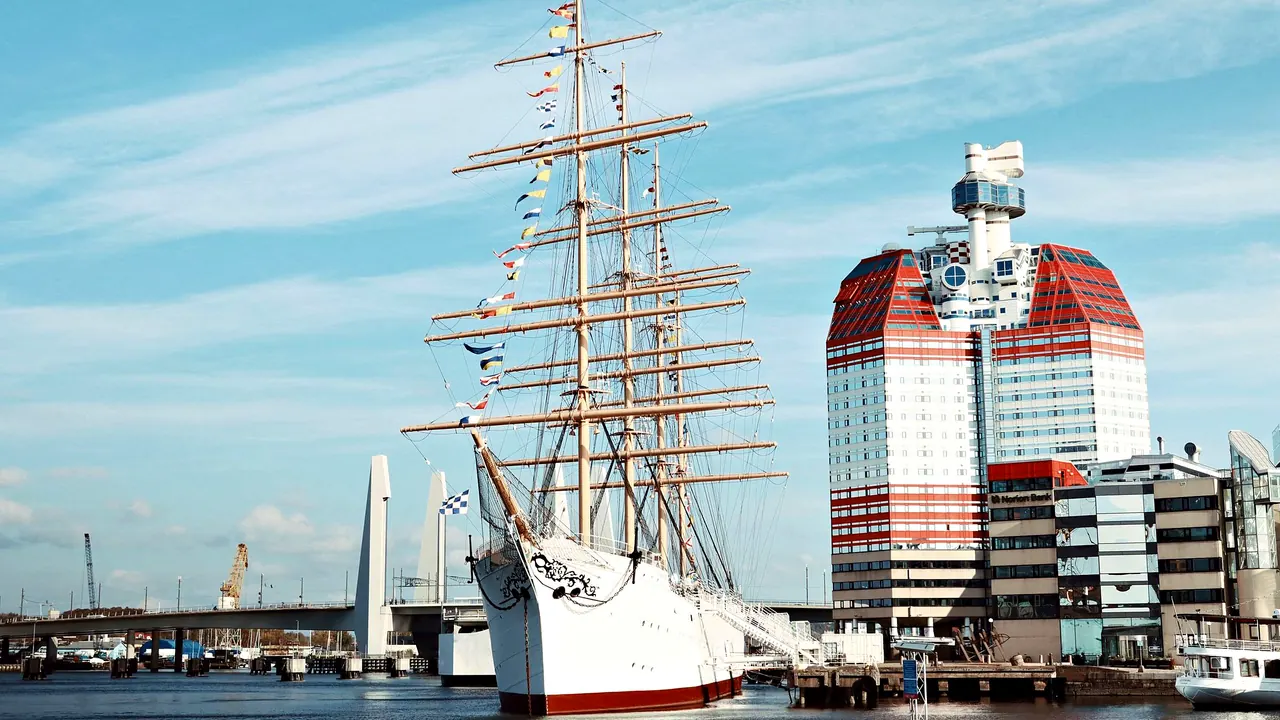
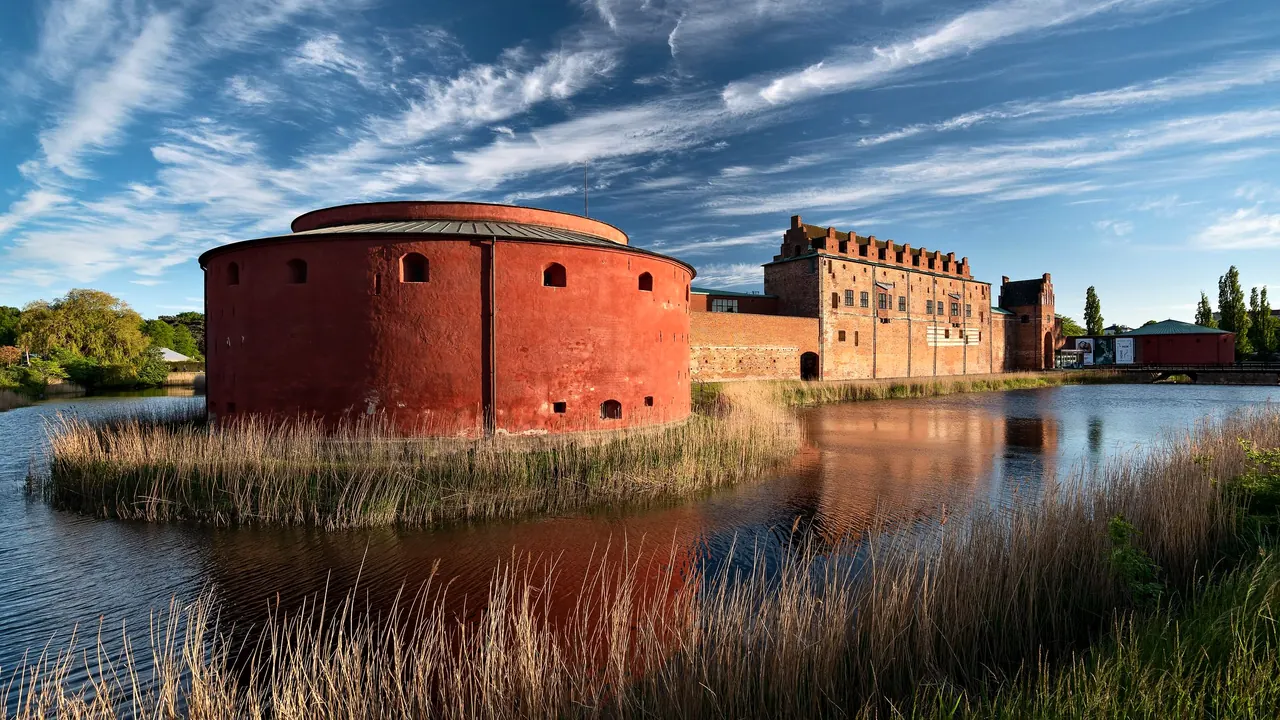
Photos: Gothenburg by Efrem Efre, Pexels License; Malmo by Kateryna Baiduzha, CC BY-SA 4.0, cropped.
Gothenburg or Malmo?
Our verdict in twelve categories, each scored against the same fixed benchmark cities, and the climate month by month, so you can choose for your trip.
Choose Gothenburg for
- families
- nature and the outdoors
- food and drink
Gothenburg is the better pick for families and for anyone who wants the sea to be part of the trip. Liseberg and Universeum are a short walk from the centre, and a tram and ferry take you to the granite islands of the car-free southern archipelago. Seafood from the Bohuslän coast gives the food a clear identity, and the city also has the fuller programme of concerts, opera and dance.
Choose Malmo for
- day trips
- wellness
- beaches
Malmo suits travellers who want a base more than a destination. Copenhagen, Lund and the Danish shore are short train rides away, so a modest city becomes a trip across two countries. The sauna and sea ritual at Ribersborgs Kallbadhus makes it the calmer choice for a restful stay, and its sandy beach on the edge of town is simpler on a hot day than a trip out to the islands.
Scoreboard
Twelve categories on one fixed scale from 0 to 100. The shaded stretch is the gap between the two.
Your match
Pick a travel style or drag the sliders, and both match scores follow your weighting.
Too close to call, 2 points apart
Wins on families and nature and the outdoors with your weighting.
Wins on day trips and wellness with your weighting.
What matters to you?
Category by category
What the scores mean for a trip.
Beaches & swimming
Neither city is a beach destination. Both have the same short, weather-dependent season and cold water. What differs is the setting: in Gothenburg you swim from smooth granite rocks and small coves at Askim and Hovås, or out on islands such as Styrsö and Vrångö, a tram and ferry ride away.
Malmo has a proper sandy beach, Ribersborg, a short cycle from the centre. Its water is shallow and calm, which suits small children, and there is finer, emptier sand at Skanör and Falsterbo half an hour to the south. For a quick swim between sights Malmo is simpler. For clear water and a day on the rocks, choose Gothenburg.
Food & drink
Gothenburg eats better, mostly thanks to the sea. Shrimp, langoustines, oysters and the autumn lobster catch from the Bohuslän coast fill Feskekôrka and Stora Saluhallen. Its fine dining, built on the same catch, is unusually strong for a city of its size.
Malmo's appeal is different and cheaper: falafel counters and Middle Eastern bakeries around Möllevångstorget, plus Skåne country cooking such as smoked eel and goose dinners in November. Fika is a serious habit in both cities. In both, dinner out is expensive, so the set lunch is the sensible main meal.
Culture & sights
There is little to choose between them, and in either city a couple of days covers the essentials. Gothenburg's character comes from its Dutch-planned canals, the wooden houses of Haga and a solid set of museums, with Nordic painting at the Museum of Art and design at the Röhsska. Malmo's historic core is smaller and older: Stortorget, the half-timbered houses of Lilla Torg, St Petri and the moated Malmöhus castle, with the twisting Turning Torso in the Western Harbour as a modern counterpoint.
Nightlife
Neither city is worth the trip for a night out. Both are quiet on weeknights and drinks are expensive. Gothenburg has a little more range: mainstream clubs on Kungsportsavenyn, and a dense cluster of student pubs, cocktail bars and dive bars around Järntorget and Andra Långgatan, kept busy by two universities.
Malmo's evenings are looser and smaller. They centre on the multicultural bars and late-opening kitchens of Möllevången, with terraces on Lilla Torg for summer drinks. Its real advantage is that Copenhagen is a short train ride across the bridge.
Nature & outdoors
Gothenburg is the better place for time outdoors. The bare granite islands of the southern archipelago, with heather, coastal paths and sea kayaking, are a short ferry ride from town. The Delsjön lakes offer forest walks on the eastern edge of the city, and the Bohusleden trail starts nearby.
Malmo is surrounded by flat farmland and beech woods, best seen by bike. The more dramatic landscapes, Söderåsen's forested ravine and the sea cliffs of Kullaberg, are about an hour away. Falsterbo's autumn migration of birds of prey is something Gothenburg cannot match, though.
Day trips
Malmo is clearly ahead here. Copenhagen is about thirty-five minutes away by train across the Öresund Bridge, and Lund's Romanesque cathedral is ten minutes away. Kronborg Castle, Louisiana and Roskilde's Viking ships are all within reach, as are Ystad and Ales Stenar on the Swedish side.
Gothenburg's outings are pleasant but more local: the island town of Marstrand, Bohus fortress, Varberg and the locks at Trollhättan. The fishing villages and Tanum rock carvings further north are best done with a car, and there is no capital city close enough for a comfortable return trip.
Good for families
Gothenburg is far better set up for children. Liseberg, Scandinavia's largest amusement park, is a short walk from the centre, and Universeum next door covers rainy days with its aquarium and indoor rainforest. Slottsskogen's free animal park has seals and penguins, and in the harbour children can climb through a destroyer and a submarine.
Malmo is just as relaxed and easy with a pram, but it has no zoo, theme park or large aquarium. The small aquarium at Malmöhus, the submarine at the technology museum and the shallow city beach fill a few days well. After that, older children may get restless.
Getting around
Both centres are compact and flat enough to walk, and you need a car in neither town. Gothenburg relies on Scandinavia's largest tram network, and one ticket also covers the buses, the river ferries and the boats to the archipelago. Trams do slow down where the lines meet in the centre.
Malmo has no trams. It is a cycling city first, with separate bike lanes and a bike-share scheme that reach the beach and the Western Harbour, and buses fill the gaps. Its underground rail link to Lund, Copenhagen Airport and Copenhagen itself gives it the better connections beyond the city.
Shopping & style
Shopping is much the same in both: Scandinavian high-street labels, little luxury, and the best browsing in the smaller districts. Gothenburg has the longer pedestrian street in Kungsgatan, and more independent, vintage and record shops across Haga, Linnéstaden and Majorna. Malmo's strengths are the design and homeware shops around Lilla Torg and Gamla Väster and the open-air market on Möllevångstorget, and Copenhagen is close enough for anything bigger.
Affordability
Both cities are expensive by European standards, and the same Swedish habits help in each: make the weekday set lunch your main meal and keep evenings in bars short, because alcohol is heavily taxed. Malmo is slightly gentler, with hotel rooms that are reasonable by Nordic standards and cheap falafel counters and kitchens around Möllevången.
In Gothenburg the savings come elsewhere. The transport ticket includes the island ferries, a picnic on the rocks costs nothing, and hotel rates can drop at weekends and during the Swedish summer, when business travel falls away.
Live music & performing arts
Gothenburg has the deeper programme. The Gothenburg Symphony Orchestra, Sweden's national orchestra, plays in the 1930s Konserthuset on Götaplatsen, and the harbour-side GöteborgsOperan is home to a contemporary dance company with a strong name in Europe. A long indie and metal tradition keeps the venues around Järntorget busy, and Way Out West brings major acts to Slottsskogen in August.
Malmo still does well for its size. It has one of Scandinavia's largest opera stages, the Malmö Symphony Orchestra at Malmö Live and free street concerts during the Malmö Festival. In both cities, theatre is mostly in Swedish.
Wellness & relaxation
Malmo has the more memorable way to unwind. Ribersborgs Kallbadhus, a wooden bathhouse from the 1890s standing on a pier, has wood-fired saunas with steps down into the sea, and locals keep up the ritual all winter. The long, flat seafront adds calm evening walks.
Gothenburg has the same habit of a sauna followed by a plunge in the sea, but it is spread across bathing jetties and rocks, with Valhallabadet near Liseberg as a plain public option. Its calm comes more from the ferries to the islands and its quiet parks than from any one place.
When should you go?
Pick your month. The climate figures are measured averages, not a forecast.
Gothenburg in July
Malmo in July
Daytime high, °C
Rainfall in the month, mm
Where the figures come from
Malmo's temperatures are measured 27 km from the centre, at Falsterbo.
Malmo has no rain gauge within 25 km of the centre, so its rainfall comes from a gridded climate dataset read at the city rather than from a gauge further away.
Temperature and rainfall are climate normals, averaged over the years shown. Gothenburg: 1991-2020 normals, Goteborg Save Airport (9.8 km from centre). Malmo: 1991-2020 normals, Falsterbo (27.3 km from centre).
The two cities have almost the same temperatures through the year. July and August are the only months warm enough to swim, with afternoons around 21°C and the sea at about 18°C in both. From November to March both are cold and dark, with highs in low single figures. Late spring and September are the comfortable months for walking the streets: mild, though not warm.
The real difference is rain. Gothenburg is wetter all year, and autumn is its wettest stretch, with October reaching 95mm. Malmo's wettest month stays around 65mm, and its spring is especially dry. Gothenburg does get long, sunny summer days, at their best in July, but it sees very little sun in midwinter, so a winter visit there is spent mostly indoors.
Which traveller are you?
On a family trip with children, Gothenburg is the clear choice. Liseberg, Universeum and the free animal park in Slottsskogen are all close to the centre. Malmo's attractions for children are modest, and older children may run out of things to do within a few days.
For an outdoors trip, Gothenburg is the stronger choice. The granite islands of the southern archipelago are good for walking, cycling and sea kayaking, a ferry ride from town, and the Delsjön lakes add forest. Malmo's flat farmland is gentler, and its best walking is an hour away.
On a relaxing and wellness trip, Malmo is the better fit. Ribersborgs Kallbadhus, the 1890s bathhouse on its pier, offers wood-fired saunas and sea dips all year, and the long, flat seafront suits slow evening walks. Gothenburg's sauna habit is plainer and more scattered.
Before you go
| Measure | Gothenburg | Malmo |
|---|---|---|
| Official language | Swedish | Swedish |
| Currency | Swedish Krona (SEK) | Swedish Krona (SEK) |
| Sockets | CF230 V, 50 Hz | CF230 V, 50 Hz |
| Driving side | Right | Right |
| Time zone | UTC+1, UTC+2 in summer | UTC+1, UTC+2 in summer |
| Emergency number | 112 | 112 |
| Elevation | 12 m | 12 m |
| Main airport | Göteborg Landvetter Airport (GOT)19 km from centre79 non-stop destinations | Copenhagen Kastrup Airport (CPH)22 km from centre196 non-stop destinations |
| Public holidays this year | 16 days | 16 days |
By the numbers
| Measure | Gothenburg | Malmo |
|---|---|---|
| City population | 674,529 | 339,316 |
| People per km² | 2,484 | 4,205 |
| Museums within 10 km | 39 | 24 |
| UNESCO World Heritage sites within 50 km | 0 | 2 |
| Swim season, months above 21 °C | None | None |
Where else could you go?
Every comparison below shares a destination with this one, so you can follow Gothenburg or Malmo somewhere new.
- Copenhagenvs Malmo
- Aarhusvs Malmo
- Aarhusvs Gothenburg
- Copenhagenvs Gothenburg
- Oslovs Gothenburg
- Hamburgvs Malmo