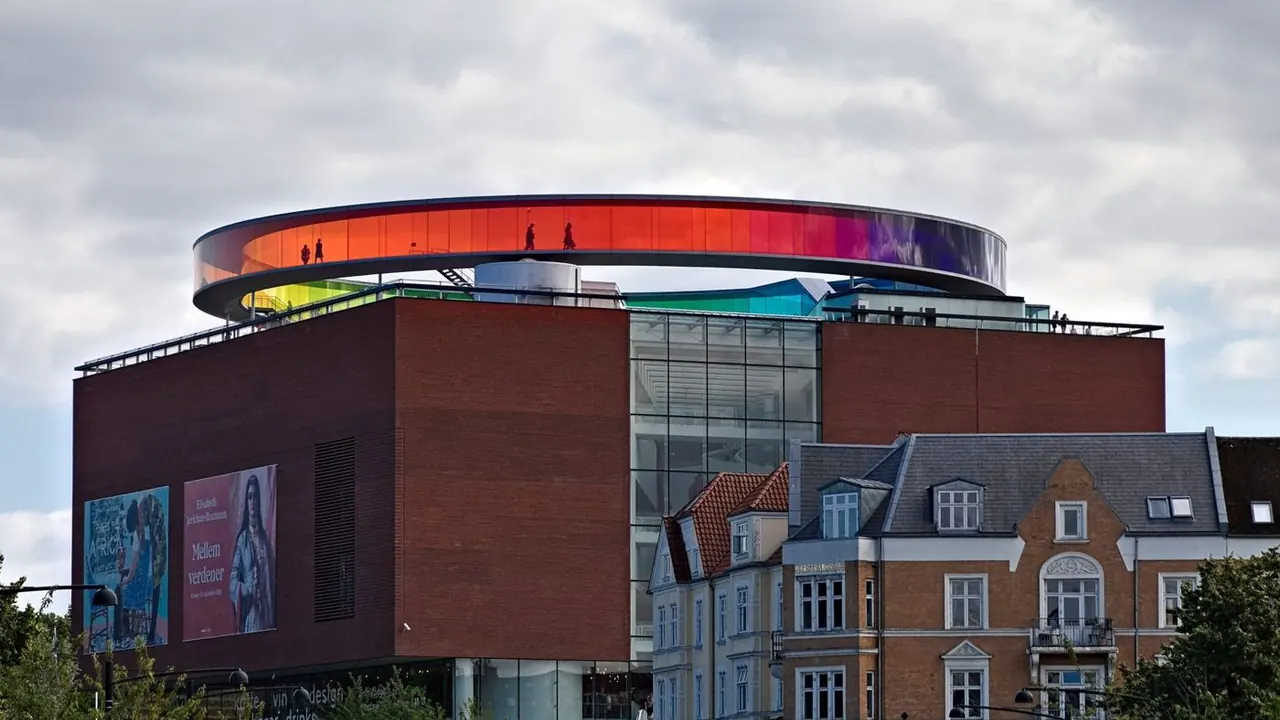
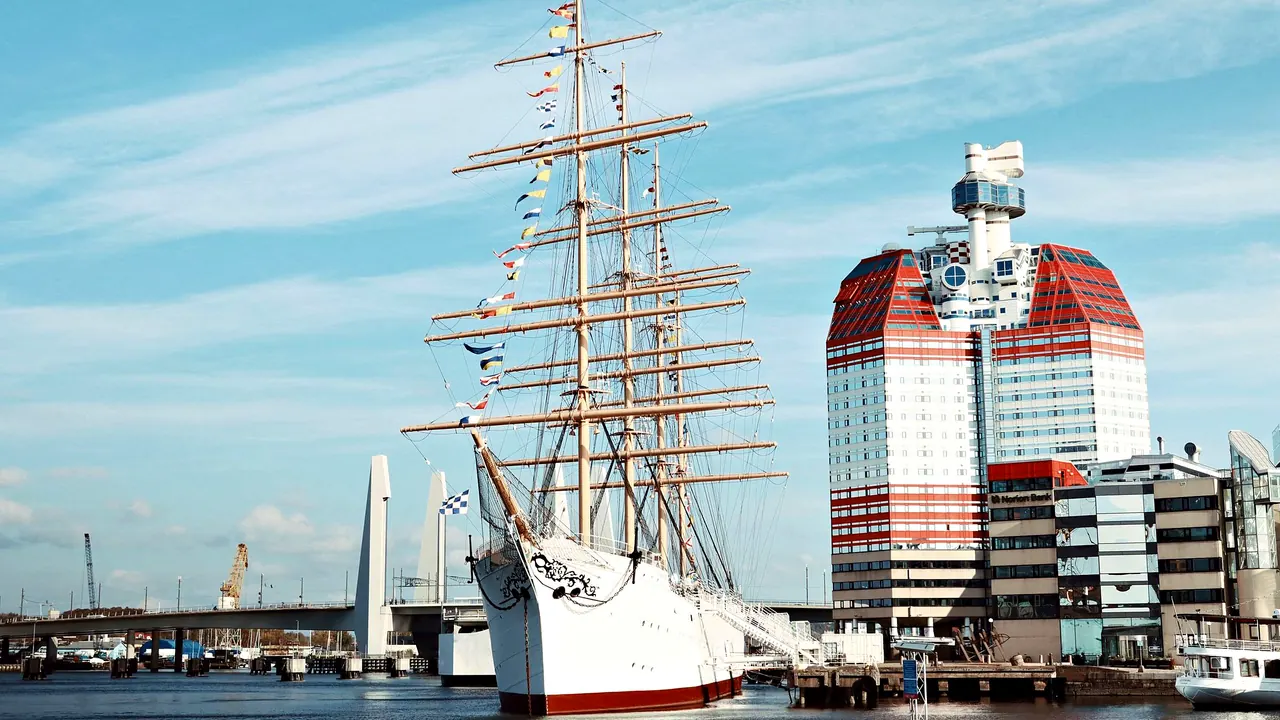
Photos: Aarhus by Mozzihh, CC BY-SA 4.0, cropped; Gothenburg by Efrem Efre, Pexels License.
Aarhus or Gothenburg?
Our verdict in twelve categories, each scored against the same fixed benchmark cities, and the climate month by month, so you can choose for your trip.
Choose Aarhus for
- culture and sights
- day trips
Aarhus is the pick for travellers who plan their days around museums. ARoS, Den Gamle By and Moesgaard would stand out in a far larger city, and between them they cover modern art, everyday life over four centuries and the Viking age. The Latin Quarter's crooked lanes and the Gothic cathedral make a small, pleasant old core to walk between visits. Because the centre is flat and you can get everywhere by bike on separated lanes, you spend your time inside the galleries rather than travelling to them. It suits an unhurried long weekend of art and history.
Choose Gothenburg for
- prices
- families
- nature and the outdoors
Families and anyone drawn to the sea will be happier in Gothenburg. Liseberg and Universeum are a short walk from the centre, and a tram and ferry take you out to the granite islands of the southern archipelago for walking, swimming off the rocks or a sea kayak. The seafood straight off the Bohuslän coast is another reason to come. It is still an expensive city, but it costs less day to day than Aarhus.
Scoreboard
Twelve categories on one fixed scale from 0 to 100. The shaded stretch is the gap between the two.
Your match
Pick a travel style or drag the sliders, and both match scores follow your weighting.
Wins on culture and sights and day trips with your weighting.
Wins on prices and families with your weighting.
What matters to you?
Category by category
What the scores mean for a trip.
Beaches & swimming
Neither city is a beach destination, and both swim in the same cool Kattegat for a few summer weeks. What differs is the shore. Aarhus has fine sand and calm, shallow water at Bellevue, Den Permanente and Moesgaard Strand, which is easy with toddlers.
Gothenburg swims from smooth granite rocks and small coves at Askim and Hovås, or on car-free islands such as Styrsö and Vrångö. Getting to the islands by tram and ferry makes a swim part of a day out.
Food & drink
The two cities eat about equally well, and both have fine dining and good cardamom buns. Gothenburg has the clearer identity. It is built on shrimp, langoustines, oysters and the autumn lobster catch, which you can see at Feskekôrka and Stora Saluhallen.
Aarhus is at its best in its New Nordic tasting-menu kitchens, which cook with Jutland produce and foraged herbs. Its covered street-food halls are the cheaper way to eat. Below the top end, both cities lack depth and charge Nordic prices.
Culture & sights
Here Aarhus is well ahead. You get a major art museum in ARoS, an open-air museum covering four centuries at Den Gamle By, and Viking-age archaeology at Moesgaard. Add the Latin Quarter and the long Gothic cathedral and you have two or three full days.
Gothenburg's sights are pleasant rather than famous. There are the Museum of Art on Götaplatsen, the East India Company building, the wooden houses of Haga and the island fortress of Nya Älvsborg. Its seventeenth-century canals and street grid are worth a walk, but a couple of days covers the essentials.
Nightlife
Nights out are much alike: student-driven, busy at weekends, quiet midweek and expensive. In Aarhus the evening centres on the riverside bars along Åboulevarden and the cellar bars of the Latin Quarter, and you can see it all in two nights.
Gothenburg spreads further. Avenyn has the mainstream clubs, while Järntorget, Linnégatan and Andra Långgatan have dive bars and cocktail bars close together. That gives you a few more nights before you run out of new places.
Nature & outdoors
Gothenburg has the stronger outdoors, because it has the sea. A tram and ferry take you to bare granite islands with heather and coastal paths, ideal for walking, cycling or a sea kayak. The rocky Bohuslän coast and the Delsjön lakes add more.
Aarhus is gentler, wooded country. The beech forests run down to the bay, and tame deer come up to visitors in Marselisborg. The heath-covered hills of Mols Bjerge and canoeing in the Silkeborg lake district are both under an hour away.
Day trips
The day trips are about equally good, but they differ in kind. From Aarhus they are mostly inland and about history. The Tollund Man in Silkeborg and Andersen's Odense are easy by train, while Jelling's runestones and the Lego House at Billund take longer and are simplest by car or bus.
From Gothenburg, most trips run along the coast. Seaside Varberg is an easy train ride, and Marstrand, the island town under its fortress, is about an hour away by bus or car and then a short ferry. The Tanum rock carvings and fishing villages such as Smögen are harder to reach without a car.
Good for families
Gothenburg is the easier city with children, mainly because the big draws are in town. Liseberg is a short walk from the centre, Universeum's aquarium and rainforest saves a rainy day, and the free animal park in Slottsskogen has seals and penguins.
Aarhus still works well with smaller children. They can feed deer by hand, walk into the old kitchens of Den Gamle By and ride at the small Tivoli Friheden. For Legoland or Djurs Sommerland, though, you need a car or a long bus ride.
Getting around
Both centres are compact and flat, and neither needs a car in town. The difference is in how you get about. Aarhus is a cycling city with wide separated lanes, and a light rail runs out along the coast.
Gothenburg relies on its large tram network. One ticket also covers the river ferries and the boats to the archipelago, though the trams slow down where lines converge in the centre.
Shopping & style
Shopping is about the same, chain stores and Nordic design with no luxury depth in either city. Aarhus comes down to one long pedestrian street and the independent design and vintage shops of the Latin Quarter, which is enough for a morning.
Gothenburg has more neighbourhoods to browse. You can move from Haga's craft shops to the vintage and record shops of Linnéstaden, Majorna and Andra Långgatan, with Nordstan for the chains.
Affordability
Both are expensive, but Aarhus costs more. Meals, beer, coffee and taxis all come at high Danish prices, and the major museums charge full admission, so bakeries and picnics do much of the saving.
Gothenburg is a little easier on the wallet. The weekday set lunch is a real Swedish institution, many museums are good value, and the transport ticket includes the island ferries. Alcohol in bars is still dear.
Live music & performing arts
The two are closely matched, each with a full orchestra and opera company. In Aarhus both play at Musikhuset, and the city's calendar peaks with its summer jazz festival and the late-summer Aarhus Festuge.
Gothenburg has Sweden's national orchestra in the 1930s Konserthuset, plus a harbour-side opera house with a well-known contemporary dance company. Its pop, indie and metal stages lead up to Way Out West in August. Theatre in both cities is mostly in the local language.
Wellness & relaxation
Relaxing works the same way in both: a sauna, a cold plunge into the bay and an unhurried pace, with no thermal springs. Aarhus has wood-fired saunas by the harbour and at Den Permanente. Gothenburg adds Valhallabadet, a large municipal bath, and a slow ferry ride out to the islands.
When should you go?
Pick your month. The climate figures are measured averages, not a forecast.
Aarhus in July
Gothenburg in July
Daytime high, °C
Rainfall in the month, mm
Where the figures come from
Aarhus's temperatures are measured 30 km from the centre, at Tirstrup.
Aarhus has no rain gauge within 25 km of the centre, so its rainfall comes from a gridded climate dataset read at the city rather than from a gauge further away.
Temperature and rainfall are climate normals, averaged over the years shown. Aarhus: 1991-2020 normals, Tirstrup (29.8 km from centre). Gothenburg: 1991-2020 normals, Goteborg Save Airport (9.8 km from centre).
The two cities share almost the same weather, so the season is the same for both. Summer runs from June to August, with July highs around 22°C in Aarhus and a degree lower in Gothenburg. The Kattegat only gets warm enough for a swim in July and August, when it reaches about 18°C off both cities. May and September are mild and good for walking the streets and the woods. From November to March days are cold, grey and short.
Rain is where they differ. Aarhus is the drier of the two, and spring is especially dry, with about 33mm in April. Gothenburg is wet all year, and autumn and early winter are the dampest months, with up to 95mm in October. Gothenburg's summer still brings long sunny days, with about 239 hours of sunshine in July, but a winter visit there means dark, wet days.
Which traveller are you?
For a culture and arts trip, Aarhus is the better choice. ARoS and its rainbow walkway, the rebuilt streets of Den Gamle By and the Grauballe bog body at Moesgaard make a stronger set of museums than anything in Gothenburg, and you can walk between most of them.
On a family trip with children, Gothenburg is the easier base, especially if you would rather not drive. The big days out are part of the city itself, so a short stay can fill every day without much planning. Aarhus suits quieter families with small children, ideally with a car.
For a trip on a tight budget, Gothenburg is the safer bet, though neither city is cheap. Everyday Swedish habits favour careful spenders, and a day on the islands or in the big parks costs very little. In Aarhus, the best sights carry full prices, so you have to choose between them.
Before you go
| Measure | Aarhus | Gothenburg |
|---|---|---|
| Official language | Danish | Swedish |
| Currency | Danish Krone (DKK) | Swedish Krona (SEK) |
| Sockets | CEFK230 V, 50 Hz | CF230 V, 50 Hz |
| Driving side | Right | Right |
| Time zone | UTC+1, UTC+2 in summer | UTC+1, UTC+2 in summer |
| Emergency number | 112 | 112 |
| Elevation | 6 m | 12 m |
| Main airport | Aarhus Airport (AAR)30 km from centre15 non-stop destinations | Göteborg Landvetter Airport (GOT)19 km from centre79 non-stop destinations |
| Public holidays this year | 14 days | 16 days |
By the numbers
| Measure | Aarhus | Gothenburg |
|---|---|---|
| City population | 290,598 | 674,529 |
| People per km² | 3,193 | 2,484 |
| Museums within 10 km | 17 | 39 |
| UNESCO World Heritage sites within 50 km | 0 | 0 |
| Swim season, months above 21 °C | None | None |
Where else could you go?
Every comparison below shares a destination with this one, so you can follow Aarhus or Gothenburg somewhere new.
- Copenhagenvs Aarhus
- Malmovs Aarhus
- Copenhagenvs Gothenburg
- Malmovs Gothenburg
- Oslovs Gothenburg
- Hamburgvs Aarhus